We Need More Christian Dogmatics and Less Apologetics

I am just rereading John Webster’s chapter inĀ The Oxford Handbook of Systematic TheologyĀ on ‘Theologies of Retrieval’. As he begins his essay he sketches how theologian Eberhard Jüngel engages this mode of theological endeavor in his bookĀ God As the Mystery of the World.Ā In his sketching, Webster highlightsĀ Jüngel’s primary thesis overriding his book, and that is […] “The book is best read as a set of analytical soundings in the modern history of the relation between theology and philosophy, seeking to show how theĀ rise of atheistic philosophy is parasitic upon decay in Christian thought about God….”Ā (Webster, p. 586) This is a very intriguing point, and one that Christian Fundamentalism, which has now come of age in American Evangelicalism would do well to take heed to. I say this because in many quarters of Evangelicalism—and I say in the quarters that make up the academic side of Evangelicalism, mostly found in seminaries, and then parachurch ministries—there is still to be found the ‘fighting Fundy’ spirit. That is, Evangelicals are consumed with matching wits with their atheist and “Liberal” counterparts by engaging the atheist (or whomever) on their own terms; nary realizing that maybe the terms set by the atheist panoply might be a result of Christians (Evangelicals or otherwise) not taking care of proper business in their own house. Namely, that Christians, in theirĀ abandonmentĀ of the doing of actualĀ Christian DogmaticsĀ (Theology) have in this vacuum created space for antagonists to the Christian faith to bottom feed off of the waste produced or not-produced by Christian thought today. Webster writes further ofĀ Jüngel’s thesis:

apologetics

[W]hat is most noteworthy inĀ Jüngel’s diagnosis is its focus on the mismatch between the authentic content of Christian faith and the conceptual version of itself by which it sought to retain its authority in the face of modern critiques. ‘Atheism’ is as much a child of theology’s theistic self-alienation as of philosophical unbelief.Ā Jüngel’s presentation of this authentic content is undoubtedly dogmatically compressed, appealing to only a narrow selection of doctrinal material; and his historical narrative can lack complexity and nuance. The book’s appeal is, indeed, as much kerygmatic as historical. What gives strength to his account is his insistence that the crisis of Christian thought and speech about God ‘is to be worked through in terms of the particular character, theĀ propriumĀ of the Christian faith’ (Jüngel 1983:229). What is required is not a more effective apologetic strategy but a better dogmatics. [emboldening mine] [John Webster,Ā The Oxford Handbook of Systematic Theology, Chapter 32 Theologies of Retrieval,Ā 587.]

Maybe if Christians, and Evangelicals in particular, got back to engaging with actualĀ positivelyĀ shaped Christian Dogmatics (instead of following the ‘negative way’), and abandoned the current trend of continuing to engage with a god largely shaped by classical theism (still!); then maybe atheists and the rest of the unbelieving crowd would lose the traction they currently have in the culture today. It is much easier for an atheist to argue with a conception of god that is humanistically constructed based on philosophical reflection and abstraction of the universe versus dealing with a God, who by definition, is shaped by His own internal Self-presentation and revelation through Jesus Christ. If ‘apologists’ were to become theologians, instead of philosophers, atheism might fade away; and if not fade away, it would at least have to reconsider how to assail the conception of the Christian God who resists philosophical manipulation, and instead contradicts it (by the wisdom of the cross!). We need more Christian Dogmaticians, and less Christian philosophers of religion.

Where Did the Language of ‘evangelical Calvinist’ Come From?

Neither Myk Habets nor myself created the terminology ofĀ evangelical Calvinist,Ā as far as I know it was coined by Thomas F. Torrance; at least in the sense that we understand and articulate it. Some people wonder why we scottish-theologywould weight ourselves down with such politically charged rhetoric; both ‘Evangelical’ and ‘Calvinist’ have accrued such ominous connotations, culturally, that it might seem anĀ unnecessary trifle to burden ourselves with. But Myk and I understand that the origin of our trajectory is indeed rooted from within the Calvinist tradition (i.e. in contrast to the Lutheran one), and so as deleterious as it might seem to some, this is the label we have identified with. ‘Evangelical’, today, stands for a particular movement, in particular among American Christianity, but is not how we use it; we use it to modify Calvinist in a way that summons are belief in God as Triune love who gave Himself for all humanity in Jesus Christ. And so we see it as an adjective that modifies our style of Calvinism, one that isĀ decidedly different from the kind of Calvinism that is usually thought of today when someone hears the verbiage of ‘Calvinism’—so our self understanding of Calvinism is not one of a simple addition of Evangelical + Calvinist; no it reaches back into a Scottish development, which primarily finds much of its voice (for Myk and myself) sounded off by TF Torrance. In order to substantiate that neither Myk nor myself invented this designation of evangelical Calvinist, let me quote Torrance in a passage from his bookĀ Scottish TheologyĀ where he uses it to describe some Scottish Calvinists (in this context Robert Leighton, an Episcopelian Calvinist) of the seventeenth century; he writes:

[…] Leighton was certainly a Calvinist, but a mild Calvinist horrified at the obsessive attention given to predestination as a test of orthodoxy, and at the substitution in the pulpit of doctrinal diatribes for biblical exposition and the preaching of the Gospel. He was anĀ evangelical CalvinistĀ of whom John McLeod Campbell once said in a letter to his father, ‘I love the writings of Leighton, because they breathe so much of the spirit of an evangelist’. Leighton himself preached to his congregation in direct personal terms about repentance and conversion, and spoke of the lively belief to which he called his people as ‘experimental knowledge of God, and of his son Jesus Christ’. This was Ā a way of believing and knowing God with an ‘inward affection towards Christ’.

The intellective knowledge of Christ, the distinct understanding, yea, the orthodox preaching of the Gospel, the maintaining of is public cause, and suffering for it, shall not then be found sufficient. Only that peculiar apprehension of Christ, those constant flames of spiritual love, that even course of holy love walking in his light, shall be thoseĀ characters, whereby Christ shall own his children, and admit them into the inheritance of perfect light.

Labour, then, for a more active and practical knowledge of God and Divine truths, such as may humble and renew your souls. [Thomas F. Torrance, Scottish Theology: From John Knox to John McLeod Campbell,Ā 163.]

Ultimately the language of ‘Evangelical Calvinist’ is not consequential in the halls of heaven (the new Heaven and Earth), but in the present it helps identify the particular theological stream we associate with (Calvinism) and how we see that stream appropriated methodologically and doctrine of Godly (Evangelical/Triune). We didn’t make it up, Torrance did; others use this language today to identify conservative Calvinists, or other brands, but they do so in a way that simply presumes that Calvinism is monolithic (of the Westminster or 5 point Baptist sorts). We have shown up in these last days (;-) ) to let the world know that there is a better way forward. If you don’t like the terminology of Evangelical Calvinist, then discard it; I personally don’t feel slavishly bonded to it either, but I am not ashamed of it in the same breath.

Torrance continues to use the language of evangelical Calvinist, in his book, to describe Scottish Calvinist theologians like Leighton; Torrance is contrasting these evangelical Calvinists with the Federal/Westminster Calvinists of that day. Likewise, we follow in suit, and readily recognize that we are noticing (and participants in) a version of Calvinism that is unapologetically different than Westminster/Federal/5 point Calvinism of today. Nevertheless, given our commitment to the primacy of Christ and God’s unilateral giveness of His grace through the Spirit created humanity of Christ, and given our Christological commitments, etc., we are clearly within the fold of the Calvinist trajectory (esp. as Torrance constructively describes and prescribes it as he engages with voices from the Scottish past). We tap into the themes and impulses left by theologians like Calvin, Knox, the Erskines, John McLeod Campbell, Thomas Torrance, Karl Barth and many others who imbibe the Reformed heritage as their own.

I hope, at minimum, this post has shown you where Myk and I took the language of Evangelical Calvinist from, and why.

A Video of the Sun and a Flare: And Why Natural Theology Isn’t The Best

I must confess, astronomy has always been a favorite of mine; not because I am an astronomer, per se, but because I love to contemplate like the Psalmist, David on how small we are relative to other bodies of things in the sununiverse, and in our own solar system. And yet keeping this in mind—how small we are (relatively speaking)—it is even more amazing that the One who Created out of gracious love, consonant with who He is as love, humbled Himself, and became one of us.

But beyond this, it is no secret that I have kicked against the goads of natural theology. So I don’t think, along with Barth and Torrance, that we can know God, the Christian God, by merely contemplating, like the classical Greek philosophers did, on nature; and then end up with the Christian God who is Triune, personal, dynamic and intimate. Instead we end up with a God, the god of the philosophers, who is pure being, actually infinite, impassible, immutable, and who creates simply because that’s what he does; he creates (that’s what Thomas Aquinas would argue, and he one of the foremost, and seminal theologians to engage with and develop natural theology). Kevin Vanhoozer comments on how this kind of approach became exemplified in that of the scholastic Reformed theologians of the sixteenth and seventeenth centuries:

The order of topics in the post-Reformation Protestant doctrine of Ā God – treating the unity and nature of God before the biblical names for God and doctrine of the Trinity – merits special comment, not least because Brunner identifi es this move with ā€œthe metaphysical, speculative perversion of the doctrine of God.ā€ Brunner’s ā€œJ’accuseā€ charges these sixteenth- and seventeenth-century theologians with ā€œfallingā€ into rationalism and natural theology – of subordinating God’s revelation in history and in Jesus Christ to the conceptual demands of substance metaphysics. Karl Barth harbors a similar Ā concern, wondering whether these theologians are really thinking about the God of Jesus Christ: ā€œIt is hard to see how what is distinctive for this God can be made clear if . . . the question who God is, which it is the business of the doctrine of the Trinity to answer, is held in reserve, and the first question to be treated is that of the That and What of God, as though these could be defined otherwise than on the presupposition of the Who.ā€ Treating De Deo Uno apart from the history of salvation and the mystery of the Trinity ultimately means that ā€œthe one divine essence as a whole is spoken about in isolation from God’s own intrinsic personal relationality.ā€ [Kevin J. Vanhoozer,Ā Remythologizing Theology,Ā 88]

It is this kind of natural theological approach that I as an evangelical Calvinist want to repudiate, and instead start with God as He has Self revealed Himself as the Son of the Father; or as Triune, and thus the Christian God. Here is what I wrote in my personal chapter in our book; my chapter is entitled; Ā Analogia Fidei or Analogia Entis: Either Through Christ orĀ Through Nature:

If the Christian God is triune in nature; then would it not makeĀ sense to begin thinking about him from within the contours of whoĀ he has revealed himself to be versus modes that are foreign to who heĀ is, and then try to construe his life as God through those media? ThisĀ is exactly the dichotomy that has obtained in the history of ChristianĀ ideas. Either God is approached through the categories provided by hisĀ self-revelation in Christ; or he is approached via abstract philosophicalĀ reflection that methodologically starts in creation and makes analogicalĀ inferences from there.

This chapter will elaborate upon the general differences providedĀ by this either/or approach to knowing God. It will argue that the bestĀ approach to knowing God is the one that starts with God as he has revealedĀ himself to be as Father and Son by the Holy Spirit; and that theĀ alternative approach leads to a flawed understanding of who God is,Ā because it primarily thinks of him as a brute creator; and thus fails toĀ adequately provide a trajectory for knowing God that best captures theĀ uniquely Christian specification of God as Triune and relational. [Bobby Grow,Ā Evangelical Calvinism: Essays Resourcing the Continuing Reformation of the Church, Chapter 4,Ā edited by Myk Habets and Bobby Grow, p. 94.]

With all of the above noted, it is from within knowing who God is as He has revealed Himself to be through the Son, that we can wholly appreciate something like this video shows. We can appreciate the power of God who is able to create such awe-inspiring things, and we can appreciate this power with the understanding that it is shaped not merely by a raw kind of power, but instead an intimate and personal power that is shaped by filial love, one for the other within the God-head of Father, Son, and Holy Spirit. So without further ado, here is the video:

American Christians Don’t Really Know What Suffering Even Is?

I want to briefly touch on something; last night I was watching a round table discussion that involved the issue of eschatology, and in particular, a discussion about the disparate views inherent to the question of millennialism (i.e. amil, premil, postmil). This discussion was made up of different Bible teachers who represented each view respectively (this discussion was moderated by John Piper). In the course of the discussion one of the teachers (the amil guy) asserted that American Christians shouldn’t even pretend like we know whatĀ SufferingĀ is. He relativized our suffering by juxtaposing it with the suffering of Christians in Iran, China, Sudan, and other erstwhile places in the world where everyone knows that being a Christian there can offer untoldĀ typesĀ of suffering.

Holbein Dead Christ, detail

I clearly understand what this guy is trying to say, but he is way way overstated, and so are all of those (because I have heard this quite frequently from other American Christians I have had contact with over the years) who make this same kind of claim about American (or Western) Christians and suffering. In fact I would go so far to say that this claim is absolute non-sense! True, there are differentĀ typesĀ and identifiable differences ofĀ intensitiesĀ of suffering that happen in people’s lives. But at the end of the day suffering is quite relative, and thus subjective. I know of many people in America, Christians, who have been endearing amazing amounts and depths of human suffering; indeed, my own family has known the depths of some pretty intense suffering over the last few years in particular (i.e. cancer, other health things, financial stresses, unemployment, depression, anxiety, etc. etc.). I simply want to place in the register here at the blog, that it is quite ridiculous and very insensitive to presume that American Christians do not really suffer! To me, all I can conclude, is that people who make such assertions haven’t really every suffered in meaningful ways; or maybe they have, and they are just insensitive to others and their own plights. Suffering can take on many different kinds of expressions, and be caused by various sources; but suffering is suffering by definition. How we measure its intensity from person to person can not ultimately be objectified or absolutized in the way that the claim that ‘American Christians shouldn’t even pretend like we know whatĀ SufferingĀ is…”Ā does.

2Ā Carry each other’s burdens, and in this way you will fulfill the law of Christ. Galatians 6:2

6Ā Humble yourselves, therefore, under God’s mighty hand, that he may lift you up in due time.Ā 7Ā Cast all your anxiety on himĀ because he cares for you.8Ā Be alert and of sober mind.Ā Your enemy the devil prowls aroundĀ like a roaring lionĀ looking for someone to devour.9Ā Resist him,Ā standing firm in the faith,Ā because you know that the family of believers throughout the world is undergoing the same kind of sufferings. I Peter 5:6-9

[seeĀ this postĀ on a related theme]

Assurance of Salvation: The Puritan’s ‘Practical Syllogism’ in Discussion with Karl Barth’s Election

Do you struggle with assurance of salvation? You know, we are working on putting together a second EC volume that deals with more pastorally driven questions (still theologically grounded) that deal with the “so what?” kinds of questions that naturally might follow upon the doctrines dealt with in our first EC volume. I will be writing, for one of my personal chapters, on the Christian doctrine of assurance. Unfortunately I am afraid that this doctrine has fallen on hard times, not because everyone has assurance of salvation, but for more dire reasons; I think this doctrine has fallen on hard times because most Evangelical Christians in America (and maybe elsewhere in the world) don’t think deep enough about salvation to ever concern themselves with such things. If you are a depth kind of Christian though, the rest of this post is for you.

I used to write, quite frequently on the exploits and happenings of the Puritans (probably because an important mentor of mine, Ron Frost, through seminary was/is a Puritan expert); the Puritans of course are known for their rigid and even ‘precisianist’ (see Theodore Dwight Bozeman’s seminal book The Precisianist Strain: Disciplinary Religion and Antinomian Backlash in Puritanism to 1638Ā [Published for the Omohundro Institute of Early American History and Culture, Williamsburg, Virginia]) modes of existence; in short they became known, in some instances for their legalism. But more positively, the Puritans and that era of Calvinist development (in both England and America) are also known for producing a rich pietistic heritage that promotes a warm hearted love for Christ through the expositional teaching of Scripture (many of the so called New Calvinists [Collin Hansen’s “Young, Restless, and Reformed” are enamored with much of the spirituality promoted by this Puritan heritage, today). One of the doctrines that was internalized and developed during this period was known as theĀ practical syllogism.Ā The ‘syllogism’ was basically an intellectual (mechanistic in its employment) apparatus used to measure the intangibles of either a genuine or temporary (false) Christianity and spirituality. Here is how famed and seminal English Puritan William Perkins articulates thisĀ practical syllogism:

Major Premise:Ā He that believes and repents is God’s child.

Minor Premise:Ā I believe in Christ and repent: at the least I subject my will to the commandment which bids me repent and believe: I detest my unbelief, and all my sins: and desire the Lord to increase my faith.

Conclusion:Ā I am the child of God.

[William Perkins cited by R.T. Kendall, Calvin and English Calvinism to 1649,Ā p. 71,Ā Ā cited by Joseph C. Dillow,Ā The Reign of the Servant Kings: A Study of Eternal Security and the Final Significance of Man,Ā p. 264.]

This syllogism flows out of what Kenneth Stewart in his book calls the only universally agreed upon fifth point of Calvinism (see his bookĀ Ten Myths About Calvinism, Appendix: The Earliest Known Reference to the TULIP Acronym,Ā 291-92),Ā Perseverance of the Saints.Ā The belief that true Christians (not just temporary ones, which was another teaching of the Puritan teaching known as experimental predestinarianism) would persevere in good works until they died (or until Jesus came back); and that this perseverance in ‘good works’ reflected that they truly had the Spirit of Christ enlivening them thus proving that indeed they were one of the unconditionally elect for whom Christ died in particular (I just anachronistically used the TULIP conceptually to read the Puritan experience through). You can see how unstable of a situation this might produce for someone who lived under the burden of culturally/societally internalized teaching. Here is the testimony of one man who indeed lived during this period, and was finally set free from this burden through the teaching of Richard Sibbes:

[I] was for three years together wounded for sins, and under a sense of my corruptions, which were many; and I followed sermons, pursuing the means, and was constant in duties and doing: looking for Heaven that way. And then I was so precise for outward formalities, that I censured all to be reprobates, that wore their hair anything long, and not short above the ears; or that wore great ruffs, and gorgets, or fashions, and follies. But yet I was distracted in my mind, wounded in conscience, and wept often and bitterly, and prayed earnestly, but yet had no comfort, till I heard that sweet saint . . . Doctor Sibbs, by whose means and ministry I was brought to peace and joy in my spirit. His sweet soul-melting Gospel-sermons won my heart and refreshed me much, for by him I saw and had muchof God and was confident in Christ, and could overlook the world . . . My heart held firm and resolved and my desires all heaven-ward. (Ron Frost. Kelly Kapic and Randall Gleason, eds., ā€œThe Devoted Life: An Invitation to the Puritan Classics,ā€ Frost is quoting from: John Rogers, Ohel or Bethshemesh, A Tabernacle for the Sun (London, n.p., 1653)

Thankfully for, Humphrey Mills (the man whose testimony we just read), he was relieved from looking to himself apart from Christ as the ground and thus assurance of his salvation. The key is that there should never be an mediate wedge or thing that stands between the believer and their Savior; there should be an immediate relation between Christ and His saints. Sibbes began to offer this kind of way forward (through his style of ‘Free Grace’ Calvinism) under the conditions and material theological categories he had available to him in his particular context.

But I think there is even more constructive resource available for us today; because even though Sibbes pointed people to look to Christ alone first (as a lover of their soul, instead of the law-keeper of their bodies), he still didn’t have the adequate theological resource to truly ground a person’s humanity and thus salvation/reconciliation in the Savior’s, in Christ’s humanity for them. It wasn’t really until we come up to Karl Barth that this kind of teaching was finely tuned and developed. [I would like to write and say more about Karl Barth—and will in the future—but because I am running out of time all I am going to be able to do is offer a quote from Michael Allen as he comments on Barth in his CD, as Barth discusses this issue of assurance of salvation through his teaching on election] Barth was quite aware of this ‘practical syllogism’ as I have described it above, but because Barth saw Jesus as both electing God (the subject) and elected man (the object) of election, he saw Jesus fulfilling both sides of election; thus humanity can rest assured not in their good works, not in their continued and sustained subjective choice for God (made evident by their good works), but they are, for Barth, able to rest assured because Jesus holds in Himself both the Subjective and Objective sides of God’s election for all of humanity in the humanity of Christ which is for us, and thus representative of God with us. Here is how Michael Allen comments on this reality in Barth’s teaching (I have some sweet quotes from Barth from his CD on this that I will have to share later):

[N]otice the personal application of the election of the Son – all others are elect ‘in Him – that speaks volumes about the doctrine of assurance…. Elsewhere in this volume, Barth addresses the so-called ‘practical syllogism’ (II/2.335–340), whereby the Puritan tradition grounded assurance not only in the objective work of Christ but also in the subjective fruits of that union with Christ (namely, in sanctifying evidences of justification in Christ). Barth believes assurance is entirely in Christ, and that the practical syllogism denies that Jesus is obedient for us, just as He is accursed for us. He fills both sides of the covenantal relationship…. [Michael Allen,Ā Karl Barth’s Church Dogmatics: An Introduction and Reader,Ā 102, Nook version.]

So Barth sees through this artificial distinction (dualism) between our humanity juxtaposed with Christ’s humanity, as if our humanity has an ontological reality of its own (apart from finding its grounding in Jesus’ humanity for us). And Barth sees how the Puritans abstracted and annexed the sanctification side of salvation to our humanity while placing this in a refracted relationship with the objective justifying work done by Jesus Christ. The effect, as Barth soĀ presciently observed, was a spirituality was produced that caused people to look at themselves before they could ever look to Christ for assurance. The individual person had to subjectively check their own lives to see whether or not they had enough good works to plausibly confirm that they indeed were fitted with the genuine righteousness of Christ and thus saved. Barth’s remedy (and Barth was not purely seeking to find a remedy for this, in a negative sense) was to ground our humanity from Christ’s elected humanity (as archetypal) for us. Thus, we cannot think of ourselves apart from Him, but only in and through His “saved” humanity for us.

I am out of time …

A Critique of the ‘What Would Jesus Do?’ Society: For, I think the Third Time

I really like how John Webster describes Barth’s understanding against the Liberal Protestantism of his day. Ironically, I think, that the way Barth understood the Liberal Protestants of his day, could (should) be the way (by and large) that we understand American Evangelicals of our day [please note: I am speaking in generalities, there are obviously many exceptions to this amongst American Evangelicals, just as there was exceptions to the Liberal Protestants in Barth’s day]. In fact, I think this dovetails nicely with the post I just posted on Occupy Wall Street. It gets to the question of how it is that “good” honest hard working (even Christian) people can be duped into thinking that the aformentioned attributes serve as the garb that justifies their place in society (i.e. as good honest hard working folk). There is always room for conviction and self-“criticality;” I know we don’t like this, and I know that much of this ultimately bothers our sensibilities; but we are Christians, people ofĀ  love and truth (insofar as we participate in God’s life in Christ).

As I’ve already alluded to, the following is Webster commenting on Barth and his critique of the Liberal Protestants (which I am lifting and applying to American Evangelicals). This is intended to decenter our trust in ourselves, and instead cause us to throw ourselves at the mercy of God in Christ. This is intended to turn our lights on so that we can more critically see how what counts as Christian and Ethical (in America and the West), probably is not as ethical and Christian as we think. This is intended to highlight how it is that “we” so easily become the standard for what is good and right in the world instead of our Savior, Jesus Christ.

[A] large part of Barth’s distaste is his sense that the ethics of liberal Protestantism could not be extricated from a certain kind of cultural confidence: ‘[H]ere was … a human culture building itself up in orderly fashion in politics, economics, and science, theoretical and applied, progressing steadily along its whole front, interpreted and ennobled by art, and through its morality and religion reaching well beyond itself toward yet better days.’ The ethical question, on such an account, is no longer disruptive; it has ‘an almost perfectly obvious answer’, so that, in effect, the moral life becomes too easy, a matter of the simple task of following Jesus.

Within this ethos, Barth also discerns a moral anthropology with which he is distinctly ill-at-ease. He unearths in the received Protestant moral culture a notion of moral subjectivity (ultimately Kantian in origin), according to which ‘[t]he moral personality is the author both of the conduct with which the ethical question is concerned and of the question itself. Barth’s point is not simply that such an anthropology lacks serious consideration of human corruption, but something more complex. He is beginning to unearth the way in which this picture of human subjectivity as it were projects the moral self into a neutral space, from which it can survey the ethical question ‘from the viewpoint of spectators’. This notion Barth reads as a kind of absolutizing of the self and its reflective consciousness, which come to assume ‘the dignity of ultimateness’. And it is precisely this — the image of moral reason as a secure centre of value, omnicompetent in its judgements — that the ethical question interrogates. [John Webster, Barth’s Moral Theology: Human Action in Barth’s Thought, 35-6]

The ‘Human culture building itself up’ was the German one (for Barth) that ultimately expressed itself in German bourgeois society, and ultimately Nazi Germany. For Barth, for the Liberal Protestant, because of the collapse of the Christian self into the self as the moral self; there no longer remained space for Christ to break in and speak a fresh word of holiness over and against the established norms of what the Liberal Protestant had come to already think of what counted as such. In other words, Barth was against a What Would Jesus Do? society.

I am appropriating this critique from Barth (a la Webster) for the American Evangelical in particular. We have come to think that what counts as moral is captured by the symbol ‘Conservative’. It is this absolutized ‘Conservative Self’ that presumes that what it means to be moral, and Christian is to ask, simply, ‘What Would Jesus Do?’ This perfectly illustrates Barth’s critique of the German Liberal Protestant. For them, as for us, to be Christian, was to be nationalist, exceptional, and normal. It is this posture that negates any space for the Word of God to break in on all of these norms or the status quo; since the status quo is synonymous with being Christian. And it is this self-evidential situation which allows for atrocities to take place in the name of Christ; through the “absolute self.”

Is what I am getting at overstated?

*Yes, I have reposted this numerous times … it is just that I like this post so!

‘From’ Christ, not ‘For’ Christ: “Why don’t you have a category for obedience?”

I have lots of people email (instead of comment) me about my various posts here at the blog. Recently I received an email from someone who wondered why I didn’t have a category (in my categories for the blog) designated as “obedience”? I haven’t emailed this person back yet, but I thought before I did that I would respond to this rather interesting observation here at the blog first (it seems fitting for me to do so).

adam-eve-garden-of-eden-1To start with, I do have a category entitled “ethics,” which deals with issues and instances of concrete instantiations of Christian obedience (or disobedience); and then I do deal with Christian obedience in many posts, but they aren’t under a specific category of “obedience,” but instead those can be found under the category of “salvation” (and then a lengthy process of weeding through this posts will ultimately yield results that show I have dealt with questions that are oriented around Christian obedience). But I would like to answer this question with more particularity, and clarity on why my blog does not emphasize this category (as important as it is!). My blog does not emphasize this category (in the way my interlocutor is wondering, I presume) because the way I think of our relation to God in Christ, has Christ in the way; and I mean in the way of you and me (logically, theo-logically). Historically, and classically, Evangelicals (given their hybrided dependence upon Reformed/Covenant theology) have emphasized relation with God through a mode of emphasizing law-keeping conditioned by forensic categories of thought (just read an Evangelical systematic theology if you don’t believe me). And insofar that I have eschewed this classical mode, I have abandoned emphasizing law-keeping (code for ‘obedience’, usually) as the emphasis by which I understood relationship with God, and how I conceive of Christian holiness (or obedience as its subsequent expression). To provide an example of where the Evangelical heritage comes from, theologically, in this regard; let me quote Kim Riddlebarger (a contemporary advocate of Covenant Theology, and member of the White Horse Inn radio broadcast, along with Michael Horton), as he sketches the original and lasting relationship and way that he (and the classically Reformed) think of how God and man (God/world) relate to each other through the Covenant of Works (or Creation):

[A]s redemptive history unfolded, the first Adam—the biological and federal representative of all humanity—failed to do as God commanded under the terms of the covenant of works. The Lord God said to Adam, “You must not eat from the tree of the knowledge of good and evil, for when you eat of it you will surely die” (Gen. 2:17). This covenant of works or, as some Reformed writers speak of it, the “covenant of creation” lies at the heart of redemptive history. Under its terms God demanded perfect obedience of Adam, who would either obey the terms of the covenant and receive God’s blessing—eternal life in a glorified Eden—or fail to keep the covenant and bring its sanctions down upon himself and all humanity. Adam’s willful act of rebellion did, in fact, bring the curse of death on the entire human race. This covenant of works is never subsequently abrogated in the Scriptures, a point empirically verified when ever death strikes. This covenant also undergirds the biblical teaching that for any of Adam’s fall children to be saved, someone must fulfill all the terms of the covenant without a single infraction in thought, word, or deed (Matt. 5:48; 1 Peter 1:16). [Kim Riddlebarger,Ā A Case for Amillennialism: Understanding The End Times,Ā 47.]

Much could be said in critique of this conception of things (and I have already said much, just check my category “critiquing classical Calvinism”), but in order to not get side-tracked from the point of this post, let me stay particular to my intention. In predictable form (since Covenant theology has Creation preceding Covenant), Riddlebarger allows Creation to condition Covenant instead of seeing Covenant (God’s life of gracious love) conditioning Creation (one serious fall out of this theological ordering is that Jesus becomes conditioned by creation instead of conditioning creation himself asĀ homoousion—I digress!). In other words, when Reformed thinkers like Riddlebarger, and his whole tradition, start theologizing and biblical exegeting they start where Riddlerbarger starts, with Law (or the Covenant of Works/Creation). And yet, as Ray Anderson has highlighted (along with others), what should be understood (first), is that God spoke and created (which is an act of grace as corollary with His overflowing life of Triune love). So what grounds any relation with God, first, is not Law-keeping, but the fact that God spoke (which is grace)! This might seem to be a subtle shift, but it is profound!

Following this shift of emphasis, what becomes primary is not my personal obedience (and Law-keeping), but God’s in Christ for us. As Thomas Torrance has written (as I just quoted this in a post below this one),

[…]Ā Under the gracious impingement of Christ through the Spirit there is a glad spontaneity about the New Testament believer. He is not really concerned to ask questions about ethical practice. He acts before questions can be asked. He is caught up in the overwhelming love of Christ, and is concerned only about doing His will. There is no anxious concern about the past. It is Christ that died! There is no anxious striving toward an ideal. It is Christ that rose again! In Him all the Christian’s hopes are centred. His life is hid with Christ in God. In Him a new order of things has come into being, by which the old is set aside. Everything therefore is seen in Christ, in the light of the end, toward which the whole creation groaneth and travaileth waiting for redemption. The great act of salvation has already taken place in Christ, and has become an eternal indicative. [see full textĀ here].

This does not mean that personal obedience is not important, but it frames it in a way that allows me to keep my eye on Christ instead of first looking at myself (and then reflexively looking at Christ: i.e. reflexive faith], as if I, myself, can somehow be abstracted out of the only true humanity which is Christ’s. So I “seek first His kingdom and righteousness, then all these other things will be added unto me” (and I only seek first, because He first loved (and sought) first that I might love Him, through Him by the Spirit). My relationship with God is not dependent upon my obedience, but Christ’s obedience for me (us); and so this ought to go along ways in illustrating why I don’t have a separate category (apart from Christology) for obedience in my sidebar. Thomas Torrance in his (posthumously published) bookĀ Atonement: The Person and Work of ChristĀ really captures the import of this shift and way of framing things from God’s gracious Self directed life for us in contrast to the Legalistic emphasis that the classical Covenant of Works flows from:

(iii) The holiness of the church is its participation through the Spirit in Christ’s holiness

Ā This holiness is actualised in the church through the communion of the Holy Spirit. He only is the Spirit of holiness, he only the Spirit of truth; and therefore it is only through his presence and power in the church that it partakes of the holiness of Jesus Christ. Since the holiness of the church is its participation through the Spirit in Christ’s act of self-consecration for the church, then that is the only holiness, the only hallowing of the church there is. That is the holiness which was actualised in the church when it was baptised with the Holy Spirit at Pentecost and the union of the church with Christ was fulfilled from the side of the church as well as from the side of Christ.

The church is not holy because its members are holy or live virtuous lives, but because through his presence in the Holy Spirit Christ continues to hallow himself in the midst of the church, hallowing the church as his body and the body as his church. Thus the true holiness of the members is not different from this but a participation in it, a participation in the holiness of Christ the head of the church and in the holiness of the church as the body hallowed by Christ. Participation in this holiness however involves for the members of the church a life of holiness, just as it involves a lifeĀ in Christ,Ā of faith relying upon his faithfulness, of love that lives from the overflow his love, of truth that comes from the leading of the Spirit. Because the church is the body of Christ in which he dwells, the temple of the Holy Spirit in which God is present, its members live the very life of Christ through the Holy Spirit, partaking of and living out the holy life of God. Therefore personal holiness, and all the qualities of the divine life and love found in their lives, are the fruits of the Holy Spirit. [Thomas F. Torrance,Ā Atonement,Ā edited by Robert Walker, 386-87.]

There is a lot to comment on here as well, but I must limit myself. I will just say that it is this reversal of things (i.e. placing the Covenant of Grace [God’s life Pre-destined]) from Law to Grace that explains why I don’t have a category explicitly labeled “obedience”. It isn’t because I don’t think Christian obedience is important, it is because I think the gr0und of this emphasis is roundly rooted in Jesus Christ for us (and thus I have a category for Christology instead). It isn’t that I don’t think personal obedience or holiness are important, I do! Instead, it is because I am persuaded that focusing on Christ and God’s Triune life of gracious love, and participating in that from the Spirit’s unioning activity will produce obedience and the life of Christ through the members of our bodies as they are constantly given over to the death of Christ that His life might be made manifest through the mortal members of our body. We obey, only because Jesus obeyed for us first. We don’t obey to ensure that we are one of the elect that God purchased from the mass of “perdituous” humanity; we obey because God loved us first that we might love Him back through the mediating and priestly Spirit anointed humanity of Jesus Christ. It is only through this framing of things that I feel I can live out this exhortation from St. Paul:

Ā It is for freedom that Christ has set us free.Ā Stand firm,Ā then, and do not let yourselves be burdened again by a yoke of slavery. ~Galatians 5:1

Without the freedom of God for us in Christ I live under a burdenouss yoke that really ends up being hell; which, I am pretty sure this is what Jesus came to save us from (ourselves), and for Himself (and His shared life in the Monarchia or God-head). So obey, but only from Christ by the Spirit, not for Christ so you can find God’s approval.

Jacobus Arminius’ Argument Against Supralapsarian Double Election From Creation

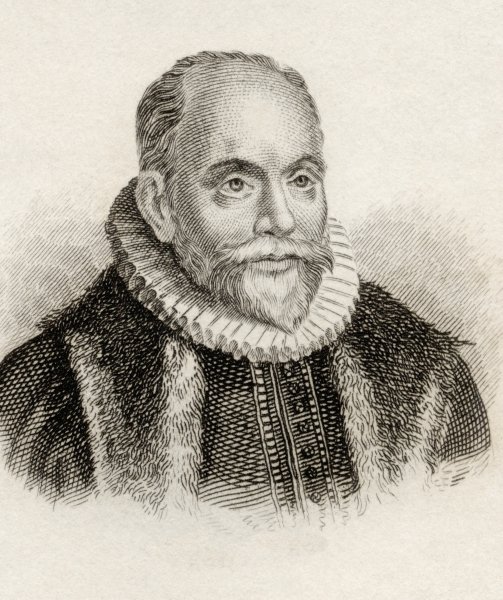
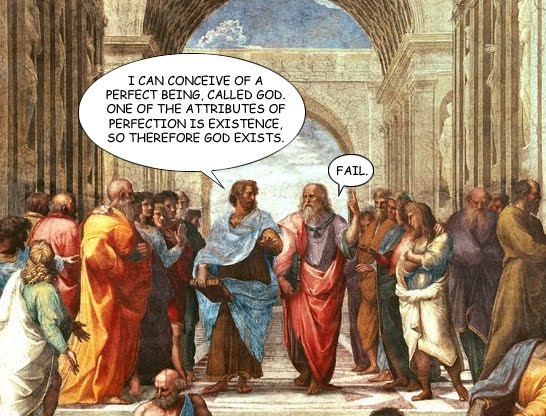
Here is one of many ways that Jacobus Arminius sought to undercut the supralapsarian double election teaching of some of the Calvinists of his day (and it should be noted that Arminius was of their number, ecclesially). This is Arminius finally offering his self-defense of his views on such things, which up until now had only been caricatured by his detractors as they made inferences from what some of Arminius’ students taught and preached from arminiustheir respective pulpits in Holland. Here is Arminius in hisĀ Declaration of Sentiments:

IX. This Predestination Is Diametrically Opposed to the Act of Creation

1. By virtue of its intrinsic nature, creation is a communication of that which is good; however, creation is not a communication of good when its purposive intent and design is set up to attain a predetermined reprobation. That which is good may be judged and determined to be good according to the mind and intention of the donor and according to the goal or purpose for which it is bestowed. In this instance, the intention of the donor would have to been to damn, an act that could only affect created beings, and the goal of the creative act was the eternal damnation of those beings. In which case, creation was not a communication of any good, but rather a preparation for the greatest evil—according to the very intention of the creator and the actual result of the event as designed. For such an event, the words of Christ are appropriate: “It would have been better for that one not to have been born” [Matt 26:24]. [W. Stephen Gunter, translator,Ā Arminius and His Declaration of Sentiments: An Annotated Translation with Introduction and Theological Commentary,Ā 116.]

This is representative of one of many arguments and articles that make up this particular article on predestination and creation. Arminius is offering a series of arguments from different angles that seek to undercut supralpsarian double election teaching. You can see how his argument is very scholastic, syllogistic, and succinct—Arminius was no dummy!

What do you think about Arminius’ argument against double election from creation? Do you think his major premise, i.e. thatĀ creation is a communication of that which is good …,Ā is the best way to argue against this doctrine (if you are so inclined to in fact argue)? And what does this reveal about Arminius’ own theological orientation, relative to his methodology? I mean, what does making a primary argument from creation say about Arminius’ chosen theological methodology? [Hint: It is something I have argued against more than once, and as a theme of my blogging against classic Calvinism]

One thing is for sure, though; to read Arminius, directly, throws him into a light that really overshadows what has become known as Arminianism today. Arminius was really more of a Calvinist than anything else (methodologically, conceptually, and so forth). He moved and breathed within that context (the Calvinist or Reformed one), and he sought to work with the same material datum that his opponents worked with; that is, working from an Aristotelian based metaphysics and conception of reality (or now known as classical Theism today). This is why I usually lump classical Arminians in with classical Calvinists; their approaches aren’tĀ dissimilar at the material principled level (de jure), but instead, their disparity comes at the level of chosen emphases and referent. They both work from a conception of God that is heavily decretal (a God who works through a set of predetermined decrees).

The ‘Eternal Indicative’, Christian Grace: Torrance is Jammin’

I wasn’t sure I really wanted to post this; not because it isn’t stupendous, but because it is rather lengthy, and I am tired. But for you my dear readers I will sacrifice some sleep, and expose you to something that ought to make your day, or life (the reality of what is being communicated). I won’t provide any of my own commentary on this one, it speaks well enough for itself. I will say though, at the outset, that what is communicated here pretty much contradicts most conceptions ofĀ GraceĀ that I have ever come across. Most conceptions of grace that I have come across (from a Christian perspective) speak of it as a thing and quality; something that God gives us that we don’t deserve. I suppose to an extent that part is true (i.e. the part about it being a reality we don’t deserve), but it is much more; and the round perspective of Grace, of course understands its actuality grounded personally in Jesus Christ and God’s action for us in Him by the creative and generative power of the Holy Spirit. At the end of the day—if you haven’t figured this out yet—it is either all Jesus, or it ain’t ChristianityĀ simpliciter.Ā Here we go; Torrance lays it down here, he is flowing big time (which is why this is a little long, at least for me to transcribe … but it is worth it!).

[T]o sum up: Grace in the New Testament is the basic and the most characteristic element of the Christian Gospel. It is the breaking into the world of the ineffable love of God in a deed of absolutely decisive significance which cuts across the whole of human life and sets it on a new basis. That is actualized in the person of Jesus Christ, with which grace is inseparably associated, and supremely exhibited on the Cross by which the believer is once and for all put in the right with God. This intervention of God in the world and its sin, out of sheer love, and His personal presence to men through Jesus Christ are held together in the one thought of grace. As such grace is the all-comprehensive and constant presupposition of faith, which, while giving rise to an intensely personal life in the Spirit, necessarily assumes a charismatic and eschatological character. Under the gracious impingement of Christ through the Spirit there is a glad spontaneity about the New Testament believer. He is not really concerned to ask questions about ethical practice. He acts before questions can be asked. He is caught up in the overwhelming love of Christ, and is concerned only about doing His will. There is no anxious concern about the past. It is Christ that died! There is no anxious striving toward an ideal. It is Christ that rose again! In Him all the Christian’s hopes are centred. His life is hid with Christ in God. In Him a new order of things has come into being, by which the old is set aside. Everything therefore is seen in Christ, in the light of the end, toward which the whole creation groaneth and travaileth waiting for redemption. The great act of salvation has already taken place in Christ, and has become an eternal indicative. The other side of faith is grace, the immediate act of God in Christ, and because He is the persistent Subject of all Christian life and thought, faith stands Ā necessarily on the threshold of the new world, with the intense consciousness of the advent of Christ. The charismatic and the eschatological aspects of faith are really one. In Christ the Eternal God has entered into this present evil world which shall in due course pass away before the full unveiling of the glory of God. That is the reason for the double consciousness of faith in the New Testament. By the Cross the believer has been put in the right with God once for all—Christ is his righteousness. He is already in Christ what he will be—to that no striving will add one iota. But faith is conscious of the essential imminence of that day, because of the intense nearness of Christ, when it shall know even as it is known, when it shall be what it already is. And so what fills the forward view is not some ideal yet to be attained, but the Christian’s position already attained in Christ and about to be revealed. The pressure of this imminence may be so great upon the mind as to turn the thin veil of sense and time into apocalyptic imagery behind which faith sees the consummation of all things. Throughout all this the predominating thought is grace, the presence of the amazing love of God in Christ, which has unaccountably overtaken the believer and set him in a completely new world which is also the eternal Kingdom of God. [Thomas F. Torrance,Ā The Doctrine of Grace in the Apostolic Fathers,Ā 34-5.]

And you wonder why I read Torrance so much! Ha, I partake liberally of his writings, and the above is an example why! If this does not charge you, then you best be checking for a Christian pulse. I don’t really know what else to say, other than I have a kink in my back now from writing this out, but I think you are now blessed because of the cause of said kink (i.e. transcribing this). Why doesn’t this stuff get preached from pulpits all across the land? Oh yeah, pastors aren’t reading Torrance, and if they do they aren’t quoting him in large doses! I think I might just have to buy my own pulpit and start preaching or something; at least that’s what I feel like doing after contemplating the depths that Torrance has just helped plumb for us. If you are a pastor, I challenge you to quote some if not all of this in a future sermon; and quote it with the passion this deserves (pound the pulpit or stomp the floor a few times [if you don’t have a pulpit anymore] if you have too).

I am going to bed now; I think I will dream of grace (i.e. sweet Jesus)!

What Theological Themes Shape Me?: Am I a Barthian?

Somebody asserted yesterday on a Facebook meta (discussion) I was having that ‘I am not a Barthian, I am an “evangelical Calvinist.” Indeed, this is true; to a degree. Let me explain this a bit. I enjoy and resonate with Thomas Torrance (who just happens to be one of Karl Barth’s most famous English speaking students), and insofar that Thomas Torrance imbibes the emphases and themes of the theology presented by Karl Barth, then that is how far I could be considered a Barthian. What are some of those overarching or undergirding themes?:

  1. That God is Triune love, and freely Self-determined to be who He is without us, but as corollary, and in grace, He has chosen to not be God without us, in Christ.
  2. As corollary to the above; I accept Barth’s critique of classical understanding of double predestination which is entailed by a distinction between elect individuals and reprobate individuals; and these individual’s status determined by God’s arbitrary choice. Barth sees God’s being as conditioned by election (and thus not God without us, ultimately), and his always already choice to be Triune. More particularly, as Barth restructures the classical conception of election/reprobation; he grounds it election in the humanity of Christ for us, and in His free choice (as electing God, and elected Man) to become humanity, He assumes our reprobation in the process. The result is that in this wonderful exchange, a double election occurs, wherein he initially elects our reprobation, but in the process of salvation (and His cross-work and grave-work), He assumes a newly elect status as the recreation of man, through His resurrection. These are the riches that we become participants of through His poverty at the cross. It is this theme that I fully endorse, provided by Barth (and there are particularities to this that I do not fully follow, which is why I end up going with Torrance … that is fodder for another day).
  3. I fully accept Barth’s critique of natural theology; i.e. that it is anti-Christ.
  4. I accept, in a constructive reading, Barth’s and Torrance’s theory of Revelation, that views Christ as God’s Self-revelation, and scripture and the proclaimed word as His ancillaries (Scripture logicallyĀ preceding Proclamation, at least for us).
  5. As corollary (which all of these points are of each other); I follow Barth’s and Torrance’s ‘analogy of faith’ methodology Versus the classical ‘analogy of being’ model of doing theology. Which means that I do not engage in philosophical categorizing of God first, but methodologically start with God’s own Self-interpretation in His Self-revelation in Jesus Christ.

Some people have narrower ways of defining whether someone is a Barthian, or not. My guess, really, is that most would say that I am Barthian—with the emphasis on IAN— but no matter, I am more concerned with the conceptual and constructive matter than I am with the label (and I do recognize the relative import of labels). I am what I am, and the above signifies some of the fundamental moves that provides an ongoing and constructiveĀ wayĀ for me as I move and breathe from the Spirit’s breath given in and through the humanity of Christ (in which I participate as an adopted son).