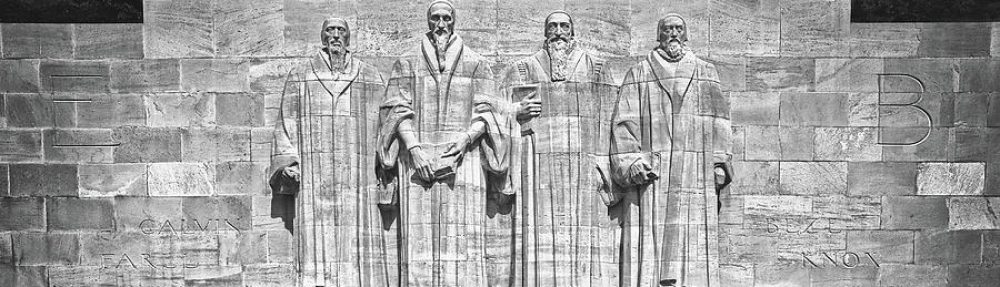
The Arminians Versus the Calvinists: Human Freedom and Divine Sovereignty in Combine

The battle of the Arminians and Calvinists continues on ad infinitum; indeed, in different expressions and levels of discourse. Nonetheless, the gruel continues unabated. Ironically, and historically, the Arminians, particularly, Arminius himself, weren’t outwith, but within the Reformed halo. As is commonly understood, Arminius was intent on engaging with the theological-anthropological conundrum of human freedom vis-à-vis God’s ostensible sovereignty (as the Calvinists were wont to press in their own stylized way). It wasn’t, of course, that Arminius was attempting to undercut the Calvinist notion that God is sovereign—God forbid it!—but instead, he was challenging the character and way of God’s sovereignty related to human freedom. Jaroslav Pelikan offers nice coverage on this:

The most controversial attempt at such an elucidation within the Reformed communion was the one associated with the names of Jacob Arminius and Simon Episcopius, which eventually challenged openly the central affirmations of the Calvinistic doctrine itself. Arminian acquired its own confessional status in the Remonstrance of 1610 and then, after the Synod of Dort, in the Remonstrant Confession of 1621/22. Reiterating and developing many of the objections to predestinarianism that had already been current during Calvin’s lifetime, the Arminian and Remonstrant protest focused on the problem of will: of the human will as responsible for conduct and therefore in some genuine sense free of “fatalistic necessity”; and of the divine will as addressed to all and therefore in some genuine sense universal, but also as free of sin and evil and free coercion, since such freedom was “the perfection of the [divine] will.” Calvin’s “fictitious fate of predestination” was “hostile to religion” because it managed to undercut both the free will of God and the free will of man. Against “the iron and fatalistic necessity of the Stoics, Manicheans, and Predestinarians,” as well as against the “blind chance” of the Epicureans, stood the biblical doctrine of “the providence of God in the world, which rules everything in a wise, holy and just manner.” The providence of God, which followed immediately upon creation and which extended also to the work of redemption, was universal in scope, pertaining to “this entire universe and especially to man,” as an expression of “the wisdom, justice, and equity of God.” These divine attributes of wisdom, justice, and equity, as disclosed in providence, meant that God was free from “any internal necessity of his own nature or of any external power of some other force”; therefore it was Arminian and Remonstrant doctrine, no less than it was Calvinist doctrine, that God did foreknow future contingents and that he was free “to dispose for his creatures whatever he wills,” death or life, command or prohibition.

It was likewise Remonstrant doctrine, no less than Calvinist, that the grace of God, defined as “undeserved and unmerited favor,” was, as the Remonstrance put it, “the beginning, the progress, and the completion of all good.” But that did not mean that grace was “irresistible.” The analogy, drawn by Augustine and after him by Calvin, between God’s call to faith and the summons to resurrection addressed by Christ, irresistibly, to a dead body, was fallacious. For “those whom God calls to faith, he calls seriously”; if it were impossible to resist the grace of God, his offer of “a reward for Christian virtue” and his threat of punishment for immorality would both be vain. On the other hand, the distinction between what God willed and what God permitted, which Calvin had dismissed as a “falsehood” and an “evasion,” was essential to prevent “the overthrow of all religion”: divine permission did not imply that “it is not possible for anything but disobedience to follow,” but rather that “man can be disobedient, yet only if he so wills.” Therefore God permitted evil not because he will it, but to leave man free. And, contrary to Calvin’s theory, it was similarly “with the permission of God and in accordance with his just judgment,” but by their own action, that the hearts of sinners were “hardened.” Hardening, also in the case of the Jews, was a divine “declaration,” not the initiative of a divine “action.”[1]

A rather succinct presentation of the primary theme[s] present between the Remonstrants and the Calvinists.

I would suggest there is a better way. It is unnecessary to place humanity and God and God and humanity into either the Arminian or Calvinist combine. All that is required to overcome such enmity is to think the relationship between God-humanity through the singular personalis (person) of Jesus Christ. Both God’s downward movement to humanity and humanity’s upward movement to God can be understood from within this miraculous nexus. When election, predestination, human freedom vis-à-vis Divine freedom/sovereignty, so on and so forth becomes the ambit by which such loci is imagined, the Gordian knot of inimical theofare, as that obtains between the “Arminians and Calvinists,” is once and for all cut through.

Pax mundi theologica obtenta est.

[1] Jaroslav Pelikan, The Christian Tradition: A History of the Development of Doctrine: Reformation of Church and Dogma (1300—1700), Volume 4 (Chicago and London: The University of Chicago Press, 1977), 233–34.

Divine and Human Agency Betwixt a Doctrine of Sanctification

Human agency, a Theanthropology will be a central piece of development in treating a doctrine of Sanctification in the theologies of Barth and TFT, respectively. Without genuine human agency, human freedom before God, even as that is somehow unilaterally grounded by God’s Self-freedom, it isn’t really meaningful to think of a Christian doctrine of sanctification. That is, because agency without real human freedom only reduces the human to metaphysical abstractions acting out an automated history already done for them absolutely by God. But in reality, if thought well, both accounts of agency, Divine and human, must and can be thought together—hypostatically so.

On Barth’s Affirmation of Anselm’s ‘Proof of God’ and Rejection of A Natural Theology

Being oppositional to natural theology is a hallmark of Karl Barth’s theological posture. His primary rejection of a natural theology isn’t a result of his socio-politico atmosphere in the Reich of Germany per se; even though it has application towards the type of Nationalistic Socialism that characterized Adolf Hitler’s vision of the golden age of Germany. Barth rejected natural theology for theological reasons; i.e., theological-anthropological reasons. He maintained a radical commitment to the reformational notion of the total depravity of humanity; albeit, in an Athanasian key. This commitment is best illustrated by his collegial correspondences, and even debates with Catholic German theologian, Erich Przywara. Przywara, was a modern advocate, and constructive builder, indeed, a retriever of the classical Thomistic analogia entis (‘analogy of being’). Przywara ultimately argued from something like a capaciousness left in fallen humanity, as if a residual spark continued to burn within the intellect; which when perfected by grace, even preveniently or objectively so, would allow fallen human beings to build an intellectual cathedral wherein its spire might reach into the heavens and touch the feet of God. But of course, this was a speculative measure by which human beings reason by a series of negations from their finite beings to its primary and first cause in the infinite being, the unmoved mover, who is, in the Przywaran frame, the God of Jesus Christ. Barth retorted to such machination with a loud Nein, such that the canton church bells in Basel were made to ring out.

Barth offered his own reading on thinking God. This has been identified by such theologians as Eberhard Juengal et al. as the analogia fidei -/relationis (analogy of faith -/relation). Barth contended that there was such a qualitative disjunction between God and humanity that outwith God’s invasion, His descending into the fallen world, outwith His assumptio carnis (assumption of flesh) it would be nigh impossible for human beings to begin to even imagine the living and triune God; let alone ‘know’ this God. What was required in Barth’s estimation was that God enter into the garb of our humanity, by becoming human Himself in Jesus Christ, and to do so unto the point of death; even death on the cross. Barth maintains that it was only this type of the dissolution of fallen humanity, and then via its resurrection in the resurrection of Jesus Christ, that humanity by the Holy Spirit, in union with Christ’s humanity (spiritually), might come to have a correspondence of faith, with Christ’s faith, through Christ’s relationship to humanity mediated through His humanity, and in turn, through His human nature in inseparable relationship with the divine Logos, who is the ground of Christ’s singular person, that humanity could ever have a center in God to rightly know God by.

With the aforementioned noted, Anthony Feneuil offers a helpful reading on how Barth engaged with Anselm’s so-called ‘ontological proof’ for the existence of God. As Feneuil shows, Barth could affirm Anselm’s proof without collapsing it into something like the analogia entis presented by Przywara et al. So, how could Barth affirm a ‘proof’ for God’s existence, without falling prey to his own critique of an analogia entis (which is a subset of a natural theology simplicter)? Feneuil writes (in extenso):

According to Barth, Anselm’s proof is not natural theology. Anselm never places himself on the —supposedly common to the believer and the unbeliever—ground of natural reason. The definition of God Anselm gives at the beginning of the Proslogion is not, says Barth, a definition in the strict sense of the term but, rather, a confession of faith. It does not define the nature of God but acknowledges a divine command, actually the first of the Ten Commandments (“You shall have no other gods before me”): “We believe that You are something than which nothing greater can be thought.” It is not about the abstract essence of God, but about the relation of lordliness between the revealed God and God’s creatures. Anselm does not place himself on the fool’s ground, he does not think on the same level. And the proof does not primarily prove the existence of God but, rather, the fact that, on the ground of this lordliness relationship that God initiated, it is not even possible for us to imagine, even as a mere hypothesis, the inexistence of God. The mere hypothesis of the nonexistence does not fit God. In that respect as well, God is very different  from any other object of the world (very different from a hundred–euro note, for instance). Therefore, Anselm’s proof is not an ontological proof, that is, a proof that would go from God’s essence in thought of God’s actual existence. It is not a proof in which human thought is above God, in which human thought decides about God’s existence. It is the other way around: the proof aims at showing, from the revealed name of God, that human thought cannot establish itself as a spectator above God. The proof shows that human thought, in relation to God, is unescapably limited.

Therefore, one could say that, in a sense, the proof aims precisely at negating the possibility of any natural theology, understood as a human attempt to escape the relation of obedience to God, and to establish oneself in the position of being able to make judgments about God’s existence, just as about the existence of any object. It is a proof that declares our wisdom as a folly before God. Hence, the insipiens, in Barth’s reading of Anselm—that is, the one who does not understand the proof—is not only the one who denies the existence of God, but also the one who tries to establish this existence on purely rational grounds. Who, then, is the insipiens? He is Descartes, not less than Kant, because when Descartes attempts to ground the certainty of God’s existence exclusively on human reason, he believes that he can consider God as a thought object similar to others, whose existence can always be put into bracket. Insofar, he is an insipiens: he believes that one can talk about God as about a thing or an absent person, using a third-person discourse, whereas one cannot talk about God without talking to God. Consequently, there is no fundamental difference between Anselm’s insipiens and Paul’s fool: both refer to those who do not acknowledge the foolishness of their own wisdom, but neither Anselm’s incipiens [sic.] nor Paul’s fool refer to the one who cannot reason well, for any contingent cause.[1]

If Feneuil is correct in his reading of Barth, and there is no reason to think otherwise, we can see, even in Barth’s reading on Anselm’s ‘proof’ how Barth’s rejection of a natural theology was operative. Ultimately, I would contend, Barth sees natural theology, and its subset in the analogia entis, as foolish because it attempts to decenter God’s ontology with fallen humanity’s; i.e., by asserting that there remains a residual foundation within the intellect of fallen humanity whereby knowledge of the true and living God has been retained; even if it might need a drop of God’s created grace to jumpstart it.

[1] Anthony Feneuil, “The Cross of Wisdom: Ambiguities in Turning Down Apologetics (Paul, Anselm, Barth),” in Christophe Chalamet and Hans–Christoph Askani, eds., The Wisdom and Foolishness of God: First Corinthians 1—2 In Theological Exploration (Minneapolis: Fortress Press, 2015), 174–75.

The Fittingness of God to Become Human / The Unfittingness of Humans to Become God

It is unfitting for man to exalt himself to the status of God. But it is entirely fitting for God to become man (human). It is fitting for God to enter His creaturely sphere, to become His creaturely magnum opus, and redeem and elevate it from the inside up. It was so fitting for God to become human (man) that He freely elected that status for Himself, even before the foundations of the world, as He elected humanity for Himself; which was ultimately going to be for us (pro nobis). To invert that order is to imbibe the spirit of the Antichrist. The very spirit that slithered upon the Holy ground of Eden and whispered into Eve’s ear with its serpentine forked tongue: “you will be like God.” Barth writes,

We can state at once the impotence of this enterprise and therefore its inward futility. God becomes and is man. His condescension to us, His being as we are, is an event. It is actuality. It is the act of the One who is free and able to do this. It is the powerful execution of His eternal resolve. It is a triumphant and indisputable and irrevocable fact. But man, on the other hand, only wants to exalt himself and to be as God. He can never do it. He does not have the freedom or power. He may determine on it for long enough, but nothing will ever come of it. He will always fall back on himself and still be man. It is not paradoxical or absurd that God becomes and is man. It does not contradict the concept of God. If fulfils it. It reveals the glory of God. But it is certainly paradoxical and absurd that man wants to be as God. It contradicts the concept of man. It destroys it. Man ceases to be a man when he wants this. It does not involve any alteration in God for Him to become a creature. Even as such He is still the Creator. But it does require an alteration in man—and one that is not given to him—to become God. He cannot hope and he need not concern himself that this will finally be attained. For his own good it is provided that he cannot pass his own limits, try how he will. The only result of his attempts is the revelation of his impotence to do so, and, because he ought not to do so, the revelation of his shame.[1]

This bespeaks the goodness and very goodness of God’s creation. All things in their proper order (taxis) in relation to the Father, Son, and Holy Spirit, and within that given, that gift humans have the capacity to flourish in the ways intended by the living God. Rebel against this order, as we are wont to do by our ‘sinful natures,’ and it all goes to hell.

[1] Karl Barth, Church Dogmatics IV/1 §60 [419] The Doctrine of Reconciliation: Study Edition (London: T&T Clark, 2010), 61–2.

Reflecting On Charles Taylor’s Social Imaginary and Buffered Self

I read through Charles Taylor’s tome, Secular Age, a few years ago; it took me a couple years to get through. I think his sociological analyses, peppered with theological riffs, represents some of the most profound observational insights available. While I was reading through it, I found some of his theological eloquence lacking, especially with reference to his reading of Calvinism. But ultimately that lacuna didn’t subtract from his overall cultural and sociological analysis. For me his most poignant themes remain his thinking on the social imaginary along with the buffered [secular] self. These two intellections, respectively, have been most applicable in my day-to-day existence out there in the big world. These themes have helped me keep the world in order so to speak. In other words, they have allowed me to have the critical valence and distanciation necessary to continuously place the various cultural-identity-posture expressions into some identifiable frame; indeed, expressions presented by the heathen, the religious, and the Christian alike.

On social imaginary: this has served as a helpful psychologizing factor, as far as realizing that all of humanity has various ideational categories that they are consciously or subconsciously drawing from in order to navigate their relative places in this ‘world system.’ It isn’t always easy to identify the various in-forming and out-forming pressures from whence the people are indeed formed. Even so, just knowing that there are clusters of various social imaginaries present in the world, an ordered filament, to one extent or another, an intellectual press that has a pedigree of development in the history of the world’s ideas, this helps me to approach people with an understanding that they aren’t as ‘naked’ or absolutely subjective as they think they might be. And of course, this sword doesn’t just cut on them ‘out there,’ but also on me, ‘in here,’ in my own spiritual and intellectual development.

On the buffered self: this dovetails with the social imaginary. People, whether conscious or not, use various belief-structures, social imaginaries, often-times, as coping mechanisms that allow them to navigate a world of other people who might present with competing social imaginaries. This is to say, the buffered self in the modern and postmodern periods, respectively, often-times and relativistically, picks the ideas and theories of life that they have inherited from the past, consciously or not, to keep the other competing social imaginaries, out there, at bay. That is to say, that in our highly individualistic world, people deploy mechanisms of ideation and belief in order to keep the world of the other ‘out there,’ in an attempt to keep a semblance of order internal to their own self-development and truths. The buffered self, I would contend, is simply representative of what might be identified as a modal collapse, an absolute immanentization of total reality, as perceived atomistically by each individual, into the turn-to-the-subject. That is, the buffered self, as the fallen self, vis-à-vis God, necessarily imbibes what it perceives to be the attributes of God into their own preponderances and activities in the world as human and individual agents. Thusly, the buffered self seeks a life of absolute autonomy, as monadic centers circumscribed purely by their own self-perception as gods among other gods; each god ostensibly capable of constructing their own worlds, their own truths.

The above, on a sketch, represents how it is that I have personally appropriated a couple of Taylor’s themes as critical mechanisms that allow me, in an attempt, to find some semblance of intellectual and sociological order, even whilst living in the midst of a world wherein each individual human agent believes themselves to be gods. From a biblically narratival vantage point what I have been describing, clearly, is a reference to the fall of humanity as that is described in Genesis 3.

‘Very Man’

Not only is Jesus Very God, but he is also Very Man. This is the Nicene-Constantinopolitan-Chalcedonian settlement in regard to the hypostatic union of Jesus person’ being both fully God, at His very being, and fully human as the ground of His being the Man from Nazareth in the Galilee. This post is meant to dovetail with the other side of this union where we looked at the way that Barth treated the personhood of Jesus Christ as ‘Very God.’ But without Very God, the Son of God, becoming Very man, we would of all people be most to be pitied. This is the stuff of the Gospel itself.

If God did not freely elect to become human, as both the electing God and the elected man, then there would be no way into reconciliation with the inner and triune life of God. We could not become partakers and thus participants in the divine nature if God did not first become us in Christ. As any good Bible reader understands, fallen humanity left to its own devices only remains in a vicious circle of self-love; a life constrained by the love of self, and its base desires, rather than being constrained by the love of God in Christ and His holiness. It took God to invade our war torn and dead sub-humanity, and re-create it such that the fallen person can finally be elevated into the throne-room of God’s life as the Son ascends with us back to the glory He has always already eternally shared with the Father in the bond of the Holy Spirit. All of this to say: the ‘man’ (human) part of the Gospel is just as important as the God part, insofar that without God becoming us it would be absolutely impossible for us to pierce into His inner and triune life and be saved. So, the man part, funded by the God part, both hypostatically united in the singular person of Jesus Christ is in fact the Euaggelion (Gospel). And for this we should be full of gratitude and worship to our Father who is in heaven.

Barth writes:

This means primarily that it is a matter of the Godhead, the honour and glory and eternity and omnipotence and freedom, the being as Creator and Lord, of the Father, Son and Holy Spirit. Jesus Christ is Himself God as the Son of God the Father and with God the Father the source of the Holy Spirit, united in one essence with the Father by the Holy Spirit. That is how He is God. He is God as He takes part in the even which constitutes the divine being.

We must add at once that as this One who takes part in the divine being and event He became and is man. This means that we have to understand the very Godhead, that divine being and event and therefore Himself as the One who takes part in it, in the light of the fact that it pleased God—and this is what corresponds outwardly to and reveals the inward divine being and event—Himself to become man. In this way, in this condescension, He is the eternal Son of the eternal Father. This is the will of this Father, of this Son, and of the Holy Spirit who is the Spirit of the Father and the Son. This is how God is God, this is His freedom, this is His distinctness from the superiority to all other reality. It is with this meaning and purpose that He is the Creator and Lord of all things. It is as the eternal and almighty love, which He is actually and visibly in this action of condescension. This One, the One who loves in this way, is the true God. But this means that He is the One who as the Creator and Lord of all things is able and willing to make Himself equal with the creature, Himself to become a creature; the One whose eternity does not prevent but rather permits and commands Him to be in time and Himself to be temporal, whose omnipotence is so great that He can be weak and indeed impotent, as a man is weak and impotent. He is the One who in His freedom can and does in fact bind Himself, in the same way as we all are bound. And we must go further: He, the true God, is the One whose Godhead is demonstrated and plainly consists in essence in the fact that, seeing He is free in His love, He is capable of and wills this condescension for the very reason that in man of all His creatures He has to do with the one that has fallen away from Him, that has been unfaithful and hostile and antagonistic to Him. He is God in that He takes this creature to Himself, and that in such a way that He sets Himself alongside this creature, making His own penalty and loss and condemnation to nothingness. He is God in the fact that He can give Himself up and does give Himself up not merely to the creaturely limitation but to the suffering of the human creature, becoming one of these men, Himself bearing the judgment under which they stand, willing to die and, in fact, dying the death which they have deserved. That is the nature and essence of the true God as He has intervened actively and manifestly in Jesus Christ. When we speak of Jesus Christ we mean the true God—He who seeks His divine glory and finds that glory, He whose glory obviously consists, in the fact that because he is free in His love He can be and actually is lowly as well as exalted; He, the Lord, who is for us a servant, the servant of all servants. It is in the light of the fact of His humiliation that on this first aspect all the predicates of His Godhead, which is the true Godhead, must be filled out and interpreted. Their positive meaning is lit up only by this determination and limitation, only by the fact that in this act He is this God and therefore the true God, distinguished from all false gods by the fact that they are not capable of this act, that they have not in fact accomplished it, that their supposed glory and honour and eternity and omnipotence not only do not include but exclude their self-humiliation. False gods are all reflections of a false and all too human self-exaltation. They are all lords who cannot and will not be servants, who are therefore no true lords, whose being is not a truly divine being.

The second christological aspect is that in Jesus Christ we have to do with a true man. The reconciliation of the world with God takes place in the person of a man in whom, because He is also true God, the conversion of all men to God is an actual event. It is the person of a true man, like all other men in every respect, subjected without exception to all the limitations of the human situation. The conditions in which other men exist and their suffering are also His conditions and His suffering. That he is very God does not mean that He is partly God and only partly man. He is altogether man just as He is altogether God—altogether man in virtue of His true Godhead whose glory consists in His humiliation. That is how He is the reconciler between God and man. That is how God accomplishes in Him the conversion of men to Himself. . ..[1]

Very meaty stuff!

Without getting too distracted let me lift up one aspect of this, particularly as found in the second paragraph above. Some critics might latch onto the fact that Barth writes, “. . . the conversion of all men to God is an actual event.” They might claim that this makes Barth a dogmatic universalist (or maybe some Christian universalists might want to take this in the positive from Barth). But that would be to miss Barth’s theology. Barth has just got done communicating that ‘the man’ Jesus Christ is the conversion of God for all of humanity in actuality. Even so, whilst this christological objectivism is rightly present in Barth, this should not lead the reader to imagine that Barth is operating from some type of Aristotelian theory of causation; to the contrary. Barth’s primary focus is on the primacy of Christ’s archetypal humanity as the humanity ‘converted’ to God. And within this, it can be (and should be) explicated that for Barth’s theology this entails all of humanity after Christ’s. So, there is a universalist aspect to the incarnation and its implications for Barth, just as there is for the Apostle Paul. But it would be wrong and foreign (to Barth’s total theology) to conclude that this necessarily leads to all of humanity subjectively bowing the knee to Christ as their Savior. This freedom in Christ for God has now been recreated in God’s freedom for us in Jesus Christ. But it is still required that by the power of the Holy Spirit a person says ‘Yes’ to God, from God’s ‘Yes and amen’ for them in Christ, in order to become full participants in the actual humanity of the Godman, Jesus Christ. In other words, the way of salvation has been ordained for all of humanity in and from Christ’s humanity. But the lost person must still recognize this reality and finally acknowledge (repent in Christ’s repentance for them) that without them echoing Christ’s yes and amen for them that they will be left out on the shadow-side of God’s lefthand of final judgment. Which in the end remains as mysterious as the first fall of humanity in Adam and Eve’s rebellion to God’s Word.

[1] Karl Barth, Church Dogmatics IV/1 §58 [130–31] The Doctrine of Reconciliation: Study Edition (London: T&T Clark, 2010), 125–26.

TF Torrance and Augustine in Discussion on a Knowledge of God vis-Ă -vis the Imago Dei

I find Thomas Torrance’s stratified knowledge of God and St. Augustine’s exercitatio mentis (spiritual exercises), and their relative correspondence to be quite intriguing, and yet in this intrigue there is also recognition of a fundamental difference. Here is how Ben Myers describes Torrance’s ‘stratified knowledge’ (if you want to read Torrance on this see his Christian Doctrine of God, One Being Three Persons):

Thomas F. Torrance’s model of the stratification of knowledge is one of his most striking and original contributions to theological method. Torrance’s model offers an account of the way formal theological knowledge emerges from our intuitive and pre-conceptual grasp of God’s reality as it is manifest in Jesus Christ. It presents a vision of theological progression, in which our knowledge moves towards an ever more refined and more unified conceptualisation of the reality of God, while remaining closely coordinated with the concrete level of personal and experiential knowledge of Jesus Christ. According to this model, our thought rises to higher levels of theological conceptualisation only as we penetrate more deeply into the reality of Jesus Christ. From the ground level of personal experience to the highest level of theological reflection, Jesus Christ thus remains central. Through a sustained concentration on him and on his homoousial union with God, we are able to achieve a formal account of the underlying trinitarian relations immanent in God’s own eternal being, which constitute the ultimate grammar of all theological discourse. [Benjamin Myers, “The Stratification of knowledge in the thought of T. F. Torrance,” SJT 61 (1): 1-15 (2008) Printed in the United Kingdom © 2008 Scottish Journal of Theology Ltd]

And here is how Gilles Emery, O. P. describes Augustine’s exercitatio mentis:

Augustine emphasizes in particular that in order to glimpse God, the spirit must purify itself of corporeal representations and “phantasmata.” The spirit must not stop at created images but must rise to what the created realities “insinuate.” This is precisely the usefulness of the study of creatures and the goal of the exercise. The exercitatio proposed by Augustine is an ascension … toward God from the image that is inferior and unequal to him, and it is at the same time a gradual movement toward the interior (introrsus tendre). From these corporeal realities and sensible perceptions, Augustine invites his reader to turn toward the spiritual nature of man, toward the soul itself and its grasp of incorporeal realities, in a manner ever more interior (modo interiore), in order to rise toward the divine Trinity. The exercise of the spirit is “a gradual ascension toward the interior,” in other words, an elevation from inferior realities toward interior realities. One enters, and one rises in a gradual manner by degrees (gradatim). Such is the way characteristic of Augustine: “pull back into yourself [in teipsum redi]…, and transcend yourself.” [Gilles Emery, O. P., Trinitarian Theology as Spiritual Exercise in Augustine and Aquinas, in Aquinas the Augustinian edited by Michael Dauphinais, Barry David, and Matthew Levering, p. 14.]

[For further reading on a Reformed version of ascension theology check out Julie Canlis’ sweet book Calvin’s Ladder: A Spiritual Theology of Ascent and Ascension.]

One fundamental and important difference—even given some apparent similarity between Torrance and Augustine, like on stratification or graded movement towards Triune knowledge of God—becomes an issue of theological anthropology and the difference between Augustine’s a priori versus Torrance’s a posterori approaches in relation to the imago Dei/Christi. 

For Augustine, knowledge of God is already present (even if soteriologically and christologically construed) by way of analogical reflection upon the image of God (which is opened up soteriologically by Christ). For Torrance, knowledge of God is not a result of turning inward, but looking outward to Christ. So we don’t know what it is to really be in the image of God, there is not resonant knowledge of God available in the human being, per se. It is only as we are recreated in Christ in the resurrection by the Spirit that genuine knowledge of God can be acquired by observing and spiritually participating in the knowledge of God through Him. So the analogy for both of the these theologians—by which we come to knowledge of the Triune God—is grounded in reflection upon the image of God. But the difference is that for Augustine, the image of God is grounded in each individual person (which would help to explain his view of election/reprobation as well); for Torrance the image of God is grounded in Christ (Col. 1.15), and thus the supposition is that God’s image has a ground external to creation in Christ, which allows us to think of knowledge of God as something external to us, and not something resonant within us (even if like Augustine we try to explain this in his kind of soteriological way).

My Reduction

I don’t like doing this, but for sake of blogginess and reception let me do so: For Augustine knowledge of God happens by turning inward to the self (by Christ to be sure) and attending to personal piety; For Torrance knowledge of God happens by turning outward to Christ, and attending to personal intimacy therein.

This kind of movement (inward a priori and outward a posterori) has some other interesting implications that get fleshed out in subsequent centuries and theologies that continue to affect us to this day. We will have to talk about this later.

*Originally posted in 2019 at another site of mine.

The Cipher-Jesus Predestined by the Fallen Heart

German anthropologist and philosopher Ludwig Feuerbach stated: God is “the outward projection of a human’s inward nature.” A very telling observation with reference to a postEnlightenment turn-to-the-subject worldpicture. This remains a fitting observation even for our 21st century time; i.e., that people, by nature (according to Scripture, and empirical observation), in the inverse, have collapsed the classical attributes of God into the mirror of their own image. A postmodern, normative relativistic people simply wake up in the morning, look in the mirror in the bathroom, and say: “hello there God.” Even if not this overtly, it is the way us sinners operate enslaved, enbondaged to the incurvature of our in-turned hearts. We are, in the first Adam sense, slaves of our polluted, stained, dead souls; souls that by sinful being (ousia) naturally believe that our way is the way.

This is being played out every single day, not just out there, but in here; indeed, in our own daily lives. This is why the Apostle Paul by the Holy Spirit exhorts us to reckon ourselves dead to sin, and alive to Jesus Christ. Even so, the pagan, the heathen has no resurrection power to mortify these first Adam ways of life that dominate every shred and depth of the marrow of the bones; they are simply enslaved to love of themselves; and left to themselves have no capacity to not sin; to not worship the self as God. It is whilst inhabiting this type of beleaguered existence that in an attempt to worship, the person will name their own person as the Messiah. The urge to worship, of course, is because the human animal has been created by the living and alien God to worship; to worship Him in spirit and truth. But absent the Holy Spirit’s indwelling, the only reality the fallen person knows to worship, most immediately, is themselves. And yet, there seems to be some type of cultural pressure (maybe the Christian witness and the Holy Spirit’s conviction in the world) that leads said fallen people to worship something or someone outside of themselves; even though they haven’t the capacity to actually achieve a genuinely extra worship. And so, they might in parody, and for convenience’s sake, attribute their self-worship to the worship of Jesus. But their respective Jesus, as has already been alluded to, is really a Jesus who does what their deepest desires yearn for; the desires that are enchained to the kingdom of darkness; to their father of lies and death, the devil.

Barth helps us,

It is not, therefore, doing Him a mere courtesy when it names the name of Jesus Christ. It does not use this name as a symbol or sign which has a certain necessity on historical grounds, and a certain purpose on psychological and pedagogic grounds, to which that which it really means and has to say may be attached, which it is desirable to expound for the sake of clarity. For it, this name is not merely a cipher, under which that which it really means and has to say leads its own life and has its own truth and actuality and would be worth proclaiming for its own sake, a cipher which can at any time be omitted without affecting that which is really meant and said, or which in other ages or climes or circumstances can be replaced by some other cipher. When it speaks concretely, when it names the name of Jesus Christ, the Christian message is not referring simply to the specific form of something general, a form which as such is interchangeable in the phrase of Lessing, a “contingent fact of history” which is the “vehicle” of an “eternal truth of reason.” The peace between God and man and the salvation which comes to us men is not something general, but the specific thing itself: that concrete thing which is indicated by the name of Jesus Christ and not by any other name. For He who bears this name is Himself the peace and salvation. The peace and salvation can be known therefore, only in Him, and proclaimed only in His name.[1]

There are much too many cipher-Jesuses running around, reigning supreme in the world. There is only one Jesus Christ, and He alone puts His words in His own mouth in perichoretic conversation with the Father and Holy Spirit. The zeitgeist would make us think that Jesus is simply an imprimatur of our own waning and base desires; that Jesus is whomever our enchained souls would determine Him to be. Whether this be for interpersonal reasons, or collectivist political reasons. When Jesus simply becomes a cipher for me and my tribe, for our self-determined predestined agendas, He has simply been collapsed into us, as we have stolen His name and badged ourselves with it. God forbid it!

[1] Karl Barth, Church Dogmatics IV/1 §57 [021] The Doctrine of Reconciliation: Study Edition (London: T&T Clark, 2010), 18.

God’s Annihilating and Evangelical Word: With Reference to Eberhard Juengal

Eberhard Juengal is engaging with the address of God, and the role that language plays in that address. He is appealing to Heidegger and others with reference to how certain language games have functioned in the profane world, in regard to anthropologically and socio-linguistically situating people as people; both within their inner-lives, and as that relates to what it means to be a human being in the world at large. After he develops things along these lines for a bit, he gets to the payoff. He receives these types of profane frameworks, particularly within there existentialist hue, and then reifies them from within a Christian theological frame of reference. He shows how God’s address, God’s language towards us, has an eschatological character to it that resituates us in a right and new relationship with Godself. Juengal writes:

The eschatological character of man’s distancing from himself has an eminently critical dimension. For, to the extent that this distancing surpasses everything which is, everything which is for itself is made nothing. Every word which addresses man about God is, in that sense, a negating or destroying word. It brings about an annihilation in that it surpasses not only our being-here, but also our past and our future. But distanced from himself in such a way, the man addressed about God is brought into a new, ultimate nearness to himself. That is, to be sure, a nearness of the ego to itself which includes its being before God. The New Testament understands this as the presence which is eschatologically oriented through the guarantee of the Holy Spirit.

The word of God which addresses man about God, has, then, an annihilating effect, for the sake of something new. Evangelical theology may not remain silent about the fact that it is destructive. But, and this is what evangelical theology must chiefly speak of, it is destructive only on the basis of the positive fact that God addresses us about himself in such a way that he promises himself to us. One should not understand it in such a way that God would permit what exists to be made nothing in order then to be able to begin all over again from the beginning, so to speak. The reverse is true: because God, in addressing us about himself in such a way that he promotes himself to us, always creates something new, that which is old becomes nothing.[1]

Juengal elaborates further, particularly with how it relates to the respective theologies of Karl Barth and Friedrich Gogarten, in footnote 6 with reference to the above second paragraph:

Thus sin passes away only when it is forgiven; but the forgiveness of sins is always more than the passing away of sin. And in exactly the same way the godless person passes away because he is justified, not in order that he can be justified; the justification of the godless is always more than the passing away of the godless. The actual contrast between the theology of Karl Barth and Friedrich Gogarten appears to me to consist of this contrasting definition of the theological relationship between the passing away and becoming, of death and life, of judgment and grace. See on this the analysis of Gogarten’s writings with special attention to the Luther statements which he cites in W. Hüffmeier, Gott egen Gott; Hermeneutische Untersuchungen zum Gottes- und Todesverständnis Friedrich Gogartens unter besonderer Berücksichtigung seiner Luther-interpretation (Tübingen dissertation, 1972). On this relationship between Barth and Gogarten I refer to the insightful investigation presented by P. Lange in Konkrete Theologie? Karl Barth und Friedrich Gogarten “Zwischen den Zeiten” (1992-1993); Eine theologiegeschichtlich-systematische Untersuchung im Blick auf die Praxis theologischen Verhaltens (Zurich: Theologischer Verlag, 1972). Karl Barth’s dogmatic approach, to define the judgment of God on the basis of grace, that is hermeneutically to say that on the basis of the new the old has become old and passed away (II Cor. 5:17), has been taken up chiefly by Ernst Fuchs and independently developed further hermeneutically.[2]

This hearkens me back to what more contemporarily is being identified by folks like Philip Ziegler, Jamie Davies et al., as Apocalyptic Theology. Essentially, the idea is what I take to be the Pauline idea of God’s disruptive grace (to borrow language from George Hunsinger); that is, that when God addresses us by the Word of God, Jesus Christ, He takes us from our present and visible circumstances, and places us into Himself, in the new creation and resurrected life of Jesus Christ. The result being, that the old is ‘annihilated,’ as it were, as the new has come (and continues to come, and will finally come at the second advent of the Christ). Peter refers to this type of theologizing in this way:

10 But the day of the Lord will come like a thief, in which the heavens will pass away with a roar and the elements will be destroyed with intense heat, and the earth and its works will be burned up.

11 Since all these things are to be destroyed in this way, what sort of people ought you to be in holy conduct and godliness, 12 looking for and hastening the coming of the day of God, because of which the heavens will be destroyed by burning, and the elements will melt with intense heat! 13 But according to His promise we are looking for new heavens and a new earth, in which righteousness dwells.[3]

As Juengal has underscored for us already, while there is a ‘taking away’ there is also a ‘bringing anew’ that is greater than not less than what has been annihilated in the death of death in Christ. This might remind us of Paul’s thinking when he writes, “17 things which are a mere shadow of what is to come; but the substance belongs to Christ.”[4] So, accordingly, there is a passing away of the shadows, which in themselves couldn’t handle the weight of what was coming as the antitype of its stead. It isn’t that the original and now fallen creation isn’t real, but that its inner reality had always already stood before it, as it was first created for its second recreation in the incarnation, resurrection, ascension, and advent of Jesus Christ. That is to say, the first creation, we might say, the first Adam, was something of a placeholder for the coming of his intended reality, in the archetypal, second and greatest Man, Jesus Christ; indeed, for the first Adam, and for all of the world therefrom.

These, are heavy teachings; who can hear them?!

[1] Eberhard Jßngel, God as the Mystery of the World, trans. by Darrell L. Guder (Eugene, Oregon: Wipf&Stock [reprint], 1983), 175.

[2] Ibid., n. 6.

[3] II Peter 3.10-13, NASB95.

[4] Colossians 2.17, NASB95.

Being Right About Jesus Versus Being Right About Politics

Being right about Jesus and the triune God isn’t like being right about a political platform or position. When we do our due diligence to be right about various and contingent political platforms and positions, we must make judgments, with the Lord’s help. But being right about Jesus isn’t ultimately based on our judgments and positions, per se. That is to say: to be right about who Jesus and the triune God are has nothing to do with us. When a person arrives at a saving knowledge of God in Christ it isn’t based on judgments and verity; it is based on who God is for us before the foundation of the world. Being right about Jesus is ultimately a human impossibility. If God wasn’t right for us first all that we would have would be our own judgments and positions about an abstract “ultimate truth,” that potentially is “out there” (like the X Files). In politics, as the counterexample, things remain largely abstract. Indeed, the abstraction comes in at just the point that human governments and politics and politicos are in fact composed of by fallen contingent human beings who purely operate in the liminal spaces of human decisions. In other words, when a person makes a decision about a politico, and its respective position, they aren’t doing so from within a personal union, an intimate touch with said politico. At best, the person attempting to make a right political decision about a political person and their respective positions, might be a personal friend of said political personage (which is rare indeed). Even so, even if that is the case, even if we think we know someone, we can never fully have a hundred percent trust that this person might not be compromised by external forces; indeed, because the person is a fallen corruptible person with a capacity to fool themselves and others. And so, we do the best we can in regard to being right about a politician and the politico system and platform in general.

Contrariwise, as alluded to earlier, being right about Jesus, about the triune God, about God in Christ is not parallel with being right about the profane things of this world; even if those profane things are highly important in regard to the human flourishing, even before God; even as God has set up the framework wherein politico factors and human governments might function in an orderly way in this fallen world. Unlike political rightness (and other rightnesses), being right about God is first about God being right for us. God is first right for us, because God alone is Right. And from within this rightness, from within the inner-perichoretic-life of God who is Father, Son, and Holy Spirit, outflows, by His freedom, His election, His choice to not be God without us, but with us; Immanuel. And it is precisely at this primordial juncture wherein being right about God, on our end, is nothing like being right about a political position. God is first right for us, that we might be right for Him, in Christ. In this way, being right about God finds its ontic procedural ground in the very Being (ousia) of God as He has chosen to penetrate our inner depths, by choosing our fallen humanity as humanity, and through this choseness, taking our fallen humanity into the manger, into His lived life on this earth, through the death of the cross, and putting all of that history to death, our fallen history; then rising again, ascending, indeed, still in our humanity, indeed as His risen and ascended humanity is the first instance of archetypal humanity in right relationship with the triune God, and herein, making us right and righteous indeed, as He freely and lovingly tasted that we were wrong, that we were bad, that He might bring us into union with Him, making the impossible possibility possible, by which we might genuinely taste and see that God is good.

This is why being right about Jesus, is fundamentally different than being right about a political position; or whatever else we might lift up and use as for an example of a secondary and contingent matter of rightness and wrongness within this fallen world, within these yet fallen bodies. Even so, as God has made us right about Him in Christ, it is in and from this first fruited ground that we now, as Christians, come to have a capacity to make better and more prudent judgments about politics, political positions and people.