The Christian Existence: Contra Systemic Dualisms

The right and left binary represents a dualism that genuine Christian theology rejects. Dualism generally says that there are equal and opposing forces, light versus dark, in a cyclical battle of yin and yang. The Kingdom of God is grounded in the reality of God become [hu]man. There is no dualism, no competitive relationship between the fallen and unfallen; all of reality is subsumed within the singular person of Jesus Christ. Thus, Christianity, the Gospel comes with different expectations. The Christian is not in a loggerhead with the darkness, per se; the Christian moves and breathes from within the atmosphere of the heavenly Zion. This reality is not of this world, and thus not of the dualisms that often frame this world system. We are emissaries of the living God in the risen Christ by the power of the Holy Spirit. In that sense we move differently than others, not being shaped by what the world optically presents to us as if it gets to determine reality by brute presence.

The aforementioned should have an impact on the Christian existence in this world. It should keep us moving towards and from the upward call in Christ Jesus. Politics, culture wars, and the like should never be defined by the whims and whams of the base person, the profane systems of thought progenerated by this world system; the evil age. Jesus is already reigning at the right hand of the Father (see 1 Cor 15), and will come once and for all riding on His white steed with the sword of God proceeding from His mouth. Maranatha

‘To the Sewer with Them!’: On Christian Vocation

The Christian place of vocation has been given its famous Protestant explication by Martin Luther. But not to be outdone, Karl Barth, has his own offering on the subject. Here he is writing on, in a small print excursus, what ultimately matters as the Christian lives coram Deo (before God).

As an instructive example, we may cite the verdict of August Bebel (Die Frau und der Sozialismus, ed. 1913, 1,409 f.): “Strictly speaking, the worker who drains sewers to protect humanity from unhealthy miasmas is a very useful member of society, whereas the professor who teaches falsified history in the interests of the ruling class, or the theologian who seeks to befog the brain with supernatural, transcendental doctrines, is an extremely harmful individual.” We must be careful not to be guilty of what is here stated to be the activity of theologians, and if we cannot do better than this we should make all haste to become good drainers of sewers. Similarly, if the professor of history cannot do better than teach history which is falsified in the interests of a class, to the sewers with him also![1]

With reference to the theologians, per Barth, to the sewer with them if all they have to offer the church, the people of God, is speculative metaphysical non-sense that has no contact with the concrete reality of God for us in the Man from Nazareth, Jesus Christ.

Part of my aim through my ongoing writings is to bring truly theological theology to the people of God. To let them know that to be a theologian is to be a worshipper of the triune God, as God has Self-revealed and explained Himself to us in Jesus Christ. That when we see Christ, we see the Father. And that it is from this filial kerygmatic point of contact that the Christian can genuinely know and speak God; indeed, from the heart of God for us, in Jesus Christ. If the Christian desires to know God ever deeper, and if they attempt to read the theologians in this pursuit, and all they find is a notion of Godness that is indeed constructed on a speculative, discursive model of human and philosophical reasoning, then to the sewer with such theologians; they have indeed failed their calling to edify the body of Christ.

As far as vocation goes, in general, the Christian has ultimate purpose in all they say and do, insofar that they bear witness to their Lord and Savior, Jesus Christ and the triune God. And this holds true whether someone is a plumber, or the head of the theology department at the most prestigious divinity school in the land.

[1] Karl Barth, Church Dogmatics III/4 §55 [534] The Doctrine of Creation: Study Edition (London: T&T Clark, 2010), 202.

Everyone is a Theologian, Even the aTheologians

Friedrich Nietzsche

I don’t think most know this: but every decision a person makes in this life is informed by theology. That doesn’t mean it is being informed by a genuinely Christian theology, but theology just the same. Many people presume that they aren’t religious, and thus further presume that they simply live a-theological lives. But the problem with that, one anyways, is that in a world that is contingent upon God’s Word, His eternal Logos, Jesus Christ, for its ongoing existence, everything in such a world necessarily becomes theological (“religious” even). If this is true (and be sure, it is!), it behooves the Christian and the non-Christian alike to work at having the good theology; indeed, as that is delivered afresh anew as Jesus Christ at the Father’s Right Hand, in-breaks into this world by the Holy Spirit into each one of our lives on the daily (second-by-second). You might think you’re free from this, oh dearest self-proclaimed “non-religious” person. Jesus makes clear that the Holy Spirit comes convicting the world of sin, righteousness, and the judgment to come. And so, this invites each and every one of us to live the repentant life. The life that Christ first lived for us every step, every breath He took for us as He lived here among us some two-thousand years ago. It is the life of the cross; we are called to take up the cross of Christ daily and follow Him. To be sure, He has already done that first for us. Hence, He has called us, and is calling us, and is calling you to walk in the power of His might, who is the Holy Spirit of the living God.

We are all theologians in this world, whether we might like it or not. Even if you think you’re an a-theologian (think atheist or agnostic, or “non-religious”), even so, you make “theological” decisions every day of your life. It is impossible not to whilst we inhabit a world that has been graciously created and recreated by the triune God; in a world where every single human life is held and made in the image of God, who is the image of Christ.

Suicide as Self-Deicide, A Theological Thought

Barth in his continuing development of a Christian Ethic, in this section, has been discussing self-power versus real power, which is God’s. In this development he has arrived at a discussion on suicide. He is taking self-power, in abstraction from God’s power, to entail a pseudo-power (self-power), and reducing it to its logical conclusion; which ironically, is at the heights of illogicality. He refers to Dietrich Bonhoeffer’s thinking on this, even as Barth goes on to paraphrase Bonhoeffer’s position.[1]

To the best of my knowledge, the Ethik of D. Bonhoeffer (1949, 111–116) gives us the most cautious statement so far written on this matter. We cannot expect every man at every moment to know from his own experience the meaning of real affliction and assault, “when we are in the greatest distress and do not know which way to turn.” A man assailed and afflicted is hid from all others and sometimes even from himself. He is alone with God, and tortured by the terrible question whether God is really with him and for him, or whether he must regard himself as an atheist, i.e., a man who God has rejected and abandoned. Many theologians and theological moralists do not in practice know properly what affliction is because exegetically, dogmatically and even pastorally they know only too well in theory. In all cases, however, suicide is consciously or unconsciously this final assault and affliction. Even the most confirmed theological moralist ought to see this, and therefore to remember that perhaps he does not finally now what takes place between God and the suicide, nor therefore what is the decision which drives him to this dubious act. Is he really a self-murderer? A readiness to recognise that he may not have been a self-murderer at all is required of all who know what it is to be assailed and afflicted, even if only in theory.[2]

So, a twist. Indeed, suicide represents a complexity. In order to actually go through with a suicide a person must be at such a point of travail, by whatever antecedent and present circumstances, that it seems like the only choice left; the one last choice to take control in the midst of the utter chaos, pain, tribulation of whatever the moment is presenting the person with, and end it all (at least on the side where the visibly and physically seen predominates). I have been at these points myself; whether that be in the years long spiritual battle I had with anxiety, depression, dark nights of the soul; or whether that be at the tail end of my incurable/terminal cancer treatment (being so worn down, in so much pain, that it was starting to seem like “ending it all” might be the way out).

Conversely, as Barth paraphrases and riffs Bonhoeffer, even though it starts to become understandable why someone might feel the ultimate desperation of ending it all, even so, this remains a matter of self-power. It is an appeal to the body of death we inhabit to muster all of its resources and conjure up a solution to the desperation; particularly in the absence of that, in regard to the pastors, the doctors, the psychologists, psychiatrists, so on and so forth. Our frames are but dust, and God in Christ knows that, even experientially; and at heights we cannot begin to imagine. And yet, there are seasons of life when God seems utterly absent, as if he has left us alone to travail the path without the Light of His Lamp for us. And again, like Job, it is at this point that we have come to despair of existence itself. Job’s resolve, even in the face of “curse God and die,” was “though You slay me, yet shall I praise You.” This is the resource, beyond our bodies of death, that God in Christ alone provides for us. It is as we come to realize that we are genuinely participatio Christi, that we are constantly being given over to Christ’s death for us, that the mortal members of our bodies might exemplify Christ’s body in us, that we can have the Jobian resolve. Even so, it is as if we are merely hanging on at that point. The enemy of our souls keeps pushing us to refer to the resource and reserve of our bodies of death, which, as we have noted, concludes in suicide. It is only when we have bought the lie of Deicide, that suicide seems to be the final solution for our personal and individual existences. When we have self-deified, and concluded that the body of death we inhabit, these dusty apparatuses, in the face of tribulation and despair, that the only way forward is self-deicide (as if our body of death is ultimately the only real deity left to turn to).

[1] It isn’t often that you get a Barth paraphrase on Bonhoeffer.

[2] Karl Barth, Church Dogmatics III/4 §55 [404] The Doctrine of Creation: Study Edition (London: T&T Clark, 2010), 77.

Life is Worth Living Before God in Christ: Against Suicide and Self-Destruction

He has made everything beautiful in its time. He has also set eternity in the human heart; yet no one can fathom what God has done from beginning to end. –Ecclesiastes 3:14

The Lord brings death and makes alive;
he brings down to the grave and raises up. –I Samuel 2:6

Judas Iscariot

Three decades ago now (to the year) I started struggling heavily with anxiety, depression, and spiritual warfare that was beyond me. It was this that the Lord used in my life to draw me to Him in very serious and sober ways. This struggle, in a very intense way (on a continuum), continued in earnest for at least a decade. It was hellish. But it was also within this white-hot fire of trial and tribulation wherein I began learning to wait on the LORD, realizing that His mercies are new every morning. Even so, in the depths of that season, there were moments where I struggled, heavily, with suicidal ideation. It was as if the Enemy of my soul had taken me to a high place telling me to throw myself off and end it all; and this happened over and over again. What the LORD brought to me in the midst of this was a way to combat it through His Word (sort of like Jesus did in Matthew 4). The passage above, I Samuel, coupled with a growing and healthy fear of God, became one of my go-to passages when these suicidal thoughts would start creeping in again. Later, in counsel of other Christian brothers I had deep fellowship with, some of them would share with me that they too were struggling with suicidal ideation. They too were in a deep season of growth with the triune God, and as such were experiencing these fiery darts from the evil one. And I was able to reiterate to them that God alone has the right to give and take life; that it isn’t our spot, no matter how dread the circumstances might seem to be in that particular moment or season of life.

I share the above with the hope of being empathetic with others, maybe even some of my readers, who have gone through similar things, or who might be going through such things currently. I am also sharing all of this as a prelude into a brief passage I want to share for us from Karl Barth. The passage itself isn’t being as vulnerable, per se, about the personal trials of life that each one of us face. But it is addressing, at the very core, the fact that God alone is the giver, sustainer, and fund of life itself. I think understanding that fact, that principled reality before God, can go along way when we can internalize its facticity in our own lives coram Deo.

Fourthly, it is not by an obscure fate or neutral decree, but in receipt of a divine benefit, that he is “alive.” The command of God, claiming him as a living person, inscribes upon his heart the fact that, coming wholly from God, it is always (whether recognised or not) an advantage, a good and worthwhile thing, for everyone to be alive. It is not wholly an advantage nor absolutely good and worthwhile. “My flesh and my heart faileth: but God is the strength of my heart, and my portion for ever” (Ps. 73.26), and: “Thy lovingkindness is better than life” (Ps. 63.3). But within its limits it is good and worthwhile because the one great opportunity of recognising and experiencing the grace of God, and therefore to continue to live. This is true no matter what we may see or not see in life of meaning, hope, success, happiness or even goodness. And wherever we have to deal with a living soul, we have to do eo ipso with this divine miracle of grace.[1]

“Choose life not death.” Amen, amen.

[1] Karl Barth, Church Dogmatics III/4 §55 [336] The Doctrine of Creation: Study Edition (London: T&T Clark, 2010), 12.

Barth on the ‘malady of homosexuality’: God’s Word as the Antidote to Cultural Mythos

Karl Barth, on his development of a human sexuality, rails against the malady and disobedience represented by any expression of a homosexuality; or any other deviances further downstream, as those also develop therefrom. The 21st century Barth world, ironically, is dominated by progressives and sociological liberals. Such postBarthians, in order to keep their status, mostly in the halls of the academy, must attempt to marginalize or altogether avoid Barth’s thinking on a human sexuality; particularly as he develops that in Church Dogmatics III/4 §54. In order, to provide a register of this Barthian development, since I have never seen anyone else ever do so, I am going to supply Barth’s most explicit statement on this particular matter. The passage is quite lengthy, but worth your while if you want to receive a fuller Barth exposure than you will elsewhere; i.e., in other Readers and the secondary literature.

Barth writes:

As against this, everything which points in the direction of male or female seclusion, or of religious or secular orders of communities, or of male and female segregation—if it is undertaken in principle and not consciously and temporarily as an emergency measure—is obviously disobedience. All due respect to the comradeship of a company of soldiers! But neither men nor women can seriously wish to be alone, as in clubs and ladies’ circles. Who commands or permits them to run away from each other? That such an attitude is all wrong is shown symptomatically in the fact that every artificially induced and maintained isolation of the sexes tends as such—usually very quickly and certainly morosely and blindly—to become philistinish in the case of men and precious in that of women, and in both cases more or less inhuman. It is well to pay heed even to the first steps in direction.

These first steps may well be symptoms of the malady called homosexuality. This is the physical, psychological and social sickness, the phenomenon of perversion, decadence and decay, which can emerge when man refuses to admit the validity of the divine command in the sense in which we are now considering it. In Rom. 1 Paul connected it with idolatry, with changing the truth of God into a lie, with the adoration of the creature instead of the Creator (v. 25). “For this cause God gave them up unto vile affections: for even their women did change the natural use into that which is against nature: and likewise also the man, leaving the natural use of the woman, burned in their lust one toward another; men with men working that which is unseemly, and receiving in themselves the recompence of their error which was meet” (vv. 26–27). From the refusal to recognise God there follows the failure to appreciate man, and thus humanity without the fellow-man (C.D., III, 2, p. 229 ff.). And since humanity as fellow-humanity is to be understood in its root as the togetherness of man and woman, as the root of this inhumanity there follows the ideal of a masculinity free from woman and a femininity free from man. And because nature or the Creator of nature will not be trifled with, because the despised fellow-man is still there, because the natural orientation on him is still in force, there follows the corrupt emotional and finally physical desire in which—in a sexual union which is not and cannot be genuine—man thinks that he must seek and can find in man, and woman in woman, a substitute for the despised partner. But there is no sense in reminding man of the command of God only when he is face to face with this ultimate consequence, or pointing to the fact of human disobedience only when this malady breaks out openly in these unnatural courses. Naturally the command of God is opposed to these courses. This is almost too obvious to need stating. It is to be hoped that, in awareness of God’s command as also of His forgiving grace, the doctor, the pastor trained in psycho-therapy, and the legislator and judge—for the protection of threatened youth—will put forth their best efforts. But the decisive word of Christian ethics must consist in a warning against entering upon the whole way of life which can only end in the tragedy of concrete homosexuality. We know that in its early stages it may have an appearance of particular beauty and spirituality, and even be redolent of sanctity. Often it has not been the worst people who have discovered and to some extent practised [sic.] it as a sort of wonderful esoteric of personal life. Nor does this malady always manifest itself openly, or, when it does so, in obvious or indictable forms. Fear of ultimate consequences can give as little protection in this case, and condemnation may be as feeble a deterrent, as the thought of painful consequences in the case of fornication. What is needed is that the recognition of the divine command should cut sharply across the attractive beginnings. The real perversion takes place, the original decadence and disintegration begins, where man will not see his partner of the opposite sex and therefore the primal form of fellow-man, refusing to hear his question and to make a responsible answer, but trying to be human in himself as sovereign man or woman, rejoicing in himself in self-satisfaction and self-sufficiency. The command of God opposed to the wonderful esoteric of this beata solitude [blessed solitude]. For in this supposed discovery of the genuinely human man and woman give themselves up to the worship of a false god. It is here, therefore, that for himself and then in relation to others each must be brought to fear, recollection and understanding. This is the place for protest, warning and conversion. The command of God shows him irrefutably—in clear contradiction to his own theories—that as a man he can only be genuinely human with a woman, or as a woman with man. In proportion as he accepts this insight, homosexuality can have no place in his life, whether in its more refined or cruder forms.[1]

Many postBarthians today would simply relegate (in an attempt to periodize and thus marginalize) Barth to his own sitz im leben. In other words, they would, and do, assert that Barth was simply conditioned by his own time and culture, and thus not “come of age,” in regard to where we have currently “progressed”; that is, with reference to human sexuality and sex, in the 21st century milieu. In Barth’s mid-twentieth century context, when he was writing Church Dogmatics, in fact, Switzerland was known to be rather progressive on what today would be identified as the LGBT movement. Notice:

1950s: Adapted and hidden

Karl Meier believed that it would take years for society to call for legal recognition of LGBT people, and that LGBT people could only achieve this by living in an adjusted and normal fashion. The Circle was the first magazine to feature edifying texts in German, French and English, and artistic photos of men. Members and subscribers referred to each other using pseudonyms rather than their real names.

Nevertheless, the Der Kreis club, being one of the first LGBT civil rights movements and groups founded in Europe, influenced and even inspired the formation and development of similar movements throughout Europe by the time of the Second World War. Examples are Die Runde (The Round) camaraderie in ReutlingenGermany, the Journal Arcadie in France, the Cultuur- en Ontspannings Centrum in the NetherlandsKredsen af 1948 in Denmark, and the Mattachine Society in the United States of America.

1960s: The end of the Ice Age

In 1960, the Der Kreis club was wound up. This occurred after a series of murders of gay men brought the attention of the Zürich press, who published their address. Major events were no longer possible, and the climate was more liberal in some European countries, causing subscribers to fall away. The last issue of Der Kreis appeared at the end of 1967, whereupon young men from sources close to Der Kreis immediately founded the new Journal Club 68, which was renamed hey ab in 1970. The topic of homosexuality was first mentioned by Swiss Television, under the theme of “youth protection”, in programmes broadcast in January and February 1967. The Swiss Organization of Homophiles (SOH) was founded in this environment in 1970. The SOH was the first gay umbrella organization, and was regarded as rather conservative, and “adjusted”. Above all, it could not reach left-wing gays and gay students. The period of history between the founding of the Freundschafts-Banner in 1932 and the SOH is known as the first LGBT movement.[2]

The above is shared to underscore Barth’s Swiss context during the time he was writing the Church Dogmatics in earnest (at least the latter half of the CD). Switzerland itself was on the leading edge of the gay rights movement in the mid-twentieth century, as the aforementioned attests. The point, for our purposes, is to note that Barth was not naïve to the zeitgeist of his own cultural current, in regard to the socio-cultural movements of his day. Indeed, insofar as Barth was a “modern man,” current attempts to periodize and thus marginalize Barth’s views on human sexuality and sex, fail. Insofar, that he was led himself to stand against such trends, as those were effervescent in his own time and day. If anything, our current situation with the highly “progressive” trending of the LGBTQI movement vis-à-vis Barth’s own concerns with it as a ‘malady’ of his own time, suggests that Barth would see this issue as a bigger problem to be addressed rather than a lesser one. If so, the progressives can neither marginalize nor own Barth, not really; since, Barth’s stand against LGBT statuses is grounded, at a fundamental level, on the inner-ground of the way he thinks a theological-anthropology, and its attending implications as those flesh out in his thoughts on a human sexuality and sex coram Deo.

For Barth, as this article has been arguing, with substantive reference to Barth in making his own case, the Word of God must be used to demythologize the idolatries of the ages; inclusive of the LGBT mythos.


[1] Karl Barth, Church Dogmatics III/4 §54 [166] The Doctrine of Creation: Study Edition (London: T&T Clark, 2010), 159–60.

[2] LGBTQ history in Switzerland, “Wikipedia,” accessed 09-24-2025.
Barth on Human Sexuality and the LGBTQI+ Agenda

There is an irony with Karl Barth, many, but one of them is that he is highly traditional in regard to human sexuality. This is ironic because the places, in the 21st century, that serve as harbingers and promoters of his theology, both Princeton Theological Seminary (and its Center for Barth Studies) and all of those with similar sensibilities, must distance themselves from Barth on these matters; that is, in order to stay politically and socially correct. But it is better to be biblically and christologically correct for my money. Here is a short snippet from Barth on this, with particular application towards, what today, would entail and implicate the LGBTQI+ agenda.

God’s sanctifying command aims at and wills man himself. This means, of course, the man who in his totality is man or woman, who is physical in every filament and cell of his body, who even as the spirit-impelled soul of his body is not sexless, nor above sex, nor bi-sexual, but mono-sexual man or woman, and lives in the presence of and in responsibility to God in this total and definite orientation of his being. . ..[1]

For Barth, human sexuality is something determined not by a particular socio-cultural context, but instead, by the Divine command of God. There is no wiggle room on this with Barth, he is very clear, all throughout the context I have taken the above snippet from.

Indeed, folks who are ostensibly his gatekeepers today must periodize Barth, and simply leave these aspects of Barth to his own historically misogynistic and cis gendered roles that were prominent at that time. In other words, such Barthians must simply make Barth a product of his time on these matters, not fully “come of age” on human sexuality, as we have in the 21st century. This is similar to what this same sentimentality will do with Jesus, in its hard Kenotic iteration. That is, they will attribute human error to Jesus, in regard to history, canonicity, hell, human sexuality, so on and so forth, by making Jesus a product of His time. But of course, this would reject then a strong doctrine of Divine freedom vis-à-vis the incarnation. Even so, Barth is simply reflective of and a witness to the Dominical teaching of our Lord on the implicates of a human sexuality. May the churches take heed.

[1] Karl Barth, Church Dogmatics III/4 §54 [133] The Doctrine of Creation: Study Edition (London: T&T Clark, 2010), 126.

On Ethnic Israel and Jesus

Given what’s going on with Israel and Iran I jotted down some thoughts (elsewhere online) on Israel and how ethnic Israel continues to relate to the Man from Nazareth, Jesus Christ.

There is a right-wing movement among some so-called MAGA people who are highly antisemitic, or we could more accurately say: supersessionist. They have bought into the old rhetoric that Israel as a nation ceased to exist in 70AD, never to reunite again. But her ethnicity has always been vouchsafed in the Man from Nazareth (see Jeremiah 31). Her ethnicity transcends itself in its purpose as the Messiah bearer for the world. And yet, the promises made to the fathers remain irrevocable (see Romans 11:29). If the nation of Israel, as a people group ceases to be, this would entail that the Man from Nazareth, the Son of David, would cease to be. But since He cannot cease to be in his particularity as a regionalized man, then neither can the nation that bore him cease to be in its perdurance before God. And this is why, I would suggest, that whether leftist or rightist, antisemitism has continued to exist down throughout the ages. The Enemy of our souls seeks to kill, steal, and destroy anything that stands for the ultimate purposes of God; including the Jews. Rightists are just as malevolent as the Leftists, and of the spirit of this age; in the kingdom of darkness rather than in the kingdom of the Son of His love. The pattern has always been: “to the Jew first, and then the Gentile.” That motif has never changed.

Jesus is the true Israel; the Jew from Nazareth. The church is only the true Israel for supersessionists and some Catholics.

The whole Kingdom of Christ is contingent upon the fact that Jesus is the Son of David. That’s where his free election to be human was and is situated. Jewishness wasn’t abrogated by the ascension of Christ, Jewishness was amplified by the expansionism of becoming the one (Jesus) for the many in the organic fulfillment of both the Abrahamic and New Covenants, respectively (and all the covenants in between, Davidic in particular). The nation or eretz (Land) of Israel today isn’t the Kingdom, per se; but it is a foreshadowing and demonstration that God remains faithful to His promises; for the Jew first, then the Greek. Political Israel today isn’t the Kingdom of Christ, but it is a demonstration of God’s faithfulness to His Word; which He willingly descended into in a Jewish body by design and grace. Only a Gnostic or Marcionite could think that God emptied His “human shell” at the ascension. No Christian of canonical principle would ever affirm that ethnic Israel was superseded by the coming of the Son of Man. Lots of rubbish being pushed around in the “Christian” church on this.

Iconoclasm and Karl Barth: On the Third Deadly Sin, Smoking

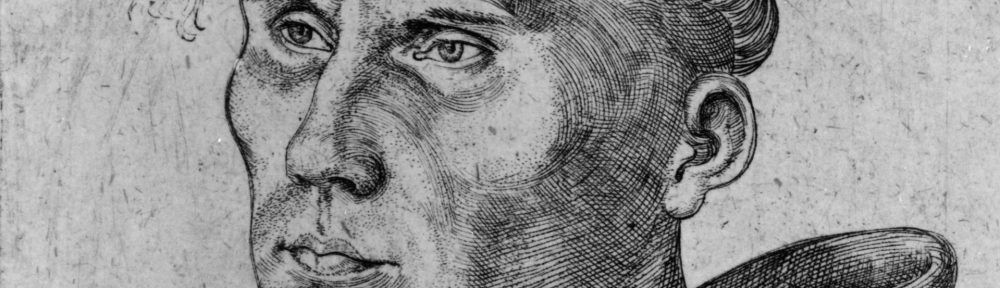
To be or not to be iconoclastic, that is the question. Not really though. As a Free low-church evangelical I have no problem with using artistic renditions of Jesus, and many other biblical and Christian characters and events that have significance within the Christian story. Indeed, this more broadly brings up the issue of how Christians ought to use pictures and art within their own narratival schemas and presentations. For me, an issue has been on how or if I should use pictures of Karl Barth. If you have read me for any season of time it is clear to you by now that I am a huge benefactor of the theological themes, categories, and grammars developed by Karl Barth. But as we all know (or most of us do), Barth comes with his own barnacles; many would consider them to be totally disqualifying of him as a Christian theologian. The primary issue with Barth, of course, is his relationship with Charlotte von Kirschbaum; his live in ‘second wife.’ I have virally engaged with this matter back in 2017, which you can find an index for here. More mildly than that particular sin, Barth was also a smoker; not a chain smoker that I know of, but he smoked nonetheless. From the Fundamentalist-evangelical background I have grown up within smoking is one of the three deadly sins.[1] And so to share a picture of Barth, which I have said picture, showing him with a “cigarillo” in hand could be another stumbling block for folks’ reception of Barth all by itself.

Should I share pictures of Karl Barth without opprobrium; or should I share pictures of Barth simply because I respect his theology, even if I reject his sin? I typically share pictures of Barth when I am engaging directly, or even indirectly with his theology. This seems to be an appropriate usage of said pictures. Currently, there are some pastors, who also have reach on X, who are under fire for “slandering” other high-profile leaders among them; whether this is done anonymously (in Josh Buice’s case), or in person (in Bryan Chapelle’s case). Indeed, these folks are losing their ministries for their ostensible slander of others. Should their disqualifying sins keep people from engaging with their past teachings, or should they still be respected; insofar that said teachings are respectable and truly bear witness to the living Christ? Should they be referenced, and even pictured in days to come; even in the name of showing them respect, insofar that their prior witnesses commend that?

What remains the case, whether we are iconoclasts or not, is that we have all sinned (and continue to) and fall short of the glory of God. Should I share pictures of Karl Barth in an honoring way, or should it only be when I am critical of the man and his sin[s]? Is God’s witness and work in the lives of His people greater than the person themselves; even while including the person being worked on? Indeed, greater is He who is in us than he who is in the world. While we are simul justus et peccator (despite Jason Staples’ critique of said doctrine), it can be said that those who are Christ’s are Christ’s indeed, insofar that Christ is for us rather than against is. That even when we fall into, or even live in particular sins (consciously or unconsciously), His mercy and grace in the face of Jesus Christ triumphs over all of it. It allows us to look at the fly in the ointment, and still see the beauty and value of the ointment; to understand that ultimately the overwhelming of Christ’s “ointmented” body floods into the sinners’ life pushing out and dissolving said flies that might seek to putrefy the work of God in the person of Jesus Christ.

I understand this is a bit stream of consciousness, but hopefully something coherent has come through. Sharing pictures of Barth for me is just a brute fact in a certain way. He just is who he is by the grace of God in Jesus Christ. The lesson we might derive from this is that this same grace applies to us and our “flies” just the same. Soli Deo Gloria.

[1] Personally, I think smoking is a deadly habit with some nasty side-effects associated with it; both science and experience bear this out.

Abortion, Sex Trafficking: Its Antidote in the Strength of the Babe from Nazareth

O Lord, our Lord,
How excellent is Your name in all the earth,
Who have set Your glory above the heavens!

Out of the mouth of babes and nursing infants
You have ordained strength,
Because of Your enemies,
That You may silence the enemy and the avenger. Psalm 8

I want to underscore one simple yet profound point by way of reflection on the above Scripture. ‘Out of the mouth of babes and nursing infants You have ordained strength.’ Ultimately, we understand as Christians that there is an archetype Babe elected for the world from eternity past, born of the Virgin Mary, wrapped in swaddling cloths and laid in a manger. We understand, in a proto-evangelical (cf. Gen. 3.15) way, that the Seed of the woman came and crushed the head of the serpent. Indeed, the strength of God was made manifest through the Babe for the world in Jesus Christ, the Man from Nazareth; obedient unto death, the death of the cross.

That is the most central aspect that I take from Psalm 8. But another, more sinister reality of this reality can be made by way of inference. One might wonder why the most innocent and vulnerable among us in the world—either children in the womb, or outside of it—are targeted so viciously by the abortionists and child sex traffickers; that is, why are pagans so bent on destroying the youth; whether that be through murder in the womb, or by taking their innocence from them in the process of sexualizing them? Why would the Enemy through his pagan spawn so target the “least of these.” Why did Herod target children under the age of two in an attempt to wipe out the Messiah, the coming King? Exactly that. The Enemy of our souls, from first to last, hates nothing more than the idea that God has saved the world by first becoming a babe in the womb of a woman. This resonance for the serpent of old remains. He seeks to destroy the babes, the infants as much as is possible as an homage to his hatred for the Son of Man, come as a babe. The murder and destruction of young lives is the satanic sacrament of the religion of death he is lord of. Maybe this deathlord is so deluded that he still thinks he might be able to thwart yet the coming of the Son of God. Or maybe the coming of the Son of God in the womb of Mary, as the way of Life for the world so irritates the son of murder, that as an expression of his nugatory life, he is constrained by his hatred to bring death where in fact God has brought ultimate Life; through the gestation of His Life for the world in the womb of a mother.