
Life is Worth Living Before God in Christ: Against Suicide and Self-Destruction

He has made everything beautiful in its time.Ā He has also set eternity in the human heart; yet no one can fathomĀ what God has done from beginning to end. –Ecclesiastes 3:14

TheĀ LordĀ brings death and makes alive;
he brings down to the grave and raises up. –I Samuel 2:6

Judas Iscariot

Three decades ago now (to the year) I started struggling heavily with anxiety, depression, and spiritual warfare that was beyond me. It was this that the Lord used in my life to draw me to Him in very serious and sober ways. This struggle, in a very intense way (on a continuum), continued in earnest for at least a decade. It was hellish. But it was also within this white-hot fire of trial and tribulation wherein I began learning to wait on the LORD, realizing that His mercies are new every morning. Even so, in the depths of that season, there were moments where I struggled, heavily, with suicidal ideation. It was as if the Enemy of my soul had taken me to a high place telling me to throw myself off and end it all; and this happened over and over again. What the LORD brought to me in the midst of this was a way to combat it through His Word (sort of like Jesus did in Matthew 4). The passage above, I Samuel, coupled with a growing and healthy fear of God, became one of my go-to passages when these suicidal thoughts would start creeping in again. Later, in counsel of other Christian brothers I had deep fellowship with, some of them would share with me that they too were struggling with suicidal ideation. They too were in a deep season of growth with the triune God, and as such were experiencing these fiery darts from the evil one. And I was able to reiterate to them that God alone has the right to give and take life; that it isn’t our spot, no matter how dread the circumstances might seem to be in that particular moment or season of life.

I share the above with the hope of being empathetic with others, maybe even some of my readers, who have gone through similar things, or who might be going through such things currently. I am also sharing all of this as a prelude into a brief passage I want to share for us from Karl Barth. The passage itself isn’t being as vulnerable, per se, about the personal trials of life that each one of us face. But it is addressing, at the very core, the fact that God alone is the giver, sustainer, and fund of life itself. I think understanding that fact, that principled reality before God, can go along way when we can internalize its facticity in our own lives coram Deo.

Fourthly, it is not by an obscure fate or neutral decree, but in receipt of a divine benefit, that he is ā€œalive.ā€ The command of God, claiming him as a living person, inscribes upon his heart the fact that, coming wholly from God, it is always (whether recognised or not) an advantage, a good and worthwhile thing, for everyone to be alive. It is not wholly an advantage nor absolutely good and worthwhile. ā€œMy flesh and my heart faileth: but God is the strength of my heart, and my portion for everā€ (Ps. 73.26), and: ā€œThy lovingkindness is better than lifeā€ (Ps. 63.3). But within its limits it is good and worthwhile because the one great opportunity of recognising and experiencing the grace of God, and therefore to continue to live. This is true no matter what we may see or not see in life of meaning, hope, success, happiness or even goodness. And wherever we have to deal with a living soul, we have to do eo ipso with this divine miracle of grace.[1]

ā€œChoose life not death.ā€ Amen, amen.

[1] Karl Barth, Church Dogmatics III/4 §55 [336] The Doctrine of Creation: Study Edition (London: T&T Clark, 2010), 12.
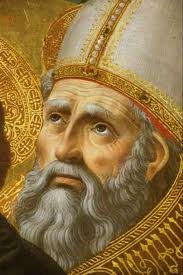
Thomas Torrance and St. Augustine in Conversation: Creatio ex Nihilo and imago Dei

Matthew Drever in the Harvard Theological Review offers a nice argument using a doctrine of creation and the imago Dei to dispel the common misunderstanding about Augustine’s so called psychological conception of the Trinity; i.e. the inner structure of anthropology (mind, will, affections) served as the lens by which Augustine supposedly conceived of the inner relation of God’s life as Triune—so a sort of proto-social-Trinitarianism. In order to understand augustine2Drever’s full argument, and how he utilizes Christian conceptions of creation and imago Dei, you will have to read his essay in full.

Within Drever’s essay, and as he is dispelling said myth, as I already noted, he engages with the imago Dei as a lens through which to reify Augustine’s understanding of the movement from God to creation, and how that is mediated through the images (humans) of the image (the Son, Jesus) in the soteriological combine (so to speak). And it is this that I find very resonant with my own Torrancean understanding of the primacy of Christ as the ground and condition of what it means to be human, and in fact “saved” or reconciled to God—which then funds human conception (as conceived from the Christ as the imago Dei, simpliciter) in regard to God, and the economy of His triune life. Here is how Drever opens his comments on imago Dei in Augustine:

[A]ccording to Augustine, all creation receives its order—its essence, or definition—through the Son. For most of creation this order comes via theĀ rationesĀ or ideas, eternally held within the Son, which are infused in creation as theĀ rationes seminales.Ā These seminal ideas provide the pre-established structure that governs the coming into existence of material objects. The order imposed on material creation through these ideas allows for the delineation of creation into a genus/species framework. Humans, however, are unique in material creation in that their order—essence, definition—does not follow pre-establishedĀ rationes seminales,Ā but rather arises through their turning to and recognition of God. This is what it means for humans to be created according to the image and likeness of God. One consequence of this is that the essence of human nature cannot be understood within the genus/species paradigm that orders the rest of the material creation. The true essence of human nature is defined (if this term remains appropriate) by how it images God, and not the one God of Plotinus but the Trinity—”man is the image of the Trinity.”

Augustine is careful to differentiate the way the Son images God from the way in which humans do so. This is an important distinction, and one in which the key Nicene trinitarian themes of divine simplicity, inseparable operation, and unchangeability are operative. The Son is distinct from creation precisely because the Son is God as the Father is God. The Son is unchanging wisdom and blessedness as the Father is (and so also the Spirit). Augustine, being the close reader that he is, contrasts this with humans who areĀ accordingĀ to the image rather than the image itself. One way of parsing this distinction is in terms of the doctrine ofĀ creatio ex nihilo.Ā InĀ Gen. litt.,Ā Augustine describes the human imaging of God at creation as the turning of humans to God and compares it with the redemptive turning of humans back to God that occurs though [sic] the Word. In both instances, this turning is a movement away from nothingness. In the latter case, it is a turning from the moral nothingness of sin; in the former case, it is a turning from the nothingness out of which all finite existence arises.

This has significant consequences for understanding the project ofĀ Trin.Ā If the true essence of human nature is theĀ imago DeiĀ and this is given in the turning of humans to God from the nothingness out of which they were created, then the resources available within the self for understanding God are also given in this turning to God. The self opens to God or to nothing, so that apart from God the self has no real or true form through which to understand God. Hence, Augustine’s inward turn into the self has as its precondition God’s self-revelatory actions of creating and redeeming the self, in which God is revealed as the triune God. [Matthew Drever, “The Self Before God? Rethinking Augustine’s Trinitarian Thought,” Ā Harvard Theological Review/Volume 100/Issue 02/April 2007,Ā pp. 240-41.]

So for Augustine, Christ is the key, and not in an overly neo-Platonized and psychologized philosophical way, but in a Christian, Christic way.

I will place this into conversation with Thomas Torrance’s conception of things with Augustine (as described by Drever), at a later date. There are some significant parallels here.