Life is Worth Living Before God in Christ: Against Suicide and Self-Destruction

He has made everything beautiful in its time. He has also set eternity in the human heart; yet no one can fathom what God has done from beginning to end. –Ecclesiastes 3:14

The Lord brings death and makes alive;
he brings down to the grave and raises up. –I Samuel 2:6

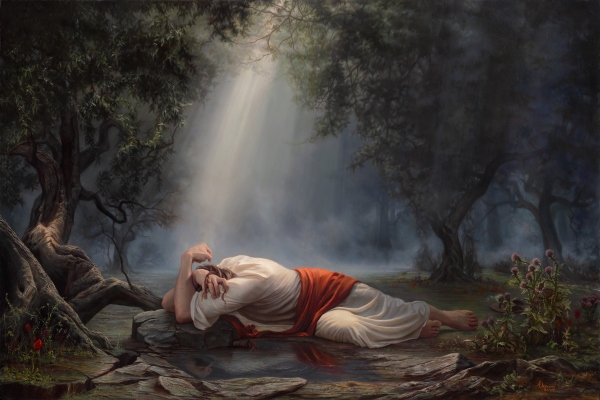
Judas Iscariot

Three decades ago now (to the year) I started struggling heavily with anxiety, depression, and spiritual warfare that was beyond me. It was this that the Lord used in my life to draw me to Him in very serious and sober ways. This struggle, in a very intense way (on a continuum), continued in earnest for at least a decade. It was hellish. But it was also within this white-hot fire of trial and tribulation wherein I began learning to wait on the LORD, realizing that His mercies are new every morning. Even so, in the depths of that season, there were moments where I struggled, heavily, with suicidal ideation. It was as if the Enemy of my soul had taken me to a high place telling me to throw myself off and end it all; and this happened over and over again. What the LORD brought to me in the midst of this was a way to combat it through His Word (sort of like Jesus did in Matthew 4). The passage above, I Samuel, coupled with a growing and healthy fear of God, became one of my go-to passages when these suicidal thoughts would start creeping in again. Later, in counsel of other Christian brothers I had deep fellowship with, some of them would share with me that they too were struggling with suicidal ideation. They too were in a deep season of growth with the triune God, and as such were experiencing these fiery darts from the evil one. And I was able to reiterate to them that God alone has the right to give and take life; that it isn’t our spot, no matter how dread the circumstances might seem to be in that particular moment or season of life.

I share the above with the hope of being empathetic with others, maybe even some of my readers, who have gone through similar things, or who might be going through such things currently. I am also sharing all of this as a prelude into a brief passage I want to share for us from Karl Barth. The passage itself isn’t being as vulnerable, per se, about the personal trials of life that each one of us face. But it is addressing, at the very core, the fact that God alone is the giver, sustainer, and fund of life itself. I think understanding that fact, that principled reality before God, can go along way when we can internalize its facticity in our own lives coram Deo.

Fourthly, it is not by an obscure fate or neutral decree, but in receipt of a divine benefit, that he is “alive.” The command of God, claiming him as a living person, inscribes upon his heart the fact that, coming wholly from God, it is always (whether recognised or not) an advantage, a good and worthwhile thing, for everyone to be alive. It is not wholly an advantage nor absolutely good and worthwhile. “My flesh and my heart faileth: but God is the strength of my heart, and my portion for ever” (Ps. 73.26), and: “Thy lovingkindness is better than life” (Ps. 63.3). But within its limits it is good and worthwhile because the one great opportunity of recognising and experiencing the grace of God, and therefore to continue to live. This is true no matter what we may see or not see in life of meaning, hope, success, happiness or even goodness. And wherever we have to deal with a living soul, we have to do eo ipso with this divine miracle of grace.[1]

“Choose life not death.” Amen, amen.

[1] Karl Barth, Church Dogmatics III/4 §55 [336] The Doctrine of Creation: Study Edition (London: T&T Clark, 2010), 12.

My Sinfulness as a Lot

This is the message we have heard from Him and announce to you, that God is Light, and in Him there is no darkness at all. If we say that we have fellowship with Him and yet walk in the darkness, we lie and do not practice the truth; but if we walk in the Light as He Himself is in the Light, we have fellowship with one another, and the blood of Jesus His Son cleanses us from all sin. If we say that we have no sin, we are deceiving ourselves and the truth is not in us. If we confess our sins, He is faithful and righteous to forgive us our sins and to cleanse us from all unrighteousness. If we say that we have not sinned, we make Him a liar and His word is not in us. –I John 1:5-10


I came to Christ a broken sinner; I needed and continue to need a Savior. I constantly sin, in big and small ways. My heart is desperately wicked and wretched above all things. I am the chief of sinners. There is nothing good in my ‘flesh.’ Left to myself, I love the darkness rather than the light. If Christ wasn’t faithful and righteous to forgive my sins, I could not go on another day. I am unclean, unclean; if Christ was not God’s hot coal of righteousness for me, burning my sins away in His condemned and broken body for me, I would simply melt into my own nothingness. Oh, wretched man that I am, who will deliver me from this body of death?! I have been subjected to a futility, unwillingly, from whence I long to be released. I am as a wandering star, awash in the corn cobs and filth of the swine’s delight. I am as a thief hanging on a tree looking at the broken body of the Messiah of Israel in need of a paradisical baptism. My limbs, my kidney pulsates with self-possessed desires, and thisworldly fantasies. Who is this Man? Get away from me Jesus, I am unworthy! It’s as if thirty-pieces of silver were in my wallet, whose shine eclipses the Sunshine of the Christ’s face. I am like the man, Cain, who walks around with the mark of God. Pilate and the Pharisees my brothers, crucifying the King of Israel; this is my sinfulness, my putrid self, wallowing in angst and the darkness of the night’s soul.


CHRIST IS RISEN!

Defeating False Condemnation by Resting in the Humanity of Jesus Christ

Wanted to provide a brief word on sin, and being free from it and any sense of condemnation it might bring into our lives post-confession/repentance. I have past sins that the accuser of my soul likes to bring up at points. I have to dig down with the Lord in prayer, and almost mechanically/analytically work through what He has done for me and how that implicates who I am now as a new creation in Christ. Douglas Campbell highlights how sin functions in the Apostle Paul’s thinking quite well:

The seriousness of Paul’s account of human wrongdoing here needs to be noted. If sin is just a series of bad choices that proceed from a fundamentally healthy nature, then Jesus needs to provide only a clear example of how to behave, along with some additional teaching about right acting. That he had to die, executing our condition, then resurrecting human nature in a new form, suggests that there was something irredeemably corrupt and contaminated in the old one. As some scholars would put it, our problem is radical (from the Latin radix, meaning “root”), suggesting that our problem goes down into the very roots of our nature.[1]

The assumption of our humanity, by Christ, and then Him putting it to death suggests (strongly) that sin has penetrated our very natures (ontology) as human beings; that nothing short of that ‘old man’ being put to death and a ‘new man’ being re-created in the resurrection of Jesus Christ will do. It is only through union with Christ, through participation with Christ’s vicarious humanity that the Christian comes to have fellowship with the Holy and triune God. It is in this where the Christian lives into what it genuinely means to be human coram Deo.

With the aforementioned as the background let me provide a scenario. I’m humming along, all of the sudden the enemy pops up his grubby face and starts attempting to remind me of past sins. Before I knew how to handle this, this sort of accusation would trip me up very badly. Now I no longer fall for this, since I am not ‘ignorant of the devil’s devices.’ What I do when this happens is turn to the logic of Romans 8:

31 What, then, shall we say in response to these things? If God is for us, who can be against us? 32 He who did not spare his own Son, but gave him up for us all—how will he not also, along with him, graciously give us all things? 33 Who will bring any charge against those whom God has chosen? It is God who justifies. 34 Who then is the one who condemns?No one. Christ Jesus who died—more than that, who was raised to life—is at the right hand of God and is also interceding for us.

1) I recognize that in my fallen heart I am even worse than what the loser enemy is accusing me of. 2) I recognize that ‘He who knew know sin became sin for me that I might become the righteousness of God in Him.’ 3) I recognize that Jesus Christ took that old man that the devil seeks to thwart me with, condemn me with, and has put it do death in His humanity. 4) I recognize that because I am ‘in Christ’ in His death and burial, that likewise I am always and forever in Christ in His resurrected humanity. 5) I recognize that the enemy is attempting to condemn a humanity that the living God of all creation took for Himself and me with Him. 6) I recognize that if the enemy wants to attack anyone He must attack and condemn the ‘Son of Man.’ 7) I recognize that that poser god, the devil, already tried to condemn the Christ, and all that resulted in was Jesus triumphing over him, and his minions, making a public spectacle of him at the cross. 8) I recognize that who I am is so inextricably bound to who Christ is for me that the enemy no longer has a target to hit in me. 9) I recognize that I am not in a place, nor is the sucker evil one to condemn anyone. 10) I recognize that God is the only One who can rightfully condemn anyone. 11) I recognize that the Judge became judged for me, that I might have and find my life in His. 12) I recognize that the enemy is a beaten foe, and a chump; I tell him to eat skubalon in the name of Jesus Christ.

This is the exercise I have been going through over the last couple of days. To God in Christ alone be the Glory!   


[1] Douglas A. Campbell, Pauline Dogmatics: The Triumph of God’s Love (Grand Rapids, Michigan: Eerdmans Publishing Company, 2020), 116, n.7.

On Being a Protestant Constructive Theologian: A Freedom to Draw from the Church catholic

You may get tired of me referring to Barth so much, but bear with me again. I just watched an excellent presentation by my co-Evangelical Calvinist and friend, Myk Habets. It was his inaugural address at Laidlaw College in New Zealand where he just became the head of their school of theology. In Myk’s talk he refers to David Bentley Hart’s language of ‘Strange Beauty,’ with reference to the triune God. I find that I am driven, mostly, by aesthetic and doxological modes when thinking theologically; I don’t think I am alone in this. As Myk underscored in his presentation, the ultimate beauty for the Christian is the reality of God’s inner-triune life. And the ultimate way for entering into this life is through the broken body of Jesus Christ; as Scripture says ‘he is the mediator between God and man.’

Often Barth is critiqued and found wanting because he is wrongly, in my view, framed as a “modern theologian.” In another book I just started reading, written by Jamie Smith, which is an introduction to Radical Orthodoxy, Smith picks up on the common critique that modern theology is defunct, offering a flat muddled conception of the triune God. As such, from this narrative, anything modern needs to be abandoned in favor of a return to the old paths and heights offered by pre-modern/pre-critical theologies that emphasize God’s transcendence and beauty therefrom. Smith places Barth into this sort of modern and flat sort of immanentized theological form; a form where the metaphysical/transcendent conception of God is traded in for a user friendly flat flabby postmetaphysical/domesticated God that can only be known through the optics of existentialism and self-absorbed navel-gazing.

But I protest. Barth, in my view, and this is the attraction for me, represents a theologian who indeed fully accepted and recognized his modern location, but put his foot in the ground forcing people back to God’s window of Himself for the world in Jesus Christ. Not to instrumentalize Jesus, but to understand with the evangelist ‘to see Me is to see the Father.’ It is this that makes Barth’s theology in line with the Fathers of the past; particularly of the Patristic past. Barth, along with Irenaeus, Athanasius, Cyril, the Cappadocians, even Augustine emphasizes the centrality of Christ to the whole theological reality. It is a reality that is not shrouded in an immanentized theological conclave, but the reality of focusing on Christ who transposes us from below to above in exactly the way God has chosen for that to happen. TF Torrance articulates this in his book Christian Doctrine of God: One Being Three Persons, he refers to this transposition as a ‘stratified knowledge of God’; a movement from the evangelical to the theological knowledge of God. This is what Barth, Torrance, and all the best theologians of the Church catholic have been about. They haven’t been driven by specifically tradition-oriented concerns, but instead to find the beauty of God as that is regulated and revealed in the face of Jesus Christ.

Barth is a constructive theologian, so is Torrance; a constructive theologian is driven by a desire to worship God. They are willing to draw off of a variety of streams provided for in the history of the Church’s theological ideas. This can be observed as the Christian reads Barth’s Church Dogmatics. He draws from reformed scholastic thinkers; medieval thinkers; patristic thinkers; modern thinkers; and whomever helps to bear the weight of attempting to magnify the beauty of the living God who is Father, Son, and Holy Spirit. To be a constructive theologian is to be driven by a desire to magnify God; this is the work of the Holy Spirit (Jn 14—16), to build up the Church of Christ by pointing people to the witnesses of Christ, no matter what period these witnesses are found within. The aim of the constructive theologian isn’t to concern themselves with anything else than magnifying Christ. They aren’t stumbled by the artificial barriers created by sectarian hedges and traditions that want to silo off people’s ability to draw from the plenitude of rich resource offered in the whole of Christian reality. Instead, the constructive theologian only cares about opening up avenues wherein the beauty and majesty of the triune God is made known in the power of all that that is for us as revealed in the resurrection and ascension of Jesus Christ.

This really is my mode. I see myself as a constructive theologian, or an always aspiring one. This does not mean I haven’t fallen prey to the seduction of sectarian shifts and turns, here and there. But it does mean that my ultimate aim is to draw from a variety of theologians and genuinely Christian traditions in such a way that the triune life of God is opened up for the Church to feast on and from as their life. This means that I can place themes in Calvin in conversation with Barth; or themes in Athanasius in discussion with Luther, so on and so forth. And after all of this, I say that I am ‘Barthianish’ because I think Barth offers the best example I’ve witnessed of what it looks like to be a Christian Protestant constructive theologian; he also fits best with my ‘baptistic’ sensibilities on certain doctrines (such as baptism, free church, free bible etc.). My aim, as a constructive theologian, is to work, along with the consensus patrum, from a revelational model, or kataphatic model of doing theology. This is not to say that there is nothing apophatic about the theological endeavor, it is just to recognize that the Deus absconditus (the hidden God) is the Deus revelatus (the revealed God). And within this hiddenness, as that comes in the ordinary flesh of a man from Nazareth, the transcendent wonder and beauty of God is opened up in exactly the way, with the certain character that He wants us to see of Himself. Here the immanentized-horizontal world we are seemingly trapped within breaks open as God penetrates the husk of the physical world, and shines His bright ray of triune light into the midst of it all. In this rupturing of things, He illumines the genuine beauty of God, and in so doing places creation into its proper orientation vis-à-vis God. Herein the beauty all around us in the created order truly takes on the beauty of God as we understand that He alone upholds it by the Word of His power in Jesus Christ. Within this frame we can begin developing theologies of nature, like St Ephrem the Syrian did, and understand that, as Calvin did, the created order is truly the theater of God’s Glory in the prosopon (face) of Jesus Christ.

This is the sort of theologian I seek to be. One that is consumed with the worship (doxology) and the beauty of God’s three in one/one in three life. Driven by this trajectory the theologian can engage in a specialized “haphazardness,” and draw off of whatever Christian streams, from whatever periods that help to magnify Jesus as Lord; and as the one who brings us into the pleroma of God’s inner Holy, Holy, Holy Life.

A Psalm from Bobby. To the Tune of Maskil. A Lament

Consider this post a Psalm from Bobby (we all have Psalms to write … don’t we?), a lament; sorry it’s where my heart is at the moment.

How much longer O, Lord? Another day, another hour, with no relief in sight. My head spins from weariness, my body aches from lack of sleep, and my soul wanes for a new day, a day where there is peace forevermore. Where are you O, LORD, are you with me in the dark hours of the morning, when it seems as if the Sun will never rise? You are my Shield and Buckler, Yah, I know this to be true; but how much longer O, LORD? Please come, come quickly, and show my employer, show humanity, show me, that we are but people. Teach us to number our days, understanding that our lives are but a vapor. How I long for the day that you have made O, Lord! What? This is the day You have made? Let me rejoice and be glad in it. What is man that You are mindful of him? From the mouth of babes You will be praised; from the mouth of Your Son You received praise from His manger, from His cross, from His grave, from His throne. O, LORD, to have the mind of Your Son; to be filled with wisdom from above that first of all is peaceable, and holy. LORD, how much longer, O, Lord. Please come quickly, please relieve my aching body, my weary soul; may I not find rest, until I find it in Thee, O, LORD. selah

The Trinitarian Love Knot: Don’t try to love, without Christ that is.

Let’s talk about love. Not just any love, but true love; the kind of love that shapes who the Christian God is, my God (and your God if you’re in Christ). There are all kinds of popular and sentimental parodies of love at work in our world today; mostly lust is mistaken for love in our day and age. There is also a more developed conception of love amongst people in the world that believes that there is some sort of creaturely independence about love that is shared between two people (like in a marriage or boyfriend/girlfriend relationship). Indeed, there is this kind of bond, and a created one, that ought to inhere between a man and a woman (by way of God’s good creation and recreation, in Christ). But is it enough to say ‘I do’ to another, if the ground of that ‘I do’ is not intentionally and consciously centered in the love of Christ as the Son of the Father in and through the communion of the Spirit?

The divorce rate in America (and the world, but I will focus on America since I am an American) does not suggest that a kind of independent creaturely love (and I mean one that is not shaped in the ‘bosom’ of the Father of the Son) has any kind of committal force or dynamis to it. Instead the statistics on marriage in America suggest that a love without the cross of Christ and cruciform shape (which is the kind of sacrificial other focused love that shapes God’s intra-Trinitarian life love) has no staying power. At bottom this kind of love, devoid of the Spirit as it is, can only and always seek it’s own good; it cannot, definitionally, seek anything else because it loves the darkness rather than the light (according to John 3:16ff).

So I will simply make the assertion and thesis statement: That there is no true ontology or conception of love apart from its ground in the Triune life of God in Christ. Further, that human love has no purpose (or telos) if it is un-tethered from the life of God through the Spirit anointed mediating gracious humanity of Jesus Christ. The conclusion, then, is that human love as an end in itself has nowhere to finally look but back at self (homo in se incurvatus); because human love was always already intended to find its verve and slide in and through Christ’s Spirit empowered love of the Father.

Thomas Torrance provides a helpful description of what God’s Triune love is; he writes:

The fact that, as St John tells us, God is Love, who has manifested his love to us in sending his only Son into the world so that we might live through him, does not meant that God is Love in virtue of his love for us, but that God is in himself the fullness and perfection of Love in loving and being loved which out of sheer love overflows freely toward others. It means that the Love that God is, is not that of solitary inactive or static love, whatever that may be, but the active movement of reciprocal loving within the eternal Being of God which the one ultimate Source of all love. That God is Love means that he is the eternally loving One in himself who loves through himself, whose Love moves unceasingly within his eternal Life as God, so that in loving us in the gift of his dear Son and the mission of his Spirit he loves us with the very Love which he is. In other words, that God is Love as this loving One in Christ and in the Spirit, means that in their interpersonal reciprocal relations the Father, the Son and the Holy Spirit are the Communion of Love which the One God eternally is in himself, and indeed is also toward us. It is as this ever living and acting Communion of loving and being loved that God is who he is, the perfection and fullness of Love that will not be confined with the Godhead but freely and lovingly moves outward toward others whom God creates for fellowship with himself so that they may share with him the very Communion of Love which is his own divine Life and Being. [Thomas F. Torrance, The Christian Doctrine of God: One Being Three Persons, 5-6]

As Torrance highlights, and in agreement with what I have been sketching previously, God’s Triune life is the only category of love available. We have been created and recreated in Christ to participate in God’s life of Triune life of love which as revealed in Christ is cruciform in shape. If we are not actively participating in this life of love, we cannot anonymously claim to be actually loving. A relationship without being grounded in participation in God’s life through Christ will only spin hopelessly and endlessly back to self. It won’t find its true orientation, as Augustine noted when he wrote: “You have made us for yourself, and our hearts are restless, until they can find rest in you.” Hearts that are seeking union and communion, one with the other; hearts that are not the new ‘fleshy’ hearts (II Cor. 3) that we have in and through the heart of Christ cannot find rest and true union, but only disarray and destruction (ultimately).

God is Love. Amen.

Still “Cancer Free,” but there are so many not …

… Today as most of you know, I went in for my 5th post treatment CT scan to make sure that my desmoplastic small round cell tumor sarcoma cancer hadn’t come back; and praise the Lord, it hasn’t—and thank you all for participating in the intercessory work of Jesus on my behalf (Heb.

7:25). As my wife and I were sitting in the waiting room (after I had had my CT scan) to see my oncologist (Dr. Ryan at OHSU), it brought back all kinds of traumatic memories; ones that I wish I never had! The same reception staff was still hard at work ushering in new and veteran patients into the stalls where their cushy chairs with cocktails of chemo awaited them, as the rush of the I-5 hummed quickly by them just outside the double pane windows that separated the air of death from the “real world,” just outside. My mind was flooded with thoughts of my own plight not too long ago when my own hair was no more, and I too was whisked back to my own stall tailored just for me. I can remember looking at those cars on the I-5 wishing I was in one of them instead of in my lounge chair of portending death. These are the kinds of thoughts that hit me today. It was terrible to see the old man wheel himself out of the chemo barn with an amputated leg, and no hair to speak of; it was horrific to see a young lady with her young husband walking back to the ominous stalls overlooking the I-5, I knew what she was about to partake in, and it only reminded me of the nightmare I once knew as reality—the reality that I would soon be dead if the poison didn’t get to me first. My heart was breaking today, as I sat there and reflected on all of this; knowing that I was right back on the same precipice that led me through those doors in the first place—the day that I had found out that I had a softball size mass in my back lower abdomen—whose to say that today those same words might not ring true again, and turn the 7th floor at Knight Cancer Institute into my home away from home once again? I was literally shivering (shaking) today, as we waited our turn to hear from my doctor; my heart pounded in my chest, and my pulse beat with a rapidity that even the medical assistant couldn’t believe … my heart was gripped with fear today! But Jesus was there!

He reminded me that he came to sit in that chair of poison for me, and all those around me. He reminded me that he who knew no sin, became sin for us that we might become the righteousness of God in him; and that all of the human suffering that I was experiencing all around me today (including my own) had been penetrated at its depths by his entering into the plight of each person in that oncology ward today. He reminded me that he came to seek and save those who were lost; those were indeed, sick, and needed a Great Physician; he reminded me that he was looking out at all of these sick people around me, and the broken heart I had for them, was really his broken heart for them at work in me. He reminded me today, as the enormity and reality of death was all around me today; that he has taken away the sting of death, and that he came to meet us right at this very point, the point of no return. He reminded me that that point was not only returned, but even better it was put to death (the death of death), and the resurrection happened. He reminded me that he is hope …

The Problem of Sin and the Last Word, The Death of Death

I don’t know about you, but I grow weary of sin; I (we) face an ongoing battle every breath that we take. Whether it be perverse thoughts, dark deep secrets that plague the conscience, actions that result in destruction for you and all those related to you, systemic evil that permeates the very fabric of society (this is probably most insidious since we are conditioned by it in ways that give it a normalcy and thus societal and then personal acceptance); the Apostle can relate,

23But I see another law in my members, warring against the law of my mind, and bringing me into captivity to the law of sin which is in my members. 24O wretched man that I am! who shall deliver me from the body of this death? Romans 7:23, 24

We battle on. But how do we know what we battle; how do we gauge the target, how do we even know that there is a target to hit? How do we realize that evil isn’t some just mysterious lurking principle ‘out there’ that ultimately is outside of me, and not something that actually implicates my very being to its deepest depths—even when I engage in the evil ‘out there’ occasionally or situationally? How do I know, even if I can index concrete and ongoing instantiations of evil ‘out there, that the evil is indeed me? And that this all encompassing wickedness and deprivation consumes my inner self, which organically shapes my outer self—since really ourselves (body/soul) are integrated wholes. In other words, I am sin to the depths, and the reason there is sin, evil, wickedness ‘out there’; it is mostly because it has a context ‘in here’, in me. But how can I say such things, how can I ground such assertions beyond some sort of psychological intuition? We know that we are blind when the impression of light intensifies our darkness; when Jesus acts the way he does, and did, we know we are indeed blind. We come to the realization that for all our good, for all our posturing toward ourselves; that the next to the last word is that we live in a state of No, or blindness to the fact that what we see the Apostle Paul giving voice to can only come when faced with the depth of our problem as we participate in the life of Christ. The One who took our No, our blindness, and indeed our sin unto himself ‘by becoming sin for us that we might become the righteousness of God in him’ (II Cor. 5:21). As Calvin so perceptively knew, we only truly have knowledge of ourselves (and our abysmal state), when we first have knowledge of God through Christ, God the Redeemer.

It is this that John Webster masterfully elucidates as he engages Karl Barth’s vision of a christologically conditioned knowledge of sin in its most depth dimension. Let me quote Webster, who is commenting on Barth’s Church Dogmatics & Ethics, and the moral anthropology embedded therein:

[B]arth’s Christological determination of sin is not so much an attempt to dislocate ‘theological’ from ’empirical’ reality, as an argument born of a sense that human persons are characteristically self-deceived. Human life is a sphere in which fantasy operates, in which human persons are not able to see themselves as they truly are. The ‘man of sin’

thinks he sits on a high throne, but in reality he sits only on a child’s stool, cracking his little whip, pointing with frightful seriousness his little finger, while all the time nothing happens that really matters. He can only play the judge. He is only a dilettante, a blunderer, in his attempt to distinguish between good and evil, right and wrong, acting as though he really had the capacity to do it. He can only pretend to himself and others that he has the capacity and that there is any real significance in his judging. (CD IV/1, p. 446.)

This theme of concealment surfaces frequently in paragraph 60 (and elsewhere). Believing ourselves to see clearly, even allowing ourselves to suppose our sight to be sharper than that of our fellows, we are blind to the reality of our own selves. Barth acutely perceives that moral earnestness frequently rests upon clouded vision and lack of self-awareness and self-distrust. And so, once again, we return to the Christological basis for the treatment of human sin: ‘Compared with Him we stand there in all our corruption … The untruth in which we are men is disclosed … We are forced to see and know ourselves in the loathsomeness in which we find ourselves exposed and known.’

Human sinfulness, then, entails an ability to disentangle ourselves from our acts in such a way that they are no longer really ours. As Barth puts it in a passage in Church Dogmatics IV/2, we allow ourselves to believe that:

The sinful act is regrettable but external, incidental and isolated failure and defect; a misfortune, comparable to one of the passing sicknesses in which a healthy organism remains healthy and to which it shows itself to be more than equal. On this view, the individual — I myself — cannot really be affected by the evil action. I do not have any direct part in its loathsome and offensive character. In the last resort it has taken place in my absence. I myself am elsewhere and aloof from it. And from this neutral place which is my real home, I can survey and evaluate the evil that has happened to me in its involvement with other less evil and perhaps even good motives and elements; in its not absolutely harmful but to some extent positive effects; in its relationship to my other much less doubtful and perhaps even praiseworthy achievements; and especially in my relationship to what I see other men do or not do (a comparison in which I may not come out too badly); in short, in a relativity in which I am not really affected at bottom. I may acknowledge and regret that I have sinned, but I do not need to confess that I am a sinner.  (CD IV/2, p. 394)

These clarifications of the forms of human self-deception (which are by no means intended to underrate the ambiguity of the moral situation) are an important background to Barth’s treatment of original sin. His objection to some formulations of that doctrine is, at heart, that they are deficient in their account of positive evil. And his refusal of an independent locus peccati, his rejection of anything other than a Christologically determined account of sin, is directed by precisely the same concern. Far from averting attention from evil as fact, Christology is intended to furnish a means of clarifying our vision and dissolving our illusions about our own moral integrity. [John Webster, Barth’s Moral Theology: Human Action in Barth’s Thought, 69-70.]

The Apostle Paul concurs with this kind of assessment about the deleterious effects of sin upon a life that knows that it only knows its true state of affairs because of the One who finally has given the last word  to our No-being by his Yes to the Father for us—viz. a Yes that is given concrete form through his death, burial, and most importantly resurrection-ascension. The Apostle Paul, with his eyes wide open, as we noted earlier, gives a final sigh of relief when he writes:

 25I thank God through Jesus Christ our Lord. So then with the mind I myself serve the law of God; but with the flesh the law of sin. Romans 7:25

The Apostle knew, that he knew sin, not ultimately because of the Law; but ultimately, because of Christ who penetrated deeper than the Law could on its own—viz. into the cavernous depths of the human soul which left to itself continues to look at evil and wickedness as if its ‘out there’, while all along failing to realize that they’ve never even seen sin and evil and wickedness in its most grotesque form; that’s because they’ve never presumed that maybe, just maybe the most insidious form of evil, in the end, dwells where they can’t peer, where they dare not, in themselves.

Worshipping God Aright: Radical Inversion

We were created to worship. Humanity will worship, left to themselves; themselves, and various post-scripts of themselves. So what is the key to worshipping in the way we were created for? Thomas Torrance has a good answer as he continues to comment on Calvin’s doctrine on sin and ‘Total Perversity’; he writes:

[I]n order to worship God aright, that is, in accordance with the motion of grace, man must learn to serve God against his own nature, [Calvin’s, Sermon on Job 10:16f.; 37:1 f.; Commentary on Romans 7:9 ff.] “acknowledging that he lives not by his own power but by the kindness of God alone, and that his life is not an instrinsic good, but proceeds from God alone. He cannot otherwise retain it than by acknowledging that it was received of God.” [Calvin’s, Commentary on Gen. 2:9] This means that Calvin defines the life-motion of man made in the image of God as the motion of faith, while the contrary motion of unthankfulness and rebellion he speaks of as incredulity and unbelief. “God does not manifest Himself to men otherwise than through the Word, so neither is His majesty maintained, nor does His worship remain secure among us any longer than while we obey His Word. Therefore unbelief is the root of defection; just as faith alone unites us to God.” [Calvin’s, Commentary on Gen. 3:6; Institutes 2.2.4; 2.2.12] Hence knowledge of God is possible only if the inverted motion of the soul in mind  and will is re-inverted by an acknowledgment of grace such that it is dragged out of its self-assertion or concupiscence, out of its self-imprisonment and blindness, in order to find life and being only as deposited in the Word. The radical inversion of all human wisdom and understanding that this entails indicates how deep going and total is the perversion of sin. A complete conversion of man’s relation with God is required. [brackets mine] (T. F. Torrance, Calvin’s Doctrine of Man, 115)

The cool thing that happens when you read Torrance on Calvin is that you get both at the same time; you get Calvin, but you get Torrance’s Calvin, which for me is the best of both worlds. Anyway, if you are struggling with how you ought to worship God; then you ought to consider radical inversion!

The ‘Beast’ in the Book of Revelation, He’s Here

I have been reading Richard Bauckham’s The Climax of Prophecy: Studies on the Book of Revelation; I was spurned to read this because I read his smaller book The Theology of the Book of Revelation a few months ago, which was excellent and a must read. In fact I would say that if you haven’t read either of these books you haven’t really ever studied the book of Revelation. What I want to highlight is a bit of Bauckham’s discussion and identification of the Beast in the book of Revelation. Now, if your reading this as a dispensationalist you will be challenged (to say the least); but I think if you read Bauckham’s development in full you would be hard pressed to refute what he has to say. He looks at the internal structure of the book, and really presses the ‘Epistle’ genre of the book (then also the ‘Apocalyptic’ and ‘Prophetic’); resulting in taking seriously that John was writing for the seven churches he is speaking to in 1st century Graeco-Rome. Bauckham is at his best as he situates the apocalyptic genre of Revelation in its proper literary context. Meaning that he identifies how all of the picteresque and emotive language of Revelation was understood within its historical context, and what the prophetic significance would have been for these 1st century Christians; and then what it means for us today (by way of application). I uphold what Bauckham here communicates about the ‘Beast’, and I want to commend it to you for your consideration. What he brings out on the Beast and Empire presents a paradigm shifting proposition in the way that most Evangelical Christians have understood this amazing book. I am going to share this quote on the Beast and Empire from Bauckham, and then I will close with a few parting comments.

[T]he images of the beast will probably become most easily accessible to us as we realise that it was primarily in developing the theme of christological parody that John found the Nero legend useful. It enabled him to construct a history of the beast as paralleling the death, the resurrection and the parousia of Jesus Christ. Some interpretation of Revelation has made the theme of christological parody seem a mere creative fantasy which John projects onto the Roman Empire, which of course had no intention of aping the Christian story of Jesus. In fact, as we have seen, the christological parody corresponds to real features of history of the empire, to the character of the imperial cult, and to contemporary expectations of the future of the empire. It is a profound prophetic interpretation of the contemporary religio-political image of the empire, both in Rome’s own propaganda and in its subjects’ profoundest responses to Roman rule. This religio-political ideology, which John sees as a parody of the Christian claims about Christ, was no mere cover for the hard political realities: it entered deeply into the contemporary dynamics of power as they affected the lives of John’s contemporaries. He sees it as a deification of power. The empire’s success is founded on military might and people’s adulation of military might. By these standards Christ and the martyrs are the unsuccessful victims of the empire. Instead of worshipping the risen Christ who has won his victory by suffering witness to the truth, the world worships the beast whose ‘resurrection’ is the proof that this military might is invincible. The parallel between the ‘death’ and ‘resurrection’ of the beast and the death and resurrection of Jesus Christ poses the issue of what is truly divine. Is it the beast’s apparent success which is worthy of religious trust and worship? Or is the apparent failure of Christ and the martyrs the true witness to the God who can be ultimately trusted and may alone be worshipped?

The ambiguity of the period of the beast’s reign, in which to earthly appearances the beast’s ‘resurrection’ has established his eternal kingdom, while those who acknowledge God’s rule are slaughtered by the beast, cannot be permanent. God’s kingdom must come. The parallel between the beast’s ‘parousia’ and Christ’s poses the issue of what will turn out ultimately to be divine, whose kingdom will prevail in the end. The cult of military power contains its own contradiction: the city which lived by military conquest will fall by military conquest. But beyond that, military power which aims only at its own absolute supremacy must prove a false messiah. It overreaches itself because it is the merely human grasping for what is truly only divine. It is only the parousia of Christ that can establish an eternal kingdom, because it is truly the coming of the eternal God who alone can be trusted with absolute supremacy.

The riddle of the number of the beast pointed specifically to Nero as the figure whose history and legend displayed, to those who had wisdom, the nature of the Roman Empire’s attempt to rival God. Any contemporary reappropriation of Revelation’s images that aims to expose the dynamics of power in the contemporary world in the light of the Gospel would also have to be specific. [Richard Bauckham, The Climax of Prophecy, 451-52]

Theological Implications

The first thing I want to draw our attention to is Bauckham’s last paragraph. What he is doing with this is delimiting the application of the book of Revelation to a particular set of boundaries. In other words, he is using its original audience and shape as determinative for how we can appropriate and apply it to our own context and situation today (just as in principle we should interpret the so called Minor Prophets or Book of the Twelve). What this does, by implication, is that it disallows the Dispensationalist interpretation of the book of Revelation. It won’t allow for providing the kind of the nitty-gritty detail that Dispensational exegesis of this book is known for. There is a general understanding of end time events revealed in this book (as it pertains to the end of the current world system), and only a more particular understanding of the consummate age or heaven. In other words, to read stuff into Revelation (like identifying the European union as the ten headed beast, or taking the “Mark of the Beast” as a literal mark or bar code embedded on your hand or forehead) will not work; and this is convincingly revealed as the exegete studies the background context and Jewish-Christian apocalyptic tradition from which John wrote and received the revelation of Jesus.

Bauckham’s prior development, to the quote above, has highlighted how the history in the 1st century (second Temple Judaism) supplies all the historical referents for which John’s apocalyptic language finds a referent. In other words, the language of “Beast” was common moniker for the Roman Empire, and its gone wild military power. The ‘Mark of the Beast’ was required in order to buy and sell in the Roman Empire (or allegiance to Nero and the Caesars). So as Bauckham notes, if true, then the application of this (prophetically for the future) is that the power of the Beast (represented by empires who have their strength through military might and power) will not last (which was immediately realized in the Roman context as ultimately the Roman empire collapsed, but this kind of “power” has continued to persist into the present). Also there is an interesting note, historically in regards to the language of the Beast receiving a fatal blow to the head, and then his resurrection (which was also common apocalyptic language directed toward the Roman empire and the Nero legend by other apocalyptic writings during this period like the Ascension of Isaiah etc.); Bauckham identifies how this was something that had already happened in reference to the Beast (in particular Nero legend, whom the number 666 through Gematria [the common usage of Greek letters that have numeric value to identify people or places, in this instance, the Greek letters for Nero add up to 666]); that after Nero committed suicide, it appeared that the Roman empire was doomed, but at the time of 70 AD Titus Vespasian resurrected and coalesced the empire through the sacking of Jerusalem and the military might of the Rome. It appeared that the Beast had died, but within a short period of time he rose again to excessive power. These are just a few examples of how Bauckham reorientates the book of Revelation through providing a thick account of the context in which the book of Revelation was written. The exegete, if genuine, cannot simply over-look what Bauckham has provided if he or she is going to honestly engage the book of Revelation. Which leads to my last implication.

For all too long, personally, folks I have been around who want to continue holding onto their particular interpretive schema of things (especially dispensationalists) will caricature other interpretive approaches to the book of Revelation in particular. There usually is a sketch of the other positions (like historist, idealist, preterist), but then this is only used to relativize the interpretive situation (or confuse); at which point the dispensationalist steps in and offers his clarity of interpreting the book of Revelation through a futurist lens alone. This is not good practice, and it ultimately turns people like me off. True, each one of us has to make our own decisions when it comes to principles of interpretation; but I would like to think that that involves being honest, and taking all the evidence (we are aware of) into account. That we are not so locked into particular denominations and their distinctives that we are afraid to change our minds, and allow our preunderstandings that we bring to the text to change in accordance with the relative weight of the evidence on the ground that we are confronted with through the kind of rigorous study that Paul admonishes us to (cf. II Tim. 2.15). [I am of course not talking about essential things here, I am talking about so called secondary things like this issue entails]

One more implication. If what Bauckham writes is true, then this has paradigmatic consequences for how we view our current situation, especially as Westerners and Americans in particular. We should not conflate being a Christian with being a Patriot, a Republican-Democrat-Independent, or simply with being an American. In fact insofar as America’s strength is rooted in her military might, then she exemplifies the features of the ‘Beast’ and not the City on the Hill that Ronald Reagan attributed to her. What the book of Revelation does is that it places any empire (like, really the emerging Global Empire we inhabit) on notice; that its time is short, and that all of its wanton desires are coming to an end. You can kill the Christians (and the ‘Beast’ has, statistically more so in the 20th century by itself than the previous 19 added together), but it is through the martyrs blood that the Beast only proves his own demise; the blood of the martyrs cries out, and signals that the Lion-Lamb’s kingdom has come and will finally come at the last trumpet. What Bauckham’s insights implies is that the Beast (or Anti-Christ) is not necessarily embodied in a single person; instead Nero and the Roman empire exemplifies or symbolizes the kind of power that is embodied by empires or empire in the world. There will be, according to the unfolding of the judgments in Revelation (the Seal, Trumpet, Bowl) an intensification of the Beast and empire just prior to the return of Christ (where the Danielic ‘Stone’ will crush the kingdoms of this world cf. Daniel 2). In other words, Jesus could come at any moment!