What do we know of evil and sin?: A Response to Open Theism from Christ Concentrated Theism

I have been having a quick discussion, once again, around the issue of so called ā€˜Open Theism.’ I had a ā€œfriendā€ on Facebook who is a strong proponent for Open Theism, so strong that he helped organize (I think) the first Open Theology theological conference (last year) that has ever taken place in the United States. This quick discussion (I really did not engage that much this time, although I have more in the past) is prompting me to write this post. So this post will be briefly sketching and engaging with Open Theism, and its antidote provided through the theological thinking of Karl Barth.
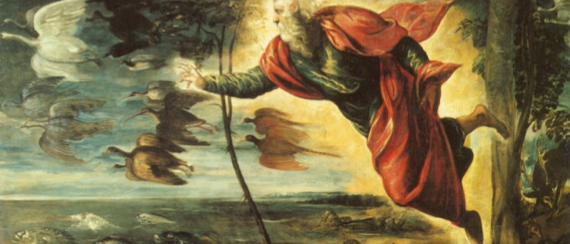
creationgod

For my Old Testament class at Princeton Theological Seminary, we were assigned reading from Old Testament scholar, Terence Fretheim’s book Creation Untamed: The Bible, God, and Natural Disasters. As is apparent from the sub-title, the theme of the book is to engage with the problem of God and evil (theodicy); more particularly with God and human suffering (vis-Ć -vis natural disasters, human caused disasters, etc.). I was excited to get into this book, but once I made it through chapter one I quickly realized Fretheim’s method to answering this purported problem (of God and evil, i.e. theodicy) was going to be his employment of ā€˜Open theology’ categories. Maybe you have never heard of Open theology, here is an example of it from Terence Fretheim applied to answering how human beings relate to God and creation in purely ā€˜free’ ways (supposedly):

Though human beings certainly need to hear that they often think of themselves more highly than they ought to think, it is also important for them to hear that they often think of themselves less highly than they ought to think. To speak less highly of the human is to diminish the quality of God’s own work. And this is the case not least because of such continuing divine evaluations of them as good. The creational commands in Genesis 1:28 and God’s engagement with the human in 2:19-20 indicate that God values human beings, places confidence in them, and honors what they do and say, though not uncritically. Human words and deeds count; they make a difference to the world and to God, not least because God has chosen to use human agents in getting God’s work done in the world…. We need constantly to be reminded that the godness of God cannot be bought at the expense of creaturely diminishment.

Another word that can be used to designate the goodness of creatures is ā€œfree.ā€ One way in which the creation accounts witness to this reality is the seventh day of creation (Gen. 2:1-3); this day on which God rests (not human beings) is testimony to God’s suspension of creative activity, which allows the creatures, each in its own way, to be what they were created to be. God thereby gives to all creatures a certain independence and freedom. With regard to human beings, God leaves room for genuine decisions as they exercise their God-given power (see already 2:19). With regard to nonhuman creatures, God releases them from ā€œtight divine controlā€ and permits them to be themselves as the creatures they are. The latter includes the becoming of creation, from the movement of tectonic plates to volcanic activity, to the spread of viruses, to the procreation of animals. This divine commitment to the creatures entails an ongoing divine constraint and restraint in the exercise of power, a divine commitment that we often wish has not been made, especially when suffering and death are in view. But God will remain true to God’s commitments, come what may.[1]

Further:

And so God creates a dynamic world in which the future is open to a number of possibilities and in which creaturely activity is crucial for proper creational developments. In other words, God choosesĀ  to establish an interdependent relationship with the creation; God chooses to work with others in creating. Certain constants are in place: seedtime and harvest, cold and heat, summer and winter, day and night (Gen. 8:22). But beyond that, the future of the world is characterized by a remarkable open-endedness, in which more than God is involved….[2]

What stands out most immediately and prominently is how for Fretheim in order for creation to be ā€˜free’ it needs to be independent from God, and so he can conclude that in creation something ā€˜more than God is involved.’ But this is precisely the point of departure between thinking Christianly or from God’s Self-revelation in Christ, and thinking philosophically about God’s relation to His grace contained creation. By trying to create space for human suffering, evil in the world, etc. Fretheim unnecessarily unhinges God from creation in a way that God is placed into competition with creation; leaving room for creation to act independently from God. Which for Fretheim allows him to leave creation open, not just for human beings, but for God himself; and so this then becomes the way for Fretheim to start thinking about why humans suffer, and in a way that does not implicate God (since there is ā€˜more than God involved’).

What Fretheim does, though, is in order to explain God and evil (theodicy), he sacrifices orthodox Christian reality for heterodox Christian un-reality. If he was thinking christologically, he is offering us an adoptionistic version by unhinging humanity from God in the way that he does (I will have to get into this further later).

But since I am running out of time for this post, let me get to the antidote to Fretheim’s ā€˜Open’ thinking. We should not attempt, as Christians, to elevate our own reasoning and interpretive capacities beyond their given reality (especially in light of the ā€˜Fall’ and the noetic effects of the ā€˜Fall’). When we attempt to move beyond God’s Self-revelation in Jesus Christ we indeed are exalting ourselves too much, and at least signaling what kind of theo-anthropology and doctrine of sin we are operating from (and how that shapes our hermeneutic and the confidence we have in accessing reality apart from God in Christ). I believe Fretheim in particular, and Open Theology, in general, move within this kind of analytical philosophical venture of doing theology that thinks beyond and outside of Christ while at the same time trying to work its way back to Christ (which would be Pelagian). But I digress. Here, I suggest, is the proper way to think of God and human suffering; and how to do so from a genuinely Christ-centered way versus the philosophical way that Fretheim and Open Theology gives us.

What does it mean? Is it not the opposite of what we might expect from the news that God became Man? Here there is suffering. Notice that it is here for the first time in the Confession that the great problem of evil and suffering meets us directly. Already, of course, we have frequently had to refer to it. But according to the letter this is the first time we have an indication of the fact that in the relation between Creator and creature everything is not at its best, that lawlessness and destruction hold sway, that pain is added and suffered. Here for the first time the shadowy side of existence enters into our field of view, and not in the first article, which speaks of God the Creator. Not in the description of creation as heaven and earth, but here in the description of the existence of the Creator become creature, evil appears; here afar off death also becomes visible. The fact that this is so at least means this: that discretion is demanded in all descriptions of wickedness and evil as being to some extent independent. When that was done later, it was more or less overlooked that all this enters the field only in connexion with Jesus Christ. He has suffered, He has rendered visible what the nature of evil is, of man’s revolt against God. What do we know of evil and sin? What do we know of what is called suffering or what death means? Here we get to know it. Here appears this complete darkness in its reality and truth. Here complaint is raise and punished, here the relation between God and man is really made clear. What are all our sighs, what is all that man thinks he knows about his folly and sinfulness and about the lost state of the world, what is all speculation about suffering and death beside what becomes manifest here? He, He has suffered, who is true God and true man. All independent talk on the subject—that is, talk cut loose from Him—will necessarily be inadequate and imperfect. Unless talk on this matter goes out from this centre, it will be unreal. That man can bear the most frightful strokes of Fate and comes through untouched by anything as through a shower of rain: that can be seen by us to-day. We are simply untouched either by suffering or by evil in its proper reality; we know that now. So we can repeatedly escape from knowledge of our guilt and sin. We can only achieve proper knowledge, when we know that He who is true God and true man has suffered. In other words, it needs faith to see what suffering is. Here there was suffering. Everything else that we know as suffering is unreal suffering compared with what has happened here. Only from this standpoint, by sharing in the suffering He suffered, can we recognize that fact and the cause of suffering everywhere in the creaturely cosmos, secretly and openly.[3]

There is much to commend here, but I best stop for now. (See footnotes below for further comment)


[1] Terence E. Fretheim, Creation Untamed: The Bible, God, and Natural Disasters (Grand Rapids, Michigan: Baker Academic, 2010), 15-16.

[2] Ibid., 17.

[3] Karl Barth, Dogmatics In Outline (Great Britain: The Camelot Press Ltd., 1949), 103-04. This book is an off the top (for Barth) series of lectures that he gave to students at the University of Bonn (Germany) in the summer of 1946. It was his explication of The Apostles’ Creed, and the quote I have from him above is his reflection on the part of the creed that goes: ā€˜Suffered under Pontius Pilate; was crucified, dead and buried: He descended into hell….’

What Barth is taking seriously is the theological/christological and biblical reality that all of creation is within the domain of God’s grace in Christ; and furthermore, that all of creation’s point and purpose, then, is in and for and from Christ. If this is so then what becomes impossible is to attempt to think about anything unhinged, as it were, from Christ (so against Fretheim, Open Theology, et. al.).

Ā 15Ā He is the image of the invisible God, the firstborn over all creation.Ā 16Ā For by Him all things were created that are in heaven and that are on earth, visible and invisible, whether thrones or dominions or principalities or powers. All things were created through Him and for Him.Ā 17Ā And He is before all things, and in Him all things consist.Ā 18Ā And He is the head of the body, the church, who is the beginning, the firstborn from the dead, that in all things He may have the preeminence. 19Ā For it pleasedĀ the Father thatĀ in Him all the fullness should dwell,Ā 20Ā and by Him to reconcile all things to Himself, by Him, whether things on earth or things in heaven, having made peace through the blood of His cross. ~Colossians 1:15-20

Miracles Can’t ‘Prove’ God: The Evangelical Heritage

I don’t want this post to be another one of those posts that bashes the Christian Fundamentalist and Evangelical past; the past that I was weened in, and moved and breathed in (still do, somewhat!) for my whole life. But, I grunewald_crucifixionam afraid some of this post will have to be just that. I, indeed, grew up under the intellectual and spiritual strictures of what it meant to be an Fundy/Evangellybelly. A essential part of that growing up process was to follow a mode of existence that engaged with Scripture and Christian life in a way that hearkened me to have to conceive of ways to constantly defend Scripture’s viability, and to defend the miraculous stories therein; in contrast to those who were ‘attacking’ it, like the higher critics and ‘Liberals’. And so my whole life, like many of yours, was involved in this task; much of my undergrad and graduate studies involved, in one way or another, a development and sophistication of this kind of way (i.e. being an apologist, before being able to be a theologian).

What I have come to realize over these last 12 years (starting in seminary) is that I have got it all wrong. God does not need me to defend him, I need him to defend me from my incurved self and desires (that are against him, that are anti-Christ). What I have realized is that we cannot and should not separate the work from the person of God in Christ, as if we could talk about his purported works (which are miraculous) in abstraction from the person from whence these works flow; and then use those works in a way that props him up, for ourselves and for the world to see. This is the wrong direction to take, and the wrong way to think by way of order. God precedes us (simply because he created us), we do not preceded him. How we know what we know has an ontic (i.e. the very essence of reality itself, ‘being’) ground supporting that; in other words, we will either ground how we know what we claim to know about God by grounding that from somewhere in ourselves, or we will recognize the actual ground as it is given to us in God in Jesus Christ. And so the consequence of this recognition is that we will no longer attempt to work our way to God by proving his existence by first proving the viability of his works (‘miracles’) in creation. We will instead, stand under them, and allow who he is to contradict our puny attempts to make him known to ourselves and to the world.

There is no one better to confront this kind of problem than George Hunsinger on Karl Barth. The following quote comes from a section where Hunsinger is discussing divine-human agency, in general, and in particular, the reality of ‘revelation’ and ‘miracle’, and the way that miracle functions within the sphere provided it by God’s Self-revelation:

God is not identical with any cosmic process, and therefore God is “not identical with the laws known to us” (III/3, 161). God is identical only with God’s sovereign freedom, “with the free disposing and directing of his own good-pleasure.” God does not overthrow the order of creation when miraculously engaging in self-revelation. “Naturally there can be no question of his contravening or overturning any real ontic law of creaturely occurence. This would mean that he was not at unity with himself in his will and work.” We must allow, however, that our perception of these laws is creaturely and finite. “We must allow that he can ruthlessly ignore the laws known to us, that is, our own perception of the ontic laws of creaturely occurrence…. He is not bound by our human concepts of order, however great may be the noetic clarity and certainty we believe them to possess” (III/3, 161). Everything depends on theology’s offering a conceptual redescription of the biblical narratives that remains faithful to the witness that is found there:

The more definitely the coming of the Son of God is announced in the Old Testament, and the more directly his revelation is attested in the New, the more natural it appears to unprejudiced reason that mention has to be made of events which can be understood only as an activityĀ supra et contra naturam,Ā as an ordering and forming which is beyond the stage of development so far reached by our concepts. And the final revelation of the Son of God at the end of all times was an event of this kind. We must be quite clear in our minds that what is revealed in these events is not aĀ miraculousĀ exception but theĀ ruleĀ of divine activity, the free goodwill of God himself, i.e., the law at which we are aiming with our concept of law. And we must also be quite clear in our minds that with all our concepts of law we can never do more than aim at this law. (III/3, 129-30) [George Hunsinger,Ā How To Read Karl Barth: The Shape of His Theology,Ā 183-4, Nook.]

It is a constant temptation to feel as if we must rush to the defense of God’s existence, in general, and his reality, in Christ, in particular. But we must submit to God, resist the devil, and he will flee from us (James 4). Resisting this temptation might cause us to look like fools to the world, we might appear weak (I Cor. 1:17-25); but the message of the cross always does. I am not suggesting that we cannot actively engage the world through proclamation; in fact we are commanded and commissioned to do so (Mt. 28). What we can do, inĀ apologiaĀ or in defense of the Gospel, is to call ourselves, and the world to sit under the Self-revealed categories given by God in Christ. What we can do is to argue that if someone is going to think Christianly (even if they aren’t one yet), is to think from the internal and eternal consistency of God’s Self-revelation, and demand that if they or we are going to think Christianity from anywhere, it must be under the constraints and integrity of its own reality found in Jesus Christ; it will only be from this vantage point that the weakness of God will be seen as power, and the foolishness of God as wisdom.

Really, Nash? Ronald Nash’s Attempt to Critique Torrance, Barth and the Whole Crew: My Brief Response

It is always nice when an Evangelical (Reformed) philosopher of religion takes note of Christian Dogmaticians outside of their normal sphere of comfortability, but sometimes this is a dangerous path to travel. Such is the path philosophythat Ronald Nash has chosen to trek.

I was sent some copies of pages (Pdf file) from Ronald Nash’s bookĀ The Word of God and the Mind of ManĀ Ā from a reader of my blog, an MDiv student (just finishing up) at Fuller Seminary—this reader is about to become (Lord willing!) a pastor in a Presbyterian church in the States. Anyway, he has been turned on to Torrance as a result of some exposure that he has received while attending Fuller (which is no surprise). Apparently he was reading this book by Nash (or became aware of Nash’s critique [of Barth, Torrance, and others like minded]), and came across the points of critique that the rest of this post will endeavor to engage. I am not really intending on mounting a defense, but more of a short (bloggy) exercise in providing context that will contravene and contradict Nash’s reading of Torrance in particular. In the following, as we read along with Nash, I hope you will notice how shallow of an attempt Nash’s is to provide critical depth in engaging Torrance’s perspective on reality, theology, etc. Here is what Nash writes (I will offer quote in full, in order to provide the necessary context):

[…] Can a similar distrust for or contempt for logic and reason be found in the writings of Christian theologians [Nash has just finished reviewing a theologian or philosopher with the last name of Stace, who I am unfamiliar with; but Nash seems to think that Torrance, Barth and others are engaging in the same style of mysticalĀ aberrant and irrationalist kind of theologizing as Stace, it is just that Nash thinks Torrance is more cloaked in his mode]?Ā Ā One thing that hinders a simple answer to this question is that few writers are as daring and as explicit as Stace. Discussions about the proper place of reason in religion are frequently plagued by inattention to tow quite different senses the wordĀ reasonĀ can have. Consider the following claims:

(1) The Incarnation is unreasonable; that is, the claim that Jesus Christ is God in incredible. I simply cannot believe it.

(2) The Incarnation is unreasonable; that is, the doctrine of the Incarnation violates the Law of noncontradiction.

In the second case, a particular Christian belief allegedly violates a principle or law of logic. Anything that is unreasonable or irrational in sense (2) is such in an objective and universal way. But in the first case, a particular Christian belief is called unreasonable simply because some person cannot understand it or believe it. Unreasonableness in sense (1) is person-relative. It should be obvious that all sorts of beliefs that some people cannot accept and thus find irrational are readily acceptable and rational to others.

When religious thinkers [ha, not Christian, eh, Nash?] like SĆøren Kierkegaard, Karl Barth, and Emil Brunner proclaimed the irrationality of certain Christian beliefs, I suspect that what they really meant to say was that something about Christianity was so shocking and so offensive to the “reason” of many unbelievers that they (the unbelievers) found it irrational. Since the New Testament itself suggest this position, and since it accords with what any observer can detect in the reactions of people to many Christian claims, the view itself is quite unexceptional.

Unfortunately, the extreme rhetoric of some Christian writers suggests that they also mean to say that Christianity is unreasonable in the second sense, that it actually involves violations of the law of non-contradiction. The writings of the Scottish disciple of Karl Barth [which by the way, Torrance was not an uncritical disciple of Barth, see Alister McGrath’sĀ T. F. Torrance, An Intellectual Biography], Thomas Torrance, are a case in point. Torrance certainly appears to claim that there is a difference between God’s logic and human logic [that’s weird!, God forbit it!, you mean I don’t have anything in myself to stand on that provides rational certitude?], and, further, that the forms of “human logic” cannot be extended to a transcendent God. Torrance seems to believe that human “ideas and conceptions and analogies and words are too limited and narrow and poor for knowledge of God.” His suspicions about purely “human” logic are evident in such statements as: “Real theological thinking” should be freed from “imprisonment in timeless logical connections.” Knowledge ofĀ eternalĀ truth, he suggests, is hindered by insisting on “fixed categories of thought.” What Torrance seems to give us is a statement that human knowledge about God is impossible and that human forms of reasoning are completely incapable of understanding truth and reason as it exists in the mind of God. [brackets throughout are mine] [Ronald N. Nash,Ā The Word of God and the Mind of Man,Ā 93-4.]

Grr … where do I start? Let me start with Torrance himself; here is a kind of summarizing quote of Torrance’s style of theologizing, and something that directly illustrates the kind of thing that Nash is seeking to critique (in a passive aggressive way, you’ll notice his frequent usage of “it seems” throughout this quote from him, but then he later offers the aggressive side of this in his critique of Torrance as he apparently has moved beyond his perception of “it seems” into “it is” or “this is how it is” and “this is why Torrance and others like him are wrong”). Anyway, here is Thomas Torrance:

[O]ur task in christology is to yield the obedience of our mind to what is given, which is God’s self-revelation in its objective reality, Jesus Christ. A primary and basic fact which we discover here is this: that the object of our knowledge givesĀ itselfĀ to us to be apprehended. It does that within our mundane existence, within our worldly history and all its contingency, but it does that also beyond the limits of previous experience and ordinary thought, beyond the range of what is regarded by human standards as empirically possible. Thus when we encounter God in Jesus Christ, the truth comes to us in its own authority and self-sufficiency. It comes into our experience and into the midst of our knowledge as aĀ novum,Ā a new reality which we cannot incorporate into the series of other objects, or simply assimilate to what we already know. [Thomas F. Torrance ā€œIncarnation: The Person And Life Of Christ,ā€ 1.]

In other words, for Torrance, there is no analogy in nature for the Incarnation; I am not aware of any analogies that ontologically correlate to the Incarnation, apparently Nash, though thinks that the Incarnation represents something ordinary and mundane; such that any average sentient person could rationally conceive of such—simply by reflecting on the proclivities of nature, abstracting said proclivities and then using this as theĀ Foundation[alism]Ā upon which we as humans know God through, and by which we justify His existence as God. Torrance, if Nash would have taken the time to actually read or attempt to faithfully understand him, would have understood what causes Torrance to write such as he does in the quote that I just provided from TF. Torrance inverts Nash’s paradigm, and sees our order of knowledge contingent upon an antecedent (or ‘outside of us’) order of ontology. In other words, Torrance believes in what he calls anĀ epistemological inversionĀ (which if Nash really read Torrance’s ‘Theological Science’ he would know) wherein for knowledge of God to be truly determinative of a genuine knowledge of God, that this knowledge isĀ RevealedĀ notĀ philosophically discovered.Ā And so, we can only come to know God under the constraints and categories that are imposed upon us by the nature of the reality with whom we encounter, God in Christ.

There is much more that I need to say about this. And it gets even more philosophical, but of the kind that Nash is not comfortable(it has already been made into a demon by him, in need of exorcism); there is the reality of Continental Philosophy at play in much of what Torrance and Barth are dealing with. But I think I will save that discussion for another day, and another post. Suffice it to say, Nash, and anyone really serious about critiquing Barth, Torrance & co. ought to read the more recently released book (2011) Ā Karl Barth And American EvangelicalismĀ edited byĀ Bruce L. McCormack & Clifford B. Anderson.Ā Obviously this book post-dates Nash’s book, but in a revision, this could be helpful for Nash and his students. McCormack’s and Anderson’s edited book (which I am still reading) provides excellent background and coverage of the issues that Nash is superficially (without understanding) critiquing in the aforementioned quote from him.

I will close by asserting that it is all about Faith,Ā not of the blind variety, but of the variety that is grounded in the vicarious humanity of Christ. The kind that provides vision of the Father, that outwith all we will end up doing is worshipping the creation rather than the Creator.

I almost forgot; I ran a series of posts that dealt with this kind of issue of Torrance and his purported method before. Here is the link to the index of those posts: ClickĀ Here

The Bible as Encounter V. Self-Promotion

The title of my post could just as easily be:Ā A Theology of the Cross V. a Theology of Glory;Ā that would make Martin Luther proud. My basic idea driving this post will be that Scripture’s primary intention, from God’s angle, is bible-cover-pagethat it be a situation wherein we encounter his Last Word to us in Jesus Christ; a place where through encounter with Godself in Christ, we as his people cultivate an intimacy and relationship with him that has Godself foundations, foundations that run deep into the everlasting well-spring of God’s Triune life. I am placing this conception of scripture in juxtaposition with how scripture is usually framed and engaged in itsĀ critical form.Ā In the bible’s critical form it is usually engaged as a place where there competition abounds; where tenure is established; and book deals are conscripted. The academic’s life is often one that is give shape by existential bursts of out-put; a place where his or her name becomes associated with imaginative ideation and constructive grammars abounding. It is this type of engagement of scripture that seems to foster an atmosphere of seeing the bible as an end in itself; an end that is ended by having one more notch on my CV, or an end that establishes me as the next best rising scholar. True, in this pursuit, even if vanity underwrites it, scripture can be given new heights; scripture from this attitude can still yield beautiful fruit for those who choose to reap from the cultivation of said scholarship—so there is a sort ofĀ ex opere operato,Ā or objectivity to biblical scholarship that can still be useful. But the concern still is present; the concern is what difference does biblical scholarship make if it is not primarily given shape by an intimate Christian relationship with its reality; with Jesus Christ? Does not an academic shaping of the engagement of scripture orient scripture’s reception in such a way that scripture becomes an end in itself; thus never really reaching its heights in the heavenlies, in Christ?

This post isn’t one where I am trying to provide an anti-intellectual apologetic. Instead, I am trying to voice a concern I have about academic biblical studies. I have been parley to academic biblical studies for quite a few years now (my degrees are both largely shaped by it), and I can say from my own personal experience that if scripture is not come to through a properly dressed Christianly dogmatic ontology, that scripture can become an end itself; the study of scripture can become the occasion for self-promotion and unbelief instead of an occasion for self-denial and belief through encounter with scripture’s reality in Jesus Christ. This is how I read Jesus’ indictment of the religious leaders of his day when he said:

36Ā ā€œI have testimony weightier than that of John.Ā For the works that the Father has given me to finish—the very works that I am doing—testify that the Father has sent me.Ā 37Ā And the Father who sent me has himself testified concerning me.Ā You have never heard his voice nor seen his form,Ā 38Ā nor does his word dwell in you,Ā for you do not believeĀ the one he sent.Ā 39Ā You studyĀ the ScripturesĀ diligently because you think that in them you have eternal life.Ā These are the very Scriptures that testify about me,Ā 40Ā yet you refuse to come to meĀ to have life. [John 5:36-40,Ā NIV]

These bible teachers (academics) knew the scriptures, but their knowledge of the scriptures served as blinders instead of spectacles for vision of scripture’s ultimate and true reality, Jesus Christ. They had scripture’s reality standing right before their naked eyes, but they could not see him. They did not read scripture by faith, they read it by sight; and thus they could not genuinely hear his voice or see his form in the invisible God made visible in Jesus Christ. This is what I am sketching above; and it is this that concerns me about the state of biblical scholarship (no matter what its expression; Evangelical, Liberal, Postmodern, Liberation, etc.). If Jesus is not, by way of theological order (chronologically and logically), the occasion, the inner ground of scripture’s growth and subsequent reception; then it can only serve as a place for self-promotion, and ultimately unbelief.

We either read scripture by faith or by sight.

In the ‘womb of Israel’

Israel is and always has been at the center of the storm, in world history, so to speak. Whether we are doing biblical studies or watching world news, Israel, one way or the other makes its way into the cycle of discussion. For some (Christians) the nation of Israel is the whole point of human history; Israel, for them, is the orientation and purpose for all of the biblical covenants. We might be able to go so far as to say that for some (Christians), Jesus Christ himself is subordinate to the nation of Israel, when, at least, it comes to understanding the point and trajectory of world history. For others (both Christians and non-Christians) the nation of Israel really isn’t that important —especially geopolitically— in fact for others, the nation of Israel (contemporaneously) is an oppressive regime who function as the taskmasters of the Palestinians. No matter how Israel is understood, whether biblically, theologically, politically, historically, or currently; Israel always seems to be able to wiggle itself into the cross hairs of almost any other group’s thought who is not Israel.

This phenomenon is not something that has happened by chance; in fact, I would argue that the primary reason Israel, to one degree or another, is at the center point of much consideration is a spiritual theological one. Indeed, for the Christian, and thus the world (because the Christian is for the world, in a particular way), Israel’s life is highlighted because they have a critical role to play in mediating the real purpose and point of history into the world. Because God covenanted with them, by grace, the nation of Israel became the particular humanity through which God’s Son, Jesus Christ would come (and has) to be the Savior of the world. Without Israel, because God chose such, we would not have the proper categories or antennae to know God as he has revealed himself in Jesus Christ. It is this point that Thomas Torrance hammers home in a way that simply won’t let you not appreciate the nation of Israel in a properly formed understanding of their place in relation to God in Christ. Torrance writes:

Thus the knowledge of God, of Christ, and of the Jews areĀ all bound up inseparably together,Ā so that when at last God came into the world he came as a Jew. And to this very day Jesus remains a Jew while still the eternal Son of God. It is still through the story of Israel, through the Jewish soul shaped by the hand of God, through the Jewish scriptures of the Old Testament and the Jewish scriptures of the New Testament church, the gospel comes to us, and that Jesus Christ is set before us face to face as Lord and saviour. Apart from this Old Testament prehistory and all the biblical revelation through Israel, we would not have the tools to grasp the knowledge of God; apart from the long history of the Jews we would not be able to recognise Jesus as the Son of God; apart from the suffering and agony of Israel we would not understand the cross of Calvary as God’s instrument to atone for sin and to enact once and for all his word of love and pardon and grace. Apart from the covenant forged in sheer grace with undeserving and rebellious Israel, and the unswerving faithfulness of the divine love, we would not be able to understand the mystery of our restoration to union with God in Jesus Christ. Apart from the context of Israel we could not even begin to understand the bewildering miracle of Jesus. The supreme instrument of God for the salvation of the world is Israel, and out of the womb of Israel, Jesus, the Jew from Nazareth — yet he was no mere instrument in the hands of God, but very God himself, come in person in the form of a servant, to work our from within our limitations and recalcitrance, and to bring to its triumphant completion, the redemption of mankind, and our restoration to fellowship with the very life of God himself. [Thomas F. Torrance,Ā Incarnation,Ā 53-4.]

So without the nation of Israel, the world would be in trouble. But without Christ, the nation of Israel is just as lost as the rest of the nations who make up the fulfillment of the Abrahamic Covenant, in Christ. The only “pass” the nation of Israel gets is the same “pass” that we have all gotten in and through the grace of God revealed in Jesus Christ as penultimately established in the cross work of his active life for all of us. The nation of Israel will always have a special place at the right hand of God, but ultimately that place gives way to its reality in Jesus Christ himself. What’s at the center of this whole discussion, at the end, really has nothing to do withĀ ethnos,Ā or nationality; instead, it has to do with the person of God’s life revealed in Jesus Christ, the servant from Israel. It is in Christ’s life “as” Israel, that Israel, and the rest of humanity is made one in the new humanity of Jesus Christ; and the dividing wall between the two is no more. So while Jesus would not be Jesus, by his gracious choice, without Israel; Israel and the Gentiles have the same standing in God through Christ, there is no distinction. It is through the new exalted humanity in Christ that Jew and Gentile alike has access to God by the same Spirit.

What does this do to all of the various emphases and ways in to thinking about Israel today? It radicalizes them, such that the nation of Israel, as particuarlized in Christ, is not something that we can fight over politically, it is not something that can be subordinated to the whims of our interpretive schemas; but instead, the nation of Israel, in Christ, is a personal someone who transcends all of our claims, and transcends in the concrete particularity of God’s life in the Jewish man from Nazareth. It radicalizes Israel, because it understands new Israel as the singular ‘seed’ of Abraham, distinct from, but inseparably related to the nation of Israel. It radicalizes the concept of Israel, because, in Christ, the new humanity, the point of Israel has provided the context for God in Christ to be revealed as Lord.

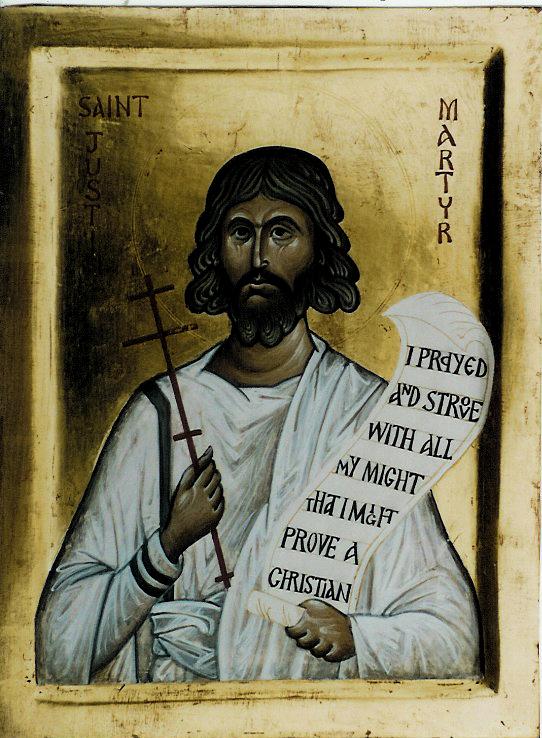
A Christian Apologetic: Torrance and “Justin Martyr,” Proving Jesus

Thomas Torrance, in his Theological Science (his theological method, and a title of one of his books), follows what he calls an epistemological inversion; in short, epistemological inversion is the approach that holds out that an object or subject (or both as in the case of Christian Theology) acts upon us (the knowers and inquirers), such that it itself opens up to us its own reality and structures of thought—this process remains an open structured event. It is from within this context that we can better understand Thomas Torrance’s appropriation of someone like Justin Martyr, and his defense of Christian reality and the Christic event itself (one and the same). Let’s follow along as Torrance engages Martyr, this quote will end with Torrance quoting Justin (which is the piece I really want to get to with this post—viz. Martyr’s “argument”):

The distinctive feature of this Word is its relation through the Spirit to historical facts and events. It is when we allow the Scriptures to direct us to these facts and events that our minds fall under the power of their truth and we are compelled to believe for they carry in themselves their own demonstration. This is not, of course, any kind of logical proof, but the kind of demonstration that arises immediately out of the facts and events themselves through their self-evidence. This is particularly well expressed in a fragment of a lost work on the resurrection that has survived through John of Damascus and attributed to Justin.

[T]he Word of truth is free, and carries its own authority, disdaining to fall under any skilful argument, or to endure the logical scrutiny for its hearers. But it would be believed of its own sake, and for the confidence due to him who sends it. Now the Word of truth is sent from God, wherefore the freedom claimed by the truth is not arrogant. For being sent with authority, it were not fit that it should be required to produce proof of what is said, since neither is there any proof beyond itself, which is God. For every proof is more powerful and trustworthy than that which it proves, since what is disbelieved, until proof is produced, gets credit when such proof is produced, and is recognised as being what it was stated to be. But nothing is more powerful or more trustworthy than the truth; so that he who requires proof of this, is like one who wishes it demonstrated why the things that appear to the senses do appear. For the test of those things which are received through the reason, is sense; but of sense itself there is not test beyond itself. As then we bring those things which reason hunts after, to sense, and by it judge what kind of things they are, whether the things spoken be true or false, and then sit in judgment no longer, giving full credit to its decision; so also we refer all that is said regarding men and the world to the truth, and by it judge whether it be worthless or no. But the utterances of truth we judge by no separate test, giving full credit to itself. And God, the Father of the universe, who is the perfect intelligence, is the Truth. And the Word, being his Son, came to us, having put on flesh revealingĀ  both himself and the Father, giving to us in himself resurrection from the dead and eternal life afterwards. And this is Jesus Christ our Saviour and Lord. He, therefore, is himself both the faith and the proof of himself and of all things. [Thomas F. Torrance, Divine Meaning, 95-6; the quote from Justin, De resurrectione, 1.1f, from the Sacra Parallela of John of Damascus. E.T. from Ante Nicene Christian Library, vol. 2, pp. 341ff. This is not generally accepted as Justin’s own work, but like the Cohortatio ad Graecos was at least written under his influence.]

For all those weary souls who have labored under the Evangelical mantle of ‘Fighting Fundamentalism’ and the Apologetic Faith (as Warfield called it); won’t you join me in commending yourself to a more Christian Way? A ‘Way’ that does not entangle itself in the realm of rationalist-historicism, that seeks to ‘prove’ Jesus to themselves and the world. I am sure that it is the other way around … we are in need of ‘proving’. And I think the “Martyr” quote helps us to think in this order, and not the order of the “world.”

No Knowledge of God Outside of Christ: A Christian Faith Understanding

I thought this quote from Paul Molnar on Thomas Torrance’s Trinitarian Theology of Creation would be timely:

Torrance’s view of God the Creator was strictly determined by his Trinitarian theology so that, in order to understand his explication of the doctrine of creation, it is important to realize that his thinking remains structured by Athanasius’ insight that it is better to ā€œsignify God from the Son and call him Father, than to name God from his works alone and call him Unoriginateā€. What this means is not only that, following the Council of Nicaea, Athanasius stressed the centrality of the Father/Son relation for understanding God the Father Almighty who is the Creator, but that he wanted to stress that this same relation must have ā€œprimacy over the Creator/creature relation. The latter is to be understood in the light of the former and not vice versaā€. Or, to put it another way, ā€œwhile God is always Father he is not always Creatorā€ and ā€œit is as Father that God is Creator, not vice versaā€. . . .[1]

And then how Thomas Torrance understood theological method as Christological method. This might help, for some, to illustrate how and why Torrance would not be an advocate for what is known as natural theology (knowing God from a naked creation), or an analogy of being (using humanities’ reflection upon itself and as the analogy for what God’s being must be like—this is also extrapolated out as man reflects on nature in general, conceiving of what kind of God it must have taken to create (or what kind of power)—it is through this kind of abstractive reasoning thatĀ  concept of godness is constructed (Philosophers like Aristotle and Plato would be prime examples of this kind of work). Instead, Torrance, in the footsteps of Barth (although with his own rationale and emphases) works through an analogy of faith (the idea that knowledge of God, as Athanasius articulates in Molnar’s quote above, only comes through relation to God in and through Christ’s vicarious faith for us). Here is what Torrance conceives:

Our task in christology is to yield the obedience of our mind to what is given, which is God’s self-revelation in its objective reality, Jesus Christ. A primary and basic fact which we discover here is this: that the object of our knowledge gives itself to us to be apprehended. It does that within our mundane existence, within our worldly history and all its contingency, but it does that also beyond the limits of previous experience and ordinary thought, beyond the range of what is regarded by human standards as empirically possible. Thus when we encounter God in Jesus Christ, the truth comes to us in its own authority and self-sufficiency. It comes into our experience and into the midst of our knowledge as a novum, a new reality which we cannot incorporate into the series of other objects, or simply assimilate to what we already know. Thomas F. Torrance says in his, ā€œIncarnation: The Person And Life Of Christ,ā€ 1

So for Torrance, and me, there is no “natural” knowledge of God available; it is strictly limited to God’s Self-revealed knowledge of Himself in Christ. Just as Jesus said, “Jesus answered: ā€œDon’t you know me, Philip, even after I have been among you such a long time? Anyone who has seen me has seen the Father.” As Athanasius and Torrance press, knowledge of God, for the Christian, must be knowledge of God as Triune or it is not truly knowledge of God; nor, is it Christian.


[1] Paul D. Molnar, Thomas F. Torrance: Theologian Of The Trinity, (Ashgate Publishing Limited, England, 2009), 73.

Thomas Torrance V. Charles Ryrie on Biblical Inerrancy

The following will be jolting to an Evangelical’s ear. This is Thomas Torrance’s rationale for understanding Holy Scripture to be errant; the analogy he uses, or really the ontology he uses is that of fallen humanity. He correlates humanities’ fallness, and human language as part and parcel with this; as the mode which Scripture takes as God’s redemptive and inerrant Word takes hold of human language, and in his in-spirated obedience ‘bends’ it back to find its purpose in its reality; the reality to which it points. So for Torrance, it is unthinkable to think that Scripture could be anything other than errant; only because it is this very human language that needed to be redeemed in the first place. With this as the reality, Torrance’s aversion to biblical inerrancy is not a function of holding to what Evangelicals might consider Liberalism (the kind of ‘Liberalism’ that gave rise to Christian fundamentalism and the doctrine of inerrancy in the first place); but instead Torrance’s account is situated within his Christological/soteriological frame in which Scripture—according to Torrance—ought to be situated. Here’s Thomas F. Torrance,

[T]he extraordinary fact about the Bible is that in the hands of God it is the instrument he uses to convey to us his revelation and reconciliation and yet it belongs to the very sphere where redemption is necessary. The Bible stands above us speaking to us the Word of God and yet the Bible belongs to history which comes under the judgment of God and requires the cleansing and atoning activity of the Cross. When we hear the Word of God in the Bible, therefore, we hear it in such a way that the human word of Holy Scripture bows under the divine judgment, for that is part of its function in the communication of divine revelation and reconciliation. Considered merely it in itself it is imperfect and inadequate and its text may be faulty and errant, but it is precisely in its imperfection and inadequacy and faultiness and errancy that God’s inerrant Holy Word has laid hold of it that it may serve his reconciling revelation and the inerrant communication of his Truth. Therefore the Bible has to be heard as Word of God within the ambiguity of its poverty and riches, its weakness and power, and heard in such a way that we acknowledge that in itself in its human expression, the Bible comprises the word of man with all the limitations and imperfection of human flesh, in order to allow the human expression to fulfill its divinely appointed and holy function for us, in pointing beyond itself, to what it is not in itself, but to what God has marvellously made it to be in the adoption of his Grace. The Bible itself will pass away with this world, but the Word of God which it has been inspired to convey to us does not pass away but endures for ever. [Thomas F. Torrance, Divine Meaning: Studies in Patristic Hermeneutics, 9-10]

This, then, does not represent an insensitive frontal attack on Biblical inerrancy; in fact Torrance’s project seeks to understand Scripture from within a Christically framed understanding of the relation of the divine and the human in the hypostatic union realized in Jesus Christ. Torrance’s view of Scripture is corollary with his view on the ‘kind of humanity’ that Christ assumed in the incarnation; viz. a fallen human in need of redemption (so Scripture as human language).

This kicks against the goads, as I already noted, for the American Evangelical. I would suggest though, that one of the reasons this is hard teaching for the Evangelical is because it takes Scripture and its mastery away from our control; and instead it places the control of Scripture in the hands of its reality, Jesus Christ. No longer is Scripture open for public consumption, but for Torrance the Bible is a decidedly Christian venture that requires eyes and ears of faith to see and hear God’s Word confront us through it. Here is how Charles Ryrie would respond to Torrance:

[T]he logic of some still insists that anything involving humanity has to allow for the possibility of sin. So as long as the Bible is both a divine and human Book the possibility and actuality of errors exist.

Let’s examine that premise. Is it always inevitable that sin is involved where humanity is?

If you were tempted to respond affirmatively, an exception probably came to mind almost immediately. The title of this chapter put the clue in your mind. The exception is our Lord Jesus Christ. He was the God-Man, and yet, His humanity did not involve sin. So He serves as a clear example of an exception to the logic pressed by people who believe in errancy.

The true doctrine of the God-Man states that He possessed the full and perfect divine nature and a perfect human nature and that these were united in one Person forever. His deity was not in any detail diminished; His humanity was not in any way sinful or unreal, though sinless; and in His one person His natures were without mixture, change, division, or separation.

Similarly, the Bible is a divine-human Book. Though it originated from God, it was actually written by man. It is God’s Word, conveyed through the Holy Spirit. Sinful men wrote that Word but did so without error. Just as in the Incarnation, Christ took humanity but was not tainted in any way with sin, so the production of the Bible was not tainted with any errors. [Charles C. Ryrie, Basic Theology, 83]

And Ryrie further:

[…] Even if the errors are supposedly in “minor” matters, any error opens the Bible to suspicion on other points which may not be so “minor.” If inerrancy falls, other doctrines will fall too. . . . When inerrancy is denied one may expect some serious fallout in both doctrinal and practical areas. [p. 77]

For Torrance, Scripture is in God’s hands first; for Ryrie, for Scripture to be Scripture it is in our hands first—once we’ve “proven” through scientific rigor, that Scripture is reliable, then we can approach the Bible as reliable, and in fact God’s Word to humanity. So for Ryrie it all depends upon our defense of Scripture; if we can’t prove it to be Scripture (without error), then it is no longer a reliable Word from God, and thus Christianity ought to go the way of other myths—this is the implication of Ryrie’s approach.

I could say much more, but this post just went over that magic word count number for posts on blogs (a 1000 words), and so I better stop or you won’t read.

The Bible and Science and Evangelism: A Boat Too Far and the Literality of the Biblical Stories?

I continue to do the work of an Evangelist; it is a challenge and gift of being a Christian that I thoroughly enjoy, and from which I draw personal telos or purpose in my ongoing adventure as a Christian person soli Deo gloria!Ā One of my most recent contacts has an interesting brew (if I can say it like that) of beliefs about reality and his own personal purpose in this amazing complexity known as life. An aspect that seems to bother, this my interlocutor, is what appears to him to be an over-literal reading of, for one thing in the Bible, the Genesis account of human origins and the related stories therein—namely, and particularly troubling for my friend, the story of Noah and the Ark. He cannot even begin to fathom how any rational (vs. rationalist) person could suppose to believe that any modernly informed person could take this literal—he seems to think that this is not physically possible (see how Ken Ham seeks to answer this apparent conundrum here, this seems to be a very reasonable explanation—proviso, I am not generally a fan of Ken Ham). I would like to expand this conversation out a bit, for my friend, myself, and anyone else who is reading; and I will do this by drawing our attention to a recently released book by Brazos Press entitled: Evolution of Adam, The: What the Bible Does and Doesn’t Say about Human Origins by Peter Enns.Ā  Here is how Enns describes some of his gist in this book:

And here is how Sandra Collins of Library Journal synopsizes the general themes of the book:

“[Enns’s] basic argument is this: modern creation arguments that focus on either the literal historical truth of the Bible or evolutionary perspectives are wrong. The Bible, including its creation accounts, represents a comprehensive theological worldview. It’s neither a literal accounting nor is it science. And it was never intended to be either of these two things. . . . Academically minded Christians looking to bridge this intellectual divide will appreciate the tone and bibliographic references here.”

I have once written on this topic here; and my thesis, taken from former seminary professor Al Bayliss, sound very similar to the way that Collins describes Enns’ primary theses in his book. Yet, my sense is that my conclusions will probably end up differently than Enns; my conclusion would be informed by the idea that a ‘theological worldview’ and ‘literal reality’ correlate with each other. That there is a ratio thatĀ  inheres between the rational (and literal) uncreated reality of God, and that which has been given expression in the contingent, and ordered reality of creation itself; so created order and rationality is given its rationality by definition of its contingence upon God’s rationality that he built into creation through Divine fiat. My point, I can’t follow this dualism, that is often posited, between theological reality and created reality; if for no other reason, but because we have these two realities in the conjoined hypostatic union of the Non-contingent/contingent reality of the Divine/human in the person of Jesus Christ—or that I see all of reality conditioned by the primacy of this kind of ‘unioned’ life. I am digressing a wee bit.

So this issue of origins, and the literal nature of the Genesis account, in particular, and for my friend; the literal nature of Biblical accounting in general continues to be an ongoing issue. Enns’ latest book and the work of the foundation of which he is an integral part, Biologos, illustrates the ongoingness of this continued struggle (or not) between modern science and modern biblical and theological studies—in fact Brian LePort, a blogger here in Portland, Oregon has just recently posted on a very related question here.

I write all of the foregoing to come up against the question that prompted me to write this in the first place; do you think that evolution, one way or the other, should be an issue that hinders or in fact fosters the ‘intellectual’ space for someone to have the room to entertain a belief in Jesus Christ as the historic orthodox person of Christian proclamation? In other words, if evolution (neo-Darwinian) stands in the way, intellectually (whatever that means, theologically), of someone being able to give a hearing to Jesus, do you think we should be softer on this issue and allow for the fact that it is possible to both affirm modern scientific theories and claims, and the claims of Jesus Christ? I know of plenty of believing Christians (like Peter Enns, or even my beloved T.F. Torrance) who believe in macro-evolution, and also are thoroughgoing Christians—I shared this, briefly with my friend, I think he was encouraged by this.

Anyway, what do you think?

Torrance’s ‘Reality’ and Foundationalism again

One of Thomas Torrance’s most basic contributions to the Christian theological landscape was to develop an epistemological approach that works from the principle that reality is a unitary whole; terminating on its ultimate source, the Triune God. Part of Torrance’s project was to undo the modern enlightenment epistemology/ontology that operated (and still does) from a dualist perspective; wherein word and concept (reality) had been decoupled one from the other so that the result becomes one where man imposes his categories of thought (abstracted from his experience of reality) upon reality and then calls that reality — this has also been called, foundationalism.

Torrance develops some of his thinking on this in his book Reality and Scientific Theology. I am going to provide a quote from him that I think is cool. The quote is in the context of Torrance talking about the possibility of Natural Theology—which he thinks is possible, but only under the constraints of his qualification that the Medieval kind of Natural Theology (amongst others) disjointed reality from word (or reality from thought) in a way that places man prior to both God and nature is not acceptable, he rejects the idea that man can create a logical bridge between human knowing and the reality that it purports to signify—Torrance, in the following quote, is in the middle of sketching and responding to Heideggar’s emphasis on ‘being and knowing’; and how Torrance believes that Heideggar was onto to something, but then misses his own point when he fails to accept that being presents us with a rational question which presupposes a rational answer. In other words, that God is the ground of all created being in His uncreated being and reality. The basic point that I want to highlight from the quote is the idea that there is an intimate relation between being and word (or knowledge); so that we cannot have one without the other. This is Torrance’s form in being-form in knowing matrix, or his epistemological inversion or tacit inferencing (borrowed from Polyani); the idea that under the weight and compulsory push provided by the reality itself—when we allow ourselves to be pushed by it—we are opened up beyond ourselves and begin to see reality as it is under its own constraints and categories of inquiry (e.g. not ones that “we” have imposed upon it through logico-deductive methods of abstraction and then induction). Enough said, here’s Torrance:

[I]t is a similar approach that is found in the thought of Martin Heideggar, who is concerned to break up the rigid structures of language and existence in order to let being itself show through in its freedom and primordial reality. Heideggar is rather more specific than Hartt [another philosopher Torrance just sketched and addressed] as to the relation between logos and physis. Logos is not itself the locus of truth, but is the manifesting of the reality of things or their “unconcealment” (aletheia). It is significant that here we do not need and do not operate with intermediary representations or sense-data [foundationalism], the sort of thing that seems forced upon us whenever we allow logos to secede from being, for what we are concerned with here is the showing of reality itself through to us. This is why Heideggar has devoted so much effort to analysing “existence” (Dasein) in order to destroy the false ontologies that keep on cropping up through the hardening of substitute-symbolisms, so that the whole focus of attention may be directed upon being in the full and proper sense (Sein). Heideggar’s own movement of thought, however, tends to be stultified and distorted, for he lowers the horizon of inquiry (Fragehorizont) in a strangely arbitrary way, so that in the last resort he is forced to break out by taking a leap into nothing, instead of letting his mind fall under the power of the inherent signification of being and its reference beyond itself. But far from opening up the reality of being, as Heideggar hoped, the leap of thought into nothing can only fall back into the relativities of existentialism.

When reality is allowed to unveil itself, however, in its own inner intelligibility, our thought is thrust up against the truth of being in such a way that it is sustained by an objective signification and does not fall back into the dark whirlpool of man’s self-understanding. Not only do we grasp the truth of intelligible being out of the depth of its own reality, but we respond to that which is not of our own making and which acts with categorical force upon our minds. Here too we find that explaining and understanding do not fall apart, as they do when logos and being become disjoined, for they operate together as we penetrate into the inner relations and significations of things and allow them to set up their own laws and meanings in our grasping of them. To express this the other way round, what we apprehend like this in the truth of its own being proves itself to us by bringing our minds under an imperative obligation which we cannot rationally resist. This is what happened, for example, when St. Anselm, breaking free from the psychologism of St. Augustine, could speak of truth not only as that which is what it is and and as it manifests itself, but as what it had to be in his understanding or conceiving of it, for he found himself together with the truth of created being under compulsion from beyond. It was in this way that the so-called “ontological argument” forced itself upon him from the side of what he had to acknowledge as the Supreme Being or Supreme Truth. That is not to be understood as the force of some logical argument or deductive or inductive train of ideas, but as the force of Reality itself (necessitas, as St. Anselm called it, its impossibility of being otherwise) in which truth and being are indissolubly one. [T. F. Torrance, Reality and Scientific Theology, 47-8]

This quote evinces some of Torrance’s own influences, both philosophical and theological. What do you think? Do you think that Torrance’s way is better than the ‘Analytic’ dualistic mode of thought that abstracts so called ‘indubitable’ principles from their experience of reality, and then seeks to correspond these categories back upon “reality?” Don’t you think it better to think from within the inner structures of reality as it is from within itself? True many would call Torrance’s approach fideistic, and maybe even philosophically naĆÆve. But of course the ones who might ascribe this to Torrance would be, most likely, imposing their analytical modes of thought upon Torrance’s epistemological project, and thus not really ever able to grasp the reality of Torrance’s point to begin with šŸ˜‰ .