Is America Exceptional? The ‘new Israel’

Massachusetts Bay

I was just over at Roger Olson’s blog, and he has provided a mini and partial review of Peter Leithart’s book, Between Babel and the Beast. Apparently (I’ll need to read this when I get the chance), Leithart challenges a religion that he (amongst others) has labeled Americanism (or the worship of America as God’s special nation, like the new Israel). There are multiple trajectories that we can take to get into the implications and presuppositions of this ‘religion’. We could spend the time looking at how the ‘conservative Right’ largely embodies this kind of folk religion; or we could look even more particularly at how a movement like the Tea Party seeks to repristinate the perceived golden age of our Christian origins as a nation. I am going to broach this golden age idea that Tea Partiers are hearkening us back to, and then tie this into ideas of exceptionalism, and a comment that someone made over at Olson’s blog that typifies, I think, a common and popular notion of what it means for America to be an exceptional nation. Before we launch into this brief exercise, let me caveat that I am glad and even proud to be an American; we have freedoms (still!) that the rest of the world, by-and-large does not. But we need to hold these in perspective and understand how our nation became a nation, and how that continues to inform the theopolitical rhetoric even of today.

The Puritans originally came to America in order to gain freedom of religion, freedom from the persecution that they were experiencing at the hands of an antagonistic Church of England. And so they fled. In their fleeing they encountered all kinds of hardship and tribulation, and yet they endured and finally made it to the ‘Promised Land’. It was these kinds of experiences, and the relative success of establishing a new nation, that imbued Puritan pastors and theologians with the notion that Divine Providence had carried them into the new land of promise. Indeed, many (if not all) of the Puritans believed that they were truly the new Israel of God, and that they had been given Divine sanction to sack the native Americans (like the original Israel did with the Canaanites), and take their lands (manifest destiny). Here is what Noll, Hatch, and Marsden have written about how Winthrop, governor of Massachusetts Bay Company, conceived of America as the literal new Israel:

[…] The Old Testament clearly taught that God dealt with nations according to covenants, either explicit or implicit, the stipulations of which were God’s law. Covenant-breaking nations were punished; covenant-keeping nations were blessed. The people of God, Israel in the Old Testament times and the church in the New Testament age, stood of course in a special relationship to God. If they were constituted as a political entity, and here Israel seemed obviously the model to imitate, then they should make their social-political covenant explicit, following the examples in the Pentateuch. This is precisely what Winthrop and his fellow Puritans thought they were doing. The were becoming a people of God with a political identity, and so they stood in precisely the same relationship to God as did Old Testament Israel. Bercovitch explains this equation in terms of typology:

Sacred history did not end, after all, with the Bible; it became the task of typology to define the course of the church (“spiritual Israel”) and of the exemplary Christian life. In this view Christ, the “antitype,” stood at the center of history, casting His shadow forward to the end of time as well as backward across the Old Testament. Every believer was a typus or figura Christi, and the church’s peregrination, like that of old Israel, was at once recapitulative and adumbrative…. [Mark A. Noll, Nathan O. Hatch, and George M. Marsden, The Search For Christian America, 34.]

This is part of the heritage that the conservative Right appeals to today; theologically, a Calvinistic postmillennial heritage that believes that America has its rootage in Divine favor and blessedness—as God’s covenant people. [sidebar: the really interesting thing about this, is that most American’s who appeal to this age as constituting a “Christian” heritage to our nation, are not postmillennial, but premillennial dispensationalists, which is completely at odds with postmil thought!]  And it is this kind of mindset that believes that America is exceptional, that is, because we have been blessed of God (as his covenant nation), and thus we can offer things to the rest of the world (even if that means that we, in a utilitarian and pragmatic way impose ourselves on other nations for the greater good; i.e. which is the preservation of God’s new Israel, America) that the rest of the world needs; we are the dispensers of God’s covenant promises after all ;-). But are we really exceptional, and are we really God’s covenant nation who operates with Divine sanction? I will answer these questions more specifically in the days to come. Let me leave us with a comment made over on that post I mentioned earlier at Roger Olson’s blog; the comment typifies how, I would imagine, most Americans who believe that America is exceptional, conceive of this:

If America is not “exceptional,” please explain to me why millions of people from many other nations are so anxious to find a way of entrance into this country. They will endanger their lives to climb the highest obstructive fences, float the seas on inflated inner tubes, stowaway on leaky boats, cram into sealed semi-trailers in stifling heat, risk being shot or arrested, dig tunnels miles long, pay exorbitant prices to human traffickers, and upon arrival live in a 3-room safe-house with 30 other people; all rejoicing and praising God that they have finally arrived in the “Promised Land.” [taken from here]

I will admit that these kinds of pragmatic concerns make America exceptional in a certain way (but certainly not the “Promised Land”!). But usually exceptionalism is used much more politically, we will use virtues of America, like the comment does above, to then justify atrocities (like foreign policy, nation building, economic treaties—like with China, etc.) that we perpetrate in the rest of the world. And we do all of this garbed in the language of being the “Promised Land.”

There is much more to say, but I will have to pick up where I am leaving off later.

What is Classical Theism?: And what impact does this have on the American Church?

So what is Classical Theism? I often refer to it, and yet I do so without much explanation. This post, in part, will seek to remedy my dearth of explanation, and hopefully allow you to better discern how classical theism has seeped into the walls of your church, or into the Christian academic context in ways that I will contend have subverted the kind of Christian ‘depth spirituality’ that our Christian ‘Triune’ God has invited us to through his Son and by the Holy Spirit.

Classical Theism, in a nutshell, was given its most salient and popular form through the work of medieval theologian, Thomas Aquinas. At its most basic level Classical Theism (‘CT’ from this point on) is the integration of Aristotelian philosophical categories with Christian theology (this is often referred to as Thomism, which signifies that Thomas Aquinas is its primary proponent and developer in the history of the church). Princeton theologian, Bruce McCormack describes it in even more general terms this way:

Classical theism presupposes a very robust Creator/creature distinction. God’s being is understood to be complete in itself with or without the world, which means that the being of God is “wholly other” than the being of the world. Moreover, God’s being is characterized by what we might think of as a “static” or unchanging perfection. All that God is, he is changelessly. Nothing that happens in the world can affect God on the level of his being. He is what he is regardless of what takes place—and necessarily so, since any change in a perfect being could be only in the direction of imperfection. Affectivity in God, if it is affirmed at all, is restricted to dispositional states which have no ontological significance. [McCormack, ed., Engaging the Doctrine of God, 186–87, cited by Bobby Grow in Evangelical Calvinism, 96.]

And Fuller Theological Seminary theologian, Veli – Matti Kärkkäinen cites process theologian David Ray Griffin’s description of CT, who describes it in similar terms to McCormack’s description, but with even more nuance:

  • Pure actuality: According to the philosophy of Aristotle, everything that exists is a combination of form and matter; thus, everything possesses both actuality and potentiality. Potentiality for Aristotle meant a lack of perfection; it implied that something was yet to come. Therefore, to preserve God’s perfect nature, Christian thinkers had to deny potentiality in relation to God. Consequently, God is absolute actuality, pure form, and there is no matter to actualize his potentiality.
  • Immutability and impassibility: While these two attributes are not identical, they are related. The former suggests that God does not change, while the latter refers to the impossibility of God’s being acted upon. Often—but not always—immutability was interpreted in the sense that God cannot be “moved” in a true emotional sense; where Scripture seems to suggest that God grieves or rejoices, such passages were considered mere metaphor.
  • Timelessness: God’s eternal existence is timeless, outside of time. While the majority of classical theists beginning with Augustine (according to whom God created time as part of creation) accept this statement as true, it has been and is a disputed issue. This element, therefore, is not a decisive feature of classical theism.
  • Simplicity: God is not composed of parts as is everything else that exists. This attribute of God is, of course, related to many others, such as his changelessness. If God has no parts, God cannot change, since there are no parts for him to lose or gain.
  • Necessity: This attribute has two aspects. On the one hand, God’s existence is necessary in the sense that it is impossible for God not to exist. Everything except God exists contingently (is dependent on God). On the other hand, necessity means that the divine essence itself—”the particular package of attributes God possesses”—is necessary. It is no accident, and it cannot be otherwise; God cannot be other than as he is.
  • Omnipotence and omniscience: These attributes follow from what has been said before. Omniscience means that God knows all truths and holds no false beliefs. Omnipotence means that within the “limits” of God’s own attributes, God possesses the capacity to do everything. [Veli- Matti Kärkkäinen citing David Ray Griffin in, The Doctrine of God: A Global Introduction, 54-5.]

Does this sound like a God you know? This sounds exactly like the God that I knew for years, ever since childhood! But I had a paradigm shift in seminary. Like I mentioned in my last post, I was introduced to thinking about God in Trinitarian ways by Ron Frost; in ways that emphasize and think of God in personal, relational, filial, and loving terms that are given shape by pressing into the Christian truth that God is God as Father, Son, and Holy Spirit—and in no other way.

All of these hallmarks, noted above, have been integrated into a theological and biblical format that stands behind the kind of Christianity that you as an American (or Western) Evangelical or Reformed Christian experience day in and out as you contemplate the God you are introduced to on Sundays, and whenever else you might listen to sermons, Bible teaching, or attend your local Bible College and/or Seminary (in general, and most likely!). Conceiving of God in this way, the predominate way, has drastic implications for how a person conceives of God, Christ, Salvation, the Church, Mission, and Spirituality (etc.). In other words, this affects everything!

So the question is: Do you want to follow a God who is philosophically conceived (and thus not very personal and intimate), or do you want to follow a God who has revealed himself to be a loving Father of the Son by the communion of the Holy Spirit? If the former, then you will adopt classical Arminianism, classical Calvinism, Open Theism (ironically); if the latter, you will most likely adopt what Ron Frost calls ‘Affective Theology’, or our Evangelical Calvinism, or even carefully nuanced forms of an evangelical Barthianism.

I will being writing more on this in the near future, but between this post and the last one, there is plenty to chew on.

§1. Matt Chandler’s Calvinism Given Historical and Theological Background … Choose You This Day!

Okay, here we go. I am going to get into this issue, this way; i.e. by having you all watch this video interview with Matt Chandler done by John Piper. My point in sharing this video is not to use it as a piece that I critique materially; instead, I want what Chandler says to take up residence in your heart and mind so that you will be able to recall this as a reference point for some of the things I will be getting at later. What I mean is this; Matt Chandler says something very explicitly and up front that I’ve known to be true for along time, but I am afraid that many who listen to, not just Matt Chandler, but many others in his tribe, are failing to realize that the informing theology behind what Chandler & co. communicate to the masses is plain old 5 point Calvinism. Now, some folk are totally fine with this, but other folk didn’t realize this to be the case (until now); and so my motive is to expose where Chandler and The Gospel Coalition are coming from, and then offer an alternative way to approach scripture through a better Christian grammar and theological grid. Watch the video, please spend the time to do that, and then I will close this video with some brief reflections and set myself up for further posts.

Click Here: John Piper Interviews Matt Chandler on Calvinism.

One thing I don’t want this to turn into is another slam-fest on 5 point Calvinism; I want to take us somewhat deeper than that. I want to take us into the Holy of holies, or into God’s life; since this is where it all goes wrong for a 5 point Calvinist (which I will establish in posts to come). This is, as you heard Chandler mention in the interview, where a need for a God with two wills comes into the picture. Let me just assert right now, if you have a god with two wills you don’t have the God of the Bible revealed in Jesus Christ! And if you don’t have the God of the Bible Self-revealed in Jesus Christ; then you don’t have the full bodied version of the Gospel.

Just be prepared to have your thinking piqued, and maybe your beliefs challenged (which I hope is what happens if you appreciate or are a follower of Matt Chandler’s teaching). Just pray that I communicate in a fair, firm, and then loving way…. thank you!

Expectations: What You Should Expect From My Obervations of ‘The Young, Restless, Reformed’

I just wanted to do a little ground clearing on what you all can expect in regards to some future posts I am going to be doing on Matt Chandler’s and John Piper’s & the whole gang’s Calvinism:

  1. My intended audience is the lay and pastoral thinking person (academics can read and respond too, but I suspect you will be already aware of most things I will be highlighting).
  2. I don’t have any silver bullets, so I don’t want you to be underwhelmed by my observations. Most of what I will say is not original to me, and is already available elsewhere if you know where to look (of course that’s why some might be interested in what I have to say, because you might not know where to look).
  3. My tone will be to be as charitable as possible. I never have looked at this ‘divide’ (doctrinally) as one that questions anyone’s salvation or ultimate Christianity; my concern, while deathly serious, has to do with folk’s Christian spirituality and daily walk with Jesus. So I don’t want anyone to think that I am questioning any of these guys’ salvation—that notwithstanding, I am questioning the Christian moorings that 5 point Calvinism (esp. North American flavor) in the church/pulpit culture actually provides (or does not!).
  4. With the latter point noted, I will be passionate about what I write; I don’t believe in dispassionate scholarship or teaching, and so this passion of mine ought to be evident (even now!). That said, I do believe that we can and should be sober-passionate; meaning that I will seek to be fair and Christian in my characterizations and observations (that’s the benefit, for me, from doing this online … I have you all to keep me honest … of course I reserve the right to keep you honest too 😉 ).
  5. I will end this with a fifth point 😉 … The need I see for doing an observational project like this on the blog; is that there are still much needed voices who will sound off about what in fact is wrong in Evangelicalism, in general, and the impact that movements (within Evangelicalism) like The Gospel Coalition and Together For the Gospel (and to a lesser extent The Shepherd’s Conferences) are having upon my brethren and sistren in relation to the doctrinal trajectory that these movements are charting for all who are participating (whether directly or indirectly). This is my motivation, to simply notice the impact; and then to identify an alternative way to consider how we ought to think about God and the Church and Salvation for Evangelicalism in particular—and to do all of this in accessible, churchy level ways.

The Young, Restless, & Reformed—Matt Chandler, Mark Driscoll, Kevin DeYoung, Justin Taylor—Getting to Know Their Calvinist History and Present

In light of my last post, and to help set up some of my next posts (which will be to review an interview that John Piper did with Matt Chandler on Chandler’s appropriation of 5 Point Calvinism, and how he now preaches it in every sermon he gives) I want to provide some clarification on where Calvinism came from. I have blown this trumpet for years, and this has become common fare in the theological literature (in other words this is not news to the theologian); but I don’t think I can sound this alarm enough, nor do I intend on necessarily speaking to the theologian. I want to speak to folk who don’t have exposure to this kind of stuff on a daily basis; I want you, the lay or even pastoral Christian to get a better grasp on the history of Christian ideas, as it has bequeathed what we know as Calvinism and Arminianism today.

My personal chapter for mine and Myk Habet’s forthcoming edited book has to do with an aspect that involves the particular issue that I am addressing in this post. The issue is what has been called classical theism. Classical theism is basically what happened when Thomas Aquinas (medieval theologian par excellence) synthesized Aristotle’s philosophical categories with Christian doctrine. This, in general, is what has given shape to most of Western Christianity in the centuries following; and what has given us the ongoing battle between Calvinism and Arminianism (which is an interesting battle because they are just two different sides of the same doctrinal coin). To help clarify and establish what classical theism is; and my assertion to what effect classical theism has had on ‘your’ Christianity today, I am going to appeal to Kevin Vanhoozer’s comments on the same subject. Vanhoozer writes:

“Evangelical theologians live in the house that Thomas built.” While this is too simplistic, it is true that most evangelical theologians embrace some form of classical theism of which Thomas Aquinas was the leading medieval exponent. Classical theism began when Christian apologists of the second century somewhat necessarily used then dominant concepts of Greek philosophy to commend the faith, and the Scriptures, to the cultured despisers of religion. Theists define God as being of infinite perfection.: all-holy, all-powerful, all-knowing, and everywhere present.

Classical theism refers to what has long been presumed as a synthesis worked out in the ancient and medieval church between biblical Christianity and Greek philosophy, and in particular between “God” and Aristotle’s notion of the “Unmoved Mover” (or Uncaused Cause). The Unmoved Mover is a perfect being: self-sufficient, eternal, and pure actuality (actus purus). From the latter — that God has no unrealized potential — Aristotle deduced that the Unmoved Mover must be immutable, because any change would be either for better or worse, and a perfect being is already as good as it can, and will for ever, be. God must not therefore have a body, because all bodies can be moved, so God is not material but immaterial. So: God sets the world into motion yet nothing moves God.

Thomas Aquians did not appropriate Aristotle’s Unmoved Mover wholesale. He realized that philosophy (a.k.a. “natural theology”) takes us only so far. Reason yields knowledge concerning the world of nature and, by extension, its Creator, but only revelation gives knowledge of the realm of grace and hence of the Son and Spirit. Nevertheless, by employing Aristotelian categories (e.g. substance, form, essence) and by conceding some knowledge of God to reason alone, the die of classical theism was arguably cast.

The first part of Aquinas’s Summa discusses the “one God (de Deo Uno) and treats themes accessible to natural reason — doctrines that would be held in common by Christians, Jews, and Arabs alike. Here we find discussions of God’s existence, unity, nature, and attributes. Aquinas treats the “three persons” (de Deo Trino) second, when he turns to the truths of revelation. He consequently presents the divine attributes before he even begins referring to the Incarnation and passion of the Son; in brief, he has been read as thinking about God apart from the gospel.

Seven hundred years later Charles Hodge would define theism in a way that seems to recall Aquinas: God is the ens perfectissimum (“most perfect being”) and theism is “the doctrine of an extra-mundane, personal God, the creator, preserver, and governor of the world.” Hodge also cites the Westminster Catechism, which gives what is “[p]robably the best definition of God ever penned by man”: “God is a Spirit, infinite, eternal, and unchangeable, in his being, wisdom, power, holiness, justice, goodness, and truth.” (Kevin J. Vanhoozer, The triune God of the Gospel, in The Cambridge Companion To Evangelical Theology, edited by Timothy Larsen and Daniel J. Treier, p. 19-20)

My personal chapter for our book, interestingly, develops some of what Vanhoozer here sketches in his own chapter (I hadn’t read this until after I had already submitted my chapter, I probably would’ve at least footnoted Vanhoozer here). Anyway, What I would like you to see is that there is a history; and there is also a linkage between Thomas Aquinas, and then through a post-Reformation theologian named Francis Turretin, and then to Charles Hodge who translated Turretin’s Latin ‘Elenctic Theology’ which became what he taught from, and the ground for most Reformed and Evangelical theologies following through even into the present. Classical Theism’s reach is deep and wide, and whether you know it or not; you most likely have been and/or are being affected by its reach right now.

There is no doubt that the so called Young, Restless, & Reformed like Mark Driscoll, Matt Chandler, Kevin DeYoung, Justin Taylor and their mentors like Tim Keller, John Piper, D. A. Carson, Al Mohler, Mark Dever, et al. have all been heavily influenced by—in fact are steeped in it—by classical theism. This is the philosophical basis that has been given both academic and popular expression in what we know as Calvinism and Arminianism today. It will not be until someone grasps this, that there will be the ability present for pastors, theologians, and lay folk alike to disentangle the actual gospel from the captivity the Gospel has been in, in the clutches of classical theism.

Stay tuned for a brief engagement with Matt Chandler’s Calvinism as we watch a video interview of him with Piper on his appropriation of Calvinism; in the days to come. Not only will I use what we just described here as classical theism to understand what informs Chandler’s (et al.) Calvinism, but I will also expand the discussion out to critique something else that Chandler just barely mentions (I’ve heard him give a whole sermon on it in the past); that is, what he believes are ‘the two wills of God’—something Chandler feels he must have to deal with what he perceives as two mutually exclusive movements of God that cannot be reconciled without appealing to two wills. I will show how this comes from not only classical theism, but from an even more focused perspective; how it flows from the nominalist understanding of God’s ‘absolute power’ V. his ‘ordained power’. It would be great if Chandler and other guys in his movement would read along, but I doubt that! I hope you’ll read it though!!

I Love You! I Disdain [westminster] Calvinism!

Why? Why? Why do I disdain classic Calvinism and Arminianism so much? Do I think it’s a game, and I just like to play “I’ll joust you games on the internet;” does this make my world go round? NO! I disdain classic Calvinism and Arminianism (classical theism for short, and through the rest of the post labeled CT) because it places people in bondage; people I love, YOU! My close family members! My family members in the church (even our local church, and we attend a Calvary Chapel of all places)! Some people must think I have a vendetta against CT; I do! Why? Am I disgruntled with it? Yes! Why? Because there are people I love (both known and unknown) who are trying to live through the strictures that the God of CT (Calvinism & Arminianism) has placed them in; a yoke of bondage (Gal. 5:1), and they’ve been conditioned to think that this is God’s freedom. These people I love live in a matrix that has conditioned them to think that their Calvinist-Arminian God (or maybe just their ‘Evangelical’ God) is a God who is defined by his ‘power’ and by his ‘Law’; and further, they have been cajoled into thinking that God is a navel gazer, or more explicitly that ‘God is for God’—or that God is inward curved, and that this inward curvature (or inward fixation) defines God’s glory. People I love and care for deeply have submitted themselves to this God, and, for some it is costing them their lives, their sanity, their hope. This is why I disdain Calvinism and Arminianism. It’s because I love YOU!

“Who’s Reformed, And Who Cares?”

I always like it when someone thinks that I have made a good point 😉 ; so I thought I would share a comment that soon to be PhD from Aberdeen, Darren Sumner, just made on an older post of mine (and in response to one that Stephen Norris made on the same thread). The point that Darren believes is a good one, has to do with how we should define what it means to be included within the Reformed Faith of Protestant Christianity. This is somewhat of a debated issue (in-house), and so I think it would be helpful to share what Darren has shared on the topic. I will do that here, and then offer a few brief thoughts of my own. By the way, there are many classically Reformed proponents today who collapse what it means to be ‘Reformed’ into a fixed set of agreed upon Reformed Confessions (the so called Three Forms of Unity — viz. The Heidelberg Catechism, The Belgic Confession, and The Canons of Dort); if someone cannot sign off on even one of these ‘forms’ in toto, then their “Reformedness” is probably non-existent. The quote from Darren challenges this conception:

[B]obby, I think you make a good point, and it’s something to which I’m growing increasingly sensitive. What are the core principles of Reformed orthodoxy? Are these primarily doctrines (e.g. election and divine sovereignty construed in a particular way), or are they primarily ethics of the way in which theology is to be carried out (e.g. semper reformanda)?

While we may want to specify a handful of doctrines, my sense of the tradition and its founding is that the latter ethics are decisive. That’s why there is no single confessional statement of Reformed orthodoxy (as with the Lutheran Formula of Concord), but rather a broad tradition of regional confessions that share a great deal of doctrinal similitude. Even where we would specify some doctrines as necessary to what it means to be in the Reformed tradition — such as election and the sovereignty of God — the ethic requires that these allow for a range of interpretive positions and not a fixed doctrinal expression. This gives Reformed thinkers the freedom to continually re-examine and re-express the truths that are encountered in Scripture.

Not everyone will draw these boundaries quite the same, but the point is that Reformed thought allows for a range of options — similar to how George Hunsinger describes the Council of Chalcedon as permitting a range of orthodox talk about the Incarnation and not fixing a single expression. On these grounds, one must certainly judge Karl Barth as squarely within the broader Reformed tradition, even if his theology is not ultimately judged as part of “classic Reformed orthodoxy.” The greatest value of classic Reformed orthodoxy, in my view, is that classic Reformed orthodoxy does not have the last word.

I agree with Darren. I think Darren’s very last sentence sums this up nicely. As Karl Barth develops in his The Theology of the Reformed Confessions, the principled way of being ‘Reformed’ (versus Lutheran for example) is found in the Reformed’s insistence upon subordinating everything to the Holy Scriptures. Thus, all Confession making becomes subordinate (and thus only proximate, at their best) to the clarity of God’s Word to us in Scripture. The consequence of this is that there is nothing static or ‘fixed’ (as Darren has said) to appeal to when trying to define the parameters for what it means to be ‘Reformed’; and I should say nothing fixed in reference to looking to certain Reformed Confessions as the canon for what it means to be included within the family of the Reformed Faith. So the question for what it means to be Reformed is not an issue of Dogmatic import, but instead, as Darren has identified (along with Barth and others), the barometer is one that is found in the realm of the ethical; or we could say, that defining this issue, using ‘Reformed principles’, becomes a question that is ‘personal’ and not abstract and/or institutional.

In closing, I would say that the classically Reformed amongst us define the Reformed Faith in static ways, as symptomatic of their doctrine of God. Doesn’t everything come back to this? So ultimately, this issue does come back to a Dogmatic question; since even a person’s ethics are a result of how they conceive of God.

In closing, closing, let me suggest a reason why this even matters (e.g. who’s included in the ‘Reformed Faith’). It matters because truth matters. It matters because the principles of the Reformed Faith, if employed consistently (semper reformanda), would actually militate against what it means to be ‘Reformed’ (in some sectors, like Westminster Theological Seminary or the United Reformed Churches); and thus calls into question the validity of their Reformed status.

Hip Hop & Calvinism

I was just reading a good little article by Efrem Smith entitled: Holy Hip Hop And Calvinism: An Odd Marriage Indeed (HT: BL). The topic is an interesting one, and one that I think is definitely worthy of developing. Interestingly though, within the development of his post, Smith voices something that I have heard before; it is something that I find somewhat troubling. It is the attempt to marginalize “Calvinism,” because it was primarily developed in the environs of Europe. Here’s what Efrem says (here he is noting how the culture and development of Hip Hop is incompatible with that of Calvinism’s pedigree):

Hip Hop influenced entirely by Calvinism is no Hip Hop at all. Reformed Theology, though it contains some theological elements that I totally agree with should not be the only or primary theology influencing Holy Hip Hop. Calvinism is Eurocentric in nature and in the United States of America has evolved into a theology driven by the privileged. Hip Hop, Holy or Secular is about the engaging and presenting of the issues surrounding a sub-culture of the historically marginalized of urban America. (see full post: here)

Saying that Calvinism is Eurocentric, and thus basically “White” (just say it) — and this is really the point I want to hit on, not the origins of Hip Hop and its original focus — does not then mean that it is necessarily incompatible with Hip Hop, per se. What I see lurking behind Smith’s analysis is that theology is contextual and thus because it is contextual only has relative and particular purchase versus universal force in its proclamation. In other words, because, supposedly, Calvinism developed amongst the rich (let’s not forget that Calvinism developed under persecution in many instances) with Europeans; it is thus necessarily bounded to that people group, and only able to speak to like people (meaning skin color and supposed social status). Efrem Smith’s belief (as you read his whole article) is that in fact the theological program that is actually compatible with Holy Hip Hop is Liberation Theology; since, one would assume, that it developed amongst a minority group of oppressed people in Latin America (and now has been appropriated by “Black Theology” today in America).

It seems like to me that Smith is of the belief that theology is really a political maneuver; one associated with a power game. What makes Liberation Theology, for example, any better than Calvinism? Aren’t both suspect constructs? Don’t both presume upon a certain doctrine of God? Is Black Liberation Theology more proximate to the Christian Gospel because it developed under constraints that were seeking to throw off the oppressor? To me the problem with both of these alternatives is that the Calvinism Smith has in mind suffers from a God of brute power (and thus theocentric while not christocentric); and Liberation Theology suffers from a focus that is horizontal in orientation, and thus man-centered. I don’t think either one of these alternatives actually represent good alternatives for hip-hop artists. Not because one developed in Europe and the other in Latin America, but because neither one actually offers an actually Christian approach, methodologically. So it’s not where a theology was developed, but what, and more importantly Who that theology communicates. Am I denying that locale has no effect on theological development? God forbid! If theology could be marginalized because of its socio-cultural genesis; then to be consistent with this, we would also need to say that Christianity is only really viable for Jewish people. Since, of course, Christianities’ particularization is Jewish and finds its mooring in a first century Jew named, Jeshua.

I see what Efrem Smith is getting at, but I don’t buy his basic premise about the contextualization — meaning marginalization — of theological constructs, and the subsequent force that said theological construct then has on later socio-cultural situations that might want to appropriate it for their articulation of the Gospel.

P.S. It seems as if Smith is also arguing that the Hip-Hop form is a static reality. But as with any linguistic construct it is dynamic and fluid; indeed, contextual and thus able to kick out the doors of its own particularity in order to express universal truth (whether that be found in Calvinism, Liberation Theology, and most likely Evangelical Calvinism 😉 ).

This turned out to be somewhat of a rant, and not as coherent as I would like; but I’m blogging.

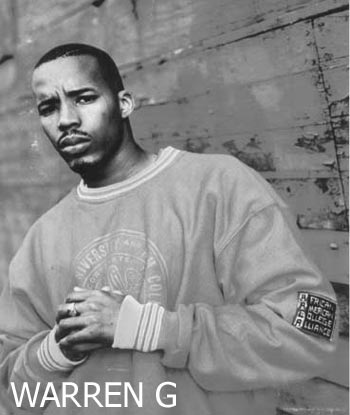
*Warren G lived just down the street from me when I was growing up in Long Beach/Lakewood, CA . . . “Regulate” 😉

The Unmoved Spirituality, Thomas and His Impact

Carl Trueman, Church historian, and faculty at Westminster Seminary (Penn.) just penned a post on the role that historians should provide in providing perspective on the intellectual history of our past. He believes that over the  last 1,000 years there has only been 2 major paradigm shifts that have actually been intellectual (even spiritual) paradigm shifts; one of which is the following:

Enter the church historians.  Any intellectual historian of any merit will tell you that the last 1,000 years in the West have only produced two moments of paradigm shifting significance, and neither of them was the Reformation.  The first was the impact of the translation into Latin of Aristotle’s metaphysical works.  This demanded a response from the thirteenth century church.  The response, most brilliantly represented by Thomas Aquinas, revolutionized education, transformed the philosophical landscape, opened up fruitful new avenues for theological synthesis, and set the basic shape of university education until the early eighteenth century.  Within this intellectual context, the Reformation was to represent a critical development of Augustinian anti-Pelagianism in terms of the understanding of the church and of salvation . . . . (whole post here)

This is pivotal. This is something that I don’t think most Calvinists/Arminians grasp (or want to acknowledge). I’m not talking about folks like Trueman, Muller, Clark et. al.; I’m talking about folks involved with The Gospel Coalition, folks who follow John MacArthur, folks who follow John Piper et. al. Most folks who follow these groups and teachers and pastors believe that they don’t have an apparatus in place when they read Scripture through their Calvinist (and also Arminian) categories. Most people who are in this camp believe that they “just” read Scripture. But the reality is, is that they (by-and-large) interpret Scripture through the synthesis of Aristotelian philosophy with Christian theology provided by Thomas Aquinas (even if Thomas and Aristotle get “Protestantized”). The moral is, is that we all read Scripture through interpretive traditions; shouldn’t we acknowledge that, and then strive to appropriate modes of inquiry that are most proximate with the categories of Scripture? Do Aristotle and Thomas Aquinas provide the best grammar to articulate the implications and teaching of Scripture? Does Aristotle’s God, the Monad, the Unmoved Mover, the Singular Substance provide the best apparatus for articulating the Christian God who is Triune, Relational, and Love in His inner-life? If not, then why would you appeal to this interpretive tradition to do the heavy-lifting for Christian thought that it clearly cannot do? Is it because you have sentimental attachment to teachers of the “old paths” that did; is it because your pastor says this is so; is it because this is the only way you think it possible to talk about God’s sovereignty; is it because you think it’s the “Orthodox” way, and any other way is heterodox or Neo-orthodox; is it because you like a God who is static, and so you’re comfortable with a static view 😉 ?

Evangelical Calvinism eschews this approach (the one that Trueman identifies as a major paradigm shift for Christian intellectual history). Not because we (I) think being different is cool, but because we think being different in this case is sound and reflects a more orthodox way to think about God. We think that if you start (methodologically) with a wrong approach to God, then you’ll end up with a wrong approach in living to and for God. This is why I am so motivated to continue to write about this stuff! It’s not a political power play, it’s not to impress people with intellectual acuity, it’s not because I want to win an argument, it’s not because I want to polarize the body of Christ, it’s not because I’m noble; it’s because “I” have become convinced that following Thomas (in general, methodologically) leads to a spirituality that reflects the god that provides an “Unmoved spirituality!”

Charles Spurgeon and the Problem of Works

I plan on doing some posting on Suzanne McDonald’s reconstruction of election in the days to come, but until then (because I’m feeling a bit lazy), I thought I would provide an interesting and even unexpected quote from Charles Spurgeon (I’m stealing this quote from Phil Johnson at the Pyromaniacs). To set it up a bit, I say surprising because it is not what you would expect to hear coming from a 5 point Calvinist (but then again Spurgeon was his own kind of 5 point Calvinist). Here, Spurgeon is discussing the “problem of perseverance” that so often plagues the 5 point Calvinist of yester-year; Spurgeon finds an interesting remedy to overcoming this particular precisianist plague, here he goes:

I have found, in my own spiritual life, that the more rules I lay down for myself, the more sins I commit. The habit of regular morning and evening prayer is one which is indispensable to a believer’s life, but the prescribing of the length of prayer, and the constrained remembrance of so many persons and subjects, may gender unto bondage, and strangle prayer rather than assist it.

To say I will humble myself at such a time, and rejoice at such another season, is nearly as much an affectation as when the preacher wrote in the margin of his sermon, “Cry here,” “Smile here.” Why, if the man preached from his heart, he would be sure to cry in the right place, and to smile at a suitable moment; and when the spiritual life is sound, it produces prayer at the right time, and humiliation of soul and sacred joy spring forth spontaneously, apart from rules and vows.

The kind of religion which makes itself to order by the Almanack, and turns out its emotions like bricks from a machine, weeping on Good Friday, and rejoicing two days afterwards, measuring its motions by the moon, is too artificial to be worthy of my imitation.

Self-examination is a very great blessing, but I have known self-examination carried on in a most unbelieving, legal, and self-righteous manner; in fact, I have so carried it on myself. Time was when I used to think a vast deal more of marks, and signs, and evidences, for my own comfort, than I do now, for I find that I cannot be a match for the devil when I begin dealing in these things. I am obliged to go day by day with this cry,—

“I, the chief of sinners am,
But Jesus died for me.”

While I can believe the promise of God, because it is His promise, and because He is my God, and while I can trust my Saviour because He is God, and therefore mighty to save, all goes well with me; but I do find, when I begin questioning myself about this and that perplexity, thus taking my eye off Christ, that all the virtue of my life seems oozing out at every pore.

Any practice that detracts from faith is an evil practice, but especially that kind of self-examination which would take us away from the cross-foot, proceeds in a wrong direction. (quote stolen from here — it is taken from Spurgeon’s Autobiography)

Isn’t He always the remedy? I mean, Christ.