
I was just reading a good little article by Efrem Smith entitled: Holy Hip Hop And Calvinism: An Odd Marriage Indeed (HT: BL). The topic is an interesting one, and one that I think is definitely worthy of developing.  Interestingly though, within the development of his post, Smith voices something that I have heard before; it is something that I find somewhat troubling. It is the attempt to marginalize “Calvinism,” because it was primarily developed in the environs of Europe. Here’s what Efrem says (here he is noting how the culture and development of Hip Hop is incompatible with that of Calvinism’s pedigree):
Hip Hop influenced entirely by Calvinism is no Hip Hop at all. Reformed Theology, though it contains some theological elements that I totally agree with should not be the only or primary theology influencing Holy Hip Hop. Calvinism is Eurocentric in nature and in the United States of America has evolved into a theology driven by the privileged. Hip Hop, Holy or Secular is about the engaging and presenting of the issues surrounding a sub-culture of the historically marginalized of urban America. (see full post: here)
Saying that Calvinism is Eurocentric, and thus basically “White” (just say it) — and this is really the point I want to hit on, not the origins of Hip Hop and its original focus — does not then mean that it is necessarily incompatible with Hip Hop, per se. What I see lurking behind Smith’s analysis is that theology is contextual and thus because it is contextual only has relative and particular purchase versus universal force in its proclamation. In other words, because, supposedly, Calvinism developed amongst the rich (let’s not forget that Calvinism developed under persecution in many instances) with Europeans; it is thus necessarily bounded to that people group, and only able to speak to like people (meaning skin color and supposed social status). Efrem Smith’s belief (as you read his whole article) is that in fact the theological program that is actually compatible with Holy Hip Hop is Liberation Theology; since, one would assume, that it developed amongst a minority group of oppressed people in Latin America (and now has been appropriated by “Black Theology” today in America).
 It seems like to me that Smith is of the belief that theology is really a political maneuver; one associated with a power game. What makes Liberation Theology, for example, any better than Calvinism? Aren’t both suspect constructs? Don’t both presume upon a certain doctrine of God? Is Black Liberation Theology more proximate to the Christian Gospel because it developed under constraints that were seeking to throw off the oppressor? To me the problem with both of these alternatives is that the Calvinism Smith has in mind suffers from a God of brute power (and thus theocentric while not christocentric); and Liberation Theology suffers from a focus that is horizontal in orientation, and thus man-centered. I don’t think either one of these alternatives actually represent good alternatives for hip-hop artists. Not because one developed in Europe and the other in Latin America, but because neither one actually offers an actually Christian approach, methodologically. So it’s not where a theology was developed, but what, and more importantly Who that theology communicates. Am I denying that locale has no effect on theological development? God forbid! If theology could be marginalized because of its socio-cultural genesis; then to be consistent with this, we would also need to say that Christianity is only really viable for Jewish people. Since, of course, Christianities’ particularization is Jewish and finds its mooring in a first century Jew named, Jeshua.
I see what Efrem Smith is getting at, but I don’t buy his basic premise about the contextualization — meaning marginalization — of theological constructs, and the subsequent force that said theological construct then has on later socio-cultural situations that might want to appropriate it for their articulation of the Gospel.
P.S. It seems as if Smith is also arguing that the Hip-Hop form is a static reality. But as with any linguistic construct it is dynamic and fluid; indeed, contextual and thus able to kick out the doors of its own particularity in order to express universal truth (whether that be found in Calvinism, Liberation Theology, and most likely Evangelical Calvinism 😉 ).
This turned out to be somewhat of a rant, and not as coherent as I would like; but I’m blogging.
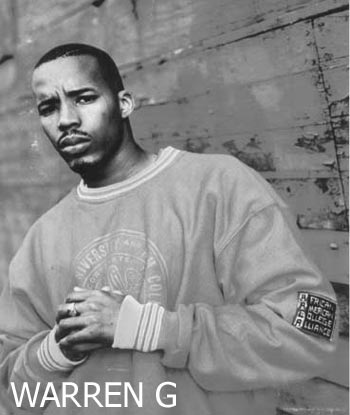
*Warren G lived just down the street from me when I was growing up in Long Beach/Lakewood, CA . . . “Regulate” 😉
Hi Bobby! I’m probably just re-saying what you said, but I think classic calvinism does have a history of assuming that Christianity was eurocentric by decree, and so noneuros would just be Christian appendices. So the author has a point. The problem is, that liberation theology is totally man centered and for both George Orwell and Ralph Ellison, were only tools for abuse by a new class of opressors.
No. The Truth will set you free, and if the Son sets you free, you will be free indeed.
I firmly believe that there were some Christian slaves in the old south, who were vastly more free than their masters.
Oddly enough, the center of the abolition movement was in puritan New England, no?
History and politics is like corn hash: throw anything in. But freedom is in Christ alone to whom we are slaves, and thankfully so.
Pingback: Calvinism and Hip-Hop? « Near Emmaus
Wow you lived near Warren G!!!?? That’s flippin’ awesome dude! 🙂
I actually enjoyed Smith’s article and thought that he raised some good points; but you raise some great points too. I am not quite as opposed to liberation theology as you seem to be, and I actually think that it offers a balancing critique against the theology typified in classical American Calvinism. But overall, I agree with your assesment. Liberation theology can be just as dangerous as classical Calvinism if its power goes “unchecked”. That said, I did briefly peruse Smith’s blog and saw that he seems to be aware of these dangers.
I also agree with your point about hip-hop being dynamic and fluid. Even secular hip-hop is not what it once was. It is no longer music of the oppressed; by any means. I definitely prefer the more old school East coast boom bap with the lyrical emphasis that Smith obviously enjoys, so on that level I can relate with him; but the art form cannot be controlled. Thanks for the post!
Yeah, he lived about 1/4 mile from me on Downey Ave. and Candlewood 😉 . This was after he made it big with Regulator, and where he lived was actually a gated community at that point. But it was still right in the “hood.”
I don’t like liberation theology not because I don’t think it does not some helpful value for emphasizing Exodus themes of salvation etc. My concern with liberation stuff it that I see it to be operating from a weak doctrine of God (just as weak as Classic Calvinism’s), and that it too falls into the trap of emphasizing “power” ironically (just like classic Calvinism) in the name of the cross and exodus. In other words I see it emphasizing the collective “power” of man instigating his own salvation in the name of God. Something like that, I just see it too “horizontally” oriented. I didn’t look at anything else Smith has written, maybe I’ll do that 🙂 .
I actually like West Coast rap myself, but I can handle some East Coast. I like the more flowing rhythm of West vs. the hard hitting East. 😉 But yeah, the genre has definitely become something other than it originally was, even when I listened to all those guys in the late 80’s and through the 90’s. Thanks for the feedback.