
John Webster is One of My Favorites & A Critique of Evangelical Christology

Behind T. F. Torrance, I would have to say that John Webster is my favorite theologian. Everything and anything I have ever read of his (or heard of his—i.e. lectures via Mp3) has simply been some of the most edifying exercises I have ever engaged in! Ironically, I haven’t been able to read very much from Webster (which might kind of dampen my prior words, heretofore); my local theological library hardly carries any of his books. One book that my local theological library does carry is his Holy Scripture: A Dogmatic Sketch. This little book continues to be my favorite book on a doctrine of Scripture. I think my library carries one more book by Webster, his: Barth’s Ethics of Reconciliation, which I haven’t read yet. Anyway, since I know that at least some of his students from Aberdeen read my blog; I wanted to present a request. If you have any essays or anything from Webster that you think I would like to read; then would you please share it with me šŸ˜‰ ?
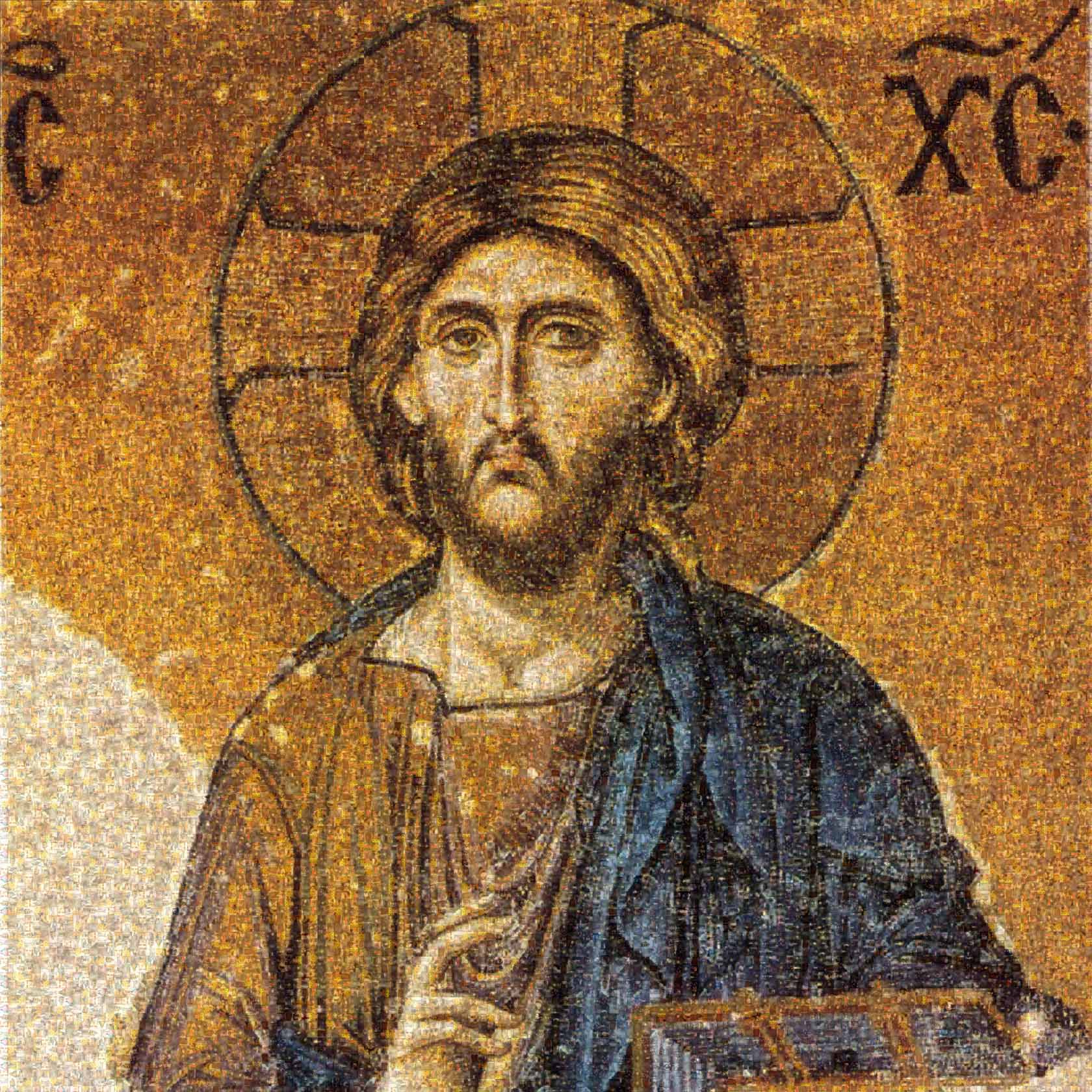
Let me close this post with a great quote from Webster. The quote comes from his chapter for the Cambridge Companion to Evangelical Theology; his chapter is entitled, awesomely, Jesus Christ. His chapter serves as a wonderfully crafted critique of Evangelicalism’s penchant for doing historiography for Christology, instead of theological exegesis & Dogmatics as Christology.Ā 

[T]he best evangelical theological work emerges from delight in the Christian gospel, for the gospel announces a reality which is in itself luminous, persuasive, and infinitely satisfying. That reality is Jesus Christ as he gives himself to be an object for creaturely knowledge, love, and praise. To think evangelically about this one is to think in his presence, under the instruction of his Word and Spirit, and in the fellowship of the saints. And it is to do so with cheerful confidence that his own witness to himself is unimaginably more potent than any theological attempts to run to his defense. The historical or apologetic anxieties to which evangelical Christology has often succumbed, and the jeremiads against the present age to which it has often given voice, are both overtaken by the sheer splendor of his self-communication. Evangelical Christology is properly doxological in the way it frames and accomplishes its task.

Christology responds to the self-communicative presence of its object in the twofold work of exegesis and dogmatics. Exegesis is not the same as study of the history of biblical literature and religion in their settings. Modern evangelicals have sometimes been bedazzled by the range and sophistication of historical procedures at their disposal, and busied themselves to master them in the hope of outbidding their opponents. But historical studies are the servant of exegesis, not its master. One thing which evangelical doctrines of the sufficiency of Scripture ought to have secured is that the ultimate resource is the text, not what can be reconstructed about what lies behind the text, for the text is an act of God’s self-disclosure. The fruits of the immense labors of evangelical New Testament scholars are by no means negligible; but in and of themselves they do not constitute a hearing of the Word, though they may offer much needed preparation for such a hearing. The real test of the utility of historical work is whether it enables exegesis. In a Christological context, this means that there is more to be gained from a potent reading of the Johannine prologue than from the most exquisite dissection of its historical background. Perhaps one of the most significant influences which evangelical theology might bring to bear upon the study of the New Testament would be to recall its practitioners to the task of theological interpretation, that is, reading Scripture as divine address.

Exegesis is served by dogmatics, whose task is to look for systematic connections between the constituent parts of the Christian gospel, and to attempt their orderly and well-proportioned exposition. In particular, dogmatics can help to prevent the distortions of perspective which can be introduced into an account of the faith by, for example, pressure from polemical concerns or excessive regard for extra-theological norms. Modern evangelical Christology has not been well served in this regard, and stands in need of a descriptive dogmatics of real moment. What is required is not an account of the person of Christ with better warrants (historical or philosophical) but a richer, more expansive, and fine-grained portrayal of the doctrine. In fulfilling this task, there is much help in the tradition, both ancient and more modern, and evangelical Christology may need to give its mind to the task of historical theology. As often in intellectual work, the way back may prove to be the way forward. [John Webster, Jesus Christ, in Cambridge Companion to Evangelical Theology, 60-1]

There is freedom in being a Christian Theologian; a vocation I continue to aspire to. And John Webster exemplifies what this means, as one of the best in this vocation. This quote (which was only going to be the first paragraph, but I couldn’t stop) is simply, timely. Evangelicals need to come back to their first love, Jesus. And Christian New Testament scholars need to come back to the Scriptures as if they trust them, because they trust Him. I could say much more in response to Webster’s points, but they are thick and clear enough on their own.

Union with Christ: Reframing Theology and Ministry for the Church

To my surprise, I just received a message from J. Todd Billings at my Facebook account (we are friends on FB šŸ™‚ ). He is Associate Professor of Reformed Theology at Western Theological Seminary in Holland, Michigan. And his area of passion has to do with Union With Christ theology (or the Apostle Paul’s “in Christ” theology). Billings is a historical theologian, and a Calvin scholar. He has another book (which I am still supposed to do a review for here at the blog, since Oxford University Press kindly set me a review copy quite some time ago), which is his published ThD dissertation from Harvard Divinity entitled:Calvin, Participation, and the Gift: The Activity of Believers in Union with Christ. This book is outstanding, I will hopefully be able to put up a review of it within a weeks time here at the blog. But what Todd was alerting me to, and what I primarily want to feature through this post; is his newest book entitled: Union With Christ: Reframing Theology and Ministry for the Church. Lord willing I will be receiving a review copy of this book too; at which point I will promptly read, and provide a report to you all about its contents. Until that time, Todd pointed me to four promo videos that he did for his publisher (Baker Publishing); which provide a great sketch of what the book is about, and how Todd fleshes out this most awesome theme, Union With Christ. The first time I ever heard this phrase, ‘union with Christ’, was in seminary from my prof and mentor, Dr. Ron Frost (another historical theology guy, his guy was/is Sibbes). I had already been immersed in this concept for years (simply because I had been reading and memorizing so much scripture); but it was the introduction to this phraseology that revolutionized the way that I thought about intimacy with Jesus, and it drew me into the evocative reality of Paul’s mystical marriage language (cf. Eph. 5) like never before. Anyway, below are the four videos from Dr. J. Todd Billings on his new book “Union With Christ” (you can’t go wrong with a title like that!). Once I get the book I will be quoting from it as I read it, and finally writing a short review of it for the blog. Stay tuned. And thank you Todd Billings for alerting me and us to your most wonderful new title.

ht: J. Todd Billings

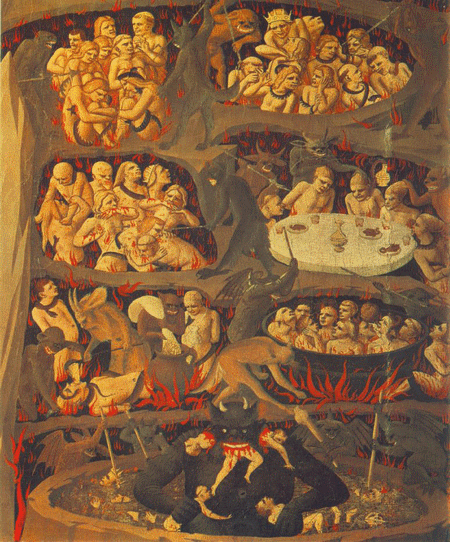
What Did Jesus Teach About Hell? Is it eternal, conscious, torment?

ā€œThen he will say to those at his left hand, ā€˜You that are accursed, depart from me into the eternal fire prepared for the devil and his angels; . . . 46. And these will go away into eternal punishment, but the righteous into eternal life.ā€ Matthew 25.41, 46 (NRSV)

Ā Craig S. Keener comments on this pericope in his New Testament Background Commentary in this way:

25:41-45. Some Jewish traditions (like Qumran War Scroll) report that Belial (Satan) was created for the pit; destruction was not God’s original purpose for people (4 Ezra 8:59-60). In many Jewish traditions, the demons were fallen angels (cf. comment on 2 Pet. 2:4). Jewish tradition was divided on the duration of hell; this passage’s description of it as ā€œeternalā€ was certainly not merely a concession to a universal image in Judaism.

25:46. Eternal life was promised to the righteous after their resurrection at the end of the age (Dan. 12:2). Some Jewish teachers believed that hell was temporary and that at the end some people would be burned up and others released; other Jewish teachers spoke as if hell were eternal. Jesus here sides with the latter group.[1]

This begs the question; what did Jesus believe about what has been labeled the eternal conscious torment doctrine of hell (the Traditional teaching)? According to Keener, and in this particular dominical teaching of Jesus; Jesus held to the belief that hell (or the after-life separated from participation with God through Christ [my gloss]) does indeed articulate that there is a literal hell that involves eternal conscious torment. As the quote from Keener also illustrates, the Jewish context in which Jesus taught as a Rabbi was not monolithic on this doctrine; it is just that Jesus appropriated and taught the strand that articulated that hell fits with what today would be called the traditional view.

In concert with this assessment, none other than The Evangelical Universalist, Gregory MacDonald (aka Robin Parry) holds that the dominical (Jesus’) teaching is consistent with Keener’s perspective; that is that Jesus taught that hell was eternal conscious torment. Note MacDonald,

[G]ehenna was a place of punishment and fire but beyond that was generally left unexplained. When we find Jesus drawing on the idea of Gehenna, we must remember that it was not a clearly worked out concept. Beyond its being a place of fiery punishment for the wicked, the details, if anyone wanted to fill them in, were up for grabs. That said, I think that it is quite clear that Jesus’ contemporaries would not have thought the he was a universalist of any variety. To the traditionalist this settles the case, but I think that there is more to be said. I want to argue, first of all, that none of Jesus’ recorded teachings about Gehenna explicitly affirm the notion that it was everlasting; and nothing Jesus is recorded to have said rules out the possibility that some or all of its inhabitants may at some point come to salvation. I am not trying to show that Jesus taught universalism nor that he taught that those in Gehenna could or would be saved, for he did neither. My aim is the much more modest one of showing that what he did teach does not formally contradict universalist claims. This, of course, does not provide any reason to suppose that a universalist interpretation of Gehenna is biblical without substantive additional reasons for embracing such an interpretation. My second task is to show that we do have such reasons.[2]

MacDonald helps reinforce Keener’s commentary, that indeed Jesus taught the Jewish tradition (amongst the many available, just as there are many available today for Christians—but not viable for most Christians) that there is a literal place in the life after life (to borrow Wright’s quip) known as hell; and that this will be a place that is characterized by final eternal conscious torment.

So this represents the dominical teaching; the teaching that Jesus taught. But this does not serve as a death knell for ā€˜Evangelical Universalists’; as MacDonald notes. For Jesus, in his context, the teaching that hell was eternal could very well have been ā€œjustā€ for his particular context. In other words, as MacDonald later contends, Jesus’ pronouncement on this topic could have beenĀ  to reinforce the severity of God’s judgment; and yet at the same time, not intending to be the last word on it. MacDonald writes:

[W]e should not suppose that, because Jesus did not explicitly teach universal salvation or explicitly repudiate the idea that many people would never experience salvation, universalism is an un-Christian idea incompatible with Jesus’ ministry. If later revelation leads in universalist directions, as I have argued it does, then we need to understand the ministry of Christ in that light. It is the whole canonical story that we examined in Chapters Two to Four that forms the broader theological context within which we must understand Jesus’ teachings about Gehenna, and it is that very context that serves to modify some of the understandings of it common in Jesus’ own day.[3]

For MacDonald, for Jesus not to teach universalism does not mitigate the fact that the whole scope and sweep of the canonical teaching does in fact teach a Christian universalism. We will have to redress this at another time.

Conclusion

The question that I have been seeking to answer through this short piece has been ā€œWhat did Jesus believe and teach about the view of hell that involves eternal conscious torment; did he teach this view or not?ā€ The result of some cursory (yet I think substantial) musing has been to conclude that Jesus did indeed teach that there is a literal place that has become known as ā€˜Hell’, and that hell is unfortunately characterized by eternal conscious torment.

This is an important point to establish because it places the burden on those who disagree to disagree with Jesus. Are there ways to do that, and still honor Jesus’ own teaching, and even his person? MacDonald believes that there are, and in fact he thinks he has (found the way).

There are other prominent foci (or focal points) to consider towards helping us understand how to place Jesus’ teaching, in the book of Matthew for example. In other words, there is a strong theological case to be made for a Christian universalism that attends to who God is as Triune Love, full of grace. If God is Love (and he is), then we have to interpret Jesus’ views and teaching on hell through that lens (the lens of the cross, the penultimate expression of his love … the ultimate being his resurrection). MacDonald’s contention to annex Jesus’ teaching to a particular situation he was addressing might have teeth in light of the theological argument; it might leave the door open for a Christian theological reification or classification of hell in ways that might favor something like MacDonald’s Evangelical Universalism. There might be hope. Maybe Jesus didn’t intend his teaching to offer the last word after all; on hell that is.

No matter what, in the end, the conclusion must be that Jesus did teach what some would call the Traditional view of hell as ā€˜eternal conscious torment’. How one places that, in its ā€˜universal scope’ is what still needs to be contended with (MacDonald has, I’m still working on it).

My personal conclusion, at the moment, is that Jesus’ teaching on hell should serve as the standard; I see it with ā€˜universal force’ and thus am not willing, as of yet, to annex it, or particularize it to his specific audience in the 1st century (which would be what MacDonald does, amongst others). I continue to hold to the trad teaching, but I also am willing to hold out that once we are present with the LORD in the consummation that he could surprise us in keeping with his life of grace and love.


[1] Craig S. Keener, The IVP Bible Background Commentary, New Testament, (Downers Grove, Illinois: Intervarsity Press, 1993), 118-19.

[2] Gregory MacDonald, The Evangelical Universalist, (Eugene, OR: Cascade Books, 2006), 144-45.

[3] Ibid, 149-50.

Protestants, Evangelicals, and the “Problem” of Tradition

This repost is inspired by Cody Lee, with whom I have been having a little discussion on this issue here.

It is often thought by Protestant-Evangelical Christians that Roman Catholics are the only ones with “Tradition,” but this really couldn’t be further from the truth. Of course what differentiates us (Protestants) from Roman Catholics is that we see tradition in a ministerial way; while Roman Catholics approach ‘tradition’ through a magesterial perspective. In other words, us Protestants (at least those who admit that we have interpretive tradition in the first place) see ‘tradition’ as Scripture’s “servant;” Roman Catholics view it as its “master.” Alister McGrath provides some excellent insight on this issue; especially as it is related to Evangelical Christians (meaning all of those who hold to a ‘high’ view of Scripture). He writes:

Evangelicalism celebrates and proclaims the supreme spiritual, moral, and theological authority of Scripture. At the Diet of Worms (18 April 1521), Martin Luther famously declared: “My conscience is captive to the word of God.” This powerful and bold statement resonates throughout evangelical history — a principled intention to listen attentively and obediently to Scripture, and to respond faithfully in our beliefs and actions. Yet evangelicals are aware that an emphasis upon the authority of Scripture cannot be uncoupled from the question of its proper interpretation. One of the major theological weaknesses of the “Battle for the Bible” within American evangelicalism during the 1980s was an apparent reluctance to accept that an infallible text was open to fallible interpretation. To assert the supreme authority of Scripture does not resolve how it is to be understood.

This familiar problem is often cited as the Achilles’ heel of contemporary evangelicalism. How can the validity of competing interpretations of Scripture be determined without appealing to some ground of authority that ultimately lies beyond Scripture itself? Evangelicalism, having affirmed the supreme authority of Scripture, finds itself without any meta-authority by which the correct interpretation of Scripture can be determined. This question is usually resolved politically, rather than theologically, by committees or organizations laying down how certain texts are to be interpreted. Yet this is not a new problem, nor one that is unique to evangelicalism. It has been an issue for the Protestant theological tradition as a whole. How can conflict over biblical interpretation be resolved without ultimately acknowledging certain criteria or agencies as standing above Scripture? To place any means of adjudication above Scripture is ultimately to compromise its unique authority. This realization has led to a growing appreciation of the role that engagement with the past might play in contemporary evangelical biblical interpretation and systematic theology. . . . (Alister McGrath quoted from, “John Calvin And Evangelical Theology,” ed. Sung Wook Chung, ix-x)

McGrath identifies an interesting conundrum for those of us who see tradition in ministerial ways; in other words, as Protestants and Evangelicals, we don’t have a ‘magesterium’ to tell us (with divine authority) how particular passages should be interpreted. But don’t we? As Alister, ironically alerts us to, Evangelicals, while asserting our ‘ministerial’ usage of tradition (that is if we recognize it in the first place, which most don’t); at the same time we appeal to our particular denomination’s interpretation of the text of Scripture. In a sense then, Protestants function in ‘magesterial’ ways of interpreting the text; appealing to our favorite Bible teachers (as an authority), or our denomination’s Confessions and Catechism as providing the ‘interpretive how’. Yet all along we continue to assert that ‘interpretive tradition’ is really only ‘ministerial’, or in the service of the text.

I think the only way around this problem is to humbly engage the past; understand and realize the role that it has had upon shaping the way we approach and interpret Scripture, and humbly test the shape of our “approaches” (or tradition) by what in fact “Scripture says.” Until we admit that we have interpretive tradition we will function like we don’t; and like the Catholics imbue the text of Scripture with our own preunderstandings as if they are native to the Text of Scripture (or self-same). The problem, for us Protestants-Evangelicals arises when we don’t appropriate a humble attitude in this regard; and when challenged with a variant interpretation from our own (from within the Protestant-Evangelical ‘tradition’), is that we see these Christians as “less-than” or even sub-Christian — since if they are disagreeing with my “denomination’s” (tradition) interpretation of Scripture, they really are disagreeing with Scripture itself.

I see this as a serious problem plaguing the Evangelical and Reformed traditions (with Protestantism); which has led to sectarian divisions within the Body of Christ, and sadly amongst those of us who all hold to sola scriptura.

The Vicarious Humanity of Christ and the Reality of Salvation

I just received a review copy of Christian D. Kettler’s book The Vicarious Humanity of Christ and the Reality of Salvation from James Stock at Wipf & Stock Publishers. I will be doing a full review here at the blog immediately following my completion of this book (let me say thank you though to James Stock for getting me this book!). Christian Kettler is someone I look to being in contact with once I start getting a bit further into my doctoral research on this doctrine (the vicarious). This book represents his PhD dissertation which he did at Fuller Theological Seminary (some years back now) under the watchful eyes of Ray Anderson and Geoffrey Bromiley. Kettler also had the opportunity to serve as Thomas Torrance’s Teaching Assistant for a bit while at Fuller (presumably) in the 80’s. I just wanted to share the brief blurb from the back cover of this book:

In this book, the problem of the reality of salvation is addressed by T. F. Torrance’s doctrine of “the vicarious humanity of Christ.” Through this approach, salvation as humanization is affirmed, yet without the problems of anthropocentric theologies. This book is unique in that it offers both a survey of contemporary Christian thinking on salvation as well as a constructive alternative based on Torrance’s doctrine, a significant yet neglected contribution to modern theology.

This book is one of the best places I can think of to officially kick off my doctoral research on the vicarious humanity of Christ! Kettler’s approach seems to deal much more closely with this doctrine within its modern theological context and discussion. My research will press, in contradistinction a bit, back further into the Tradition of the Church; and will develop and unearth how this doctrine first received its legs through seminal figures scattered throughout the span of Church history starting in at least the 4th century A.D., and moving through the Reformation period into the Modern (with Thomas Torrance), finally placing all of this into the discussion that Kettler mostly focuses on in his own research.

I was thinking of sharing the Table of Contents from this book, but I think I’ll do that later.

Thin on Theology, Bib Studies Folk

Just a quick observation; doesn’t it seem like most of your Biblical Studies guys and gals (and I mean as far as the discipline) are very naĆÆve theologically? Let me qualify this; I don’t mean to denigrate all bib studies folks, but what I am highlighting is how it often seems to me that (often) up and coming bib studies folks don’t have a clue about how to interpret the ‘inner logic’ and theo-logic that the text of Scripture presupposes all the time (like the Trinitarian shape that makes scripture go round). ‘Biblical Studies’ folk can tell you all about the impact that Second Temple Judaism has upon the interpretation of scripture, but they haven’t the foggiest when it comes to the impact that the incarnation ought to have when exegeting passages that have to do with the soteriological category of ‘Justification’. They can parse the Greek, and do great lexical and syntactical analyses; but become agitated when the theologian steps in and inserts the category of ‘union with Christ’ into the exegetical exposition. I run across this quite often in the blogosphere. Surely this can run the other way too; the dogmatician can get so caught up in his “dogmatizing,” that he or she never opens their Bible. But this post is mostly a gripe aimed at bib studies folks. I think they need to learn one more language; it’s called Theology!


Dispensational ‘Pre-Tribulationism’: An “American Theology”

A caveat: The following post is not intended to slam or deface Evangelical Christians who are ‘Classic’ or ‘Progressive’ Dispensational, Premillennial; and as the focal point of this post, Pre-Tribulational. Instead, this post is intended to throw out somewhat suggestive reasons for why I have come to disavow the Pre-Tribulational view in particular, and the Dispensational framework in general. I attend a church where this kind of teaching is taught; I attended a Bible College and Seminary where (for the most part) this kind of thought was communicated; and I grew up as the son of a Baptist pastor where I was weened on this kind of theology as sure as I suckled on my mother’s milk (TMI šŸ˜‰ ). Thus I am no foreigner to the sub-culture and theological and exegetical assumptions that go into developing and cultivating this kind of thinking; I, in fact, up and until probably the last 6 years was as ardent of a defender of this kind of theological tap that you might ever hope to cross-paths with. I provide all of this back-story in order to let you know, the reader, that my intention is not to be one of those kind of guys who once was this, and now that I am no longer this (and instead am that); that my goal is to destroy, belittle, and beat-up my former belief (and thus all those who still hold to it) in order to make my new belief more stable and secure — and also to make my new belief more credible, while making my old belief incredible and part of my immature theological years. This is not my intention with this post; you know, like someone who grew up as a Fundamentalist Christian, who ended up attending university, becoming an atheist professor, now bent on destroying any and all Fundamentalist or Evangelical Christians who might happen upon their cross-hairs . . . you get my point by now, I gather? Good! Let’s proceed.

Today I had a great time of fellowship and discussion with my pastor, and a fellow (and awesome) brother in Christ at our local Star Bucks (where else? we live in the Pac NW). One of the topics of discussion, brief as it may have been (on this particular issue), had to do with my proclamation that I am no longer a “Pre-Tribber” (or Dispensationalist for that matter). All along, as I made this known, I am well aware that both my pastor (and I believe brother in Christ) are both dispensational and pre-trib in orientation. I simply want to expand upon ‘why’ I am no longer pre-trib . . . (for those who don’t know ‘Pre-Tribulational’ has to do with the belief that certain Christians believe that we are facing a 7 year period [Jacob’s Trouble] that will come upon this earth that will involve upheaval and global “tribulation” that the earth has never known before [cf. Mt. 24] — in particular this is tied into the dispensational teaching on Daniel’s 70th Week found in Daniel 9 — this is where the 7 year number comes from. This period is one where God’s Wrath [as ‘The Day of the LORD’] will be focused in particularly on the Jewish nation for their rejection of the Messiah — while this “wrath” is pin-pointed on the nation of Israel, it will have global implications in which the nations of the world will rise up to destroy Israel [and they will get close], ultimately seeking battle with the God of the Bible. Since according to Pre-Tribbers, this period has to do with God’s Wrath being poured out on an unbelieving world [to the Jew first, see this principle in Rom. 2.11 for example], and since Christians have not been appointed to wrath but salvation in Christ [cf. I Thess. 5.9]; the pre-tribber argues that there is no reason for us [as the Church, part of the Church-Age] to be here. It is at this point that God’s focus is turned back onto His original prophetic plan [and that has to do with the nation of Israel, the Church—according to Dispensationalists—is simply a parenthesis in God’s original prophetic plan, which was to save Israel]. And so this, then, serves as another argument for why pre-tribbers believe that we won’t be here—it serves as an alleviation of a pressure valve of sorts—the pre-trib rapture [which says that Jesus will secretly remove His Church from this earth prior to the 7 year Tribulation period] serves as a necessary mechanism which removes the Church [a ‘Mystery Kingdom’ of sorts pace Charles Ryrie] from the scene [as a subsidiary story line in the larger plot line of God’s salvation story—again, according to pre-tribbers, as having to do originally with the nation of Israel] so that God can get back to the business of dealing with Israel—sorry for this aside, but I thought I should include this for someone who might not know what Pre-Tribulationism is about.).

. . . I am no longer pre-trib because I reject the hard and fast distinction between Israel and the Church (as does the Apostle Paul in Ephesians 2.11ff). Thus, I no longer need to have a mechanism in place that needs to somehow have the Church out of the picture so that God can supposedly deal with His real aim in salvation history; that is to save the nation of Israel. 2) I am no longer pre-trib because I believe that Paul argues against the idea—in first and second Thessalonians—that there will be a removal of the Church prior to the Lawless one, being revealed (Dispies take the ‘Lawless one’ to be the Anti-Christ); he hadn’t been revealed in the first century, and as I gather he hasn’t as of yet been revealed in our context either. This is a significant point. According to the pre-trib understanding, we will be off the scene prior to the Anti-Christ revealing himself to be someone who ought to be venerated (like God). Yet, according to Paul’s argument, in II Thessalonians (if we take all of his referents to be correlative to how pre-tribbers take them) the man of Lawlessness (or the ‘Anti-Christ’) will be revealed while the Church is present. According to pre-tribbers, the Anti-Christ will not reveal himself in the way that II Thessalonians 2 says, until the middle of the Tribulation period (at the start of the last 3.5 years of ‘Jacob’s Trouble’); this is a fatal blow (in my opinion) to the pre-trib chronology and basic argumentation (and this, granting their supposition that the Church will not experience the ‘Great Tribulation’ since they make this synonymous with ‘God’s/Lamb’s Wrath). 3) I am no longer a pre-tribber because I believe that it represents a privileged understanding of reality; or, that it is an American-exceptionalist theology. What I mean is that the pre-trib position fits well with a society who has been, relatively, pampered in her ‘American’ (Western) experience; it fits well with a society that is escapist and shaped by amusement in orientation. Go and preach pre-trib theology in the Sudan, Indonesia, or any other place in the world where Christians have been suffering ‘Great Tribulation’ on the kind of scale that one would imagine the book of Revelation to be describing. This point is not so much of an argument, but more of a call to pause and think about what ‘Tribulation’ might mean within various contexts throughout the globe—Pre-Tribulationism, in light of this, could only have taken shape in a society that, at all costs, wants to avoid any persecution, suffering, or martyrdom (this all makes sense psychologically). 4) I am no longer pre-trib because I believe the exegesis, especially the exegesis of the pre-tribber’s locus classicus—I Thessalonians 4 and I Corinthians 15—to be artificial and contrived (I could never make sense of this, even as a trained pre-tribber who understood ‘how’ they were ‘trying’ to make this work). 5) I am no longer a pre-tribber because I do not believe that either Jesus or the Apostle Paul or Peter (amongst others) presupposed this kind of theology as part of their theological oeuvre’s. 6) I am no longer pre-trib because I reject the hermeneutics that one must presuppose in order to get all the way to the pre-trib position (through dispensationalism).

I have other reasons, and concerns; but ultimately I believe that the pre-trib position, in particular, is reflective of an American Theology. While I do not believe that chronological arguments are good ones; I do think that the absence of both dispensationalism and thus pre-tribism in church history is a significant point. I could say much more, with more detail; but this post is already approx. 1500 words, and so I will close. This is obviously more of a vent, and off the top, and so take it as such.

Trinity, Gospel, Theology, Dogmatics and the Patristic era repeated. Frost responds …

Matt Frost has responded to my post on the Negotiability of the Trinity. His post is entitled: Oh goodie: The Evangelicals talk about the doctrine of God. This whole discussion was instigated by Marc Cortez, here. And then Brian LePort furthered the discussion by noting others who had joined in, and by asking some questions himself here. I was provoked by Brian’s post to respond by posting a post of my own here; primarily because of the comments that ensued at Brian’s blog (most of which seem incoherent, confused, and arguments from the emotive).

Anyway, I think Matt does an admirable job of highlighting and itemizing the issues over at his blog; so check it out!

My primary concern on this issue is theological; not sociological. Meaning, if as Athanasius has said; it is better to ā€œsignify God from the Son and call him Father, than to name God from his works alone and call him Unoriginateā€, then the person and work of the Son (Jesus) are inextricably linked. Thus to proclaim the Gospel is to proclaim the life of God in Christ for us; if not, then we have decoupled the work of Jesus from his person, and thus relinquished the core truth of the Gospel — again, the life of God, who is eternal life (according the Gospel of John and his Epistles).

I see many thoughtful Christians not being so thoughtful nowadays. It appears that many well meaning folk want to bypass the necessary rigor required for thinking theologically or Dogmatically. In fact the words ‘theological’ and ‘Dogmatic’ have become something of cuss words for these people (and these people don’t like to cuss!). And so, this particular trajectory is doomed to repeat the errors ofĀ  yesteryears heretics, and the thread over at Brian’s helps to illustrate this.

Is the Trinity negotiable for Evangelical Christians and the Gospel?

What is happening to ‘Evangelical’ Christianity? Brian LePort just posted this: Is Rejection of the doctrine of the Trinity a Rejection of the Gospel? Brian is simply continuing a dialogue that Marc Cortez started on his blog, and then others responded to Marc by way of posts at their blogs (you can get all the links at Brian’s blog). What is astounding to me is not anything that Brian has said or asked, but some of the responses that have been provided in the comment meta at Brian’s. Evangelicalism is in a relativist slide, in general. If the sentiment being voiced at Brian’s in the comment meta is at all representative of the kind of ‘Evangelical’ thinking out there; then indeed we have come a long way, and I don’t mean forward.

Anyway, given the occasion, I thought I would re-post a post I wrote quite awhile ago that engages this very question and issue. To be honest, the kind of responses over at Brian’s scares me for Evangelicalism. Here’s the body of my post:

There are certain “Christian” belief systems that assert that the Trinity is a man-made distortion of who God is. They assert that Jesus is either: a creation of God, an exalted Angel, a demiurge, a mode or expression of the one God. They assert much more, and there are many more views of who Jesus is, that are under or beyond whom Jesus really is as disclosed in Scripture. Conversely, it is those who make such assertions about who Jesus is, whom preach a different gospel — since Jesus is the gospel. And if we get who Jesus is, wrong, then we get the Gospel wrong. If Jesus isn’t the second person of the Trinity, then we end up with a gospel that necessarily starts with man. It took God assuming humanity to himself to bridge the gap between sinful man, and a holy God. If Jesus is just a creation, or a mode, then he is unable to bridge this gap … since He “really” cannot represent us before God — this requires a God-Man. Thankfully Jesus is the second person of the Trinity, which makes the Gospel a predicate of the Trinity. The Gospel is necessarily Trinitarian. Vanhoozer says this way more succinctly than I:

In sum, the Gospel is ultimately unintelligible apart from Trinitarian theology. Only the doctrine of the Trinity adequately accounts for how those who are not God come to share in the fellowship of Father and Son through the Spirit. The Trinity is both the Christian specification of God and a summary statement of the Gospel, in that the possibility of life with God depends on the person and work of the Son and Spirit. The doctrine of the Trinity thus serves both as an identification of the dramatis personae and as a precis of the drama itself. “He is risen indeed!” (Kevin Vanhoozer, “The Drama of Doctrine,” 43-44)

This illustrates my point above, that in order for man to truly be brought into the presence of a holy God, requires that God bring us into his very life! Which He did, in Christ. Unfortunately, this means that LDS, Jehovah’s Witnesses, Apostolic Oneness Pentecostals, Unitarians, et al. all preach a different gospel than the one proclaimed by the Apostles in the New Testament. The Gospel is exclusive by definition, to Trinitarians.

The End of Theology, Jesus

I simply want to reflect on why all of this is important; I mean theology, biblical studies, and working at thinking Christianly. At points, I don’t know if you’re like this, I can only read so much; it seems like simply reading theology books (and even the Bible, which is my favorite thing to do) isn’t enough. It seems like there must be more, and there is! Knowing God, the Father, Son, and Holy Spirit in all his plenitude (as far as we can by his grace) is the point. And participating in the communion of his divine life, through union with the Son by the Spirit is what it is about. And the consequence of this is that this kind of union ends up spreading out into relationships with others; whether they be Christian or non-Christian, of course fellowship with other believers is where the communion is at. I really don’t know why I am writing this, other than the fact that I feel reflective; and I simply want to voice my thoughts on why I think theology and biblical studies are important. It is important because as priests unto God we have been charged with doing our priestly duty; that is, to love God and to love our neighbors through talking about Jesus; or proclaiming the good news of Jesus. Indeed, the overflow of our relationship with Christ—cultivated through the hard work of theology and biblical studies—ends up pointed vertically and horizontally (in that order). It results in fellowshipping deeper with the saints, and proclaiming louder with the un-saints. Theology and biblical studies is important because it provides hooks and hangers for the Holy Spirit to place the life of Christ on our lives. It is through the depths ofĀ  theological reflection that we cultivate a deep abiding well spring in the eternal life of Christ; one that springs up the living waters that Jesus alone offers to all.

Ultimately, I think what I simply want to say with this stream of consciousness post; is that theology and biblical studies is important because it is a fundamental part of fulfilling ‘The Great Commandment.’ We need to love God, and love our neighbors as ourselves. We need to participate in the triune life of God through the vicarious humanity of Christ brought to fruition in our lives by the Holy Spirit’s intercession. We need to be growing in the grace and knowledge of Jesus Christ, and spur each other on to love and good works as we see the day approaching! Theology and biblical studies is not an end itself; instead it serves to open us up to the end, Jesus Christ!