We Need More Christian Dogmatics and Less Apologetics

I am just rereading John Webster’s chapter in The Oxford Handbook of Systematic Theology on ‘Theologies of Retrieval’. As he begins his essay he sketches how theologian Eberhard Jüngel engages this mode of theological endeavor in his book God As the Mystery of the World. In his sketching, Webster highlights Jüngel’s primary thesis overriding his book, and that is […] “The book is best read as a set of analytical soundings in the modern history of the relation between theology and philosophy, seeking to show how the rise of atheistic philosophy is parasitic upon decay in Christian thought about God….” (Webster, p. 586) This is a very intriguing point, and one that Christian Fundamentalism, which has now come of age in American Evangelicalism would do well to take heed to. I say this because in many quarters of Evangelicalism—and I say in the quarters that make up the academic side of Evangelicalism, mostly found in seminaries, and then parachurch ministries—there is still to be found the ‘fighting Fundy’ spirit. That is, Evangelicals are consumed with matching wits with their atheist and “Liberal” counterparts by engaging the atheist (or whomever) on their own terms; nary realizing that maybe the terms set by the atheist panoply might be a result of Christians (Evangelicals or otherwise) not taking care of proper business in their own house. Namely, that Christians, in their abandonment of the doing of actual Christian Dogmatics (Theology) have in this vacuum created space for antagonists to the Christian faith to bottom feed off of the waste produced or not-produced by Christian thought today. Webster writes further of Jüngel’s thesis:

apologetics

[W]hat is most noteworthy in Jüngel’s diagnosis is its focus on the mismatch between the authentic content of Christian faith and the conceptual version of itself by which it sought to retain its authority in the face of modern critiques. ‘Atheism’ is as much a child of theology’s theistic self-alienation as of philosophical unbelief. Jüngel’s presentation of this authentic content is undoubtedly dogmatically compressed, appealing to only a narrow selection of doctrinal material; and his historical narrative can lack complexity and nuance. The book’s appeal is, indeed, as much kerygmatic as historical. What gives strength to his account is his insistence that the crisis of Christian thought and speech about God ‘is to be worked through in terms of the particular character, the proprium of the Christian faith’ (Jüngel 1983:229). What is required is not a more effective apologetic strategy but a better dogmatics. [emboldening mine] [John Webster, The Oxford Handbook of Systematic Theology, Chapter 32 Theologies of Retrieval, 587.]

Maybe if Christians, and Evangelicals in particular, got back to engaging with actual positively shaped Christian Dogmatics (instead of following the ‘negative way’), and abandoned the current trend of continuing to engage with a god largely shaped by classical theism (still!); then maybe atheists and the rest of the unbelieving crowd would lose the traction they currently have in the culture today. It is much easier for an atheist to argue with a conception of god that is humanistically constructed based on philosophical reflection and abstraction of the universe versus dealing with a God, who by definition, is shaped by His own internal Self-presentation and revelation through Jesus Christ. If ‘apologists’ were to become theologians, instead of philosophers, atheism might fade away; and if not fade away, it would at least have to reconsider how to assail the conception of the Christian God who resists philosophical manipulation, and instead contradicts it (by the wisdom of the cross!). We need more Christian Dogmaticians, and less Christian philosophers of religion.

Good Works, The Work of the Great Deceiver

I am starting to become less and less convinced that Christians, at least in America, actually struggle with things like I am about to highlight in this post. It seems as if a folkism has overtaken American Evangelicalism in a way that pragmatism and utilitarianism rues the day, and principle and doctrinal concerns no longer, for some reason are important—I am somewhat rabbit trailing from where I want to take this post. I hit on this because I think that what this post is going to talk about might be down on the pole of significance for many of us; in fact I think that American Evangelicalism, in general, has so imbibed our feel good pop culture that the concept of ‘good works’ and right standing before God really have no functional meaning for people’s daily lives and spirituality. We are so busy with everyday concerns, trying to make ends meet, watching TV, and entertaining ourselves to death; that serious reflection about doctrinal concerns—like the relation between good works and saved by faith alone—really have no place of import in our lives.

Nevertheless, for those who might be the exception to my sketch above, this post might mean something to you. As you might have already picked up, I want to bring up the issue of ‘good works’ in the Christian’s life. And in particular, I want to get more insight into what Martin Luther, the Reformer thought, who is primarily known for emphasizing sola fide, ‘faith alone’. Maybe though, maybe I am wrong about what I was getting at in my first paragraph above; maybe in fact good works for Christians are alive and well, maybe good works (whatever those are) are what provides salvation, psychologically, for so many of us. Maybe when we do good things we feel good before God (coram Deo), and maybe when we do bad things we feel guilty before God; so maybe that’s why we try to comfort ourselves by the good that we do, and brushing the bad under the good in a way that makes us feel ‘justified’ before God (and of course we attribute the good to the power of God in our lives, and thus we even feel more justified when we see our good works; in fact we start to look at our good works as the basis for our assurance of salvation). According to John Webster, Martin Luther would totally disagree with you—if you think your good works are a sign of your salvation or something—here is how Webster describes Luther’s view here:

[…] Luther’s doctrine of justification b grace through faith severs the bond between acceptance and self-realization which he found in scholastic anthropology; in effect, his moral ontology calls into question the notion that self-conscious, self-actualizing selfhood is anthropologically primary. Indeed, in a crucial phrase he notes how, in good works as traditionally understood (i.e. as ‘religious’ works), ‘the self has been set up as an idol’. He acutely sees that religious works, and the understanding of the human person through which their significance is expounded, have become an exercise in self-preservation; good works are in league with human egotism, and their consequence is accordingly the deepening of human depravity and not release from it. For such works have become ‘merely acts of appeasement and self-righteous attempts at self-salvation. Luther recognised the depth of the corruption of the self which attempts to turn all goods to itself’. The target of Luther’s critique is thus the prudential calculation of benefits which might accrue to the agent on the basis of certain kinds of moral performance; acts undertaken in anticipation of rewards are ipso facto disqualified as good works, because within them lurks the sinful, self-realizing ego. If the Christian is related to his or her good works ‘self-centeredly’, the result is that chronic inflammation of the self which is the curse of sin. [John Webster, Barth’s Moral Theology, 163.]

This seems like a dilemma! If good works aren’t the sign of my salvation; if good works can’t provide me with assurance of salvation, then what or who can? If good works which are done by natural Pelagian impulse only serve to really further my own self-deception about how sinful I am—as T. F. Torrance would say ‘all the way down’—then I am of all men most to be pitied.

Of course the answer is ‘faith’, the faith of Christ at work in us by the Spirit. This is the ground of assurance, it is the faith of and the faith in Christ that resolves the dilemma. Good works, the ones we have been recreated in, in Christ (Eph. 2:10); are a result of the overflow of relationship that we already have with Christ. We don’t look to our good works as if those are our ‘Yes’ before God, He already said ‘No’ to them at the cross; instead, with the Apostle Paul we look to Christ where ‘all the promises of God find their Yes in him. That is why it is through him that we utter our Amen to God for his glory’ (II Cor. 1:20).

What Luther’s emphasis can provide is a way out of a moralistic Christian spirituality that can only produce introspective navel gazing Christians who ultimately are driven by angst, instead of the power of God, which is the true Gospel of Jesus Christ; the one that we are not ashamed of (Romans 1:16).

Bart Ehrman V. Daniel Wallace as a Theologian of Glory

Apparently Daniel Wallace of Dallas Theological Seminary recently debated the infamous Bart Ehrman at Ehrman’s home campus, at the University of North Carolina, Chapel Hill. Wallace isn’t the only Evangelical biblical scholar who has taken the podium against Ehrman; Craig Evans, along with Darrell Bock (also of Dallas Theological) have debated Ehrman as well. You can read Wallace’s recap of his debate with Ehrman over at the Parchment and Pen blog where he blogs sometimes.

Ehrman grew up as a Fundamentalist and/or Evangelical Christian, and like many, once “educated” he could no longer honestly maintain his faith as a Christian. And, so of course, he appears to be hell bent on destroying the once for all faith delievered the saints one Greek manuscript at a time. His method of antagnoism against Christianity finds expression through his discipline as a New Testament and Biblical scholar. He has coupled his training with his past experience as a formal debater; and he has made an appeal, not unlike his forefathers before him (like the Jesus Seminar), to the popular masses. He hosts these kinds of sensational debates—like the kind he just had with Wallace—in order to gain more of a hearing, and sensationalize the whole process of undercutting people’s faith in the reliablity the Scriptures—sensationalism sells, and Ehrman has sold himself and his message quite well.

My frustration with the continued attention given to Ehrman by so many of these Evangelical Biblical scholars is that it simply gives Ehrman that much more of a voice and platform. Certainly his message needs to be challenged, and yet I think the best way is to challenge him through the literature instead of through the spectacles that these ongoing public debates have turned out to be.

The problem with Ehrman is not the data or evidence; it is actually a theological problem, a heart problem. Ulitmatley, like Jesus said, he loves the darkeness rather than the light. If you read Wallace’s post, you’ll see that he seems surprised or shocked at Ehrman’s skepticism. Why? Ehrman is skeptical and atagonistic not because of the manuscriptual evidence (that’s trojan horse) for the New Testament; but because he is held captive by himself, and chooses himself rather than Christ.

I guess I will always be surprised when I come across Christians who are surprised that unbelievers or the ‘world’ act like unbelievers and the world. And that Christianity, and persuading someone is not primarily an issue of winning an intellectual argument, or marshalling the evidence in a way that any intellectually honest person would just have to agree with the soundness (so I think) of my argument. And yet this is the torch that folks like Wallace and others seem to continue to carry on; that the evidence, if presented clearly, is self-evident to those who are confronted with it. I think, theologically, the reality is, is that the issue, like in Ehrman’s case, comes back to his desire to win the approval of men instead of God. Jesus said, against the Pharisees (in John 5), that this kind of posture can only lead to unbelief. Ehrman is Martin Luther’s Theologian of Glory.


Devotional with Martin Luther’s Theology of the Cross

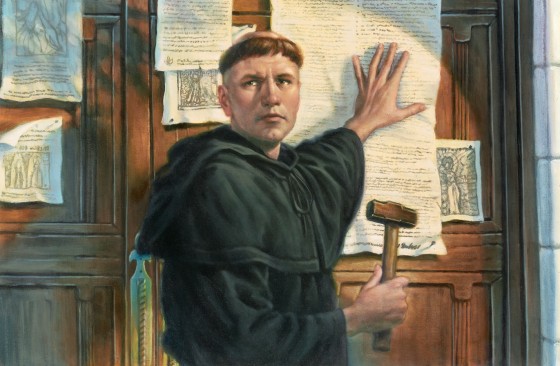
I was first introduced to Martin Luther’s theologia crucis, or “Theology of the Cross,” in seminary, in my Reformation Theology class. Once I heard of it, I was hooked! It is absolutely brilliant, and represents the best of Martin Luther’s theological offering for the church. My previous post was a tribute to Rory Wheeler, who just went home to be with the Lord as a result of the effects of cancer. Death, even for the Christian, presents lingering questions; the primary one being “why dear Lord, cannot you just vanquish this curse, right now?” It is obvious to all of those with eyes of faith, that the Lord works in ways that would appear “hidden.” He became man, a babe wrapped in swaddling cloths in a manger. He was born into a poor-man’s family from ridiculed Nazareth. The list of God’s hiddeness (Deus absconditus), of course, can be enumerated over and again. Indeed, this is where Luther’s theology of the cross finds its footing; that God works in ways that to the naked eye seem foolish (see I Corinthians 1:17-25, the passage of my Master’s thesis, and motivated by Luther’s theology of the cross). Randall Zachman provides one of the best descriptions of Luther’s theology of the cross that I have ever read. I am going to quote it in full, it is worth it; in fact if you want to continue to read my blog, your ticket 😉 is that you have to read this whole post because what Zachman has to say is that good! Here we go:

In the context of theologia crucis, faith means believing with certainty that God’s Word is true even when the whole world, the heart of the believer, and even God himself contradict the truth that is revealed in the Word, particularly the Word of promise. Thus, when God begins to show mercy, God does so by first revealing wrath (in law); when God makes alive, God does so by slaying. The same contradictions apply especially to those who have already come to faith. God promises the forgiveness of sins, yet our conscience feels nothing but sin and wrath; God promises life, yet we see nothing but death. Faith, therefore, is the art of believing the Word while experiencing, seeing, and feeling the opposite. We believe that Christ is the Son of God, even though we see and abandoned man on the cross; we believe that God cares for the church, even though we see nothing but a church persecuted by the world and apparently abandoned by God; we believe in eternal life, even though we see and feel nothing but death.

However, the primary locus of the theology of the cross is the experience of trial or tribulation (Anfechtung), when the very heart and conscience of the believer sense that God’s promise of grace and forgiveness is a lie. The believer must regard the promise of forgiveness as true and certain even though the conscience testifies to the contrary.

But under the cross which we experience, eternal life lies hidden. . . . We, too, experience the cross, and death appears to us, if not in fact, yet in our conscience through Satan. Death and sin appear, but I announce life and faith, but in hope. Therefore, if you want to be saved, you must battle against your feelings. Hope means to expect life in the midst of death, and righteousness in the midst of sins.

This is the very meaning of being simultaneously righteous and a sinner (simul iustus et peccator): to believe that we are righteous coram Deo even though we feel like condemned sinners.

Within the context of the theology of the cross, the grace of sanctification and its attestation in the testimony of a good conscience would necessarily be subordinated to the grace of justification and the promise of the forgiveness of sins. This is because the testimony of the good conscience confirms one’s faith in the promise, whereas the theology of the cross emphasizes that testimony of the conscience that contradicts faith in the promise; that is, Anfechtung. Therefore, although Luther continually insisted upon the necessity of sanctification and of the testimony of the good conscience, within the framework of theologia crucis he could not help but consistently subordinate the grace of sanctification to that of justification.

Luther’s concentration on the theology of the cross also accounts for his refusal to involve the Reformation directly in the external reform of the church. The Word of God does not deal with external, temporal things, but rather with invisible, eternal things; and such invisible things are revealed under an external appearance that contradicts what is being revealed. The theology of glory, in contrast—such as Luther found in the papacy—emphasizes externals to the point of neglecting the invisible truths revealed by the Word: indeed, to the point of calling God’s Word a lie. Thus, those in the Reformation who would introduce concern for externals—such as Karlstadt with his rejection of idols and the papal mass—misunderstanding the whole nature of the Word of the cross, and divert the attention of believers from the invisible, eternal things of God’s promises to the visible, temporal things of human reason and senses. Yet it is precisely reason and the senses that must be mortified if we are to believe that the Word of the cross is true.

Luther’s theologia crucis also explains his suspicion of those, such as the Anabaptists, who emphasized the external holiness and moral behavior of the church. If the Word of the cross reveals the truth of God under a contrary appearance, then one would expect the true church not to look like the church at all, but rather to look like God-forsaken sinners. The “synagogue of Satan,” on the other hand, with its theology glory, would look like the true church of God and would demonstrate a superior holiness externally—as in the monks and friars—but inwardly it would be rejected by God. The theology of the cross would therefore lead one not to stress the conformity of the appearance of the church with its faith, but rather stress the ways in which the appearance of the church denies its claim to be the people of God. The church looks like a gathering of sinners rejected by God and the world, whereas it is in truth the beloved people of God. The church cannot be judged by its appearance, but only by whether it has the Word of Christ crucified. Hence the primary task of the church is to preach the Word of God, while letting externals take their course. [Randall C. Zachman, The Assurance of Faith, 9-10]

How can that not bless you?! There is a lot in this, too much to talk about in toto; as far as the implications and applications, let me grab just a couple. But first I should also notice something else for us. You see Zachman refer to Luther’ “theology of glory,” this was in contrast to the theology of the cross; and it refers to (oversimplified) focusing on doing things for the praise and glory of men, instead of God (just do a word study or theology of glory study in the Gospel of John, you’ll see how this plays out) [Luther attacked the scholastic theology of his day as based upon the “theology of glory” instead of the “cross”]. Now to my applications.

1) It seems like a loving God would vanquish death so that humanity would no longer have to endure the torment of it. Indeed, he has, but it is only with eyes of faith that we understand the significance of the cross and resurrection and ascension. To the world if God is all powerful, and loving (David Hume) why doesn’t he do something about it now? The wisdom of God is displayed in hiddeness, in the unexpected; God is the God whose ways are not our ways, but the way of the cross, the unexpected! Why did the holocaust happen? Why do little kids die from cancer, or starvation? We have to interpret these kinds of questions through the hidden ways of God, through the cruciformity and cross-shaped work of God’s life. That’s the answer to Luther’s theology of the cross; the wisdom and knowledge of God is only penetrated by those who are wedded to him, in Christ, by the Spirit. And it is when we are pressed up against the most dastardly things of this life—tribulations—that we quit depending on ourselves, and throw ourselves on God’s mercy that we enter into the kind of life that God gives himself in his inner-life of mutual and interpenetrating love, Father, Son, and Holy Spirit. It is when we are pushed beyond ourselves that God’s glory in the face of Jesus Christ is just waiting to smile on is in the midst of our thlipsis, tribulation! Here is the wisdom of God, to take what is intended to destroy, and bring resurrection life out of it!

2) The second application here is a quicker observation. This one has to do with Luther’s/Zachman’s point about how the church should look vis-á-vis the theology of the cross. Frankly, it shouldn’t look like what Western, and in particular, American, upward mobile churches strive to look like. It shouldn’t look like people who have it all together. It should look like people who are broken, needy, and beggarly. When did Jesus do his greatest work of atonement? What was the crescendo of his work? When he went to the cross. When he was most broken. It was here that he brought life to all of humanity, through his death; by rupturing the bonds of self love (homo incurvatus in se), with the unbreakable bond that he shares consubstantially with the Father and Holy Spirit. That is, a life is given shape, by self-giveness; between the Father, Son, and Holy Spirit. It is through this kind of brokeness, in the mirror image of the cruci-shaped Son, that we can be the church for the world. That we have something to offer them; only when we are broken, and realize that we receive life as gift from the Father, in Christ, by the Holy Spirit.

Much more to say, but this has run long enough. I think I will talk more about the theologia gloriae “theology of glory,” in the near future.

*This is a repost, I really like what Zachman has to say on Luther’s ‘theology of the cross’; I hope you’re blessed by it today as well! Blessings.

The Problem of Sin and the Last Word, The Death of Death

I don’t know about you, but I grow weary of sin; I (we) face an ongoing battle every breath that we take. Whether it be perverse thoughts, dark deep secrets that plague the conscience, actions that result in destruction for you and all those related to you, systemic evil that permeates the very fabric of society (this is probably most insidious since we are conditioned by it in ways that give it a normalcy and thus societal and then personal acceptance); the Apostle can relate,

23But I see another law in my members, warring against the law of my mind, and bringing me into captivity to the law of sin which is in my members. 24O wretched man that I am! who shall deliver me from the body of this death? Romans 7:23, 24

We battle on. But how do we know what we battle; how do we gauge the target, how do we even know that there is a target to hit? How do we realize that evil isn’t some just mysterious lurking principle ‘out there’ that ultimately is outside of me, and not something that actually implicates my very being to its deepest depths—even when I engage in the evil ‘out there’ occasionally or situationally? How do I know, even if I can index concrete and ongoing instantiations of evil ‘out there, that the evil is indeed me? And that this all encompassing wickedness and deprivation consumes my inner self, which organically shapes my outer self—since really ourselves (body/soul) are integrated wholes. In other words, I am sin to the depths, and the reason there is sin, evil, wickedness ‘out there’; it is mostly because it has a context ‘in here’, in me. But how can I say such things, how can I ground such assertions beyond some sort of psychological intuition? We know that we are blind when the impression of light intensifies our darkness; when Jesus acts the way he does, and did, we know we are indeed blind. We come to the realization that for all our good, for all our posturing toward ourselves; that the next to the last word is that we live in a state of No, or blindness to the fact that what we see the Apostle Paul giving voice to can only come when faced with the depth of our problem as we participate in the life of Christ. The One who took our No, our blindness, and indeed our sin unto himself ‘by becoming sin for us that we might become the righteousness of God in him’ (II Cor. 5:21). As Calvin so perceptively knew, we only truly have knowledge of ourselves (and our abysmal state), when we first have knowledge of God through Christ, God the Redeemer.

It is this that John Webster masterfully elucidates as he engages Karl Barth’s vision of a christologically conditioned knowledge of sin in its most depth dimension. Let me quote Webster, who is commenting on Barth’s Church Dogmatics & Ethics, and the moral anthropology embedded therein:

[B]arth’s Christological determination of sin is not so much an attempt to dislocate ‘theological’ from ’empirical’ reality, as an argument born of a sense that human persons are characteristically self-deceived. Human life is a sphere in which fantasy operates, in which human persons are not able to see themselves as they truly are. The ‘man of sin’

thinks he sits on a high throne, but in reality he sits only on a child’s stool, cracking his little whip, pointing with frightful seriousness his little finger, while all the time nothing happens that really matters. He can only play the judge. He is only a dilettante, a blunderer, in his attempt to distinguish between good and evil, right and wrong, acting as though he really had the capacity to do it. He can only pretend to himself and others that he has the capacity and that there is any real significance in his judging. (CD IV/1, p. 446.)

This theme of concealment surfaces frequently in paragraph 60 (and elsewhere). Believing ourselves to see clearly, even allowing ourselves to suppose our sight to be sharper than that of our fellows, we are blind to the reality of our own selves. Barth acutely perceives that moral earnestness frequently rests upon clouded vision and lack of self-awareness and self-distrust. And so, once again, we return to the Christological basis for the treatment of human sin: ‘Compared with Him we stand there in all our corruption … The untruth in which we are men is disclosed … We are forced to see and know ourselves in the loathsomeness in which we find ourselves exposed and known.’

Human sinfulness, then, entails an ability to disentangle ourselves from our acts in such a way that they are no longer really ours. As Barth puts it in a passage in Church Dogmatics IV/2, we allow ourselves to believe that:

The sinful act is regrettable but external, incidental and isolated failure and defect; a misfortune, comparable to one of the passing sicknesses in which a healthy organism remains healthy and to which it shows itself to be more than equal. On this view, the individual — I myself — cannot really be affected by the evil action. I do not have any direct part in its loathsome and offensive character. In the last resort it has taken place in my absence. I myself am elsewhere and aloof from it. And from this neutral place which is my real home, I can survey and evaluate the evil that has happened to me in its involvement with other less evil and perhaps even good motives and elements; in its not absolutely harmful but to some extent positive effects; in its relationship to my other much less doubtful and perhaps even praiseworthy achievements; and especially in my relationship to what I see other men do or not do (a comparison in which I may not come out too badly); in short, in a relativity in which I am not really affected at bottom. I may acknowledge and regret that I have sinned, but I do not need to confess that I am a sinner.  (CD IV/2, p. 394)

These clarifications of the forms of human self-deception (which are by no means intended to underrate the ambiguity of the moral situation) are an important background to Barth’s treatment of original sin. His objection to some formulations of that doctrine is, at heart, that they are deficient in their account of positive evil. And his refusal of an independent locus peccati, his rejection of anything other than a Christologically determined account of sin, is directed by precisely the same concern. Far from averting attention from evil as fact, Christology is intended to furnish a means of clarifying our vision and dissolving our illusions about our own moral integrity. [John Webster, Barth’s Moral Theology: Human Action in Barth’s Thought, 69-70.]

The Apostle Paul concurs with this kind of assessment about the deleterious effects of sin upon a life that knows that it only knows its true state of affairs because of the One who finally has given the last word  to our No-being by his Yes to the Father for us—viz. a Yes that is given concrete form through his death, burial, and most importantly resurrection-ascension. The Apostle Paul, with his eyes wide open, as we noted earlier, gives a final sigh of relief when he writes:

 25I thank God through Jesus Christ our Lord. So then with the mind I myself serve the law of God; but with the flesh the law of sin. Romans 7:25

The Apostle knew, that he knew sin, not ultimately because of the Law; but ultimately, because of Christ who penetrated deeper than the Law could on its own—viz. into the cavernous depths of the human soul which left to itself continues to look at evil and wickedness as if its ‘out there’, while all along failing to realize that they’ve never even seen sin and evil and wickedness in its most grotesque form; that’s because they’ve never presumed that maybe, just maybe the most insidious form of evil, in the end, dwells where they can’t peer, where they dare not, in themselves.