Jesus, the ‘Criterion of Truth’

Let me respond to these comments made by commenter Stephen by quoting something from TF Torrance on Barth that I think is apropos to what Stephen has communicated about his own process and method of theological jesusphilosopherengagement. I don’t think Stephen is as far afield as what Torrance on Barth is critiquing, but then, I don’t really know. Here is what Stephen wrote of his approach:

In all honesty, I am extremely averse to theological precision. (I think I spend most of my time questioning dogmatics unnecessary dogmatic claims!) My exposure to world (particularly, Chile, Korea, Japan) Christianity and different Christian traditions has in many ways made me a theological minimalist.

Also, I take the consequences of positions extremely seriously and must negotiate accordingly. This does not mean I compromise on the essentials (Trinity, Incarnation, Atonement, and Authority of Scripture), but it does mean that certain dogmatic statements are accountable to human experience of reality (like a doctrine of Scripture, creation, etc).

And this [he is applying his method to a discussion about Biblical translation and human epistemology]:

My final disclaimer is that knowing the author’s original intention does not settle the issue. Even if (lest say for argument’s sake) the author meant inerrancy as traditionally understood, if human experience does not allow me to say this, than I have to reformulate reinterpret the author’s views in light experience. (Truth is truth!) Certain doctrines must take into account experience. Actually all do, but the incarnation, trinity, atonement are inaccessible now, but hopefully these views will be vindicated at the parousia by are [sic] experience when all will be revealed. [taken from here]

Here is how Thomas Torrance on Karl Barth would respond to placing this kind of premium on human experience and absolutizing it as the criterion by which we know:

[T]here is still another line of development that must be noted, not one concerned so much with history considered as the product of man’s creative spirituality or with the existentialist fear of rational criticism, but with a psychological analysis and interpretation of the religious self-consciousness that is deliberately pursued as an extension of the Cartesian line of thought – what Wobbermin called ‘religo-psychological existential thought’. This is a line of thought which takes seriously the interrelation between man’s knowledge of God and his self-knowledge, and between his self-knowledge and knowledge of God, that is, the correlation between God and man, but it is one which thinks away the free ground of that correlation in God, takes its starting-point in man’s immediate self-consciousness, and makes its ultimate criterion man’s certainty of himself. Even it that means starting from a religious ego-consciousness and returning to it as the criterion of certainty, it involves a religio-psychological circle which is fundamentally ‘vicious’, for it has no objective ground independent of its subjective movement, and no point where its circular movement comes to an end, since the ‘God’ at the opposite pole is only the correlate of man’s consciousness, and so points back to man for its testing and truth.

In all these different movements there is, insisted Barth, a basic homogeneity of method from Schleiermacher to Bultmann, in which theological thinking takes its rise from a basic determination in the being of man, so that the only truth is is concerned with or can be concerned with is truth for man, truth which can be validated only by reference to his self-explication controlled by historical analysis of human existence. Two fundamental propositions are involved in this whole line of thought: a) Man’s meeting with God is a human experience historically and psychologically fixable; and b) this is the realisation of a religious potentiality in man generally demonstrable. These fundamental propositions remain essentially the same even if the idiom is changed to that of existentialism. It is this line of thought which throws up a theology in which the Church and faith are regarded as but part of a larger context of being and in which dogmatics is only part of a more comprehensive scientific pursuit which provides the general structural laws that determine its procedure, and so are the test of its scientific character. This means that theology can he [sic] pursued only within the prior understanding, and by submission to a criterion of truth, derived from a general self-interpretation of man’s existence. Thus theological activity becomes merely the servant of man’s advancing culture, and the tool of a preliminary understanding which, as Bultmann claimed, is reached ‘prior to faith’. [Thomas F. Torrance, Karl Barth, Biblical and Evangelical Theologian, 34-5.]

Not wanting to push commenter, Stephen to places he might not want to go, or be identified in; I cannot help but see Stephen’s methodology being critiqued and described in Torrance’s accounting. The Bible and Theology know nothing of a human experience (ontologically) abstracted from the human experience of God in Jesus Christ (as definitive and determinative of what it means to be human). There cannot be some sort of notion of human epistemology that has an active intellect of its own that is able to abstract a logical-deductive schemata of categories from its interplay with a pure nature of passive reality that then becomes the criterion by which humanity vindicates the reality of God in Christ. As Torrance notes, “… one which thinks away the free ground of that correlation in God, takes its starting-point in man’s immediate self-consciousness, and makes its ultimate criterion man’s certainty of himself. Even it that means starting from a religious ego-consciousness and returning to it as the criterion of certainty, it involves a religio-psychological circle which is fundamentally ‘vicious’, for it has no objective ground independent of its subjective movement, and no point where its circular movement comes to an end, since the ‘God’ at the opposite pole is only the correlate of man’s consciousness, and so points back to man for its testing and truth….”

If we believe that our experience is more certain than the objective experience of God, REVEALED (exegeted cf. Jn. 1.18) in Jesus Christ; then we will only haplessly be able to end up back in the ‘vicious’ circle, that Torrance notes above, of displacing God’s certainty with a religio-psychologically certainty of our own. And in the end we end up back in the ‘Liberal’ theological project of Schleiermacher, and not the orthodox one of Barth and even the Trad. And theology becomes driven by my experience, my ‘feeling’, and by anthropology of a certain kind; the kind that believes our capacity to speak of God can only be fleeting projections of our own imaginations that remain cut off from the inaccessibility of the Triune God who became incarnate and left nuanced and detailed disclosure and attestation of that in Scripture.

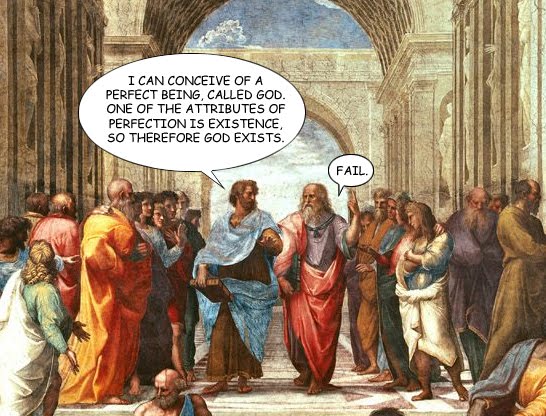
Really, Nash? Ronald Nash’s Attempt to Critique Torrance, Barth and the Whole Crew: My Brief Response

It is always nice when an Evangelical (Reformed) philosopher of religion takes note of Christian Dogmaticians outside of their normal sphere of comfortability, but sometimes this is a dangerous path to travel. Such is the path philosophythat Ronald Nash has chosen to trek.

I was sent some copies of pages (Pdf file) from Ronald Nash’s book The Word of God and the Mind of Man  from a reader of my blog, an MDiv student (just finishing up) at Fuller Seminary—this reader is about to become (Lord willing!) a pastor in a Presbyterian church in the States. Anyway, he has been turned on to Torrance as a result of some exposure that he has received while attending Fuller (which is no surprise). Apparently he was reading this book by Nash (or became aware of Nash’s critique [of Barth, Torrance, and others like minded]), and came across the points of critique that the rest of this post will endeavor to engage. I am not really intending on mounting a defense, but more of a short (bloggy) exercise in providing context that will contravene and contradict Nash’s reading of Torrance in particular. In the following, as we read along with Nash, I hope you will notice how shallow of an attempt Nash’s is to provide critical depth in engaging Torrance’s perspective on reality, theology, etc. Here is what Nash writes (I will offer quote in full, in order to provide the necessary context):

[…] Can a similar distrust for or contempt for logic and reason be found in the writings of Christian theologians [Nash has just finished reviewing a theologian or philosopher with the last name of Stace, who I am unfamiliar with; but Nash seems to think that Torrance, Barth and others are engaging in the same style of mystical aberrant and irrationalist kind of theologizing as Stace, it is just that Nash thinks Torrance is more cloaked in his mode]?  One thing that hinders a simple answer to this question is that few writers are as daring and as explicit as Stace. Discussions about the proper place of reason in religion are frequently plagued by inattention to tow quite different senses the word reason can have. Consider the following claims:

(1) The Incarnation is unreasonable; that is, the claim that Jesus Christ is God in incredible. I simply cannot believe it.

(2) The Incarnation is unreasonable; that is, the doctrine of the Incarnation violates the Law of noncontradiction.

In the second case, a particular Christian belief allegedly violates a principle or law of logic. Anything that is unreasonable or irrational in sense (2) is such in an objective and universal way. But in the first case, a particular Christian belief is called unreasonable simply because some person cannot understand it or believe it. Unreasonableness in sense (1) is person-relative. It should be obvious that all sorts of beliefs that some people cannot accept and thus find irrational are readily acceptable and rational to others.

When religious thinkers [ha, not Christian, eh, Nash?] like Søren Kierkegaard, Karl Barth, and Emil Brunner proclaimed the irrationality of certain Christian beliefs, I suspect that what they really meant to say was that something about Christianity was so shocking and so offensive to the “reason” of many unbelievers that they (the unbelievers) found it irrational. Since the New Testament itself suggest this position, and since it accords with what any observer can detect in the reactions of people to many Christian claims, the view itself is quite unexceptional.

Unfortunately, the extreme rhetoric of some Christian writers suggests that they also mean to say that Christianity is unreasonable in the second sense, that it actually involves violations of the law of non-contradiction. The writings of the Scottish disciple of Karl Barth [which by the way, Torrance was not an uncritical disciple of Barth, see Alister McGrath’s T. F. Torrance, An Intellectual Biography], Thomas Torrance, are a case in point. Torrance certainly appears to claim that there is a difference between God’s logic and human logic [that’s weird!, God forbit it!, you mean I don’t have anything in myself to stand on that provides rational certitude?], and, further, that the forms of “human logic” cannot be extended to a transcendent God. Torrance seems to believe that human “ideas and conceptions and analogies and words are too limited and narrow and poor for knowledge of God.” His suspicions about purely “human” logic are evident in such statements as: “Real theological thinking” should be freed from “imprisonment in timeless logical connections.” Knowledge of eternal truth, he suggests, is hindered by insisting on “fixed categories of thought.” What Torrance seems to give us is a statement that human knowledge about God is impossible and that human forms of reasoning are completely incapable of understanding truth and reason as it exists in the mind of God. [brackets throughout are mine] [Ronald N. Nash, The Word of God and the Mind of Man, 93-4.]

Grr … where do I start? Let me start with Torrance himself; here is a kind of summarizing quote of Torrance’s style of theologizing, and something that directly illustrates the kind of thing that Nash is seeking to critique (in a passive aggressive way, you’ll notice his frequent usage of “it seems” throughout this quote from him, but then he later offers the aggressive side of this in his critique of Torrance as he apparently has moved beyond his perception of “it seems” into “it is” or “this is how it is” and “this is why Torrance and others like him are wrong”). Anyway, here is Thomas Torrance:

[O]ur task in christology is to yield the obedience of our mind to what is given, which is God’s self-revelation in its objective reality, Jesus Christ. A primary and basic fact which we discover here is this: that the object of our knowledge gives itself to us to be apprehended. It does that within our mundane existence, within our worldly history and all its contingency, but it does that also beyond the limits of previous experience and ordinary thought, beyond the range of what is regarded by human standards as empirically possible. Thus when we encounter God in Jesus Christ, the truth comes to us in its own authority and self-sufficiency. It comes into our experience and into the midst of our knowledge as a novum, a new reality which we cannot incorporate into the series of other objects, or simply assimilate to what we already know. [Thomas F. Torrance “Incarnation: The Person And Life Of Christ,” 1.]

In other words, for Torrance, there is no analogy in nature for the Incarnation; I am not aware of any analogies that ontologically correlate to the Incarnation, apparently Nash, though thinks that the Incarnation represents something ordinary and mundane; such that any average sentient person could rationally conceive of such—simply by reflecting on the proclivities of nature, abstracting said proclivities and then using this as the Foundation[alism] upon which we as humans know God through, and by which we justify His existence as God. Torrance, if Nash would have taken the time to actually read or attempt to faithfully understand him, would have understood what causes Torrance to write such as he does in the quote that I just provided from TF. Torrance inverts Nash’s paradigm, and sees our order of knowledge contingent upon an antecedent (or ‘outside of us’) order of ontology. In other words, Torrance believes in what he calls an epistemological inversion (which if Nash really read Torrance’s ‘Theological Science’ he would know) wherein for knowledge of God to be truly determinative of a genuine knowledge of God, that this knowledge is Revealed not philosophically discovered. And so, we can only come to know God under the constraints and categories that are imposed upon us by the nature of the reality with whom we encounter, God in Christ.

There is much more that I need to say about this. And it gets even more philosophical, but of the kind that Nash is not comfortable(it has already been made into a demon by him, in need of exorcism); there is the reality of Continental Philosophy at play in much of what Torrance and Barth are dealing with. But I think I will save that discussion for another day, and another post. Suffice it to say, Nash, and anyone really serious about critiquing Barth, Torrance & co. ought to read the more recently released book (2011)  Karl Barth And American Evangelicalism edited by Bruce L. McCormack & Clifford B. Anderson. Obviously this book post-dates Nash’s book, but in a revision, this could be helpful for Nash and his students. McCormack’s and Anderson’s edited book (which I am still reading) provides excellent background and coverage of the issues that Nash is superficially (without understanding) critiquing in the aforementioned quote from him.

I will close by asserting that it is all about Faith, not of the blind variety, but of the variety that is grounded in the vicarious humanity of Christ. The kind that provides vision of the Father, that outwith all we will end up doing is worshipping the creation rather than the Creator.

I almost forgot; I ran a series of posts that dealt with this kind of issue of Torrance and his purported method before. Here is the link to the index of those posts: Click Here

We Need More Christian Dogmatics and Less Apologetics

I am just rereading John Webster’s chapter in The Oxford Handbook of Systematic Theology on ‘Theologies of Retrieval’. As he begins his essay he sketches how theologian Eberhard JĂźngel engages this mode of theological endeavor in his book God As the Mystery of the World. In his sketching, Webster highlights JĂźngel’s primary thesis overriding his book, and that is […] “The book is best read as a set of analytical soundings in the modern history of the relation between theology and philosophy, seeking to show how the rise of atheistic philosophy is parasitic upon decay in Christian thought about God….” (Webster, p. 586) This is a very intriguing point, and one that Christian Fundamentalism, which has now come of age in American Evangelicalism would do well to take heed to. I say this because in many quarters of Evangelicalism—and I say in the quarters that make up the academic side of Evangelicalism, mostly found in seminaries, and then parachurch ministries—there is still to be found the ‘fighting Fundy’ spirit. That is, Evangelicals are consumed with matching wits with their atheist and “Liberal” counterparts by engaging the atheist (or whomever) on their own terms; nary realizing that maybe the terms set by the atheist panoply might be a result of Christians (Evangelicals or otherwise) not taking care of proper business in their own house. Namely, that Christians, in their abandonment of the doing of actual Christian Dogmatics (Theology) have in this vacuum created space for antagonists to the Christian faith to bottom feed off of the waste produced or not-produced by Christian thought today. Webster writes further of JĂźngel’s thesis:

apologetics

[W]hat is most noteworthy in JĂźngel’s diagnosis is its focus on the mismatch between the authentic content of Christian faith and the conceptual version of itself by which it sought to retain its authority in the face of modern critiques. ‘Atheism’ is as much a child of theology’s theistic self-alienation as of philosophical unbelief. JĂźngel’s presentation of this authentic content is undoubtedly dogmatically compressed, appealing to only a narrow selection of doctrinal material; and his historical narrative can lack complexity and nuance. The book’s appeal is, indeed, as much kerygmatic as historical. What gives strength to his account is his insistence that the crisis of Christian thought and speech about God ‘is to be worked through in terms of the particular character, the proprium of the Christian faith’ (JĂźngel 1983:229). What is required is not a more effective apologetic strategy but a better dogmatics. [emboldening mine] [John Webster, The Oxford Handbook of Systematic Theology, Chapter 32 Theologies of Retrieval, 587.]

Maybe if Christians, and Evangelicals in particular, got back to engaging with actual positively shaped Christian Dogmatics (instead of following the ‘negative way’), and abandoned the current trend of continuing to engage with a god largely shaped by classical theism (still!); then maybe atheists and the rest of the unbelieving crowd would lose the traction they currently have in the culture today. It is much easier for an atheist to argue with a conception of god that is humanistically constructed based on philosophical reflection and abstraction of the universe versus dealing with a God, who by definition, is shaped by His own internal Self-presentation and revelation through Jesus Christ. If ‘apologists’ were to become theologians, instead of philosophers, atheism might fade away; and if not fade away, it would at least have to reconsider how to assail the conception of the Christian God who resists philosophical manipulation, and instead contradicts it (by the wisdom of the cross!). We need more Christian Dogmaticians, and less Christian philosophers of religion.

Origins, Dawkins, and the Myth of Origins: A Faith Account

It is often assumed by atheists/fundamentalists like Richard Dawkins and the so called new Atheists that macro-evolutionary biology, and big-bang cosmology (amongst other disciplinary distinctives) is the death-knell for richard-dawkinsthe Christian explanation of things; i.e. that reality has an explanation that is extra nos (outside of us), and thus is not absolutized or made immanent to material nature itself. These new Atheists though, move too quickly; they presume that their explanation for reality—metaphysical materialism—comes with its own explanatory power as to the origins itself. But one major problem with this supposition is that the categories with which their supposed explanation for origins comes, does not by definition come with something outside of material reality; and thus by definition—if material reality is the end in itself that these new Atheists naĂŻvely presuppose it to be—the confines of thought from which they have to work, at a first order level (or a general knowledge level) is defined with the prior commitment that material reality is all that there is. But, again, this does not tell us about the origin of material reality, it only tells us that there is material reality, and that material reality, enclosed in on itself, as it is, has a set of conceptual categories through which to think; but these categories, by definition, do not include the kind of conceptual ingression required to explain the origins of material reality itself. And so these new Atheists fool themselves into thinking that they have a corner on reality, that left to their own devices, they really don’t have after all. David Bentley Hart makes my point more prescient:

There is, after all, nothing inherently reasonable in the conviction that all of reality is simply an accidental confluence of physical causes, without any transcendent source or end. Materialism is not a fact of experience or a deduction of logic; it is a metaphysical prejudice, nothing more, and one that is arguably more irrational than almost any other. In general, the unalterably convinced materialist is a kind of childishly complacent fundamentalist, so fervently, unreflectively, and rapturously committed to the materialist vision of reality that if he or she should encounter any problem—logical or experiential—that might call its premises into question, or even merely encounter a limit beyond which those premises lose their explanatory power, he or she is simply unable to recognize it. Richard Dawkins is a perfect example; he does not hesitate, for instance, to claim that “natural selection is the ultimate explanation for our existence.” But this is a silly assertion and merely reveals that Dawkins does not understand the words he is using. The question of existence does not concern how it is that the present arrangement of the world came about, from causes already internal to the world, but how it is that anything (including any cause) can exist at all. This question Darwin and Wallace never addressed, nor were ever so hopelessly confused as to think they had. It is a question that no theoretical or experimental science could ever answer, for it is qualitatively different from the kind of questions that the physical sciences are competent to address. Even if theoretical physics should one day discover the most basic laws upon which the fabric of space and time is woven, or evolutionary biology the most elementary phylogenic forms of terrestrial life, or palaeontology an  utterly seamless genealogy of every species, still we shall not have thereby drawn one inch nearer to a solution of the mystery of existence. No matter how fundamental or simple the level reached by the scientist—protoplasm, amino acids, molecules, subatomic particles, quantum events, unified physical laws, a primordial singularity, mere logical possibilities—existence is something else altogether. Even the simplest of things, and even the most basic of principles, must first of all be, and nothing within the universe of contingent things (nor even the universe itself, even if it were somehow “eternal”) can be intelligently conceived of as the source of explanation of its own being. [David Bentley Hart, Atheist Delusions: The Christian Revolution and Its Fashionable Enemies, 103.]

The author to the Hebrews has written:

 3 He is the radiance of the glory of God and the exact imprint of his nature, and he upholds the universe by the word of his power. After making purification for sins, he sat down at the right hand of the Majesty on high, ~1:3

3 By faith we understand that the universe was created by the word of God, so that what is seen was not made out of things that are visible. ~11:3

Thomas Torrance articulates the God-world relation by using the concepts of God’s non-contingent independence, and the world’s contingent independence; I think this asymmetric mutually implicating binary correlates well with what Hart is getting at. The world cannot provide its own ground for its own being. The world can speak of things from within its own being because the being of the world is given an intelligible order and coefficient knowledge because of its contingent dependence upon something else as the given for its being as the world. It is thus unintelligible to assert that the world has its own independent giveness based upon what we can emperically observe in the given world. In other words, the fact that there is a given world presupposes something that the world itself, left to itself, cannot explain under its own strength. This is what the author to the Hebrews is asserting; that is, that we cannot explain the being of the world by the being of the world by finding an analogy in the being of world for its own being (this is circular). Instead we must relate to the giver of the giveness of the world through an analogy or relation of faith; and this is only possible if the giver of the giveness of the world graciously chooses to reveal himself to us, breaking in on the world he has given its being to.

In short, the new Atheists need something more than they have available to them, left to their own bereft machinations and apparatuses. They need more than the being of this world has to offer them; they need some grounding that will allow them to discern the possibility, more, the reality, that the world itself, by definition, is contingent; not upon itself, of course, but upon a ground that comes before the being of the world itself. But this would mean that they would have to walk by faith, not by sight; and unless they have the Spirit they will never be able to say that Jesus is Lord—of all men (and women), then, they are the most to be pitied.

Holding Scripture Together: Either Jesus or You §1.

This post will dovetail nicely with my last two posts (here1 & here2) on Scripture, and Biblical interpretation, respectively. In this post (short article) I will focus on Karl Barth’s (please don’t let that scare some of you away!) dialectical hermeneutic, and his view on what stands as the unity of the ‘Testaments’, Old and New. Barth’s view, as reported and developed by George Hunsinger, is corollary with Myk Habets’ and my view, and our own approach which we have labeled as a dialectical mode of engaging the text of Scripture at an interpretive level (we have developed this in chapter 15 of our edited book, in our co-written ‘Theses’ chapter). In fact, let me open up this article with a quote from what Myk and I have written on this, and then we will jump into Barth’s ‘faith’ approach to understanding the unity and diversity in Scripture. [Before pressing on, let me provide an editor’s note: this short article has become longer than I had initially planned for, so I will break it up into two posts; the first post will be sharing what Myk and I have written on this topic, and then the second installment will be touching on Barth’s similar understanding, with a flare that only he can provide.] Here is what Myk and I have written (and this will be at length):

Thesis Nine

Evangelical Calvinism is a form of dialectical theology.

The systematic theology of Evangelical Calvinism is dialectical in character rather than strictly philosophical or analytical. It is not content to formulate a system of theology whereby Christianity is reduced to timeless, logical truths about God. The God of biblical revelation presents us with logical problems, seeming paradoxes, surprising features which cannot simply be resolved by discursive reason. “Thus, dialectical theology is a protest against rationalistic religion in whatever form it occurs, whether the natural theology of Thomism, a theological liberalism shaped by idealist philosophy or a conservative orthodoxy that reduces theology to logically systematized propositions.”39

Padgett and Wilkins also point out that dialectical theology has two additional tendencies, “a rejection of any philosophical system as normative for theology and a substructure, either implied or explicit, informed by existentialism.”40

Those working within an Evangelical Calvinism find no compulsion to allow strictly logico-deductive reasoning to determine the final outcomes of their systematic theology, preferring instead to use the conceptual apparatus of philosophy as a servant of the Word so that a truly theo-logic dominates. Charles Partee provides an important and correct insight on John Calvin in this regard, which resonates with Evangelical Calvinism’s approach:

Calvin’s theology is properly concerned for right answers, but his right answers should be understood not as a logically unassailable system of ideas but in terms of their adequacy as a heartfelt confession of faith attempting to protect the mystery of God’s revelation. This confessional nature of theology takes precedence over all its rational truth, not even a system rationally explicating revealed truth. Calvin’s theology is a systematic offering of faithful witness to the truth revealed by God in Jesus Christ.41

Evangelical Calvinists (attempt to) resist the urge to fill in the gaps, and remain satisfied with the dialectical situation that often occurs as a result of studying the living triune God and his Word written.

The canon of Scripture knows of no deterministic logical reasoning; this, we argue, is the product of Aristotelian, Augustinian, Newtonian, and much later, Scholastic “causal connections.” The alternative is of course a created connection in which God reveals himself (personally and propositionally) in an analogous way by means of his Word and Spirit. When philosophical causal connections are adopted as the totality of ones hermeneutic then all manner of topics in Scripture lapse into absurdity (or at the least, are reduced to rational categories and not historical ones). Here one thinks of such dialectical issues as Divine sovereignty and human free will; or salvation and damnation; or the prohibition against “seeing” God and living and the testimony of Scripture of those people who do “see” God and do live. This is not to deny that free rational agency and compulsion by objective reality go together: they do—but they do so within the created categories given to us by the God who alone is free and who, in his freedom, creates humanity in his image but with a contingent freedom and thus with a contingent confession.42

An illustration may prove useful at this point; the example of human free-will. We have to assert, in light of Scripture and the life of the Incarnate Son, that our freedom is limited, because it is contingent, but in this limitation we find it is truly free when assessed, not by causal connections we may make within creation (a closed system of reference), but free in relation to God who alone is free. We are thus free for something—to do the will of God, and not free in any sense of abstract causality. Thus free-will is defined by the Apostle Paul, in light of the Christ event, as a will enslaved to the will of God: “Paul a bond-servant of Christ Jesus, called as an apostle, set apart for the gospel of God” (Rom 1:1 NASB). Jesus himself defined human free-will in the same way when he taught us to pray to the Father that his will be done on earth as it is in heaven (Matt 6:9-10). Jesus further modeled such free human will when he stated, repeatedly, that he came to do the will of the one who sent him and not his own will: “For I have come down from heaven, not to do my own will, but the will of him who sent me” (John 6:38). Thus we affirm that free-will is God’s will made our own and not our self-will: “For whoever does the will of my Father who is in heaven, he is my brother and sister and mother” (Matt 12:50). Self-will is, to the contrary, slavery to sin. Thus causal connections—the hermeneutics of Classical Theism and Classical Calvinism—are logical but not theo-logical. Thus Evangelical Calvinism operates with a theo-logical hermeneutic and not simply a philosophical logic that results in determinist and dualist ways of thinking and systems of theology.43 [Myk Habets and Bobby Grow, eds., Evangelical Calvinism: Essays Resourcing the Continuing Reformation of the Church, (Eugene, OR: Pickwick Publications, 2012), 440-41.]

As you read this you will notice that we are apparently arguing against another and disparate approach to understanding Scripture and its diversity; we are arguing against any approach that we try to systematize Scripture in a way that reduces it to a series of proof-texts, proof-texts that in the end gloss over Scripture’s primary point, Jesus, in favor of whatever ‘system’ is being appealed to as that which gives Scripture its unity. So to keep this less abstract, by way of illustration, what I am referring to is something like classic Calvinism, Arminianism, Open Theism, Historicism[s], etc. superimpose on Scripture with the goal of trying to make it make sense for whatever audience this system is trying to appease. This, as Myk and I have already stated, can only flow from a posture towards Scripture (even good intentioned) that is philosophical, and thus not truly ‘Biblical’ in the sense that Scripture itself presupposes; i.e. that Jesus is the true center (cf. Jn. 5:39), and He is the true center ‘all the way down’, methodologically and principally. If a system starts somewhere else other than with Jesus, methodologically, and instead it starts with ‘Salvation’ as its starting point, for example, then the result will be a study in anthropology (the study of humans) superimposed onto the text of Scripture—and all of its attendant philosophical substructures.

The goal for the Christian reader and interpreter of Holy Scripture ought to be where it goes; it ought to twist and turn in its cavernous and sloping ways such that the only way that it is able to hold all of its disclosure about God together has to be a person, has to be Jesus Christ instead of a philosophical superstructure that (with good intention) seeks to smooth Scripture out. Smooth it out in a way that Scripture becomes our possession, it becomes man’s and woman’s possession; insofar that their conceiving, their philosophizing holds Scripture together.

We will pick up the rest of this story in the next installment of this two post series on the unity and diversity of Scripture as Christ. Hopefully this has whetted your appetite for more.

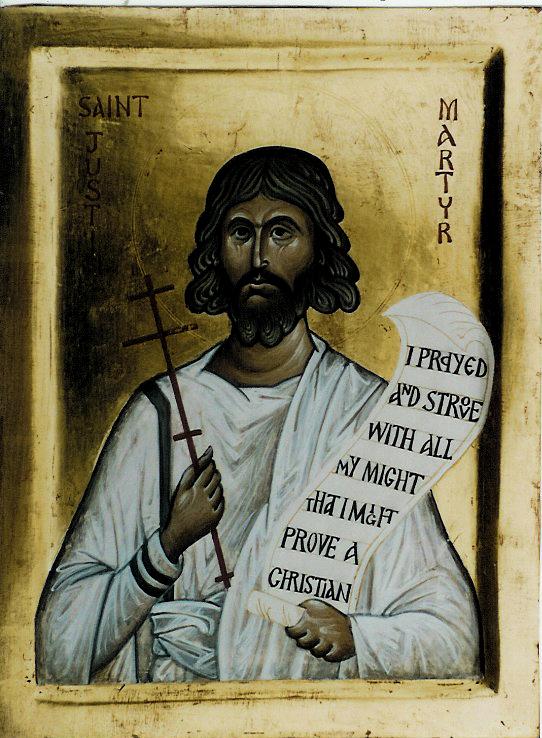
A Christian Apologetic: Torrance and “Justin Martyr,” Proving Jesus

Thomas Torrance, in his Theological Science (his theological method, and a title of one of his books), follows what he calls an epistemological inversion; in short, epistemological inversion is the approach that holds out that an object or subject (or both as in the case of Christian Theology) acts upon us (the knowers and inquirers), such that it itself opens up to us its own reality and structures of thought—this process remains an open structured event. It is from within this context that we can better understand Thomas Torrance’s appropriation of someone like Justin Martyr, and his defense of Christian reality and the Christic event itself (one and the same). Let’s follow along as Torrance engages Martyr, this quote will end with Torrance quoting Justin (which is the piece I really want to get to with this post—viz. Martyr’s “argument”):

The distinctive feature of this Word is its relation through the Spirit to historical facts and events. It is when we allow the Scriptures to direct us to these facts and events that our minds fall under the power of their truth and we are compelled to believe for they carry in themselves their own demonstration. This is not, of course, any kind of logical proof, but the kind of demonstration that arises immediately out of the facts and events themselves through their self-evidence. This is particularly well expressed in a fragment of a lost work on the resurrection that has survived through John of Damascus and attributed to Justin.

[T]he Word of truth is free, and carries its own authority, disdaining to fall under any skilful argument, or to endure the logical scrutiny for its hearers. But it would be believed of its own sake, and for the confidence due to him who sends it. Now the Word of truth is sent from God, wherefore the freedom claimed by the truth is not arrogant. For being sent with authority, it were not fit that it should be required to produce proof of what is said, since neither is there any proof beyond itself, which is God. For every proof is more powerful and trustworthy than that which it proves, since what is disbelieved, until proof is produced, gets credit when such proof is produced, and is recognised as being what it was stated to be. But nothing is more powerful or more trustworthy than the truth; so that he who requires proof of this, is like one who wishes it demonstrated why the things that appear to the senses do appear. For the test of those things which are received through the reason, is sense; but of sense itself there is not test beyond itself. As then we bring those things which reason hunts after, to sense, and by it judge what kind of things they are, whether the things spoken be true or false, and then sit in judgment no longer, giving full credit to its decision; so also we refer all that is said regarding men and the world to the truth, and by it judge whether it be worthless or no. But the utterances of truth we judge by no separate test, giving full credit to itself. And God, the Father of the universe, who is the perfect intelligence, is the Truth. And the Word, being his Son, came to us, having put on flesh revealing  both himself and the Father, giving to us in himself resurrection from the dead and eternal life afterwards. And this is Jesus Christ our Saviour and Lord. He, therefore, is himself both the faith and the proof of himself and of all things. [Thomas F. Torrance, Divine Meaning, 95-6; the quote from Justin, De resurrectione, 1.1f, from the Sacra Parallela of John of Damascus. E.T. from Ante Nicene Christian Library, vol. 2, pp. 341ff. This is not generally accepted as Justin’s own work, but like the Cohortatio ad Graecos was at least written under his influence.]

For all those weary souls who have labored under the Evangelical mantle of ‘Fighting Fundamentalism’ and the Apologetic Faith (as Warfield called it); won’t you join me in commending yourself to a more Christian Way? A ‘Way’ that does not entangle itself in the realm of rationalist-historicism, that seeks to ‘prove’ Jesus to themselves and the world. I am sure that it is the other way around … we are in need of ‘proving’. And I think the “Martyr” quote helps us to think in this order, and not the order of the “world.”

No Knowledge of God Outside of Christ: A Christian Faith Understanding

I thought this quote from Paul Molnar on Thomas Torrance’s Trinitarian Theology of Creation would be timely:

Torrance’s view of God the Creator was strictly determined by his Trinitarian theology so that, in order to understand his explication of the doctrine of creation, it is important to realize that his thinking remains structured by Athanasius’ insight that it is better to “signify God from the Son and call him Father, than to name God from his works alone and call him Unoriginate”. What this means is not only that, following the Council of Nicaea, Athanasius stressed the centrality of the Father/Son relation for understanding God the Father Almighty who is the Creator, but that he wanted to stress that this same relation must have “primacy over the Creator/creature relation. The latter is to be understood in the light of the former and not vice versa”. Or, to put it another way, “while God is always Father he is not always Creator” and “it is as Father that God is Creator, not vice versa”. . . .[1]

And then how Thomas Torrance understood theological method as Christological method. This might help, for some, to illustrate how and why Torrance would not be an advocate for what is known as natural theology (knowing God from a naked creation), or an analogy of being (using humanities’ reflection upon itself and as the analogy for what God’s being must be like—this is also extrapolated out as man reflects on nature in general, conceiving of what kind of God it must have taken to create (or what kind of power)—it is through this kind of abstractive reasoning that  concept of godness is constructed (Philosophers like Aristotle and Plato would be prime examples of this kind of work). Instead, Torrance, in the footsteps of Barth (although with his own rationale and emphases) works through an analogy of faith (the idea that knowledge of God, as Athanasius articulates in Molnar’s quote above, only comes through relation to God in and through Christ’s vicarious faith for us). Here is what Torrance conceives:

Our task in christology is to yield the obedience of our mind to what is given, which is God’s self-revelation in its objective reality, Jesus Christ. A primary and basic fact which we discover here is this: that the object of our knowledge gives itself to us to be apprehended. It does that within our mundane existence, within our worldly history and all its contingency, but it does that also beyond the limits of previous experience and ordinary thought, beyond the range of what is regarded by human standards as empirically possible. Thus when we encounter God in Jesus Christ, the truth comes to us in its own authority and self-sufficiency. It comes into our experience and into the midst of our knowledge as a novum, a new reality which we cannot incorporate into the series of other objects, or simply assimilate to what we already know. Thomas F. Torrance says in his, “Incarnation: The Person And Life Of Christ,” 1

So for Torrance, and me, there is no “natural” knowledge of God available; it is strictly limited to God’s Self-revealed knowledge of Himself in Christ. Just as Jesus said, “Jesus answered: “Don’t you know me, Philip, even after I have been among you such a long time? Anyone who has seen me has seen the Father.” As Athanasius and Torrance press, knowledge of God, for the Christian, must be knowledge of God as Triune or it is not truly knowledge of God; nor, is it Christian.


[1] Paul D. Molnar, Thomas F. Torrance: Theologian Of The Trinity, (Ashgate Publishing Limited, England, 2009), 73.

The Philosopher’s Theology, and Calvinism

I am writing a review for this book right now, for the Pacific Journal of Baptist Research; I should be done with the review by tomorrow. But I thought I would throw something up here from the book for your consideration. Michael Rea writes:

The methodological divide between systematic theologians and analytic philosophers of religion is ripe for exploration. It is of obvious theoretical importance to both disciplines, but it also has practical import. The climate in theology departments for analytic theologians is muck like the climate in English-speaking philosophy departments for continental philosophers: often chilly. Moreover, the methodological divide is surely the most significant obstacle to fruitful interdisciplinary dialogue. The problem isn’t just that academics with different methodological perspectives have trouble conversing with one another. Rather, it is that, by and large, the established figures in both disciplines don’t even view mutual conversation as worth pursuing. They ignore one another. They (implicitly or explicitly) encourage their students to ignore one another. They allow their methodological preferences to play a very large role int their judgments about hiring and about the quality of papers they referee for professional journals. And the divide only grows deeper. No doubt many (on both sides) will thin that all of this is perfectly legitimate. Maybe it is, but that is beside the point; its legitimacy shouldn’t just be taken for granted. It is an open and interesting question whether theology can sensibly be done in the analytic mode. [Michael C. Rea in Analytic Theology: New Essays in the Philosophy of Theology, edited by Oliver D. Crisp and Michael C. Rea, 2]

For some of you you could care less about what appears to be cutting the bologna way too thin. But I assure you this represents a substantial issue with real life fall-out (which I understand personally). The divide that Rea is speaking about represents a substantial methodological difference between how folk “do” theology. The difference is the difference between starting with Christ, in principle (principially) and methodologically (which is the method I follow); or starting with generic philosophical abstractions about nature and the god of nature, and from this set of principles working toward God and Christ. This divide works its way out, finally, to the issue that I am often harping on here at the blog; the distinction that I often draw between classical Calvinism and Evangelical Calvinism—viz. the disparate doctrines of God, for example (do we have a substance metaphysic [classic Calvinism] or a [onto] relational metaphysic [Evangelical Calvinism] shaping how we conceive of God and all the subsequent doctrines that follow? etc.).

I realize that I moving fast, from one thing to the other; but I want to illustrate how this “divide” that Rea is speaking about can play out THEOLOGICALLY.

An Apologetic Existence

This post is a response to and reflection on C. Michael Patton’s recent post: A Short Defense Of The Christianity (To Myself). He summarizes the gist of his post in his concluding remarks when he writes this:

… this is my trek when I have my doubts. They stabilize me. I am not saying they are going to stabilize you in the same way. It is these four points that keep my faith anchored. There is a God. He has communicated. Jesus rose from the dead demonstrating the truthfulness of his claims. And Jesus is God incarnate (“in the flesh”) who lived a perfect life, making life with God possible to all who put their trust in him. I could believe more. My faith is not perfect. However, when my faith is challenged, these intellectual benchmarks serve as a powerful  immunity to doubt and disbelief.

I could believe more. I hope each day that I believe more. Only in eternity will I have my faith fully vindicated. Only in eternity will my faith be perfect. But until then, these four points are sufficient for me not only to be a Christian, but to sacrifice every moment in service to Jesus.

My response and reflection to this, is this; ultimately, this modus operandi and mode of being somewhat disheartens me. To be clear, like Patton, for years upon years I struggled with deep existential doubt; the kind that can make dark nights of the soul more like black periods of existence. Nevertheless, it was (and sometimes is) this kind of doubt that pushed me to read and study and think in ways that I would not have; lest doubt. So I don’t want the impression to come across that I am coldly dismissing Patton’s honest reflection on his own spiritual plight; instead, the rest of what I am going to say is meant to push Patton (and myself), and other Evangelicals (especially) to move on to an existence and Christian spirituality that is itself, Christian.

To be Christian—to think Christianly—moves beyond Apologetics101. And yet for many, if not all, evangelical Christians, apologetics of a kind that serves to provide a rational defense and basis for one’s faith continues to be the raison d’ĂŞtre (reason for existence) and mode through which people like Patton find their continued coherence for life and purpose. In other words, everything is riding on Patton’s capacity to defend his faith to himself; if for some reason he no longer is able to sustain a virulent labyrinth of responses to the unbelieving self, it seems his life and faith are in jeopardy of at least becoming a simple Theist.

Ultimately, my problem with this is that the anthropology that is funding Patton’s ongoing trial of existence is grounded in an intellectualist one; an anthropology that sees humanities’ mind/intellect/rationality as the defining feature of what it means to be human. This kind of existence and anthropology takes seriously Descartes’ cogito ergo sum (I think therefore I am), and majors on the premise that in order for my existence to be meaningful I must be in a constant state of flux and thought; continuously ensuring the purpose of my own existence. Ultimately, Patton’s mode is anthropocentric; because it disjoints humanity from humanities’ ground of real existence in the humanity of Jesus Christ ‘for us’. Patton has to somehow conceive of a way, that is abstracted from Christ, to once again join himself with Christ. Patton’s method for doing this is not rooted in what has already taken place in the hypostatic union of God and man in the person of Christ; instead, Patton is, as a pilgrim, seeking a route that will enable him to join his humanity with the humanity of Christ. But where is the Spirit in Patton’s account? Patton is in need of a robust Christological theological anthropology.


How To Think Theologically and Historically, or Christianly, as an Evangelist

Analytic theology would have us bound by analytics, and even foundationalism. The general populace at large has been infected by this disease of “faith seeking proof of the self.” This bait is always present for the theologian and biblical exegete; that is the bait of establishing the self as the canon of all that is right and true in the world. I recently fell prey to this bait when in discussion with someone from the general populace side. The bait, in this instance was “proving” the historicity of the resurrection of Christ through the canon of self (or maybe positivism). The Apostle Paul admonishes us, and writes: “For although we are walking in the flesh, we do not wage war in a fleshly way, since the weapons of our warfare are not fleshly, but are powerful through God for the demolition of strongholds. We demolish arguments and every high minded thing that is raised up against the knowledge of God, taking every thought captive to the obedience of Christ.” [II Corinthians 10:3-5] We are Christians, and we are guardians of the truth of the Gospel as we participate with Christ in his ongoing priestly ministry. We don’t fight to establish ourselves so that we can establish Christ; Christ fought for us through his battle with the principalities and powers [Col. 2:15] so that he might establish us and our humanity in his!

Thomas Torrance has a good word on how we ought, as Christian theologians, operate in a way that demolishes arguments against the knowledge of God. It is not through engaging the world on their terms (the constant battle and bait), but it is through approaching the world through a differentiated mode of witness. In other words, we assume a posture that stands from within the uniqueness and weirdness of the Gospel and the Incarnation of Christ. Here is Torrance,

[T]he mystery of Christ is presented to us within history — that historical involvement is not an accidental characteristic of the mystery but essential to it. That is the problem.

Let us first put it this way, recalling the bi-polarity of our theological knowledge. If God has become man in the historical Jesus, that is an historical event that comes under our historical examination so far as the humanity of Jesus is concerned, but the fact that God became man is an event that cannot be appreciated by ordinary historical science, for here we are concerned with more than simply an historical event, namely, with the act of the eternal God. So far as this event is a fact of nature it can be observed, and so far as it is historical in the sense that other natural events are historical, it can be appreciated as such; but the essential becoming behind it cannot be directly perceived except by an act of perception appropriate to the eternal event. That act of perception appropriate to the eternal event is faith, which is an enabling of reason given to it in the very act of receiving revelation.

But now we have not said too much? The act of perception appropriate to an eternal act, or divine act, would surely be the pure vision of God, which we do not have in history. Here on earth and in time we do not see directly, face to face, but see only in part, as through a glass enigmatically, in a mystery. We see the eternal or divine act within history, within our fallen world where historical observation is essential. Faith would be better described then as the kind of perception appropriate to perceiving a divine act in history, an eternal act in time. So that faith is appropriate both to the true perception of historical facts, and also to the true perception of God’s action in history. Nor is it the perception of history by itself, divorced from revelation, but it is the way we are given within history to perceive God’s acts in history, and that means that faith is the obedience of our minds to the mystery of Christ, who is God and man in the historical Jesus. What is clearly of paramount importance here is the holding together of the historical and the theological in our relation to Christ.

If the two are not held together, we have broken up the given unity in Christ into the historical on the one hand, and the theological on the other, refracting it into elements which we can no longer put together again. We then find that we cannot start from the historical and move to the theological, or from the theological and move to the historical without distortion, and nor can we rediscover the original unity. We can only start from the given, where the historical and the theological are in indissoluble union in Christ. [Thomas F. Torrance, Incarnation: The Person and Life of Christ,” edited by Robert T. Walker, 6-7]

We can hear Torrance’s influences, from Polyani and his Tacit Knowledge, and maybe some of Anselm’s Fides Quaerens Intellectum (faith seeking understanding) tradition. This has led to Torrance’s epistemological inversion and kata physin (according to the nature of the thing, or scientific knowledge); wherein the object of consideration acts upon the knower, and the object opens itself up more and more as the knower engages with the object (and subject in our case) on its own terms. This is Torrance’s way of demolishing arguments against the knowledge of God. It is not to fall prey to the constant bait of self; it doesn’t take the self that seriously. Instead it is to work within the canons of knowledge that God has revealed of himself in Christ. It rebuffs Cartesian foundationalism; so that humanity is not engaged in proving their structures of thought prior to their ability to affirm God’s existence, the historicity of the resurrection and a whole host of other things. Instead, what justifies humanities’ belief is faith (so Barth and Torrance’s, amongst others, ‘analogy of faith’ methodology). It isn’t rationalist certitude; it isn’t basic ideas formed in the halls of the academy; it is Faith!

So how am I supposed to interact with someone at my workplace who operates from a convoluted, water downed rationalist mode of thinking (where the self is king)? My method, even amongst the most hostile, is to frame the whole discussion by starting out with; “as a Christian,” and then begin to explain what it is that Christians (like Evangelical Calvinists) believe about God (as love and Triune etc.). At the end I can invite that person into a participatory relationship with the God of the resurrection. I have done this often in Evangelistic situations (even in the church 😉 ), and it is one of the best ways to counter the world’s mode of rationalist self perpetuation. And it allows me to freely talk about Christ, without also having to prove Christ (that’s just not proper theological method). Battle on!