A couple of days ago I attempted to critique a blog post written by Rachel Held Evans, famous Christian blogger par excellence. In particular I was  attempting to critique her seeming suggestions about how we ought to read the Old Testament, in particular, those troubling passages of Scripture that make it seem like God commanded his covenant people, Israel, to slaughter the Canaanite people groups that Israel was supposed to subdue and dispossess of their land. This part of Rachel’s post is the part that is most interesting and revealing to me, even though it is situated within a broader appeal, by Rachel, to the story of Abraham and Isaac, and the sacrifice of Isaac that God was requiring of Abraham (the story can be found in Genesis 22). The reason that the issue of the Canaanites is more interesting to me is because this is where Rachel really begins to discuss the way she believes she must interpret these admittedly hard passages to deal with, ethically. And so for the rest of this post I am going to attempt to offer a material engagement with what Rachel wrote in her post, and attempt to offer some perspective on where, maybe, her apparent interpretive approach has come from, historically. Furthermore, I also will be addressing, briefly, Old Testament scholar, Peter Enns, and the impact that he has had upon Rachel Held Evans (even recently) through the publishing of his new book The Bible Tells Me So: Why Defending Scripture Has Made Us Unable to Read It. Because I will be engaging with quite a bit of material, and some profound stuff in regard to biblical interpretation and theology (i.e. heremeneutics), this post is going to run long; hopefully it will be interesting enough to you to finish through to the end.
The God of Genocide Who Is Love
As I mentioned, Rachel Held Evans, among many others, is troubled with passages in the Bible (like what we might find in the books of Genesis, Exodus, Numbers, Joshua, etc.) where we see God commanding his covenant people Israel to go into these Canaanite nations and wipe them out; for Rachel (and not just Rachel) this sounds like ethnic cleansing and genocide, she writes:
In the story in question, God leads the Israelites on a years-long conquest of Canaan, with instructions to kill every man, woman, and child of Canaanite ethnicity. “When you enter Canaan,” God tells Joshua, “the land I am giving you, as I promised to Abraham long ago, do not offer terms of peace, but kill everything that breathes—including women, children, and livestock. Leave nothing alive.”[1]
She writes further,
Those who defend these stories as historical realities representative of God’s true desires and actions in the world typically respond to challenges to that interpretation by declaring: “God is God, and if God orders ethnic cleansing, we have no business questioning it.”
According to this view, God is glorified in seeing swords driven through the chests of curly-haired toddlers, in pregnant women being stabbed in the belly before being murdered themselves, and in old men and women begging for mercy but being denied it—just as God was glorified in the death of all the firstborn Egyptian males (Exodus) and in the taking of twelve and thirteen year old girls as spoils of war (Numbers).
An endorsement of such actions raises about a million questions, the most pressing of which is: if God ordained ethnic cleansing in the past, might God ordain it in the present or future?[2]
What we see Rachel doing, is the same thing that we all must do when confronted with texts in Holy Scripture; we must try and understand to make sense of this, and what appears to be a very brutal and bloody version of God, and how that jives with Jesus Christ, and his revelation of God as love (cf. I Jn. 4:8). We need to honestly work at bringing what seems to be an ethical dilemma in God’s own life into some sort of comportability with this picture of God as gentle like a Shepherd, but aggressive like a Warrior.
Getting a better grasp on the gravity of the biblical scenario that Rachel is attempting to get her head around is important as we move forward in critically engaging with Rachel’s article. Now, there are some alternatives that we have available to us, as we attempt to bring some sort of resolution to this  ‘apparent’ dilemma with who God is. Here are some alternatives off the top:
1) We could posit that God is God (as Rachel has already interacted with this approach herself), and thus what he says goes, no matter what (a la John Piper).
2) We could offer a view that I have heard over the years that: the Canaanite people were so miserably immoral, that wiping them out was actually an act of mercy (like putting a wild, diseased animal out of its misery).
3) We might want to not frame this as an ethical conundrum primarily, and instead focus on the covenantal and canonical reality of these ‘harsh’ stories by emphasizing God’s plan of redemption in action as forging a way for his ultimate salvation for the nations that he was mediating with particular focus through the nation of Israel. We might want to understand that God’s action in these “genocidal” stories through the lens of the salvation that he was bringing not just for future nations, but maybe even for these Canaanite people themselves (which would be an interesting way to understand this).
4) Or, we might want to posit, as many biblical interpreters of the late 18th, 19th, 20th, and now 21st centuries have offered through a higher critical, historist, history of religions lens (in Peter Enns’ words):
“God never told the Israelites to kill the Canaanites. The Israelites believed that God told them to kill the Canaanites.” … “is the story of God told from the limited point of view of real people living at a certain place and time….The Bible looks the way it does because ‘God lets his children tell the story,’ so to speak.” … These ancient writers had an adequate understanding of God for them in their time,” … “but not for all of time—and if we take that to heart, we will actually be in a better position to respect these ancient voices and see what they have to say rather than whitewashing the details and making up ‘explanations’ to ease our stress. For Christians, the gospel has always been the lens through which Israel’s stories are read—which means, for Christians, Jesus, not the Bible, has the final word.”[3]
There are other ways to try and understand what God is doing (or not doing, as it may be according to Enns, and potentially Evans, insofar as she is willing to endorse Enn’s solution), but these, above, will have to suffice for now.
This is where things are interesting, and maybe even telling, in regard to Evans’ own approach, she writes in regard to the Joshua passage:
Those who defend these stories as historical realities representative of God’s true desires and actions in the world typically respond to challenges to that interpretation by declaring: “God is God, and if God orders ethnic cleansing, we have no business questioning it.[4]
It sounds as if Rachel is not of those “who defend these stories as historical realities representative of God’s true desires and actions….” It sounds like she is choosing, along with Peter Enns, to see these stories as not ‘historical realities representative of God’s true desires and actions,’ but instead as a story[s] that “looks the way it does because ‘God lets his children tell the story,’ so to speak.”[5] Evans makes her reliance upon Enns opaquely clear when she writes,
As I’ve mentioned here on the blog before, one of my favorite guides on this journey has been Old Testament scholar (and friend) Peter Enns. Pete’s books, blogs and articles just make sense to me—as a skeptic, as a literature lover, and as a Christian. The guy speaks my language, and he consistently writes with unusual wit, clarity and honesty.[6]
Further,
I’m not sure how else to describe this book [The Bible Tells Me So] except to say that reading it is an experience. Never have I encountered a book on biblical interpretation that manages to be as simultaneously challenging and funny, uncomfortable and liberating, intellectually rigorous and accessible, culturally significant and deeply personal. It’s a book that invites the reader to really wrestle with Scripture, and it’s not for the faint of heart.[7]
Does this praise of Enns’ work mean, without a doubt, that Evans takes Enns’ solution to the dilemma of “God as love and genocide” as gospel truth for herself? No, not necessarily, but it does suggest it. Especially when Evans, in her article on Abraham and Isaac (the one I have been referencing throughout this little critique), takes this tact in response to all of this; she writes:
While I agree we can’t go making demands and bending God into our own image, it doesn’t make sense to me that a God whose defining characteristic is supposed to be love would present Himself to His creation in a way that looks nothing like our understanding of love. If love can look like abuse, if it can look like genocide, if it can look like rape, if it can look like eternal conscious torture—well, everything is relativized! Our moral compass is rendered totally unreliable. We have no moral justification for opposing Joseph Kony’s army of children, for example, because Joseph Kony claims God is giving him direction. If this is the sort of thing God does, who are we to question it?
This is a hard God to root for. It’s a hard God to defend against all my doubts and all the challenges posed by science, reason, experience, and intuition. I once heard someone say he became an atheist for theological reasons, and that makes sense to me. Once you are convinced that the deity you were taught to worship does evil things, it’s easier to question the deity’s very existence than it is to set aside your moral objections and worship anyway.[8]
It sounds like Evans needs a way out, or better, a way around the events recorded, for example, in our biblical book of Joshua. And it ‘sounds’ like, for Evans, Enns has provided a plausible alternative for Rachel, an alternative that allows the Bible to remain the Bible, but one that is compatible with Evans’ modern ethical sensibilities juxtaposed with who she believes God to be. My colleague, Kevin Davis has responded to this “apparent” mood at work in the hermeneutic of Evans in this way (at length):
I don’t disagree with the substance of that initial criticism [the one being made by both Evans and Enns], but it also must be said that I make God into my own image. Last I checked, I am a sinner. I harbor a whole host of assumptions, moral and aesthetic categories, which I bring to my theology and which still predetermine my conception of God. This is why our theology is always a work-in-progress — “theology on one’s knees,” to use one of Balthasar’s favorite images.
My disagreement with Evans (and Enns obviously comes to mind) is how the biblical portrait of God no longer operates in its authoritative capacity for the church. A certain treatment of Christ, which is itself selective, is given the sole normative status for one’s theology. The rest of the Bible is relativized through its cultural framework, with the peculiar christology of one’s own cultural conditioning serving as the norma normans.
While I invariably bring moral and aesthetic categories to my theology — categories which have been predefined apart from the covenantal activity of God and the inscripturated witness to God — these categories have to be rigorously tested, modified, or perhaps rejected entirely. God does not conform to my philosophy; my philosophy conforms to God, using “philosophy” in both its narrow (modern) and broad (ancient) sense. This includes the God of the conquests, just to be clear.[9]
Davis brings up the way, if I had space, that I would like to proceed further in offering a more pin-pointed critique of Evans’ apparent hermeneutic (reliant upon Enns, as the case may be). But I am going to have to leave the heft of that critique with Davis’ insightful words, and move on, in conclusion to suggesting where, in the history of biblical interpretation, Enns’ and maybe Evans’ approach to interpreting these Old Testament stories come from (and the desire to figure out how to still salvage the God of the Old Testament, in essence, as the Christian God of love that he is, without totally throwing the Old Testament into the garbage can). To this suggestion we now turn, and with this we will close (we are currently at 2200 words in this now mini-essay of mine).
History of Interpretation
This is where this critique must go, not just to the ethical concerns (that Davis  has now helpfully alerted us to what is at stake in that regard), but what the antecedents are to the way that Enns’ (and Evans, insofar as she might rely upon Enns in her own thinking) ‘novel’ (but not novel) approach has developed in modern history.
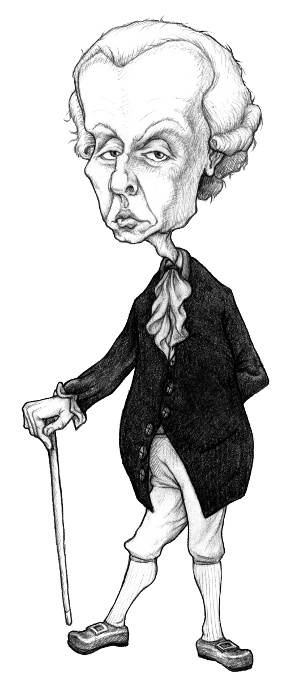
Immanuel Kant signaled a paradigmatical shift into the ‘modern’ period (among other thinkers) in providing the building blocks for how people think (in general) about reality; inclusive of biblical reality and its ostensible historical accounts. It is interesting to consider the kind of impact Kant had when we apply that to the development of modern biblical studies and interpretation, and then how that impact gets played out in people like Enns (who was trained in the discipline of modern biblical exegesis at Harvard Divinity School). Murray Rae helps us understand what kind of impact Kant had, and interestingly, and to our point, how we can see this impact in the types of questions that Evans is asking, and in the kind of ‘solution’ that Enns is offering (pace a ‘Kantian’ turn). Rae writes in regard to Kant and biblical interpretation:
Kant proceeded to explain that there are two forms of theology, the revealed or biblical theology of the church containing all the historical and symbolic material upon which Christian theology has been constructed, and the rational theology which Kant himself presumed to develop in Religion within the Limits of Reason Alone (1793). These two forms of theology are related as two concentric circles: the outer being revealed theology, the inner being rational theology. The rational theologian, Kant argued, must “waive consideration of all experiences,” which is to say, the rational theologian must proceed without reliance upon the historical material of the Bible. There is, in revealed theology, a timeless essence with which the rational theologian is concerned, but it is discoverable in principle without recourse to the historical testimonies that attend Christian theology, as also the theology of other faiths. The essence of all faiths, allegedly, is their moral significance, which is derivable a priori from reason alone[10].
Remember when Evans wrote this previously in this essay?: “This is a hard God to root for. It’s a hard God to defend against all my doubts and all the challenges posed by science, reason, experience, and intuition….” And remember, Enns’ ‘solution’ (that Evans appears to resonate with)?: “The Bible looks the way it does because ‘God lets his children tell the story,’ so to speak.” And now consider that, with what we just witnessed in regard to the impact that Kant (according to Rae) had upon modern biblical exegesis, and the desire for a ‘rational’ theology. What is interesting about Kant in relation to Enns’ ‘solution’ is the willingness, the necessity even, in order to be rational and in accord with modern sensibilities (ethically and epistemically), to discard the ‘husk’ of historical reality, in order to get to the ‘kernel’ and essence of the ethical reality of who the God of the Bible is. For Enns, thinking from a Kantian (among many others later) type of trajectory, it is perfectly acceptable to discard the historical event-ual reality of the biblical text as a faithful representative of who God is (because it does not comport with modern ethical sensibilities – remember Davis’ critique previously), in fact it is demanded by the rational among us, in order to be able to still affirm the gentle Shepherd God who is love that we find particularly revealed in the man from Nazareth, in Jesus Christ.
Conclusion
We have covered a lot of ground, and too quickly. This has turned into a mini-essay of sorts (of about 3000 words), way too long for a blog post, but if you stuck it out, thanks.
I have made lots of suggestions, and attempted to draw some connections that still wait to be connected through further development. But I hope that through this engagement, you can at least see some pitfalls that I believe are attendant with Evans’ probing in her post (that I have referenced throughout), and where that trajectory has come from in modern history. I also hope that the role that Enns is playing in all of this has become clear. For many of you that might be a good thing, but in a later post I would like to suggest (and somewhat argue) that reading the Bible through ‘rational’ categories (like those provided by Kant and others, and now deployed constructively by folks like Enns & co.) is not really ‘principled’ Christian or confessional way of reading Scripture. I will further suggest in that later post that this way of reading Scripture (‘rationally’) is not new, nor principally owned by Enns (he just has his own creative way of engaging it), but in fact serves as the basis for almost all of what counts as biblical studies today.
Stay tuned.
[1] Source
[2] Ibid.
[3] Peter Enns, The Bible Tells Me So, cited by Rachel Held Evans here.
[4] Rachel Held Evans, Source.
[5] Enns, The Bible Tells Me So, cited by Evans.
[6] Evans, Source.
[7] Ibid.
[8] Rachel Held Evans, Source.
[9] Kevin Davis, A Brief Response to RHE, accessed 10/21/14.
[10] Murray Rae, “Salvation in Community: The Tentative Universalism of Friedrich Schleiermacher (1768–1834),” in ed. Gregory MacDonald, All Shall Be Well: Explorations in Universalism and Christian Theology, from Origen to Moltmann(Eugene, OR: Cascade Books, 2011).