
The Father-Son Relation: Rowan Williams on the Irenaean Theology of Participation, and TF Torrance’s Homoousion

Rowan Williams in his chapter in The Cambridge Companion to Jesus entitled A History of Faith in Jesus offers historical insight to the rapid doxological posture the early church took towards Jesus as God become man. As Williams details this he highlights this particular development in the theology of Irenaeus, and how Irenaeus provided for what Karl Barth, later, might call an analogia relationis. This is a beautiful way, a doxological and participatory way to conceive of what God in Christ has done for us in the mediatorial vicarious humanity of the eternal Logos, Jesus irenaeusChrist. It is this relation that Thomas Torrance swoons about so much and as corollary so do we as evangelical Calvinists. Williams writes of this development in Irenaeus’ theology this way:

Some of the language of early Alexandrian theology in particular similarly emphasises the role of Jesus as the visible manifestation of the invisible God, the mediator, not so muchĀ  of salvation or forgiveness as of true perception of the divine nature. The earlier theologian to stress this theme, however, is not an Alexandrian, but an Ć©migrĆ© from Asia Minor, Irenaeus, who became bishop of Lyons in France; and fro him Jesus’ role as revealer immediately connects with a further and more profound set of considerations. Jesus reveals because of his own relation to the Father; because his face is wholly turned to the Father, it reflects his glory. For us to know and recognise that glory, we must be brought into that relation – a fundamental theme of Paul and John in the New Testament (Rom 8, John 17, among much else), which Irenaeus develops extensively, Jesus is an example, not only in the sense of being a model of behavior we ought to imitate (again a New Testament theme, as in Matt 11.29; 1 Cor 11.1), but as a paradigm of relation to God as Father. Our attention or devotion to him is a kind of tracing the contour of his life so as to see its conformity to the Father’s character and purpose; we are to pick up the essential clues as to how to recognise what it is to be a child of the heavenly Father by looking single-mindedly at him (cf. Heb 12.2). Being in the Spirit is not only or even primarily a gift of prophetic alignment with the ultimate judgement of Jesus, but entails the gift of sharing Jesus’ relation with the Father, beginning to love God as parent with the same confidence as Jesus shows.[1]

As I reflect upon this it conjures up for me the way T.F. Torrance presses into his constructive appropriation of the Athanasian themed, patrological focused homoousion, that developed post-Irenaeus. The idea that Jesus, the eternal Son, is consubstantial or one nature (ousia) with the Father [and the Holy Spirit]. Note Torrance:

. . . Hilary of Poitiers argued that it was the primary purpose of the Son to enable us to know the one true God as Father. This was the theme to which he gave considerable theological reflection in view of the Nicene homoousion and what it implied for our two-fold belief in God the Father Almighty and in God the Son of the Father. ā€˜All who have God for their Father through faith have him for Father through the same faith whereby we confess that Jesus Christ is the Son of God.’ Again: ā€˜The very centre of saving faith is the belief not merely in God but in God as Father; nor merely in Christ, but in Christ as the Son of God; in him, not as a creature, but as God the Creator born of God.’ ā€˜The work which the Lord came to do was not to enable you to know him as the Father of the Son who addresses you . . . The end and aim of this revelation of the Son is that you should know the Father . . . Remember that the revelation is not of the Father manifested as God, but of God manifested as the Father’.[2]

It is this theme of participation in Christ, who is homoousios or consubstantial with the Father that was so important for Irenaeus, Nicene and Chalcedonian theology, as well as for people like Torrance who made that particular doctrine a touchstone for his theological-hermeneutic. It is the idea of ā€˜relation’ with God as Father through the Son by the Holy Spirit that I believe is so important for what it means to know God in proper standing as His children. It is a matter of being rightly related through Christ; if we understand what that means, we will understand God to be our loving Father, and as Williams writes we will begin ā€œto love God as parent with the same confidence as Jesus shows.ā€

As of late we have seen a lot of energy expended over the so called eternal functional subordination debate; the debate that is attempting to clarify what in fact the inner-life (ad intra) of God’s life looks like. I would contend that if that debate was shaped more by the dialogical, participationist mood that we have been highlighting in this post, and less by the analytical mode and tone it has taken, that the ā€œdebateā€ itself may never have happened to begin with. It is surely important to attempt to apprehend the mystery of God’s ineffable Triune life, and it is surely important to follow the pattern of God’s inner-life as revealed in Jesus Christ (which I believe the pro-Nicene theology has done), but when we press the edges of that apprehension too far we end up saying more than we are capable of saying; we lose sense of the fact that God will share His glory with no one. That said, there are ā€œorthodoxā€ contours of thought articulated by the church catholic that indeed set the boundaries and thus grammar by which Christians have a certain rule to follow when attempting to speak meaningfully about God as Triune. But we would do well to remember that just as the early church did, this all must be prayerfully held within a sense of deep awe and worship of God as Father, Son, and Holy Spirit; co-equal, co-eternal, with no subordination whatsoever in the inner-life (ad intra).

Apart from my digression on EFS, what I really wanted to emphasize through this post is how central and important the ā€˜analogy of relation’ is for evangelical Calvinism; how important it should be for all Christians, even if they don’t identify as evangelical Calvinists (God forbid it!). If you really contemplate the implications of all of this all you can do is worship.

Ā 

[1] Rowan Williams, ā€œA History of Faith in Jesus,ā€ edited by Markus Bockmuehl, The Cambridge Companion to Jesus (Cambridge, UK: Cambridge University Press, 2001), 221-22.

[2] Thomas F. Torrance, The Christian Doctrine of God: One Being Three Persons (Edinburgh: T&T Clark, 1996), 139.

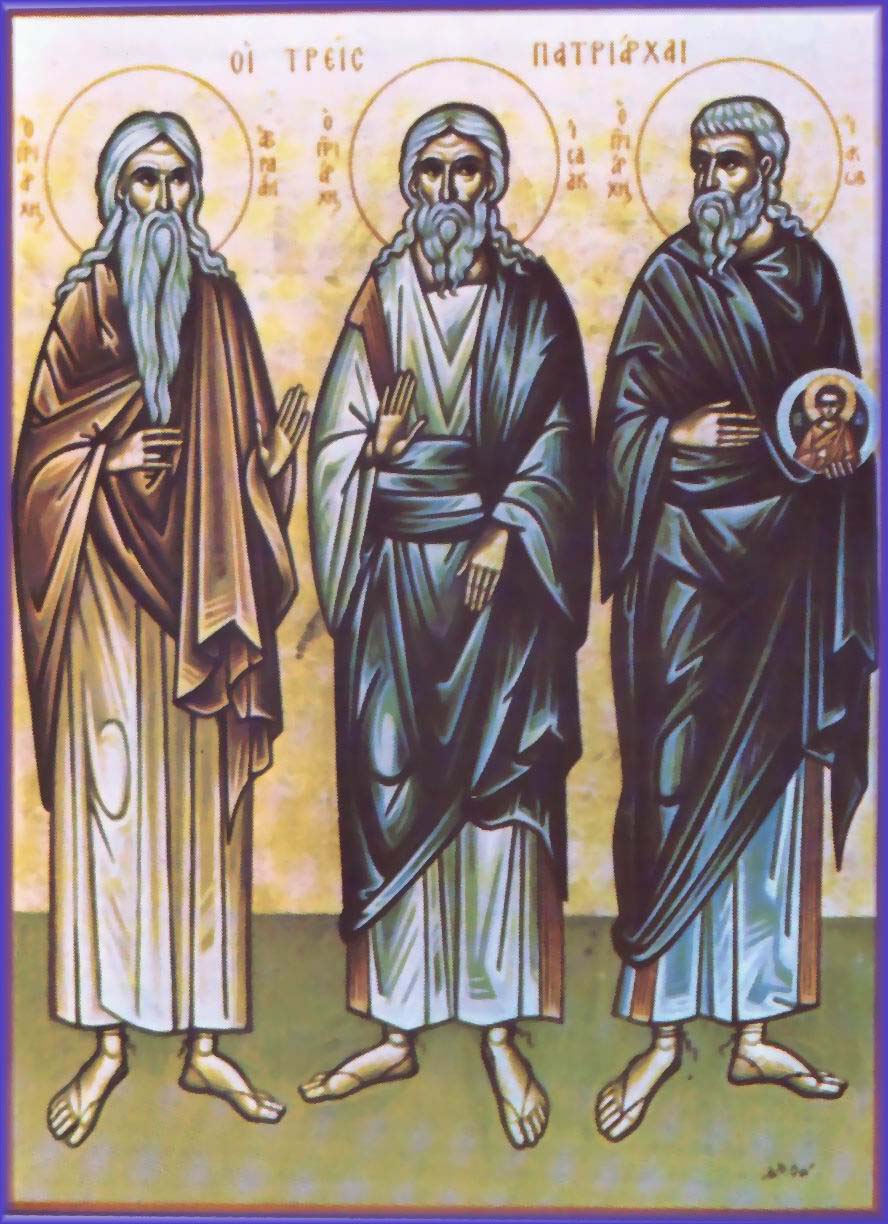
On Irenaeus. Christ ‘the concentric feedback loop of Israel’ or Recapitulation

Jesus is the recapitulation of Israel; or in fact of God’s life itself in the kameronvia historia, according to Patristic theologian Irenaeus. I want to share what Duke Divinity School theologian J Kameron Carter has to say about this in his book Race. I will want to revisit the substance of this at a later date, until then, here is what Carter has written in regard to Irenaeus’ view of how God in Christ ā€œre-doesā€ ā€œre-livesā€ ā€œre-capitulatesā€ creation, Israel-Mary, and Godself in his lived life for the nations:

In arguing this way, it is as if Irenaeus is saying that the recapitulation of all things in Christ occurs in a concentric feedback loop. Creation itself is a concentrated expression of the love the Father has for the eternal Son through the Holy Spirit. That is, it is a condensed narrative that captures without diluting the rhetorical plotline of the depths of God’s love for the Son, a love that embraces within itself even that which is not God (i.e. creation). In this sense, creation in its own way recapitulates the divine life as the ā€œstructure of supreme love.ā€ But then as if even this condensed story were still too prolix, YHWH presents the story of Israel, beginning with the call of Abram-become-Abraham to create ex nihilo a people who before did not exist, as a compendium of the story of creation, which too came into being. And so to grasp the story of Israel is to grasp the story of creation. And finally again, in an effort to contain what yet appears to be too elongated a narrative filled with plot twists, reversals, and surprises, Christ himself ā€œcuts shortā€ the story of Israel into the rĆ©sumĆ© of his own material body and historical life, only then to have this loop back to the story of creation, but now under the aspect of the second Eve. He is the biography of creation. But in so being, he proves to be God’s own autobiography, God’s writing of Godself.[1]

Rich. Too rich for me to try and engage with at the moment (due to time constraints), but hopefully you grasp some of the point, and see what is going on in the theology of Irenaeus, at least as mediated through Carter’s wit.

[1] J Kameron Carter, Race: A Theological Account, kindle loc. 851.

Reading the Bible: Dogmatically or non-Dogmatically, but Dogmatically

Is following a purported “Christ-centered” hermeneutic—of which there is more than one alternative—a dogmatic or systematic theological imposition, or even a “creedal” one over the text of Scripture? Is following a patriarchpurported methodological or principled Christ centered hermeneutic an artificial way to read the Scriptures, with the result of flattening out the various caverns and contours offered by the oft rough edges of Scripture? This is not so easy of a question for me to answer at the moment, but my inclination is to say, NO! It is not artificial, and it is not a theological imposition. Why? Because Jesus apparently offered this kind of hermeneutic himself (cf. John 5:39; Luke 24:44), and the early church seemed to follow an incipient confessional hermeneutic that saw all of the promises made in the Hebrew Bible (TaNaKh) as fulfilled in Jesus, which we now have deposited for us in the New Testament. Indeed what the early church seemed to have been operating with—early on—was a very theological (albeit pre-Nicene) Christ-centered, and quite apocalyptical hermeneutic and reading of the Scriptures. Someone who imbibes this kind of ‘rule-of-faith’ (the early Christ creedal approach) reading of Scripture is none other than Irenaeus (c. 130–c. 202); he was a second century biblical theologian who is known for his run ins with the proto-Gnostics (a dualist sect). As well, he is also known as a disciple of Polycarp, who is purported to be the disciple of the Apostle John; and so he has a rather unique Christian pedigree, and a closeness to the early church that is quite intimate. Irenaeus developed his own style of a Christ-centered hermeneutic in his recapitulation mode of interpretation (which he took over from the Apologist, Justin Martyr), which was given shape as a result of his frequent battles with these incipient Gnostics. Brevard Childs helpfully sketches the main contours of Irenaeus’ approach, which I want to share. Here is Childs on Irenaeus:

Central for Irenaeus was the biblical emphasis that God’s order for salvation had extended from creation to its fulfillment in Christ, as God progressively made himself known in creation, law, and prophecy through the divine Logos. Christian scripture bore witness to Jesus Christ as God’s son and saviour who was from the beginning with God and fully active throughout this entire history (IV .20.1ff). All the economies of God reveal this history of revelation according to its stages which led the church from infancy to perfection. Indeed in his doctrine of ‘recapitulation’ Irenaeus pictured Christ’s joining the end of time with the beginning and thereby encompassing within himself fully the entire experience of Israel and the church (III.21.10–23.8). Because of the unity of God’s salvation, it was absolutely essential to the faith that the two testaments of the Christian Bible be seen as a harmonious witness to the one redemptive purpose in history. Through his use of ‘types’ (IV .14.3) and prophecy (IV .10.1) Irenaeus sought to demonstrate that the two covenants were of the selfsame substance and of the one divine author (IV .9.1). [Brevard S. Childs,Ā Biblical Theology of the Old and New Testaments: Theological Reflection on the Christian BibleĀ (Minneapolis: Fortess Press, 1993), 31.]

So early on we see a kind of dogmatically rendered hermeneutic that starts with the reality of Christ as the center which serves as the substance and reality of both the Old Testament and what became the New Testament. For Irenaeus, the so called ‘rule-of-faith’ did not represent something that was in competition with Scripture, but in fact reflected apostolic witness to the reality of Scripture that bridged both the Old and New Testament.

What I am wrestling with, is a challenge I was recently given in this regard. I was actually moving along, happily on my way, with a certain constructive view toward a Christ centered (‘depth dimensioned’) hermeneutic that I thought had an ancient pedigree. Indeed, I still think this; but I am having to wrestle, still with what this means beyond principle, and in actual practice. And I want to wrestle with what this means in regard to dealing with the Bible as literature (even if it is unique and sacred). The Bible itself has an ontology (as John Webster likes to point out), and a dogmatic orientation and giveness and place; and so this placement itself supposes upon a certain dogmatic principle (i.e. that God is gracious, and that God has spoken and speaks; triunely so). I simply think it is impossible, and really not advisable, to try and engage with Scripture, hermeneutically, as if it can or should be done non-Dogmatically and non-Ecclesiastically; and more importantly, then, non-Christically. I think to approach Scripture through all of these “non” ways, is really more Englightenment generated, and thus anthropologically generated (which itself is a kind of naturalist Dogmatic approach), than my interlocutors would like to think. Really, though, I don’t think my interlocutors are all that Enlightenment formed; they are just Augustinian, and want to follow a certain salvation-history and pietistic relational reading of the text of Scripture. But let’s be honest, we all follow a dogmatically construed understanding of Scripture; that really isn’t the issue (it is an understood, or should be). The question is: Who is following a more faithful ordering of the dogma? And which dogma (or theological schema) is one following? I hate how this always has to come back to these methodological questions, but it does; and once engaged with at this level, we are better ready to engage the text on its given level—which is to do so ‘in Christ.’

In short: To presume that reading Scripture “Christ-centeredly” is an artificial theological imposition, would be a double edged sword; since reading Scripture as if God has spoken therein is just as much of a theological imposition, respectively. It is better just to be honest, to level the playing field, and admit that reading Scripture as Christians is a highly theological endeavor. The only other alternative, really, is to read it from a naturalist frame of some kind, and who wants to do that?

Interpreting Scripture as if Jesus is the Center and not the [Nation] of Israel

Is the nation of Israel distinct as a people of God, or was the nation of Israel the prefigural and pre-incarnate mode of God’s Self-revealing life in the unfolding reality of salvation history; such that Jesus then is the distinct person[s] of God whoĀ isĀ the Israel of God, and indeed the point of the nation of Israel’s existence? I hold to the concept that Jesus is the ‘Israel of God’; however, I did not always hold to this interpretation. In my previous life as a Dispensationalist I held that a defining feature of Ā salvation history, and God’s prophetic plan for the nations was that Israel was distinct from the Church (which is probably theĀ sine qua nonĀ of what it means to be a dispensationalist in any of its expressions); and that God’s primary intention with his dealings with creation had to do with the nation of Israel (the Church was simply an ‘add-on’ in God’s plan). But this old belief of mine runs contrary to the Patristic (early Church–’Church Fathers’) interpretation of Scripture, and even more importantly, I believe it runs counter to the Apostolic and Dominical (Jesus’) interpretation of the Old Testament Scriptures (and we have their interpretation deposited for us in the New Testament writings). Robin Parry (Gregory MacDonald) provides a really good and precise statement on my belief:

The insight that throughout the New Testament Jesus is portrayed in terms that recall the nation of Israel and its mission is so commonplace I shall not spend long defending it. The kinds of evidence appeal can be made to include the fact that many titles for Jesus have strong associations with Israel. For instance, Jesus’ use of the title Son of Man as influenced by Daniel 7 (e.g., Mark 14:62), where it refers to Israel or Israel’s representative of the nation. This could suggest that Jesus, in his role as messianic king of Israel, represents and embodies the destiny of that nation. Now the title Son of God did evolve during the New Testament period and afterwards into something closer to the later title of God the Son, but its messianic connections are still clear in places. This insight helps explain some otherwise peculiar Christian interpretations of the Old Testament, such as when Matthew takes the words of Hosea 11:1, “out of Egypt I called my son,” which in their context refer to the exodus of the Israelites, and applies them to Jesus’ flight to Egypt after the death of Herod (Matt 2:15). Once it is perceived that for Matthew Jesus is Yahweh’s sonĀ because he is embodying the story of Israel,Ā this apparent misuse of an Old Testament text begins to make sense. The title Messiah/Christ could also suggest one who represents the whole nation before God; and, in light of our arguments in the previous chapter, thinking of Jesus as Isaiah’s Servant of Yahweh, as the early Christians certainly did (Mt 3:17/Isa 42:1; Mark 10:45/Isa 53:10; Acts 8:30-35/Isa 53:7-8),Ā isĀ to think of him as one who fulfils the story and mission of Israel. On top of this, we can see how the Gospels can tell the story of Jesus in such a way as to parallel the story of Israel. For instance, after Jesus is baptized he goes into the wilderness for forty days before crossing the Jordan into Israel to begin his mission just as Israel went into wilderness for forty years before crossing the Jordan into Canaan. However, where Israel failed its testing in the wilderness, Jesus succeeds. [Gregory MacDonald,Ā The Evangelical Universalist,Ā 75.]

This way of interpreting Jesus’ reinterpretation and “re-living” of the nation of Israel has been called recapitulation; something that dominated Church Father, Irenaeus’ method of re-interpreting the Old Testament, and the nation of Israel, in light of its fulfillment in Jesus Christ. J. N. D. Kelly remarks in regard to Irenaeus’ method:

The conceptions, Pauline in its ultimate derivation, of the inauguration of a new, restored humanity in Christ seems to have reached Justin [Martyr] from the theological tradition of Asia Minor. It was taken up and deepened by Ireanaeus, who was also the first to work out comprehensive theories both of original sin and of redemption…. [J. N. D. Kelly,Ā Early Christ Doctrines, revised ed.,Ā 170.]

So this is

… the distinctively Irenaean interpretation of the work of Christ. ‘Because of His measureless love,’ he writes, ‘He became what we are in order to enable us to become what He is.’ The method he outlines in the oft-repeated assertion that what we lost in Adam we recovered in Christ; its premiss is the idea that, if we fell through our solidarity with the first man, we can be restored through our solidarity with Christ. The key-conception which Irenaeus employs to explain this is ‘recapitulation’ …, which he borrows from St. Paul’s description of the divine purpose as being ‘to sum up all things in Christ’. He understands the Pauline text as implying that the Redeemer gathers together, includes or comprises the whole of reality in Himself, the human race being included. In close conjunction with this he exploits to the full the parallelism between Adam and Christ which was so dear to St. Paul. Christ is indeed, in his eyes, the ‘second Adam’ …, and ‘recapitulated’ or reproduced the first even in the manner of His birth, being generated from the Blessed Virgin as he was from virgin earth. Further, just as Adam contained in himself all hisĀ descendantsĀ  so Christ (as the Lucan genealogy proves) ‘recapitulated in Himself all the dispersed peoples dating back to Adam, all tongues and the whole race of mankind, along with Adam himself’Ā [sic]Ā Thus, when He became incarnate, Christ ‘recapitulated in Himself the long sequence of mankind’, and passed through all the stages of human life, sanctifying each in turn. As a result (and this is Irenaeus’s main point), just as Adam was the originator of a race of disobedient and doomed to death, so Christ can be regarded as inaugurating a new, redeemed humanity. [Kelly, 172-3.]

As we can see from Kelly’s description of Irenaeus’ method, the whole of it is shaped by a deeply rooted christological conditioning; such that all of Israel’s history, both in its obedience and disobedience (mostly the latter), and in its Adamic heritage is taken up in a Christian way, so that Christ is understood as the center of what it is to be God’s primary hope and purpose for all of creation, for all of the nations.

It is this method of interpretation, an Apostolic (if you will) method that is at the heart of my own hermeneutical theory. It is working in a ‘depth dimension’ as Thomas Torrance has called it, and Adam Nigh has developed it in our edited book,Ā Evangelical Calvinism,Ā and Nigh’s chapter,Ā The Depth Dimension of Scripture: A Prolegomenon to Evangelical Calvinism.Ā And as can be observed, this kind of method has soteriological shape to it, such that Scripture is to be interpreted through the saving and mediating (e.g. ‘Priestly’) person of Jesus Christ for us. It is this kind of hermeneutic that leads to (and from, really) an ‘ontological theory of the atonement’, which we have developed in detail in our book (already mentioned).

Maybe this will better help some appreciate where I am coming from with even more clarity than heretofore. And maybe it will help some of you who have known me in my past to better understand why it is that I have rejected dispensationalism as my hermeneutical method.

Postscript

Recapitulation has been developed further, and has been taken up, in certain ways, by what has become known as (especially in Reformed circles) ‘Covenant theology’. I advocate a certain form of this kind of theology, one that is tied to what Barth and Torrance have called an ‘analogy of faith’ versus an ‘analogy of being’ interpretation of the text of Scripture (which in my application of this refers to God’s life and Self revelation as a God who is grace and not Law … which is fodder for another post).

Too Much Jesus? Your Method of Biblical Interpretation

I would like to expose you all to Thomas Torrance’s take on Irenaeus’ understanding on what could be called a Christocentric Hermeneutic. As you read Torrance’s account of Irenaeus, understand that you are reading Torrance too. Here is Torrance on Irenaeus:

It is, then, to the Incarnation that Irenaeus turns for the clue to the interpretation of the history of creation and redemption and therefore for the clue to the interpretation of the Scriptures. The essential order and connection of things is embodied in Jesus Christ and it is by reference to him that the economic ministrations of God in humanity and the historical covenants are to be understood aright, and therefore the interconnection between the scriptures of the prophets and the scriptures of the Apostles, ‘the Gospel and the Apostles. Even the Scriptures of the old covenant have to be read in the light of Christ’s advent in the flesh, for his coming connected the end with the beginning and made the beginning predictive of the end, thus showing that the faith of the patriarchs and prophets and ours is one and the same. They sowed the seed, the word about Christ (sermonem de Christo), but it is in us that the fruit is reaped and received, and only in the Church is the truth of the things prefigured realised. ‘Certain facts had to be announced beforehand by the fathers in a paternal manner, (paternaliter), and others prefigured by the prophets in a legal manner (legaliter), but others delineated according to the pattern of Christ (deformari secundum formationem Christi) by those who perceived the adoption, for in one God are all things shown forth.’ [Thomas F. Torrance, Divine Meaning, 122-23]

How does this strike you? Do you think this is too intense for a hermeneutic or mode for interpreting Scripture? Is your method of biblical interpretation this intensively Christ focused? I am really curious how you all think of this; I obviously highly appreciate this kind of ‘Patristic’ method of interpreting and reinterpreting (the OT) Scripture in light ofĀ  its fulfillment in Christ. This rubs against the method of interpretation I learned (by and large) in Bible College and Seminary; which is the Literal Grammatical Historical method (the kind that leads to and from Dispensationalism).