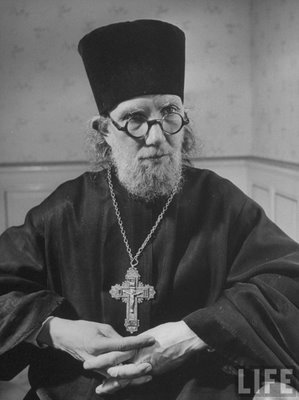
Here is a post that was originally two parts. I combined them, so now it is one long post (essay). Be built up!
In light of Hank Hanegraaff’s Chrismation into Eastern Orthodoxy, I thought I would do a post on theosis; it just so happens that in my readings, apart from all of this, I just read through a study on Barth’s theology where Adam Neder dedicates a section to Karl Barth and theosis. So for the remainder of this post we will see what Neder thinks about Barth’s theology in this regard; Neder offers five points where Barth is at odds with theosis, and then four constructive points where Neder sees Barth in some convergence with this typically Eastern framed doctrine.[1] We will look at Neder’s framing of Barth’s ‘negative’ posture towards theosis in this post, and then in another post we will look at Neder’s four points on how Barth is positively predisposed towards theosis within his theology.
We will get right into it through Neder’s accounting of this doctrine in the theology of Barth. Here are the ‘cons’ relative to Barth’s relationship to the doctrine of theosis as understood by Neder in Barth:
This way of stating Barth’s relationship to the history of the church’s reflection on deification will puzzle many readers. If ever there was an enemy of deification, was it not Barth? How can Barth be a contributor to the church’s clarification of the meaning of human participation in the triune being of God when he rejects deification literally hundreds of times throughout the Church Dogmatics? Consider just a few of the ways that Barth and Orthodoxy differ significantly on the matter of participation in the being of God.
[1] If human beings participate in God’s being, God’s being must, in some way, be particible. Barth does not affirm the distinction, widely (although not universally) held within Orthodoxy, between divine essence and energies, and he defends the filioque. Therefore their respective doctrines of God yield differing understandings of the meaning of human participation in God’s being.
[2] Participation in God’s life is a reality for human beings because it is a reality in Jesus Christ. Barth and Orthodoxy agree on this point. Yet their Christologies differ significantly—especially regarding the communicatio idiomatum—and therefore so too do their descriptions of the meaning of participation in God’s life. Unlike the Orthodox, Barth does not think that Jesus’ human nature is deified (in the sense of receiving and possessing divine “qualities” or “attributes”), and therefore he denies that human participation in the being of God involves such a transfer.
[3] The Orthodox synergistic construal of the relationship between divine and human action is at odds with Barth’s understanding of that relationship. Both agree that human participation in God occurs in human freedom, but their conceptions of the meaning of participation will differ along with their differing views of human freedom, the imago Dei, and sin.
[4] Whereas the doctrine of election is centrally significant for Barth’s understanding of human participation in God’s life and touches every aspect of it, that doctrine plays virtually no role in Orthodox descriptions of theosis. Neither does Orthodoxy emphasize the covenant in the way that Barth does.
[5] The sacraments (mysteries) often figure centrally in Orthodox discussions of theosis, but, as we have seen, that is not the case with Barth’s understanding of human participation in God. In addition to his repudiation of sacramental mediation in general, Barth’s actualistic ontology is incompatible with the common affirmation of that grace is infused into the soul of the believer through the sacraments.[2]
This is interesting, really, cause if you know anything about Barth’s theology he has a huge emphasis upon a participationist understanding of salvation and what it means to be human in Christ; which is why Neder is able to offer a list of positives in Barth’s theology towards theosis (which we will get to in another post). But this list should highlight for you how Barth and theosis might not get along so well, and this because of the way that Barth re-frames much of the tradition through adopting another “metaphysic” and ontology (i.e. actualism). We see how Barth follows the Reformed way when it comes to Christology, and thus theoanthropology, which is what Neder’s point is about the communicatio idiomatum. We see how Barth’s doctrine of God is a bit different from the Orthodox in regard to the ‘particible’, and the idea that God can be ‘pieced’ out as it were which for the Orthodox is accommodated for by (at least for some of them) the distinction between divine essence and energies. We see how ‘human freedom’ is different, particularly because Barth holds strongly to a Reformed conception of God’s sovereignty grounded in a thick doctrine of divine freedom. Meaning that salvation is already accomplished, for Barth, de jure (objectively) in Christ—from both the Godward side and humanward side in Christ. In other words there is no cooperation between God and humanity in salvation (as there is in the Orthodox conception of theosis and its concept of grace), but instead there is a de facto (subjective) correspondence between the faith of Christ accomplished in his vicarious humanity for us, and then our ‘transfer’ into that by the Holy Spirit’s capacity to provide a correspondence between Jesus’s ‘yes’ to the Father for us, and now our ‘yes’ in correspondence to his to be for the Father in Christ by the Holy Spirit—this is a strong distinction between Barth and the Orthodox, even though they both respectively hold to a view of salvation that is participationist (participatio Christi). And then we see how the Reformed emphasis upon ‘election’ differentiates Barth from the Orthodox; bearing in mind of course how Barth rightly recasts election/reprobation in and from Christ. And finally we see how Barth is distinct from the Orthodox in regard to the sacraments, and this gets into Barth’s actualism and how he thinks of Jesus as ‘grace’ in person versus the Orthodox conception which is oriented around and from the sacraments as a ‘means’ of receiving God’s grace and as the ‘means’ by which someone participates in God’s life through Christ in theosis.
What is Theosis? — In Conclusion
Let me close with another short quote from Neder where he quotes Anna Williams on four distinct contours of thought that she identifies as essential when attempting to identify if theosis is actually being considered or not. In other words, this is a compressed distillation of what one should expect to find if they are ever confronted with the doctrine of theosis. Indeed, it is these points of theological material that Barth in his own unique way is engaging with and contributing to within his own participatory understanding of salvation. Here is Neder quoting Williams:
In her summary of the patristic doctrine of theosis, Williams offers just such a list. After acknowledging “considerable diversity in the ways various theologians describe deification,” she observes that nonetheless, “there is a firm core that distinguishes this doctrine from other model of sanctification.” According to Williams, four criteria must be met: “Where we find the ideas of [a] participation in divine life, [b] union with God and [c] humanity portrayed as human destiny, and [d] a mode of articulating divine transcendence in this context, we can say we are dealing with a doctrine of deification.”[3]
In this sense Barth fits quite well within the theosis discussion. What we just noted, via Neder, are the ways that Barth’s theology remains distinct from the Orthodox conception of theosis, but at the same time we can also see some over-lap; particularly in light of Williams’ definition of the component parts of what theosis entails as a doctrine. In another post we will highlight the four points of Barth’s theology, according to Neder, wherein he fits in well even with some of the Orthodox understanding of theosis and participation soteriology.
Picking up where we left off yesterday, in this post we will jump right into how Adam Neder places Barth in a positive relation to the doctrine of theosis; particularly within the Orthodox iteration of that. Just as a reminder let me repost what I ended the post with yesterday; it is another short quote from Neder where he offers a distillation of the component parts of what makes up the doctrine of theosis; he himself is quoting Anna Williams’ compression of this doctrine for easy identification.
In her summary of the patristic doctrine of theosis, Williams offers just such a list. After acknowledging “considerable diversity in the ways various theologians describe deification,” she observes that nonetheless, “there is a firm core that distinguishes this doctrine from other model of sanctification.” According to Williams, four criteria must be met: “Where we find the ideas of [a] participation in divine life, [b] union with God and [c] humanity portrayed as human destiny, and [d] a mode of articulating divine transcendence in this context, we can say we are dealing with a doctrine of deification.”[4]
Neder is contesting that Barth himself, a Westerner, contributes to the development of this prestigious doctrine along with other notables spanning from East to West (even though theosis is typically thought of as an Eastern theological reality).
Again, in the last post we saw how Neder framed Barth in rather oppositional terms relative to theosis, here Neder will place Barth in a positive stance towards the constructive development of the doctrine of theosis. Neder writes (in extenso):
There are of course other and important differences between Barth’s conception of the meaning of human participation in God and that of the Orthodox. I do not deny that such differences exist nor do I want to argue for some kind of rapprochement by smoothing them out. I am arguing, rather, that Barth is a contributor to the church’s history of reflection on this important issue, and that the quality of his contribution merits consideration within the present discussion. The following are just a few of the areas where their concerns overlap considerably:
[1] Both Barth and Orthodoxy conceive of participation in God teleologically and eschatologically. Participation in God represents the “ultimate destiny” of humanity. For Barth, this means the fulfillment of a perfect reality (i.e., the objective participation of all humanity in Christ is fulfilled as believers subjectively participate in Christ), whereas for the Orthodox the teleological movement is conceived along more gradual lines, as the final realization of a partial beginning. Nevertheless, both agree that participation in God is a teleological and eschatological concept.
[2] Both Barth and Orthodoxy insist that participation in God is not the abolition of true humanity, but its realization. Each works this out in a different way, but both agree that participation in God “does not suppress humanity, but makes humanity truly human.” Moreover, they agree that while the union between God and human beings is real, it is real as a union in distinction.
[3] For much of Orthodoxy, God’s nature (ousia) is unapproachable, unknowable, and imparticible. Deification is participation in God’s energies. Nevertheless, “these energies are not something that exists apart from God, not a gift which God confers upon humans; they are God Himself in His action and revelation to the world. God exists complete and entire in each of His divine energies.” Barth does not share this distinction between essence and energies, but he affirms something analogous to it. According to Barth, that which most basically distinguishes God from all else is his gracious and sovereign action. This action is God’s alone. God does not share it. God’s being is in-act, and God’s act is sovereign and gracious. But God freely shares himself with us. And he does so by including us in this action of his and therefore in himself. In the event of the union of God’s free primary action and our correspondingly free secondary response, we are given a creaturely share in God’s being. Thus, for Barth and Orthodoxy, God’s “nature” is imparticible even as human beings really participate in God.
[4] Barth’s actualistic anthropology, his insistence that human “being” does not precede human action, but rather is in-act, overlaps with what Meyendorff describes as “the central theme, or intuition, of Byzantine theology,” which, he writes, “is that man’s nature is not a static, ‘closed,’ autonomous entity, but a dynamic reality, determined in its very existence by its relationship to God,” such that “his very nature is truly itself only as much as it exists ‘in God’ or ‘in grace.’” I have already noted the divergent ways in which Barth and Orthodoxy conceive of nature and grace, and it goes without saying that Barth’s Christocentric framework for understanding creature nature is very different from that of Orthodoxy. Nevertheless, there is an important shared emphasis among them that human nature is only properly described in dynamic, active, and one might even say kinetic terms. What Meyendorff writes of Orthodoxy could, in its own way, apply equally well to Barth: “The logos of every creature consists, therefore, in being essentially active; there is no ‘nature’ without ‘energy’ or movement.” Furthermore, both agree that participation in God is the event in which human nature is actively realized.[5]
Conclusion
Personally, I like Neder’s observations in regard to Barth’s relationship to the doctrine of theosis. As I alluded to above, theosis itself is not just an Eastern Orthodox teaching, it has prevailed throughout Western theology as well (even, as Neder suggests elsewhere, in Augustine himself). Off the top Martin Luther with his marriage mysticism and belief in the mirifica commutatio (‘wonderful exchange’); John Calvin with his unio cum Christo (‘union with Christ’), unio mystica (‘mystical union’), and duplex gratia (‘double grace’) conception of salvation; T.F. Torrance with his actual doctrine of theosis in direct conversation with the Eastern church and Patristic theology all represent examples of how this doctrine was present in its own particular way within ‘Western’ theology—the examples could be enumerated exponentially.
As Neder has decisively shown, I think, Barth is one other significant figure who has helped forward our understanding of the doctrine of theosis; albeit from within his own unique framing of things. As we noted in the last post, as is the normal pace of Barth, he reformulates almost everything he gets his hands on through his actualistic theological ontology, driven by his intensively principial Christ concentrated way. He works, as Torrance, as a Reformed theologian with categories like: election/reprobation, covenant (foedus), and the Scripture principle in play; among other important identifying features as found within Reformed theology.
Even if you are Eastern Orthodox, maybe especially so, I commend Barth’s alternative approach to the doctrine of theosis to you. I think he offers a more robust version of this doctrine, and avoids the pitfalls that come along with the classical understanding of theosis as it affirms something like Luther’s commuticatio idiomatum, and a kind of attendant synergism in the “appropriation” of salvation.
I might do one more post based upon Neder’s work. If I do I will share four points where Adam Neder explicates what union with Christ theology actually is in Barth’s theology. These four points significantly differentiate, or at least nuance Barth’s understanding of ‘theosis’ and/or union with Christ theology from the Orthodox understanding. While, as Neder has pointed out there are some important points of contact between Barth and Orthodoxy on this doctrine, there are also significant points of departure (as my first post indicated, but these other four points might make that even clearer).
___________________________________________________________
[1] Although as Neder notes, the concept of theosis is ubiquitous throughout the history of Christianity; whether East or West. He is right, John Calvin himself with his union with Christ theology is right there in his own Reformed way. T.F. Torrance actually had a doctrine of theosis in his theology, as my colleague Myk Habets has written on in his book Theosis in the Theology of Thomas Torrance. And lets not forget Martin Luther in all of this, the Finnish reading notwithstanding.
[2] Adam Neder, Participation in Christ: An Entry into Karl Barth’s Church Dogmatics (Louisville/Kentucky: Westminster John Knox Press, 2009), 90-1.
[3] Ibid., 91.
[4] Adam Neder, Participation in Christ: An Entry into Karl Barth’s Church Dogmatics(Louisville/Kentucky: Westminster John Knox Press, 2009), 91.
[5] Ibid., 90-1.