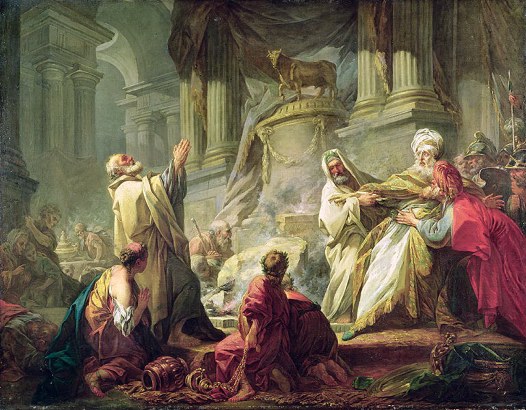
I think Cornelius Van Til offers a good sketch of Barth’s understanding of grace as personified personally in Jesus Christ (instead of grace as a principle or quality). You will  notice in Van Til’s sketch how he accentuates Barth’s disdain for the natural theology and analogy of being of both Roman Catholic theology and later post-Reformed orthodoxy (or Westminster Calvinism, simpliciter). I totally appreciate this emphasis, from Barth, as you know; and I think Van Til presents Barth accurately in this way; note Van Til,
[B]arth’s answer to both charges is that speaking Christologically of grace is not to speak speculatively in any direction. One may freely use the language of any school of philosophy. But one must, as a theologian, be free from the control of all philosophy.
Thinking Christologically of grace enables us, says Barth, to speak along the lines of Reformational theology. Thinking Christologically of grace enables us to escape the Romanist approach to grace and the free will of man. Romanism thinks along the lines of the analogy of being (italics mine), and in doing so, is largely controlled by philosophical speculation. It is this philosophical speculation that accounts for its use of natural theology. In Romanist theology Christ comes into the picture too late; he comes in afterwards, and a Christ coming in afterwards is, in effect, Christ not coming in at all.
Against this the Reformers, thinking Christologically, gave God the true priority over man, and grace the true priority over man’s participation in it.
But the Reformers did not consistently work out the relation of grace to sin along Christological lines. They were unable to fathom the full implication of their own idea of the sovereignty of grace. They did not realize that the full freedom and glory of God’s grace to man in Christ is expressed in the very idea of his being the one who suffers the wrath of God for man.
Again, the Reformers, and notably Calvin, had no full appreciation for the biblical universalism involved in the true idea of grace. We must therefore go beyond the Reformers in stressing both the full sovereignty and the full universality of the nature of grace. Instead of thus going beyond the Reformers, later orthodox theologians all too often fell back on natural theology and on the idea of direct revelation in history. Thus they tended once more to make the consciousness of man think of itself as autonomous. And thus they became, all too often, the forerunners of the consciousness theology of Schleiermacher and his followers.
This in turn prepared the way for a theology which was, in effect, as Feuerbauch maintained, nothing more than an undercover anthropology.
If then we are to work out the true Reformation principle of theology, and therewith escape the synergistic views of Romanism, we must think of grace Christologically. And if we are to escape the narrowness of an evil orthodoxy and the subjectivism of the consciousness theologians, we must think of grace Christologically. And finally if we are really to enjoy the full certainty of the gift of the grace of God in Christ for all men, and in doing so laugh in Feuerbach’s face, then we must think of grace Christologically. [Cornelius Van Til, Christianity and Barthianism, 31-32]
Why Does This Matter Again?
There are a lot of threads in Van Til’s sketch of Barth; let me focus on one thread, the primary thread running throughout this account. That is that Grace is Personal in Christ, and any other account—as evinced in those noted (the Romanists, post-Reformed orthodox, Schleiermacher, et. al.)—collapses grace into creation such that creation dominates our thinking about God. If we follow this method—natural theology—we take God captive by our creations and constructs, and God is no longer capable to speak Lordly words over and against us (so he ceases to be Lord in this scenario). The Apostle Paul warns of such madness when he writes:
18 For the wrath of God is revealed from heaven against all ungodliness and unrighteousness of men, who suppress the truth in unrighteousness, 19 because what may be known of God is manifest in them, for God has shown it to them. 20 For since the creation of the world His invisible attributes are clearly seen, being understood by the things that are made, even His eternal power and Godhead, so that they are without excuse, 21 because, although they knew God, they did not glorify Him as God, nor were thankful, but became futile in their thoughts, and their foolish hearts were darkened. 22 Professing to be wise, they became fools, 23 and changed the glory of the incorruptible God into an image made like corruptible man—and birds and four-footed animals and creeping things. Romans 1:18-23
This is why this discussion matters; the gravity of this weights on whether we can say that we are worshipping God as revealed in Jesus Christ, or are we worshipping God created in our image? This oversimplifies things quite a bit, but this is the nub of it for me.

 through Cornelius Van Til. Van Til for Westminster folks, such as Cassidy, carries a weight for them such as Karl Barth and Thomas Torrance carries for us Evangelical Calvinists. Cassidy and I have some history in regard to having some lively exchanges about Barth, Van Til, et al.; particularly on Facebook (in the past). Anyway, I thought I would alert you all to Cassidy’s planned spate of posts (and it looks like he plans on at least an essay or book coming out of it) with all of this in mind. What you will really find interesting, as you read his article, is that part of his motivation has been prompted by yours truly, and us Evangelical Calvinists; he mentions us in his post.