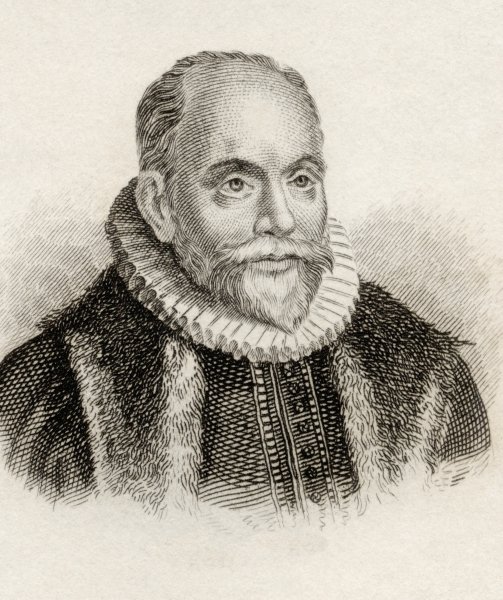
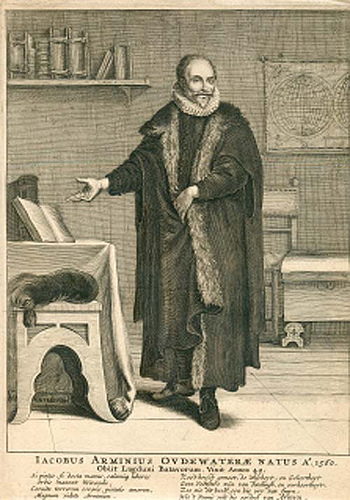
This is a follow up post to the recent post I just put up that shared Jacobus Arminius’ view of Predestination (in contrast to his interlocutors, or more, examiners whom today we would know as classical or Westminster Calvinists; you can read that post (if you haven’t already) here. The content of this post shares once again from Arminius; these are the twenty points and implications that Arminius shared (from his Declaration of Sentiments) immediately following the four points on predestination I shared from him in that last post. So here are the positive (and negative) implications that Arminius thinks flows from his view on predestination:
 [T]his doctrine of predestination declares:
1. The foundation of all Christianity, both with regard to salvation and to the certainty of salvation.
2. The essence of the Evangel. Indeed, it declares the Gospel itself, which must be believed for salvation (as far as the two articles above are concerned).
3. Because predestination is a clear and explicit Scriptural teaching, it has never been examined by a general or particular Council of the Church, nor has it ever been contradicted by any orthodox divine.
4. Predestination has been consistently acknowledged and taught by all well-informed teachers.
5. Predestination is consistent with the harmony of all the confessions of faith made by the Protestant churches.
6. The Dutch Confession and [Heidelberg] Catechism are of one accord on this doctrine. This agreement is such that if in the sixteenth article of the Confession the two expressions “those persons who” and “others’ be interpreted as “believers” and “unbelievers,” my position on predestination will be comprehended in that article with the utmost clarity. For this reason, when I held a public disputation at the university, I required that the article of faith under consideration be composed in the exact words of the Confession. When compared, it is evident that there is a complete harmony with the [Heidelberg] Catechism, specifically questions 20 and 54.
7. Interpreted in this manner, predestination is in full harmony with the nature of God—his wisdom, goodness, and justice, because it enshrines their primary content in the clearest possible witness to God’s wisdom, goodness, and justice.
8. This predestination is in harmony with the nature of humanity at every level—in the primitive state of creation, in its fallen state, as well as in its restoration.
9. It is in complete accord with the act of creation. It affirms that creation is a genuine communication of goodness, both with regard to the intention of God as well as with regard to the actual creative act. Predestination has its origin in the goodness of God, so that whatever has reference to its being fully preserved and carried out proceeds from divine love. The act of creation is itself a perfect and appropriate divine act in which God is well pleased and through which humanity has received the requisite means to avoid falling into sin.
10. This predestination is in accord with the nature of eternal life and all the Scriptural nomenclature by which it is designated.
11. It also agrees with the nature of eternal death and all the names by which that death is described in Scripture.
12. This predestination underscores that sin is actual disobedience and therefore the meritorious cause of condemnation. For this reason predestination must be understood in the context of the fall and sin. [Jacobus Arminius, Declaration of Sentiments, trans. by W. Stephen Gunter, 137.]
Okay, so this is twelve of the twenty theses. Let me provide the remaining eight later.
I think one thing (of many) that stands out to me from Arminius’ view of predestination is how he explicitly ties it into creation. This is different from the way that us Evangelical Calvinists articulate this. We believe that Pre-destination finds its primary referent in the life of God, in particular, in God’s elected life for us in Jesus Christ; and we see, as corollary of this, election as Pre-destination’s outworking in and through the history of redemption. Arminius’ view falls prey to collapsing God’s life into the creation in a way that ultimately presents a fissure between the Father and the Son. When the Son becomes flesh (incarnate), he begins to play out the purposes that Arminius believes are for a humanity that is abstracted out from the life of God; once Jesus enters into this situation (of predestination), he simply becomes (adopts) a humanity (like ours) that is given shape by this decree of election/reprobation. And which ultimately has nothing to do with God’s Self-determinate life. Jesus becomes a creature, and subordinated from God’s life as the means or instrument through which God saves the elect; but He ceases to have a necessary bearing on the shape of God’s life.