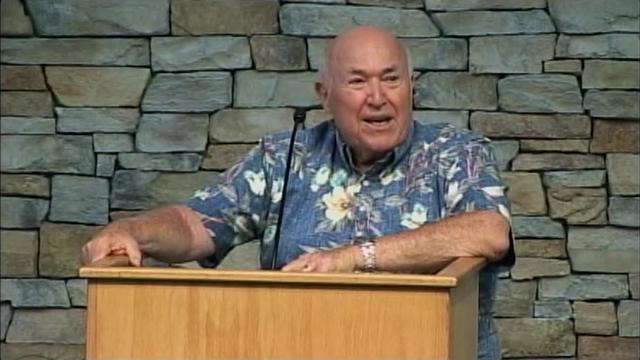
In Defense of Lonnie Frisbee’s Salvation; In Defense of Salvation for All

I was planning on writing a blog post on what death is; what Incarnation Anyway entails; and life everlasting. But for lack of energy, and time at the moment, I am going to simply post three separate Facebook/Twitter posts I just posted; as you’ll see they are thematically related. It was really prompted by a video I just watched made by Lonnie Frisbie’s best friend. If you don’t know, Frisbee was the catalyst that started the ‘Jesus People’ movement with Pastor Chuck Smith at Calvary Chapel Costa Mesa back in the late 60s early 70s. As an aside: I attended Calvary Chapel Costa Mesa from 95-98 (would go five times a week), and also did one year at Calvary Chapel Bible College. I was just reading the Twitter noise about the recently released movie: ‘The Jesus Revolution,’ which features the story of Frisbee, Chuck Smith, and the beginnings of Calvary Chapel. There has been some legalistic and underinformed reference to Lonnie Frisbee, and the way he died (of AIDS as a result of homosexual experimentation he engaged in). So, that’s the context and impetus behind this vignette of postings.

This first one was in response to the following Tweet (I’ll leave its author anonymous):

“What would a movie telling the whole true story of Lonnie Frisbee look like? It wouldn’t look pretty. It wouldn’t have a happy ending. It definitely wouldn’t be rated PG-13. And it definitely wouldn’t pull in $15 million on opening weekend. ”

Me in response: It would look like the thief dying on the cross to whom Jesus said “today you will be with me in paradise.” Lonnie died in repentance; and even if he hadn’t he would’ve been saved. Not because of what he had done, or not done, but because of what Christ has done for him. I’m not a promoter of the theology he followed, or anything like that. But at the end of the day Lonnie trusted Christ for Christ’s eternal life for him. He died in that hope, and thus into the joy of the Lord forevermore.

And now the rest of the posts that were really subtweeting, thematically, the above:

1. The Gospel is not nomist. IOW, it is not Law based, it is triune God based; which is to say: grace based in Jesus Christ. When people pretend like the juridical religions of Calvinism and Arminianism have no real life effect, they fail to grasp the basis of the Gospel itself. You get a Law based Gospel when you start with a Law based notion of God. When you get God wrong from the get-go, everything else that outflows from there is skewed just the same. God is not the big teddy bear in the sky, but He’s not merely the Judge either. Indeed, God is the Judge judged! Think about that when thinking out the implications of the Gospel; it might well save your life (pun intended). It is better to start where Jesus starts with God, as Son of the Father; thus, informing us, that the Father is Father of the Son by the bond of the Holy Spirit. We have a Father-Son-Holy Spirit God who has freely elected all of humanity for Himself; He’s jealous that way.
2. I have a propensity, I’ve noticed, to defend sinners when they die; even in their sins. I’m referring to people who had already come to Christ at some point, and because of varying circumstances “fell off the wagon.” They became bruised reeds. Those in fact are the elect of God. I have this propensity because I’m under no delusion that if they aren’t saved then neither am I; and thus the Gospel has failed to be Good News, it simply became a mask for the Law without Christ (a Judaizing gospel).
3. The One who performed the Gospel, and continues to, is the One who in His triune person is the Gospel; that is, Jesus Christ. We don’t perform anything for our salvation; salvation is the gift of God’s life for all of humanity, especially the sick and disgusting people.

In Memorium: Theology of Encounter: Karl Barth and Chuck Smith in Dialogue

*For some reason I left this post in draft status. It is a post, as you will see, that I wrote at the passing of, Pastor Chuck Smith in October of 2013. I might state things a little differently if I were to write a similar post now, but the general gist would be the same.

earlier wrote a more  personal and reflective post in regard to the death of (my former) Pastor, Chuck Smith, today; this post will also be in honor and memoriam of Pastor Chuck, but from a more theological vantage point.

johnthetheologianIt is no secret that I have been constructively critical of some of the things attendant to all things Calvary Chapel, and in keeping with my own predisposition, not surprisingly, this criticalness has been in regard to materially theological things associated with the informing theology (classical Dispensationalism) and hermeneutic that Pastor Chuck imbibed as his mode for engaging with the Scriptures (in English: the way he, put simply, interpreted Scripture). But one primary thing, and this is the thing that takes center-place today as we reflect back on the life and witness of Pastor Chuck Smith, that that Chuck actually worked from what is ironically, a rather sophisticated, but simple and refreshing, theology; what I would like to call (with others), a theology of encounter.

I know some would wonder how, or why it is a guy, like myself, with the background that I have (ecclesially and theologically) might be predisposed toward the theology of Karl Barth. And further, how in the world I might claim that in fact, this predisposition comes from the kind of theological vibe I began to experience as a young child (when I came to Christ), but more profoundly in and around the time I began attending Calvary Chapel, Costa Mesa with Pastor Chuck (and their Bible College for a year). This theological vibe wasn’t something manufactured by Chuck Smith, or Calvary Chapel, or even Karl Barth; instead it is a vibe, of course, that finds its ground and impulse from God in Christ Himself. But, it is a vibe that I think Chuck Smith, maybe unknowingly, or naïvely fostered and promoted in the sub-culture of the evangelical Church that is known as Calvary Chapel. That is a theology of encounter.

This kind of theology of encounter, given its most salient voice (in my view) by Swiss theologian par excellence, Karl Barth emphasizes a personal (but not subjectivist or experientialist) encounter, a fresh and continuously given contact with the God of the Word, who is the Word, the viva vox Dei, the living voice of God. This kind of encounter is not something manufactured up from our bellies, but it is something that moves towards us in unidirectional freedom from the very belly or bosom of God Himself; it is this encounter, this eternal Logos, that exegetes God’s life for us (cf. Jn. 1.18), and showers us with the eternal life spring that is God’s life Himself, in Christ. There is something very un-apologetic and naïve about this kind of theology of encounter. It presumes upon faith, as if faith represents the living trust that has always already been [co]inherent in God’s triune life of love; as if we have been invited to participate in this eternal bond of filial life, as if faith has nothing to do with a blind leap into the dark abyss of our self-dominated selves projecting life toward an idol we hope can liberate us from ourselves. But this kind of faith, this way of knowing and encountering God is objectively grounded in God Himself, in His dearly beloved Son; it is a trust that the Son has in the Father, of which its integrity is underwritten by the sweet smelling aroma of the Holy Spirit’s co-bonding life of koinonia and fellowship that He Himself underwrites as He finds this orientation within the shared and triune life that He co-grounds and brings us into through the homoousial humanity of Jesus Christ.

It is this kind of faith relationship, this kind of theology of encounter, without the particular and critical kind of grammar I just sketched above, that I was already opened up for because of the Lord’s personal work of encounter and contradiction in my own life, and what I continued to experience at Calvary Chapel under Pastor Chuck, that I was predisposed toward and just waiting to find a grammar that would help articulate what in the world this kind of devotional Christianity was all about. At the end of the day, even with Pastor Chuck’s own idiosyncracies in tow, I believe he fostered this kind of theology of encounter within his own ministry and witness.

requiescat in pace.

What is the Secret Rapture of the Church?: With Some Reference to Calvary Chapel

Like many out there I grew up as a so called Pre-Tribulational (Pretrib), Dispensational Premillennialist. I was weaned on books by H. A. Ironside, and influenced by people like Charles Ryrie, Dwight Pentecost, John Walvoord, and the whole company of characters at Dallas Theological Seminary. I ended up attending a school founded by John Mitchell, Multnomah Bible College and Biblical Seminary, which was endearingly known (back then and prior) as ‘Mini-Dallas.’ Multnomah had its roots in Dallas; not just ideationally, but relationally. So, as a son of a Conservative Baptist pastor, and one trained at a decidedly ‘dispensational’ school, I am well worn and schooled in this area of consideration; and beyond just its popular representations, but in its most rigorous and academic form. Even so, as I continued to study, and even with some at my seminary (profs who were not really dispensational at all, in fact some silently repudiated it), I began to see some serious holes in the whole dispensational framework. As a result, I kept studying after graduating seminary in 2003, and by the time I read Richard Bauckham’s little book The Theology of the Book of Revelation I was ready to be persuaded away from the whole system (probably around 2010); and I was. After reading Bauckham’s work I finally and fully repudiated dispensationalism, and its attendant teachings, and, at least as far as thinking about the millennium and the second coming of Christ were concerned, accepted the Amillennialist perspective (and I still do).

In case you still aren’t clear though on what Pretrib rapture theory entails, a primary teaching of Dispensational thought, I thought I would share a nice summation of its historical development as that took place through the teaching of John Nelson Darby. Ernest Sandeen in his book The Roots Of Fundamentalism: British And American Millenarianism, 1800–1930 offers a really nice presentation on the entailments present in the so called ‘secret’ rapture teaching developed by Darby, and currently held to by a plethora of an aging American evangelical populace. He writes (in extenso):

The focus on their disagreement was Darby’s teaching about the second coming of Christ, known at that time and since as the secret rapture and one of the most distinctive teachings of dispensationalism. Darby, in company with all the Plymouth Brethren, believed that the church could not be identified with any of the denominational and bureaucratic structures which historically had made and presently were making that claim. The true church, the bride of Christ as Darby often referred to it, could only exist as a spiritual fellowship. The consummation of the church would take place at the second coming of Christ when the members of the body of Christ, both living and dead, would be caught away to dwell with Christ in heaven. Darby’s view of the premillennial advent contrasted with that held by the historicist millenarian school in two ways. First, Darby taught that the second advent would be secret, an event sensible only to those who participated in it. Darby did not expect the kind of public and dramatic event so graphically described in Matt. 24:27: “For as the lightning comes from the east and shines as far as the west, so will be the coming of the Son of man.” The character of the church required that the coming be secret and mystical.

It is this conviction, that the church is properly heavenly, its calling and relationship with Christ, forming no part of the course of events of the earth, which makes its rapture so simple and clear; and on the other hand, it shews how the denial of its rapture brings down the church to an earthly position, and destroys its whole spiritual character and position. Our calling is on high. Events are on earth. Prophecy does not relate to heaven. The Christian’s hope is not a prophetic subject at all.

There were, in effect, two “second comings” in Darby’s eschatology. The church is first taken from the earth secretly and then, at a later time, Christ returns in a public second advent as described in Matthew 24. As Darby put, “The church’s joining Christ has nothing to do with Christ’s appearing or coming to earth.”

Second, Darby taught that the secret rapture could occur at any moment. In fact, the secret rapture is also often referred to as the doctrine of the any-moment coming. Unlike the historicist millenarians, Darby taught that the prophetic timetable had been interrupted at the founding of the church and that the unfulfilled biblical prophecies must all wait upon the rapture of the church. The church was a great parenthesis which Old Testament prophets had not had revealed to them. As was true of all futurists, of course, Darby maintained that none of the events foretold in the Revelation had yet occurred nor could they be expected until after the secret rapture of the church. Christ might come at any moment; the watchful believer might have been, and indeed should have been, waiting faithfully and patiently for that return, like the ten virgins in Jesus’ parable, ever since the day of Christ’s ascension. Darby avoided the pitfalls both of attempting to predict a time for Christ’s second advent and of trying to make sense out of the contemporary alarms of European politics with the Revelation as his guidebook.

To me the Lord’s coming is not a question of prophecy, but my present hope. Events before His judging the quick are the subject of prophecy; His coming to receive the church is our present hope. There is no event between me and heaven.

This expectation of the imminent advent, with no obstacle in the way of Christ’s return, proved to be one of the greatest attractions of dispensational theology.

Darby never indicated any source for his ideas other than the Bible — indeed, he consistently affirmed that his only theological task was explicating the text of Scripture. The secret rapture was a distinctive development, however, and considerable interest has been aroused about the source of the doctrine. As late as 1843 or possibly even 1845, Darby was expressing doubts about the secret rapture. In later years he seems to have felt that he was convinced about the doctrine as early as 1827. Darby’s opponents claimed that the doctrine originated in one of the outbursts of tongues in Edward Irving’s church about 1832. This seems to be a groundless and pernicious charge. Neither Irving nor any member of the Albury group advocated any doctrine resembling the secret rapture. As we have seen, they were all historicists, looking for the fulfillment of one or another prophecy in the Revelation as the next step in the divine timetable, anticipating the second coming of Christ soon but not immediately. After Irving’s death the Catholic Apostolic church continued to teach historicist doctrines. It is true that among the English phrases pronounced by one or another of the illuminati in Irving’s church there occurred fragments such as “Behold the bridegroom cometh,” and “count the days one thousand three score and two hundred — 1,260 — . . . at the end of which the saints of the Lord’s should go up to meet the Lord in the air,” but such utterances can scarcely be considered as evidence for any doctrine and have, in any case, little reference to the secret rapture as Darby taught it. Since the clear intention of this charge is to discredit the doctrine by attributing its origin to fanaticism rather than Scripture, there seems little ground for giving it any credence.[1]

As is clear, as Sandeen develops for us, even in the house of the millenarians, there was intramural debate of no small contest. But our focus, in particular, is on the sketch that Sandeen provides in regard to what the teaching of the secret rapture entails, in itself, and what the broader framework was that supported it. Further, Sandeen, and I think this is significant, and important towards making a critique, gives us the genealogy of Dispensationalism, and the secret rapture teaching. John Nelson Darby, and this is well known, is the source for this rapture theology in the history of its relatively recent development. In other words, this teaching is idiosyncratic to Darby, despite the claims of folks like Ryrie who attempt to find a red thread of its belief back to the Apostolic age. More importantly, in order to get the rapture teaching from Scripture, the exegete must manhandle the text to a point that it no longer is contextual to the canonic text.

As I alluded to above, I think that this teaching, both the framework of Dispensationalism, and its adjunct teaching of the secret rapture are on the wane. This is for a variety of socio-cultural and demographic reasons, but also because most of the evangelical churches have gone the seeker-sensitive route; a route where they perceive that the seeker desires to be titillated by bright lights, smoke machines, and loud music rather than engaging in any sort of doctrinal teaching. That’s one primary reason I think dispensational teaching is dying. But then, like with people like me, as we continue to study and attempt to engage the text of Scripture more critically, it becomes clear, through studies like Sandeen’s, that Dispensationalism and the secret rapture are simply too ad hoc and artificial to actually be defended from Scripture. This is why the appeal for this teaching and framework largely remains one made to the popular rather than the academic or in the confessional sectors of the Church.

One denomination that still presses this teaching more than any other that I am aware of is, Calvary Chapel. In a formative period of my life I attended their bible college for a year, and was a ‘member’ of the mother church, Calvary Chapel Costa Mesa, for about five years. During this period of my life I literally attended church five days a week, and absorbed the life and culture of the church; that church, but not fully in the end. The founding pastor of CC, Chuck Smith, whom all following pastors in Calvary Chapel elevated and attempted to imitate down to listening to him teaching through the Bible (“Chuck Tapes”), was an ardent proponent of Dispensationalism and secret rapture teaching. Attendant with this, Smith was also a strong Christian Zionist, and spent much of his time leading trips to Israel; he also gave financially, as I recall, to the cause of Israel through various mediators, so on and so forth. As a result, Smith was known by many of the leaders (like prime ministers/presidents) of Israel. It was this influence that shaped Calvary Chapel until his death on October 3rd, 2013. Since then there has been a split within the many Calvary Chapel churches. Some of the churches have moved away from this heavy emphasis on prophecy teaching and dispensationalism (including CC Costa Mesa under the leadership of Smith’s own son-in-law, Brian Brodersen), but others have doubled down and remained committed as ever to this Smithian emphasis. Teachers like Barry Stagner, Don Stewart, Mike MacIntosh, Jack Hibbs, Tom Hughes, David Hocking (who isn’t officially CC, but might as well be), Jon Courson, and a host of others continue to propagate this teaching of Darby’s as if it is a preamble of the faith.

Calvary Chapel serves as one example, a significant example, of how Darby’s teaching remains in the mainstream of conservative evangelical teaching. Dallas Theological Seminary, Multnomah University (my alma mater), Biola University and Talbot School of Theology, Western Seminary (Portland, OR) among other like schools continue to maintain a dispensational character; albeit less prominent for some of these schools, respectively, relative to years past. All this to say that this teaching has a history, and places of education that continue to provide context that allows it to be fostered in the North American context. While I think Dispensationalism is indeed on the wane, I don’t really think, especially at a popular level, that is going away anytime soon.

One thing that I can say positive about my background in this area is that it did instill an excitement about the return of Christ into my life that outwith this teaching I’m not sure I’d have. The one element that I think is true about the intent of the ‘secret rapture’ is the emphasis it supplies in regard to focusing on the return of Christ. As an amillennialist I maintain this same sort of fervent hope that was instilled into me originally by my Dispensational, Pretrib background. Even if I have eschewed the whole framework as artificial and not organic with the whole canonical teaching of Scripture, at the same time I can lock arms with them in the hope of Christ’s soon and any moment return.

My style of amillennialism, at least as I have attempted to think it, maintains that just like with the first advent of Christ, there was a whole complex of historical on the ground factors occurring that made His coming very hard to discern for most. I think similarly at the second coming, while there are prophetic details presented in Scripture that ought to cue us into this coming, that it will be impossible to ‘chart’ a timeline of just how things will look exactly at His coming. I think, along with Bauckham, that there will be a Babylonian character, on a global scale, at the second coming of Christ. I think we are there in intense ways, and so I actually do expect that Christ could return at any moment; or at least “any moment” relative to my capacity to actually penetrate what in fact is happening on the ground as they precede His coming. We can get into the details of what I actually believe about these details in a later post.

[1] Ernest R. Sandeen, The Roots Of Fundamentalism: British And American Millenarianism, 1800–1930 (Grand Rapids, Michigan: Baker Book House, 1978), 62-5.

In Memoriam: A Theology of Encounter, Karl Barth and Chuck Smith in Dialogue

*For some reason I left this post in draft status. It is a post, as you will see, that I wrote at the passing of, Pastor Chuck Smith in October of 2013. I might state things a little differently if I were to write a similar post now, but the general gist would be the same.

earlier wrote a more  personal and reflective post in regard to the death of (my former) Pastor, Chuck Smith, today; this post will also be in honor and memoriam of Pastor Chuck, but from a more theological vantage point.

johnthetheologianIt is no secret that I have been constructively critical of some of the things attendant to all things Calvary Chapel, and in keeping with my own predisposition, not surprisingly, this criticalness has been in regard to materially theological things associated with the informing theology (classical Dispensationalism) and hermeneutic that Pastor Chuck imbibed as his mode for engaging with the Scriptures (in English: the way he, put simply, interpreted Scripture). But one primary thing, and this is the thing that takes center-place today as we reflect back on the life and witness of Pastor Chuck Smith, that that Chuck actually worked from what is ironically, a rather sophisticated, but simple and refreshing, theology; what I would like to call (with others), a theology of encounter.

I know some would wonder how, or why it is a guy, like myself, with the background that I have (ecclesially and theologically) might be predisposed toward the theology of Karl Barth. And further, how in the world I might claim that in fact, this predisposition comes from the kind of theological vibe I began to experience as a young child (when I came to Christ), but more profoundly in and around the time I began attending Calvary Chapel, Costa Mesa with Pastor Chuck (and their Bible College for a year). This theological vibe wasn’t something manufactured by Chuck Smith, or Calvary Chapel, or even Karl Barth; instead it is a vibe, of course, that finds its ground and impulse from God in Christ Himself. But, it is a vibe that I think Chuck Smith, maybe unknowingly, or naïvely fostered and promoted in the sub-culture of the evangelical Church that is known as Calvary Chapel. That is a theology of encounter.

This kind of theology of encounter, given its most salient voice (in my view) by Swiss theologian par excellence, Karl Barth emphasizes a personal (but not subjectivist or experientialist) encounter, a fresh and continuously given contact with the God of the Word, who is the Word, the viva vox Dei, the living voice of God. This kind of encounter is not something manufactured up from our bellies, but it is something that moves towards us in unidirectional freedom from the very belly or bosom of God Himself; it is this encounter, this eternal Logos, that exegetes God’s life for us (cf. Jn. 1.18), and showers us with the eternal life spring that is God’s life Himself, in Christ. There is something very un-apologetic and naïve about this kind of theology of encounter. It presumes upon faith, as if faith represents the living trust that has always already been [co]inherent in God’s triune life of love; as if we have been invited to participate in this eternal bond of filial life, as if faith has nothing to do with a blind leap into the dark abyss of our self-dominated selves projecting life toward an idol we hope can liberate us from ourselves. But this kind of faith, this way of knowing and encountering God is objectively grounded in God Himself, in His dearly beloved Son; it is a trust that the Son has in the Father, of which its integrity is underwritten by the sweet smelling aroma of the Holy Spirit’s co-bonding life of koinonia and fellowship that He Himself underwrites as He finds this orientation within the shared and triune life that He co-grounds and brings us into through the homoousial humanity of Jesus Christ.

It is this kind of faith relationship, this kind of theology of encounter, without the particular and critical kind of grammar I just sketched above, that I was already opened up for because of the Lord’s personal work of encounter and contradiction in my own life, and what I continued to experience at Calvary Chapel under Pastor Chuck, that I was predisposed toward and just waiting to find a grammar that would help articulate what in the world this kind of devotional Christianity was all about. At the end of the day, even with Pastor Chuck’s own idiosyncracies in tow, I believe he fostered this kind of theology of encounter within his own ministry and witness.

requiescat in pace.

A Birds-eye View of Calvary Chapel’s Senior Pastor’s Conference, 2013: And a Reflection on the Trajectory of Calvary as a Movement

chucksmith13

As I have referenced previously, I have had involvement in Calvary Chapel since in and around 1995. I attended their Bible College for a year in 1996-97; attended the flagship church of Calvary Chapel, founding pastor Chuck Smith’s church in Costa Mesa, CA (for four years); and more recently we attended Calvary Chapel, Vancouver (WA), now Calvary Downtown for a couple of years. Before all of this Calvary Chapel stuff came into my life—as most of you know by now—I grew up in the Conservative Baptist Association (CBA), my dad as one of this denomination’s ordained pastors. Currently we attend Columbia Presbyterian Church in Vancouver, WA; this has become a better fit for us (my wife and I), theologically (and the church, and in particular the senior pastor, Dr. Fitz Neal, has a great sense of the Spirit’s koinonial presence). That said, I am still very intrigued and interested in the politics and the goings-on in the Calvary Chapel movement. I am still friends with the pastor at our former Calvary Chapel here in Washington, and am able to kind of stay aware of how the movement is going. The reason I am writing about this right now is because today is the kick off day for the 2013 Calvary Chapel Senior Pastor’s Conference (which goes from today 06-03 through Friday 06-07). The rest of this post will be a description and reflection on the polity, politics, theology, and church government that defines Calvary Chapel as a movement.

History and Inception

Here is how the Calvary Chapel Association (and by the way, this ‘Association’ language is rather new, Calvary prides itself on not being a denomination [point of fact, they are one of the most denominational non-denominations you might ever encounter]) describes the history and founding of Calvary Chapel by Chuck Smith:

[I]n 1965, Pastor Chuck Smith began his ministry at Calvary Chapel Costa Mesa with just twenty-five people. From the beginning, Pastor Chuck welcomed all, young and old, without judgment, placing his emphasis on the teaching of the Word of God. His simple, yet sound, biblical approach draws 25,000 people weekly.

With a sincere concern for the lost, Pastor Chuck made room in his heart and his home for a generation of hippies and surfers; generating a movement of the Holy Spirit that spread from the West Coast to the East Coast, and now, throughout the world.

What began as a small local church has now grown into an international ministry of over 1500 fellowships throughout the world.

Here in our website, we invite you to find out more about who we are today, what we believe, where we are throughout the world and we invite you to join us as we meet and worship our wonderful Lord and Savior, study His Word, fellowship together, grow in His grace and desire to make disciples and go into all the world. [website]

So this movement really started when Chuck Smith opened the doors of his church to the hippies and surfers (and this whole kind of 60’s culture) when nobody else really would. From there the Lord did radical things in the lives of many many people, and most of the most prominent (and even less) Calvary Chapel pastors today can trace their lineage back to being saved out of the drug and free-sex culture of the 60’s and 70’s under the leadership of pastor Chuck Smith; in fact the common refrain among most Calvary Chapel pastors today is that Chuck Smith is their pastor. Interestingly, this kind of clues you in to the kind of implicit hierarchical ‘episcopalian’ style of church government that gives the Calvary churches their shape (Chuck=Pope, his inner circle of big named pastors=the college of cardinals, the regional leadership they have in place=archbishops, and their local pastors=bishops) (you can read more about the kind of fall out this government has been producing of late in the Calvary movement in general here).

Theology

By and large, Calvary Chapel (given its background in Foursquare ecclesiology and theology) is broadly what can be called ‘semi-charismatic’. They believe in what some have called the ‘second-blessing’ (which they would repudiate this language), or what they call ‘the baptism of the Holy Spirit’; this is a post-conversion experience and event, wherein a Christian person needs to be baptized with the Holy Spirit in order to accomplish the work of the ministry, and to experience a powerful life of sanctification where victory over personal sin is the sign; along with this ‘baptism’, they like other charismatics believe that a sign of this will be speaking in tongues (in the charismatic understanding of this)—unlike other charismatics, they do not press that a person needs to speak in tongues, and they restrain speaking in tongues from happening in the main church service (they have what is called ‘after-glow’ services where such “gifts” can be practiced freely).

As far as their doctrine of God; they are typically Evangelical, and affirm that God is triune, and that He has incarnated Himself for us in Christ, dying for all people (so universal atonement) to forgive them of their sins and reconcile them unto God.

Their view of salvation is essentially Arminian (but I would argue that the way it is usually communicated in most Calvary Chapels, incidentally as it is, that it actually tends more towards a historic understanding of semi-Pelagian); they believe and teach (and I generalize, because there is a range of belief here among the various pastors; I base my generalization on the teaching of pastor Chuck Smith who is the pastor’s Pastor) that essentially a person could conceivably fall away, but they usually caveat this with the qualification of “but why would a true Christian ever fall away’? This teaching can be quite unnerving the contemplative type.

Ultimately, Calvary Chapel, in line with their heritage (Foursquare) is anti-intellectual. One example of this from my personal experience is this: I told my fellow students at Calvary Chapel Bible College that I was going to be leaving there to attend Multnomah Bible College (where they had real doctors for faculty etc.); their instant and unanimous response was “oh brother, be careful that you don’t quench the Spirit!” I have also heard multiple times from various prominent pastors in Calvary Chapel that one of the real dangers facing the Calvary movement is intellectualism; the only caveat they have for this, is that they will appeal to sanctioned intellectuals (mostly from Dallas Theological Seminary), who meet the snuff relative to their heavy heavy dependence upon classical Dispensational theology. And this leads me to my next point; if they do have a theological approach and hermeneutic, it is classical Dispensationalism.

Calvary Chapel is known (even in the State of Israel itself, i.e. the leadership of the nation of Israel) for being Christian zionists, and this is a result of their internalization of dispensational theology, and the “literal” reading of the text of Scripture. They have, as I’ve heard, directly sent financial support to the nation of Israel (because if you bless Israel God will bless you cf. Gen. 12.1-3ff); they see Israel as the key to interpreting Scripture and Biblical prophecy (instead of Jesus, by implication); and they see all of this support correlate with a proper Pre-tribulational, Premillennial, Dispensational reading of Scripture. Indeed, this is their theological way.

Current Events

So what is interesting to me, currently, is that given all of the above background, what is happening right now in the Calvary Chapel movement is something of either death thralls, birth pangs, or both. The founder, who still tightly holds the reigns of the doctrinal direction of Calvary Chapel as a movement (or now an association), Chuck Smith, is determined that any Calvary Chapel who diverges from a strict Classical Dispensational (so you can’t as a Calvary Chapel pastor even be a Progressive Dispensationalist) reading of Scripture is essentially (and this is not too strong!) a heretic (or someone who does not take Scripture seriously at all). Beyond this, anyone who might even hint at being less Arminian (which they don’t even call themselves Arminian, which illustrates Calvary’s de-emphasis on doing theology) in orientation, and instead Reformed (meaning 5 point Calvinist), or worse, Covenantal (although I have never come across any Calvary pastor who is this far removed from the Calvary way) is basically anathema.

The problem facing the upper leadership of Calvary Chapel right now (well one big problem anyway) is that there is a whole new crop of younger pastors who have grown up in the Calvary Chapel movement, and are 2nd and 3rd generation (in some instances) from their 1st generation forefathers. And this newer crop of pastors have not, for lack of a better word, been as ‘indoctrinated’ into the Calvary way as many of their forebears. And a lot of these newer or younger pastors are much more open (just because of cultural norms) to new theological ideas that do not align, at all, with dispensational theology. The influence for many of these guys might be John Piper and/or The Gospel Coalition, which is much too ‘Reformed’ for Calvary tastes; or they might be being influenced by the writings of N.T. Wright, who is not dispensational, and in fact is quite Covenantal in orientation—and there are many other influences giving shape to the new direction of these younger pastors and their flocks.

Indeed, as I observe this as an informed outsider (now), what I think this current pastors conference is intended to do is to reign a lot of these younger pastors back into the fold of the Calvary way. The problem, as I see it, is that a lot of these pastors (and many of them are actually 1st generation Calvary pastors who have continue to study outside of the Calvary sanctioned scholarship) are not interested, at all, in preaching/teaching and endorsing the hard lines drawn by classic dispensational theology. Furthermore, I don’t think many of these types of Calvary pastors (and most of them are outside the boundaries the hub of Calvary Chapel in Southern California) are actually willing to bend the knee to Chuck Smith (and his cohorts) on having to read Scripture in this hard core (and even idiosyncratic) understanding of Pre-Tribulational, Premillennial Dispensational Theology. And yet, Chuck Smith (and those close to him), have actually been giving these types of pastors in Calvary Chapel, as I see it, an ultimatum. That is, either you teach the Bible as I see it (Chuck Smith), or you can no longer brandish the name of Calvary Chapel—so in effect they will be disassociated. I think this kind of doctrinal fissure is already present in the Calvary movement, and so this, I think, pastor’s conference might be very defining in regard to the way that Calvary Chapel is going to look in the near future. I could actually see a massive rupture or split happening in this movement; if it hasn’t already happened functionally.

Last year they streamed the conference live; unfortunately this year they aren’t. So I will have to wait and hear what happens, if anything. Maybe the leadership will back off on pressing their pastor’s in the direction I have described, but I highly doubt it!

Pastor Chuck Smith, a Paradigm: Engaging Bible Teachers Critically, From the Bible

I grew up as the son of a Conservative Baptist preacher-man. I came to Christ at an early age; I walked with Christ for many years from an early age. After chucksmithgraduation from high school (1992 … oh my!) I became quite luke-warm, and immature (retarded) in my walk with Christ. The LORD got a hold of me in 1995 through some drastic circumstances. I grew up in Southern California (Temecula and Long Beach CA, the latter being the motherland), and so it was somewhat natural for me—given my Evangelical situation, and the ubiquitous presence of Calvary Chapels through their radio station 107.9 KWVE, The Wave of Living Waterfor me to be attracted to their ministry—and so I began attending Calvary Chapel, Costa Mesa (Chuck Smith’s church, the founder of Calvary Chapel, and predominate voice during the ‘Jesus People’ movement in the late 60’s early 70’s). As things progressed, I felt led to attend Bible College; Calvary Chapel had a Bible College (when I started it was at Twin Peaks, Arrowhead, CA; but then we moved to their current facility at Murrieta Hot Springs, CA), and so I attended there for a year (before I went to Multnomah in Portland, OR).

I share all of the above history to get to the point I want to make through the remainder of this post. As part of the curriculum at Calvary Chapel Bible College we all had to listen to what we endearingly called “Chuck tapes.” As you walked around campus you could often hear Chuck preaching through the Bible in chipmunk voice (people would speed up their tape players to triple speed to get through the tapes faster). Anyway, this was an integral part of what Calvary Chapel Bible College considered hermeneutics; i.e. the art and science of biblical interpretation. The belief was such that if the bible student (like me) absorbed enough of Chuck Smith’s interpretation of scripture, that he or she would be on solid ground (for the rest of their lives) to interpret scripture, univocally, from Chuck’s interpretive work. So obviously there was an interpretive magesterium at work here; there was such a veneration (still is!) of Chuck Smith among Calvary pastors and the faithful, that whatever Chuck says, preaches, or writes must be anointed by God, and thus sound and true.

Being a Baptist, I didn’t have this same kind of devotion to Chuck; I respected him as a pastor, but I didn’t see him as Moses (as many do in Calvary Chapel leadership, they have for their philosophy of ministry what they call ‘The Moses Model’). In fact, this is one of the reasons I ended up leaving Calvary Chapel Bible College early (it was a two year program, I left after a year); I wanted to go somewhere where the Bible was still seen as God’s special ordained place of encounter with us, and at the same time go somewhere where this, the Bible, was taught more critically (and actually learn the biblical languages, and all of the hermeneutical tools available). This is what led me to Multnomah Bible College, and then terminating at Multnomah Biblical Seminary.

My concern now, after having spent quite a bit of time—again!—devoted to a few dominant voices (John Calvin, Karl Barth, Thomas Torrance); is that I am simply repeating what was happening to me at Calvary Chapel Bible College. That is, that I am beginning to simply defend someone else’s particular (and even idiosyncratic) interpretation of scripture; instead of critically checking what they are offering as interpretation (or not). I am not suggesting that there aren’t a symphony of voices that help contribute to our interpretation of the text of scripture; but this presupposes something, that is, that scripture is the norma normans, the ‘norming norm’ of what really is theological opinion (theologoumena). This presupposes something further; that is that scripture has a clarity to it, that can be critically engaged and understood.

My basic point in this post is this; while there are multitudinous voices available as faithful interpreters of scripture in the history of the Christian church, scripture alone still has the dominant say. There is an interchange that takes place between the text’s original inception, and its ongoing reception in the church (as I have been reading about Gadamer a bit). In other words, scripture’s interpretation involves a dialogical exchange between its interpreters; but scripture’s dialogue is ultimately determined by what the authors (or Author) have intended (which includes its implicit horizon’s of meaning).

All I am trying to say, is that I want to critically engage Thomas Torrance, John Calvin, Karl Barth, Augustine, Irenaeus, Athanasius, Chuck Smith, and whoever else, by the clarity of scripture’s determining voice as it finds its full attestation in the resurrected Jesus. I don’t want to simply parrot one teacher or interpreter over another; I want to engage with certain voices who I find creative and imaginative (in good ways), critically, from the text of scripture. And I want to be a participant in this rich dialogical exchange that we have been called to as we grow in sensitivity to scripture’s voice; which is ultimately God’s voice in Jesus Christ, God’s triune speech act given disclosure through the human media inspired and illuminated by the Holy Spirit’s creative activity (which is ongoing in an illuminating way).