Accessible: Thesis Fourteen. The atonement is multifaceted and must not be reduced to one culturally conditioned atonement theory but, rather, to a theologically unified but multi-faceted model.

This is part of my ongoing attempt to make what I write accessible for the Christian public at large. The following is Thesis 14 from our edited book Evangelical Calvinism: Essays Resourcing the Continuing Reformation of the Church. I will quote it in full, then follow it up with further explanation, with hopes of making it comprehensible in ways that are able to penetrate the hearts and minds of as many as will. [here is the first installment]

cropped-holbein-dead-christ-detail.jpg

_______________

Thesis Fourteen. The atonement is multifaceted and must not be reduced to one culturally conditioned atonement theory but, rather, to a theologically unified but multi-faceted atonement model.

While Evangelical Calvinism upholds what is essential in a penal substitutionary theory of the atonement, it does not limit the atonement to juridical metaphors. Instead it prefers to see the atonement through the multifaceted New Testament perspectives, in addition to the many Old Testament antecedents, and speak of an ontological, personal, relational, and even mystical union, centered in Christ, by which any atonement model inheres.55

The language which the New Testament uses to set this out is drawn from the long history of God’s dealings in revelation and reconciliation with his covenant people Israel. That language is used in the sovereign freedom of the New Testament revelation, in the sovereign freedom of the Son of God who, as he comes into the situation prepared for him in Israel, acts both critically and creatively in fulfilment of the Old Testament patterns of understanding and worship provided within the covenant. We must seek therefore to examine that language, and through it and by means of it, seek to understand what the New Testament teaches us of the death of Christ. And yet we must pass beyond the Old Testament language to the actual person and work of Christ himself and allow his person and work as mediator to remould in our obedient understanding of him, even the language divinely prepared in the old covenant, for here it is with the new covenant in the blood of Christ that we are concerned.56

It is this embodied aspect of the atonement in Christ that becomes the centrum wherein an Evangelical Calvinist understanding of the atonement takes full shape. The imagery and liturgical activity of atonement found throughout the canon of Scripture is grounded and orientated ontologically in the cruciform life of Christ. This means that Evangelical Calvinists believe that penal-substitution is an aspect of the atonement, and a fundamental one at that; that both forensic realities are present, but that they find their nexus deeper down as Christ takes on the full weight of sin in his very being.

Torrance beautifully describes the implications of such an atonement model when he writes:

Jesus did not repudiate the preaching of John the Baptist, the proclamation of judgement: on the contrary he continued it, and as we have seen he searched the soul of man with the fire of divine judgement, but in Jesus that is subsidiary to—and only arises out of—the gospel of grace and vicarious suffering and atonement. In the incarnate life of Jesus, and above all in his death, God does not execute his judgement on evil simply by smiting violently away by a stroke of his hand, but by entering into from within, into the very heart of the blackest evil, and making its sorrow and guilt and suffering his own. And it is because it is God himself who enters in, in order to let the whole of human evil go over him, that his intervention in meekness has violent and explosive force. It is the very power of God. And so the cross with all its indelible meekness and patience and compassion is no deed of passive and beautiful heroism simply, but the most potent and aggressive deed that heaven and earth have ever known: the attack of God’s holy love upon the inhumanity of man and the tyranny of evil, upon all the piled up contradiction of sin.57

If the forensic/juridical components are the primary components of an atonement theory, then the concern is that atonement will not have dealt with the real reach of sin; to use the language of Scripture, the juridical/forensic, alone, does not have the capacity to deal with the “heart.” Instead, juridical/forensic themes can only provide “payment” to God for legal crimes committed against him; yet the primary issues— the cause of the symptoms—remains untouched. Evangelical Calvinists advance the ontological theory of the atonement that helps correct the imbalance left by the classic understanding.

55. See Torrance, Atonement, 99.

56. Ibid., 1.

57. Torrance, Incarnation, 150.

_______________

Accessible

In a nutshell, what this all means, is that we as Evangelical Calvinists (Myk Habets and myself in particular) believe that the most popular and dominant theory of the atonement (i.e. what Jesus did for us, as classically understood, in his cross-work, paying for the penalty of our sins), which is known as the Penal Substitutionary Atonement (PSA) theory, does not adequately capture the depths of which actually happened in the atonement of Jesus. Basically, to simply believe all that Jesus did at the cross was pay a legal debt on our behalf, would be akin to a bails-bondsman paying for a criminal to get out of jail; obviously, the criminal is now “free,” but in reality all that has happened is a legal agreement between the Law-court and the criminal has been agreed upon, that their debt has been ‘paid’ for (in the analogy, only temporarily, which is where it breaks down), and on this basis they are now free from the prison that was now holding them. Of course the problem remains, only the symptoms have been dealt with, and the criminal is still a criminal in intention and heart, they are just a “free criminal.” This is akin to what happens in the forensic PSA understanding of the atonement. Jesus is the bails-bondsman, he pays for our penalty of sin, but in reality, his payment never penetrates into the depth of our heart, which is what makes us sinners and inward focused (navel-gazers). What needs to happen, is that Jesus needs to fully enter into our situation, he needs to become fully human, and thus when he dies on the cross, what is really happening is that he is putting to death the cause of our criminality, what makes us sinners (our utterly wicked hearts Jer. 17;9 etc.). So when we say ‘the ontological theory of the atonement’ all that this is indicating is that Jesus truly enters into the depths of our humanity, and he isn’t just our purported bails-bondsman, but he actually and really (ontologically-which means ‘being’ of who we really are), becomes a real human being, representative of all human beings, and he condemns ‘sin’ in his body, as Paul says in Romans 8:3; he puts our sorry hearts of sin out of their misery, and gives us his heart of ‘flesh’ (II Cor. 3; Ez. 36) in his resurrected humanity.

So to frame the atonement as a ‘legal’ thing as its primary understanding, is problematic; because it doesn’t offer the real answer to what we really needed, only the belief that Jesus put our sinful hearts to death, deals the final death blow to our wicked hearts that is needed in order for genuine reconciliation to happen between God and humanity. And as Evangelical Calvinists, we believe this union of reconciliation has happened in the person of Jesus Christ, who is both God and man, and our mediator and high priest. And so we stand humbly before him and in him, as redeemed, recreated, and resurrected humanity, with new hearts that beat with love for the Father, given life blood through the veins of Jesus for us, and breath to these dry bones, by the Holy Spirit’s in-spiration.
Pace J. Todd Billings: Picking at Calvin’s Wax Nose: Union or Forensic?–Atonement Theology, An Impasse

**An important repost, must read!

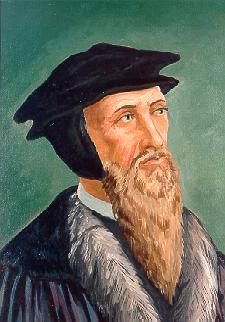
Often here at The Evangelical Calvinist I refer to the language of union with Christ, and Calvin’s “mystical union” (unio mystica). This is the stuff that makes ‘EC’ go round; that is pressing this Pauline idea of ‘in Christ’ theology as the key of our soteriological framework. In line with Thomas Torrance, and through his development of Scottish Theology, in his book “Scottish Theology;” I often pick up on the way this was developed, contra the Westminster development of Calvin that takes hold of Calvin’s theology of the Law, and its relation to understanding salvation. J. Todd Billings says that either one of these streams misses Calvin’s theology as a whole, and thus distorts Calvin if we try to emphasize either his relational over and against his juridical (legal), or vice versa. Billings writes:

[T]here is an ‘Anti-Legal School’ in Calvin scholarship that tends to emphasize Calvin’s distance from scholasticism, his fluidity in the use of image and metaphor, and his rich Trinitarian theology. Language about forensic transaction is generally treated with suspicion, in preference for the more organic images of transformation. In reaction to this school, the ‘legal’ aspects of Calvin’s thought tend to be emphasized by others, particularly his distinctively Reformed concerns for the doctrines of justification and imputation. Accounts of one school of thought tend to either ignore or deny the other side. . . . I will argue that the place of the human is illuminated in Calvin’s theology of participation by seeing a Trinitarian account of the duplex gratia as the framework for participation. For Calvin, participation in Christ must emphasize the legal and the transformative language in the ‘double grace’ of justification and sanctification. In prayer, believers act in ascetic struggle to pray rightly, yet the foundation for their active struggle is a recognition of God’s free pardon. Likewise, in the sacraments of baptism and the Lord’s Supper, believers act in response to God’s justifying act in a way that incorporates them into a Trinitarian soteriology: the Father is revealed as gracious and generous through his free pardon of believers in their union with Christ; this union also involves the activation of believers by the Spirit—toward a life of piety and love, requiring ascetic effort and activity. Believers are made active in the ecclesial and social community. A participatory, Trinitarian account of the duplex gratia plays an important role in Calvin’s theological account of the sacraments. ‘Participation’ in baptism is so real that it is almost biological. Celebrating the Lord’s Supper involves participating in Christ’s ascension to heaven to feed on his life giving flesh and blood. Calvin’s theology of prayer and the sacraments is a theology that is theocentric, but also participatory, activating believers in love of God and neighbour as the body of Christ. [J. Todd Billings, Calvin, Participation, and the Gift: The Activity of Believers in Union with Christ, (New York: Oxford University Press, 2007), 105-06]

This serves instructive for noting a certain reality; one that Billings is not intending to address here, but one that I believe is constructively available through the present thesis that Billings will proceed to develop throughout the rest of his chapter. What I want to highlight is the fact that both lines of thought—union with Christ/relational and forensic—are present in Calvin. Consequently, all things being equal, both strands can be found developed and emphasized within the tradition that bears Calvin’s name. This is precisely what we seek to elucidate and alert folks to with our forthcoming book on Evangelical Calvinism, and what I, personally, have been doing here with my blog (at points). Calvin’s nose is very “waxy,” and thus it should be expected that given the various predispositions of people in general; that aspects of Calvin’s corpus will be developed over and against other aspects—and this shaped by various socio-cultural constraints present throughout Calvinism’s history and development.

Billings’ point is that to negate one aspect of Calvin from his other side is to misread and misunderstand Calvin’s full bodied theological thrust. Nevertheless, the reality is, is that Calvin has been read through various foci and lenses; the history bears this out. This takes us back to Richard Muller’s thesis that Calvin should not be seen as the touchstone of what it means to be a Calvinist. In some ways this is true, there is a difference between being Calvinian (which is what Billings is developing in his book—Calvin’s theology) and Calvinist; I would suggest though that a theologian could only ever be a Calvinist (Evangelical, Westminster, Spiritual Brethren, et al) if in fact she has a shred of Calvinian in her first. My point, Calvin’s nose is wax; and I would say that this is a good thing, precisely because we are as Reformed Christians, people who interpret and re-interpret Calvin and any teacher through Scripture. Those who appreciate Calvin, and try to appropriate him constructively through Scripture; will almost necessarily end up being a Calvinist (vs. Calvinian), and, of course, I would propose that the best of us will end up an Evangelical Calvinist! 😉

Thesis 14 From Our EC Book: Theories of the Atonement, and Our Ontological Theory

My last post only briefly only touched on our Thesis 14 from our Evangelical Calvinism book. In this post I will provide the quotation of the whole thesis from the book; here we go:

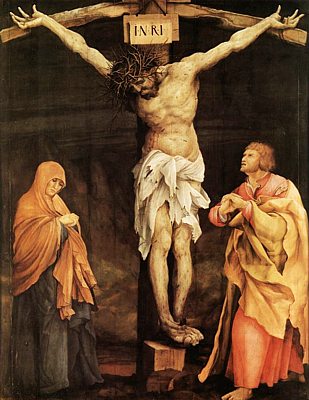
crucifixionThesis 14. The atonement is multifaceted and must not be reduced to one culturally conditioned atonement theory but, rather, to a theologically unified but multi-faceted atonement model.

While Evangelical Calvinism upholds what is essential in a penal substitutionary theory of the atonement, it does not limit the atonement to juridical metaphors. Instead it prefers to see the atonement through the multifaceted New Testament perspectives, in addition to the many Old Testament antecedents, and speak of an ontological, personal, relational, and even mystical union, centered in Christ, by which any atonement model inheres.55

The language which the New Testament uses to set this out is drawn from the long history of God’s dealings in revelation and reconciliation with his covenant people Israel. That language is used in the sovereign freedom of the New Testament revelation, in the sovereign freedom of the Son of God who, as he comes into the situation prepared for him in Israel, acts both critically and creatively in fulfilment of the Old Testament patterns of understanding and worship provided within the covenant. We must seek therefore to examine that language, and through it and by means of it, seek to understand what the New Testament teaches us of the death of Christ. And yet we must pass beyond the Old Testament language to the actual person and work of Christ himself and allow his person and work as mediator to remould in our obedient understanding of him, even the language divinely prepared in the old covenant, for here it is with the new covenant in the blood of Christ that we are concerned.56

It is this embodied aspect of the atonement in Christ that becomes the centrum wherein an Evangelical Calvinist understanding of the atonement takes full shape. The imagery and liturgical activity of atonement found throughout the canon of Scripture is grounded and orientated ontologically in the cruciform life of Christ. This means that Evangelical Calvinists believe that penal-substitution is an aspect of the atonement, and a fundamental one at that; that both forensic realities are present, but that they find their nexus deeper down as Christ takes on the full weight of sin in his very being. Torrance beautifully describes the implications of such an atonement model when he writes:

Jesus did not repudiate the preaching of John the Baptist, the proclamation of judgement: on the contrary he continued it, and as we have seen he searched the soul of man with the fire of divine judgement, but in Jesus that is subsidiary to—and only arises out of—the gospel of grace and vicarious suffering and atonement. In the incarnate life of Jesus, and above all in his death, God does not execute his judgement on evil simply by smiting violently away by a stroke of his hand, but by entering into from within, into the very heart of the blackest evil, and making its sorrow and guilt and suffering his own. And it is because it is God himself who enters in, in order to let the whole of human evil go over him, that his intervention in meekness has violent and explosive force. It is the very power of God. And so the cross with all its indelible meekness and patience and compassion is no deed of passive and beautiful heroism simply, but the most potent and aggressive deed that heaven and earth have ever known: the attack of God’s holy love upon the inhumanity of man and the tyranny of evil, upon all the piled up contradiction of sin.57

If the forensic/juridical components are the primary components of an atonement theory, then the concern is that atonement will not have dealt with the real reach of sin; to use the language of Scripture, the juridical/forensic, alone, does not have the capacity to deal with the “heart.” Instead, juridical/forensic themes can only provide “payment” to God for legal crimes committed against him; yet the primary issues—the cause of the symptoms—remains untouched. Evangelical Calvinists advance the ontological theory of the atonement that helps correct the imbalance left by the classic understanding. [Myk Habets and Bobby Grow, Evangelical Calvinism: Essays Resourcing the Continuing Reformation of the Church, Chapter 15: Theses on a Theme, 449-50.]

__________________________

54. Cf. Thesis 8. According to Torrance, When Christ Comes, 188, “That is why we are afraid of God—because He wants to give Himself to us in love, and His love is our judgment. Because we are afraid, our guilty conscience distorts the face of God for us and makes us afraid to look upon Him. We are trapped in the pit of our own fears, and run away from the very One who really loves and the only One who can forgive us.” Torrance proceeds to exposit the “wonderful exchange” wrought by God in Christ whereby Christ takes our judgment and our place that we might be given his place (184).

55. See Torrance, Atonement, 99.

56. Ibid., 1.

57. Torrance, Incarnation, 150.

The Ontological Theory of the Atonement and Evangelical Calvinism

Here is something for you to meditate upon as you sleep tonight (at least I’m going to). This is a quote from Thomas Torrance taken from Myk Habet’s and my book Evangelical Calvinism. It is taken from our Thesis chapter, calvaryand this happens to be Thesis 14. Here is what Thesis 14 is:

The atonement is multifaceted and must not be reduced to one culturally conditioned atonement theory but, rather, to a theologically unified but multi-faceted atonement model.

And here is the quote from Torrance (when I have more time I will quote the whole thesis):

Jesus did not repudiate the preaching of John the Baptist, the proclamation of judgement: on the contrary he continued it, and as we have seen he searched the soul of man with the fire of divine judgement, but in Jesus that is subsidiary to—and only arises out of—the gospel of grace and vicarious suffering and atonement. In the incarnate life of Jesus, and above all in his death, God does not execute his judgement on evil simply by smiting violently away by a stroke of his hand, but by entering into from within, into the very heart of the blackest evil, and making its sorrow and guilt and suffering his own. And it is because it is God himself who enters in, in order to let the whole of human evil go over him, that his intervention in meekness has violent and explosive force. It is the very power of God. And so the cross with all its indelible meekness and patience and compassion is no deed of passive and beautiful heroism simply, but the most potent and aggressive deed that heaven and earth have ever known: the attack of God’s holy love upon the inhumanity of man and the tyranny of evil, upon all the piled up contradiction of sin. [Torrance, Incarnation, 150.]

As you can see from Torrance he has a different emphasis than the ubiquitous range that penal substitution has for Evangelicals and the Reformed alike. Instead of seeing atonement framed by a juridical or legal frame (which flows from the Covenant of Works), Torrance understands that the depth dimension of the atonement, if it is to be really effectual (so to speak), must penetrate the depth of the broken and desperately evil heart. A legal conception only, only deals with behavioral and venial sins (symptoms, externals); instead of framing the atonement legally, per se, Torrance develops his ontological theory of the atonement. The idea is well expressed in the quote provided from him above. This is why Torrance so believed that Jesus had to of assumed a fallen/sinful humanity in the Incarnation (although he rightly qualifies this by arguing that Jesus immediately sanctifies this fallen humanity by the Holy Spirit so as not to sin); Torrance believed with Gregory of Nazianzius that ‘the unassumed is the unhealed’. And Myk and myself (and other of our authors in the book) believe that this is the better way to go; i.e. that is to understand that salvation must deal with the real problem, our stone like broken hearts. That’s what Jesus does by penetrating the depths of our fallen humanity all the way down, and through this he gives us his heart of flesh; the kind that is Spirit shaped, and where the Spirit of the Lord is there is Liberty.

Anyway, off to bed for me; more to come on this later.


Discontinuity Between Calvin and the Calvinists on the Hermeneutics of Atonement

I just read this essay Hermeneutical discontinuity between Calvin and later Calvinism by Kevin D. Kennedy from Southwestern Theological Seminary in Fort Worth Texas in the Scottish Journal of Theology Volume 64 (2011) – page 299. Unfortunately I didn’t have the chance to make a copy of it (I read this while I was at my alma mater’s theological library today — Multnomah University), but I would like to try and provide a synopsis of his thesis and argument (as I can recall).

Basically, Kennedy argues that John Calvin and the later Calvinists (post-Reformed orthodox) function with discontinuity relative to their hermeneutics on the extent of the atonement. For Calvin, as Kennedy convincingly argues, he held to a universal atonement, but not universal salvation; for the “Calvinists,” according to Kennedy, they hold to a limited (particular) atonement, and a particular salvation. As part of Kennedy’s “ground clearing work,” he notes Richard Muller’s work in this area; as well as the work of Paul Helm and Roger Nicole (their rejoinder to R.T. Kendall’s work on Calvin). He recognizes that said scholars need to be acknowledged for their work in the area of Calvin studies (especially Muller), but that in this particular area they all over-state things when it comes to Calvin’s view of the extent of the atonement. Kennedy demonstrates that Calvin’s hermeneutics, both in his commentaries (on the salient passages), and in his little book Concerning the Eternal Predestination of God consistently argues for a universal atonement (but not salvation). In particular, Kennedy looks at Matthew 20.28 which says:

[j]ust as the Son of Man did not come to be served, but to serve, and to give His life a ransom for many.

Kennedy demonstrates (by quoting Calvin’s commentary), that Calvin believes that the word ‘many’ is not referring to a limited class of people (the elect), or that it is excluding one group of people from the other (elect from the reprobate)—as, he notes, John Owen, along with the rest of the post-Reformed orthodox Tradition would argue—but that Jesus is providing dominical teaching by making a contrast between himself as the One over and against the Many for whom he died pro nobis (or would be dying, given the historical present in context). Kennedy goes on to look at other passages in Calvin’s commentaries that are pertinent to this topic; all illustrating this same point. For Calvin, when the word ‘many’ is used in these contexts it is not intended to exclude one class of people from the other; but instead, it is to contrast Christ’s death for us, over and against ‘us’ the many (or the point that Jesus wasn’t dying for himself, but for us). Kennedy, then, moves on and takes a look at the more universalist passages in Paul’s corpus (like I Tim. 2.4 etc.); he notes that Calvin, qualifies the word ‘all’ (like God desires that ‘all’ men be saved) in a way that speaks, not to his view of the extent of the atonement; but to Calvin’s view that not all will believe. So the limiting, for Calvin, according to Kennedy, has to do with appropriation of salvation and not the extent of the atonement as the post-Reformed orthodox interpret Calvin (so Muller, Helm, Nicole, et al).

Kennedy concludes that the post-Reformed have imposed their later developed hermeneutic of particularism onto Calvin’s hermeneutic of the atonement. He suggests that a more fruitful way forward, while noting that there are some continuities between Calvin and the Calvinists (per Muller’s exhaustive argument, like in his After Calvin), would be not to gloss over the genuine discontinuities that are present between Calvin and the Calvinists. In this instance the primary distinction is between Calvin’s view of the extent of the atonement (which is universal), and the particularist view of the atonement held by the Calvinists (the Reformed orthodox ones).

In closing, what is very enlightening with Kennedy’s essay, is that it helps to substantiate what we Evangelical Calvinists, Thomas Torrance amongst us, have been arguing in regard to Calvin’s view of the atonement. This helps substantiate Thomas Torrance’s reading of many of the Scottish theologians in his book “Scottish Theology;” which argues that there is a whole strain of development of Calvinism in Scotland that follows and develops this teaching on the atonement first articulated by Calvin. Again, it is important to note that Calvinism has a variegated currency; and much of this is because Calvin left the doors open for more than one trajectory. In other words, his method was not scholastic.

**A repost, I really liked this post, so here it is again.

John MacArthur the Philosopher

Watch this interview with John MacArthur; he is discussing his view on limited atonement and predestination. Notice the irony of everything that he communicates; especially how he says to avoid philosophical speculation in regards to these issues, yet he fails to identify that his whole response is deeply entrenched in philosophical (like Stoicism, Aristotelianism, etc.) grammar. He assumes, uncritically, it seems, that what he is communicating is pure Bible truth.

Torrance, Universalism and the Limited Atonement

Here is Thomas Torrance commenting on rationalist thinking in regards to trying to articulate issues particular to the extent of the atonement. And then we have Torrance commenting on the inescapable reality of the universal range of the atonement, but not the universal salvation that a rationalist approach must reduce to; which Torrance is, of course, as am I, against! Torrance says:

The rationalism of both universalism and limited atonement

Here we see that man’s proud reason insists in pushing through its own partial insight into the death of the cross to its logical conclusion, and so the great mystery of the atonement is subjected to the rationalism of human thought. That is just as true of the universalist as it is of those who hold limited atonement for in both cases they have not yet bowed their reason before the cross of Christ. (Atonement, 187-88)

This was his concluding remark, he had just finished, previous to this, effectively arguing against both limited atonement and universalism (whether that be of Classic Calvinist or Arminian [or even Barthian] varieties). Now we get into his initial thoughts on the fact that Christ’s death had to be for all; according to both Scripture’s witness, and the ‘inner-logic’ scripture presupposes upon:

(i) Christ’s death for all is an inescapable reality

We must affirm resolutely that Christ died for all humanity — that is a fact that cannot be undone. All men and women were represented by Christ in life and death, in his advocacy and substitution in their place. That is a finished work and not a mere possibility. It is an accomplished reality, for in Christ, in the incarnation and in his death on the cross, God has once and for all poured himself out in love for all mankind, has taken the cause of all mankind therefore upon himself. And that love has once and for all been enacted in the substitutionary work on the cross, and has become fact — nothing can undo it. That means that God has taken the great positive decision for man, the decision of love translated into fact. But because the work and the person of Christ are one, that finished work is identical with the self-giving of God to all humanity which he extends to everyone in the living Christ. God does not withhold himself from any one, but he gives himself to all whether they will or not — even if they will not have him, he gives himself to them, for he has once and for all given himself, and therefore the giving of himself in the cross when opposed by the will of man inevitably opposes that will of man and is its judgement. As we saw, it is the positive will of God in loving humanity that becomes humanity’s judgement when they refuse it. (Thomas F. Torrance, Atonement, 188-89)

It is really hard for people to cope with what Torrance is saying, I think. It kicks against the way that we have been “trained” and “conditioned” to think. All I can say, is that folks should try to imagine a world where doing math for Theology does not exist; and then we’ll all be fine 😉 .

Discontinuity Between Calvin’s Hermeneutic on the Atonement from the Calvinists

I just read this essay Hermeneutical discontinuity between Calvin and later Calvinism by Kevin D. Kennedy from Southwestern Theological Seminary in Fort Worth Texas in the Scottish Journal of Theology Volume 64 (2011) – page 299. Unfortunately I didn’t have the chance to make a copy of it (I read this while I was at my alma mater’s theological library today — Multnomah University), but I would like to try and provide a synopsis of his thesis and argument (as I can recall).

Basically, Kennedy argues that John Calvin and the later Calvinists (post-Reformed orthodox) function with discontinuity relative to their hermeneutics on the extent of the atonement. For Calvin, as Kennedy convincingly argues, he held to a universal atonement, but not universal salvation; for the “Calvinists,” according to Kennedy, they hold to a limited (particular) atonement, and a particular salvation. As part of Kennedy’s “ground clearing work,” he notes Richard Muller’s work in this area; as well as the work of Paul Helm and Roger Nicole (their rejoinder to R.T. Kendall’s work on Calvin). He recognizes that said scholars need to be acknowledged for their work in the area of Calvin studies (especially Muller), but that in this particular area they all over-state things when it comes to Calvin’s view of the extent of the atonement. Kennedy demonstrates that Calvin’s hermeneutics, both in his commentaries (on the salient passages), and in his little book Concerning the Eternal Predestination of God consistently argues for a universal atonement (but not salvation). In particular, Kennedy looks at Matthew 20.28 which says:

[j]ust as the Son of Man did not come to be served, but to serve, and to give His life a ransom for many.

Kennedy demonstrates (by quoting Calvin’s commentary), that Calvin believes that the word ‘many’ is not referring to a limited class of people (the elect), or that it is excluding one group of people from the other (elect from the reprobate)—as, he notes, John Owen, along with the rest of the post-Reformed orthodox Tradition would argue—but that Jesus is providing dominical teaching by making a contrast between himself as the One over and against the Many for whom he died pro nobis (or would be dying, given the historical present in context). Kennedy goes on to look at other passages in Calvin’s commentaries that are pertinent to this topic; all illustrating this same point. For Calvin, when the word ‘many’ is used in these contexts it is not intended to exclude one class of people from the other; but instead, it is to contrast Christ’s death for us, over and against ‘us’ the many (or the point that Jesus wasn’t dying for himself, but for us). Kennedy, then, moves on and takes a look at the more universalist passages in Paul’s corpus (like I Tim. 2.4 etc.); he notes that Calvin, qualifies the word ‘all’ (like God desires that ‘all’ men be saved) in a way that speaks, not to his view of the extent of the atonement; but to Calvin’s view that not all will believe. So the limiting, for Calvin, according to Kennedy, has to do with appropriation of salvation and not the extent of the atonement as the post-Reformed orthodox interpret Calvin (so Muller, Helm, Nicole, et al).

Kennedy concludes that the post-Reformed have imposed their later developed hermeneutic of particularism onto Calvin’s hermeneutic of the atonement. He suggests that a more fruitful way forward, while noting that there are some continuities between Calvin and the Calvinists (per Muller’s exhaustive argument, like in his After Calvin), would be not to gloss over the genuine discontinuities that are present between Calvin and the Calvinists. In this instance the primary distinction is between Calvin’s view of the extent of the atonement (which is universal), and the particularist view of the atonement held by the Calvinists (the Reformed orthodox ones).

In closing, what is very enlightening with Kennedy’s essay, is that it helps to substantiate what we Evangelical Calvinists, Thomas Torrance amongst us, have been arguing in regard to Calvin’s view of the atonement. This helps substantiate Thomas Torrance’s reading of many of the Scottish theologians in his book “Scottish Theology;” which argues that there is a whole strain of development of Calvinism in Scotland that follows and develops this teaching on the atonement first articulated by Calvin. Again, it is important to note that Calvinism has a variegated currency; and much of this is because Calvin left the doors open for more than one trajectory. In other words, his method was not scholastic.

Crucilogic, The Stauros Shaped Mind: Evangelical Calvinist Epistemology

Often here I refer to TF Torrance’s labeling of Classical Arminianism and Calvinism as logico-causal; meaning that these approaches feel the need to diminish tensions — relative to certain doctrines — and fill in the “gaps,” so to speak. Here Robert T. Walker — Torrance’s nephew and editor of his books Incarnation & Atonement — explains how Torrance believes that we should avoid such approaches (the context that this footnote is made in is the section in Atonement where TFT is addressing both universalism and limited atonement [both errors]):

For Torrance, apprehension of the cross involves a conversion of the reason in which we bow our own reason before the reality and mystery of Christ and seek to understand it (as far as we may) out of itself without reducing it to logical schemata of our own making which inevitably break it up into separate elements to distort it. We need to hold together what scripture holds together, refusing to categorise it in ways that distort that wholeness. If we cannot understand how scripture holds together certain things which we find difficult (such as the unconditional love and forgiveness of God for all, the finished work of Christ, the gospel imperative to repent and believe, and the fact that some refuse and are judged by the very gospel that offers them life) then it is not open to us to resolve the tension through a man-made logical schema which emphasises some elements as [sic] the expense of others. We need to be crucified with Christ in our natural reason and through the transforming of our mind begin to penetrate into ‘the interior logic of scripture’ so that we may learn to think as scripture thinks and hold together what it holds together in Christ. Both universalism and limited atonement for Torrance fail to do that. . . . (Thomas F. Torrance, ed. Robert T. Walker, Atonement, 188 fn. 70)

This dovetails with another post I’ve written on Theological Exegesis. Furthermore, it presses one of the reasons why Torrance and Evangelical Calvinists believe it is necessary to “apparently” let certain things dangle. I know one issue that really bothers some of you who read here (not all of you) is how EC’rs can hold that if Jesus died for everyone (which the Incarnation demands, per its ‘interior logic’ — which Torrance argues in this section of “Atonement”) how it also can be true that not everyone is saved. Classic Calvinists hold to a prior causal metaphysic behind the back of Jesus’ revelation that necessitates that if Jesus died for someone then built into that, that someone “will” get saved.  Torrance is saying that crucified and resurrected wisdom is at odds with such logico-causal schemas, which (by inference — this is my estimation) put to death theology of glories (or man-based speculation) that seek to “proclaim” things that the Gospel itself neither demands nor imposes upon us categorically. Classical Arminians have problems with their own “theologies of glory,” which Torrance does address . . . maybe another time.

The Undoing of classic Causal Determinism in Theology through resurrection

Here T. F. explains and undoes the usual understanding of how events in history and causation relate one to the other. He defeats the idea of causation, appropriated by Classical Theists, in general; and Classical Calvinists & Arminians, in particular, that there is a necessary relation between the event that happened, and the events that led to the happening. He makes a disjunction between Factual event and Necessary event; the former being that which we understand as an actual happen-stance of the past, and the latter having to do with the idea that because that happen-stance happened, that the events that led to its happening also were necessarily organised in a certain way in order for the the conditions of that event to be so — as if we, as historians (or scientists, theologians, etc), can absolutize causes based upon an idea of uniformitarian conception of Event. Obviously this is a little complicated, and not for the faint of heart, but I think it important to be grasped in order to understand what Evangelical Calvinists mean when we say that we eschew the logico-causal-determinism of ‘classic’ thought. Here’s T. F. Torrance (this whole discussion takes place in the context of TFT talking about resurrection):

(a) Interpreting ordinary historical events

(i) Freedom and necessity in historical events

Let us try to understand this from a merely natural point of view. Think of a historical happening: in taking place it appears as a free happening. Once it takes place, it cannot be undone. Throw a stone through that window and you are engaging in a free act, but once it has taken place, the act cannot be recalled — we cannot turn it backwards as we can a film of the event. Thus once an event has taken place, it becomes ‘necessary’ — in the sense that it cannot now be other than it is. At this point, however, we are liable to suffer from an illusion, for we tend to think that because it is now necessary fact, it had to happen. This is the kind of optical illusion we suffer from on the golf course when our opponent putts a ball from the other end of the green and it goes right down into the hole — immediately that happens we somehow think it had to happen from the start, but what we have done in a flash is to read the final result back all along the line of the ball’s course into the free act behind it. It is through this kind of illusion or indeed delusion that some historians think that historical events are to be interpreted in the same way in which they interpret the events of natural processes as concatenated or linked together through causal necessity.

The distinction between causal necessity and factual necessity

But it is important to distinguish in historical happening between causal necessity and factual necessity, between causal determination of events and the fact that once they happen they cannot be otherwise. An historical event, once it has taken place, is factually necessary for it cannot now be other than it is, but an historical event comes into being through a free happening, by means of spontaneous human agencies. Certainly all historical events are interactions between human agents and nature, as well as interactions between agents and other agents — so that there are elements of causal determination in historical happening that we have to take into account, physical factors relating to the kind of patterns of space and time in which we live and work. But historical events are not by any means merely natural physical processes, for as happenings initiated and bound up with purposeful agents they embody intention which often conflicts with and triumphs over the course of events that nature would take on its own.

(ii) History is the interweaving of natural processes with human intention

It is this interweaving of natural processes and human agencies, of nature and rational intention, that gives history its complicated patterns. The course of events has often quite unforeseen results, for human acts may fail to achieve what would have been expected or may achieve far more than would or could have been anticipated. But in our interpretation of history we must never forget that in the heart of historical events there is free happening which bears the intention in which the true significance of history is to be discerned. Thus while we must appreciate fully the physical factors involved, we must penetrate into the movement of time in the actual happening in order to understand the event in the light of the intentionality and spontaneity embedded in it. The handling of temporal relation has proved very difficult and elusive in the history of thought, for it has so often been assimilated to logical relation and so transposed into something very different. The confusion of temporal with logical connection corresponds here to that between spontaneity and causal determinism in natural science. We can see this error recurring, for example, in notions of predestination where the free prius of the divine grace is converted by the scholastic mind into logico-causal relation, while the kind of time-relation with which we operate between natural events is imported into the movements of divine love and activity. It is a form of the same mistake that people make in regard to the resurrection, when they think of its happening only within the logico-causal nexus with which they operate in classical physics. (Thomas F. Torrance, Atonement: The Person and Work of Christ, edited by Robert T. Walker (Downers Grove, Illinois: IVP Academic, 2009, 249-50)

In keeping with Torrance’s usual mode of thinking from the Incarnation & Atonement (here the resurrection being the focus), he seeks to excoriate any ideas of logico-causal determinism as the lens through which profane historians would attempt to interpret the ‘historicity’ and ‘facticity’ of the resurrection itself — Torrance’s discussion here, is all taking shape within his line of thought associated with Kata Physin (or according to the nature of the thing, or his more popular method Theological Science). As he deconstructs the post hoc ways of what might be called ‘natural theology’ (meaning all modes of intellectual inquiry which make inferences from supposed stable events, works, physical nature, etc. to their “necessary causes”), by implication, he also gets at theological constructs (like classic Calvinism-Arminianism, Neo-Orthodoxy like Brunner’s) that operate with this same modus operandi.

The moral: There are unseen, unknown contingencies built into the nature of things themselves that make it impossible to accurately infer a stable causal chain of events from the event back to the cause itself. The answer to this, in relation to knowledge of God, is to see the event and cause conjoined together in the person-act of Jesus himself. It is from this vantage point that we then are set up to know God, in Christ, but no longer as some sort of deterministic causal agent; but instead, as personal, triune Divine agent who apocalyptically breaks into the contingencies of history re-creating them towards their telos or created purpose in Christ (cf. Col. 1:13ff) — the resurrection, then, being the instantiation of this within time-space history.

I doubt this has cleared much up, but if nothing else it helped me to write this out for my own process. I also would surmise that it is because of the nuance of this kind of thought, evinced by TFT, that Evangelical Calvinism will continue to have problems with making headway with the typical American Christian. It is easy to understand causal-determinism, because that’s what “we see” in “nature” all the time (there is an “apparent” coordination between how things appear to the naked mind’s eye, and how we then assume things in themselves “must” be — so it is natural to operate with a docetic understanding of things — but this is not Christian, nor Evangelical Calvinism — it is the mode of Classical Calvinism & Arminianism [and I realize this is hard teaching, who can hear it?]).