The Dilemma Between Divine Simplicity and Analogy Introduced §1

Once, I tried to compare and contrast Thomas F. Torrance’s and Thomas Aquinas’ respective and disparate views on the usage of ā€˜analogy’ in theological engagement. I did this in our (Myk Habets’ and my) edited book Evangelical Calvinism: Essays Resourcing the Continuing Reformation of the Church; my personal chapter in that book is titled: Analogia Fidei or Analogia Entis: Either aquinasThrough Christ or Through Nature. I wasn’t altogether pleased with how that chapter came out, but it is what it is.

George Hunsinger in his new book Evangelical, Catholic, and Reformed: Essays on Barth and Other Themes engages with the same issue I attempted to, but his comparison and contrast is between Karl Barth and Thomas Aquinas; a similar endeavor to mine (I mean in regard to the traditions on analogy being compared). Throughout the rest of this post (which will probably run long) I am going to engage with Hunsinger’s comparative and constructive work here, which will involve engaging with the ostensible problem of Divine Simplicity and analogy respectively.

The Fourth Lateran Council serves as a jumping off point for Hunsinger in setting up this (his) discussion. We will enter into this with him at length (in other words I am going to be doing some extensive quotation work), and then we will follow it up with my own reflections in response to Hunsinger’s salient points on Barth and Aquinas in discussion. So Hunsinger:

A famous formula from the Fourth Lateran Council ran as follows:

For between Creator and creature there can be noted no similarity so great that a greater dissimilarity cannot be seen between them. (Constitutions, ii)

Whatever this formula might mean, it is not necessarily in agreement with the view taken by Irenaeus. Although both would posit an analogy between the Creator and the creature, the Lateran formula, if taken strictly, seemed to construe their metaphysical difference as a matter of degree (ā€œgreater dissimilarityā€), whereas Irenaeus, if taken strictly, appeared to adopt a more radical view. For him their difference would seem to be absolute, as set forth through a pattern of negation and eminence, not just a matter of degree. Uncreated light, being wholly other than created light, was placed in a class by itself: God was ā€œunlike any light that we know.ā€

The idea of divine simplicity seemed to generate a quandary. Defining God as wholly other than any creatures seemed to rule out the possibility of analogical discourse in theology. The idea of analogy, even as construed by the Fourth Lateran Council, seemed to posit that God and the creature were somehow metaphysically comparable. The dissimilarity between them, no matter how great, was finally a matter of degree. Divine simplicity, on the other hand, seemed to require a difference that was not merely relative but absolute. If so, it seemed to rule out the possibility of analogical discourse about God. Language about God, on these terms, could only be equivocal and apophatic. Analogical views of theological language that affirm divine simplicity, or God’s radical difference from the world, need to deal with this dilemma.[1]

To sharpen this dilemma Hunsinger appeals to Denys Turner and Patristic Hippolytus; first to Turner:

There can be no good sense … in any … calculation of the greater and lesser degrees of ā€œdistanceā€ which lie between Creator and creatures as contrasted with that between one creature and another; for it is not on some common scale of difference that these differences differ … as if to say: it is this kind or that, only infinitely so…. A term of comparison … presupposes a common scale…. For if God is not any kind of being, then his difference from creatures is not a difference of any kind, hence is not a difference of any size, hence is not incomparably greater, but, on the contrary, is, simply, incommensurable. ā€œGreaterā€ and ā€œlesserā€ cannot come into it, logically speaking.[2]

Hunsinger then cites Hippolytus:

For comparisons can be instituted only between objects of like nature, and not between objects of unlike nature. But between God the Maker of all things and that which is made, between the infinite and the finite, between infinitude and finitude, there can be no kind of comparison, since these differ from each other not in mere comparison (or relatively), but absolutely in essence. And yet at the same time there has been effected a certain inexpressible and irrefragable union of the two into one substance [upostasin] which entirely passes the understanding of anything that is made. For the divine is just the same after the incarnation that it was before the incarnation; in its essence infinite, illimitable, impassible, incomparable, unchangeable, inconvertible, self-potent [autosXenes], and, in short, subsisting in essence alone the infinitely worthy good.[3]

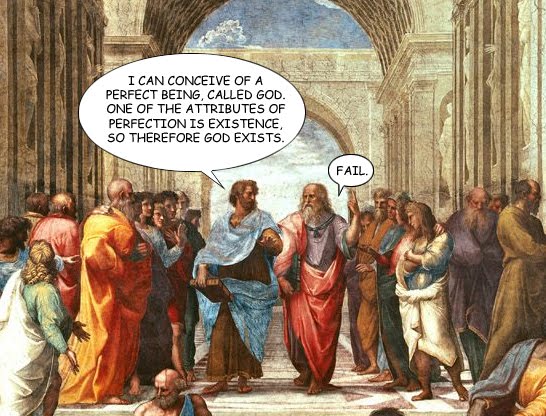
If God is ā€˜simple’ and non-composite, if He just is and His predicates are just who He is fully and wholly in all that those are realized in Himself; if God is so unique and other in this regard, such that He is not open to creaturely comparison, then how can we ever speak of God in anything but equivocal ways? This is the dilemma that Hunsinger has introduced us to, and the dilemma that Thomas Aquinas and Karl Barth understand and work through in their respective ways.

Since this is running long, and the comparison between Barth and Aquinas will run longer, I will divide this up into two separate posts. Hopefully you see and understand the dilemma that Divine simplicity and analogous language presents us with; if you do you will better appreciate the respective ways that both Barth and Aquinas end up engaging with this issue (no surprise I go with Barth … but Hunsinger doesn’t think Barth and Aquinas are as far apart as some think – stay tuned).

[1] George Hunsinger,Ā Evangelical Catholic And Reformed: Doctrinal Essays on Barth and Related ThemesĀ (Grand Rapids, Michigan/Cambridge, U.K.: William B. Eerdmans Publishing Company, 2015), 61 kindle.

[2] Denys Turner cited by George Hunsinger in Ibid., 61-2.

[3] Hippolytus cited by George Hunsinger in Ibid., 62-3.

Standing with Friedrich Schleiermacher against Philosophical Theology

There seems to be an ascendancy, once again, of philosophical theology [and I apologize, this post, or at least this point of this schleiermacher (1)post is going to have to remain rather general and abstract without any concrete examples at the moment]. The way I understand philosophical theology is pretty close to home; it is a form (it might be THE form) of evangelical theology that I sat under while in undergrad at Bible College (things changed a bit for me in my seminary experience because of two profs in particular). Philosophical theology, as I understand it, and have experienced it, in a nutshell, is what has come to be called: analytical theology. Analytical theology, in a nutshell, is theology, like scholastic theology from the post-Reformed era that feels free to drink freely from the analytical philosophical tradition (like from Aristotle, Plato, the Stoics, et al), and use the categories discovered by these philosophers as they reflected upon creation as the categories through which the Christian God was synthesized and casted.

So even with the scant sketch above of how I understand philosophical or analytical theology what should begin to emerge is how there is no necessary connection between Christian theology, and its revealed categories, and the categories ā€œdiscoveredā€ by the analytic philosophers. And yet what happens in the analytical theology tradition is that a foundation, of sorts, is constructed so that these two disparate approaches of thinking about metaphysical things can be brought into mutually supporting beams such that God’s life ends up being founded upon our capacity to think God (from reflecting upon creation) instead of being confronted by God Self-revealed and interpreted in Jesus Christ. This is how I see analytical theology functioning, and it is because of this that I must reject it, and search for an approach (and I believe that I have found one years ago now) that does not depend upon my ability as a philosopher and theologian to conceive of God, categorically, apart from his Self-revelation.

Friedrich Schleiermacher, a German theologian from the 18th and 19th centuries, who became known as the ā€˜Father of Theological Liberalism’ (wrongly!) offers an alternative to the analytical tradition–when critically received–that I believe is quite refreshing; and that I believe moves us away from attempting to work out correlationist theologies that seek to synthesize Christian theology with classical philosophical categories (Thomas Aquinas is one of the most famous for attempting to do this … I should say though, that I can learn a lot from Aquinas, still, just not uncritically).

I believe, along with Schleiermacher, and Karl Barth (and Thomas Torrance, et al) that Christian theology cannot and must not depend upon any attempted correlations between natural reflection upon nature (the analytical philosophers), and then syntheses of these reflections with Christian theology.[1] I do not believe, along with someone as Scottish as Thomas Torrance, that there are any natural analogies for God become man (i.e. the Incarnation); do you? Schleiermacher writes it this way:

Our dogmatic theology will not, however, stand on its own proper ground and soil with the same assurance with which philosophy has long stood on its own, until the separation of the two types of proposition is so complete that, e.g., so extraordinary a question as whether the same proposition can be true in philosophy and false in Christian theology, and *vice versa*, will no longer be asked, for the simple reason that a proposition cannot appear in the one context precisely as it appears in the other; however similar it sounds, a difference must always be assumed.[2]

And this in regard to the audience of Christian theology:

It is obvious that an adherent of some other faith might perhaps be completely convinced by the above account that what we have set forth is really the peculiar essence of Christianty, without being thereby so convinced that Christianity is actually the truth, as to be compelled to accept it. Everything we say in this place is relative to Dogmatics, and Dogmatics is only for Christians; and so this account is only for those who live within the pale of Christianity, and is intended only to give guidance, in the interests of Dogmatics, for determining whether the expressions of any religious consciousness are Christian or not, and whether the Christian quality is strongly expressed in them, or rather doubtfully. We entirely renounce all attempt to prove the truth or necessity of Christianity; and we presuppose, on the contrary, that every Christian, before he enters at all upon inquiries of this kind, has already the inward certainty that his religion cannot take any higher form than this.[3]

For Schleiermacher, then, and many others after him (like Barth, Torrance, and a whole host of more ā€˜liberal’ theologians), Christian Theology is for Christians! It is exclusive to those who have eyes to see, and ears to hear; as the Revelator has written: ā€œHe who has an ear, let him hear what the Spirit says to the churches.ā€™ā€[4]

The ascendancy of philosophical or analytical theology that I referred to to open this brief piece up continues to make new in-roads into the evangelical heart-land. I think we ought to repent of that, and engage in theological endeavor that ironically comes from someone like Schleiermacher. We want to really be able to hear from the Lord, and attempt to repeat what we hear in a genuine way as Christians. We want to genuinely walk in the way that comes after we come to recognize that Deus dixit, that ā€˜God has spoken;’ and only after that and from that speech can we truly theologize and in a way that contradicts our words, and our lives instead of flowing from them (which I contend analytical theology does at its base in the methodological form that it flows from).

The end.

[1] If you have not spotted the undercurrent of what I am getting at yet let me help: What this cuts against, what I am about to write about, is natural theology. Natural theology believes that there are analogies in creation (because of an interconnected chain of being between creation and Creator) that can be used as foundation stones for us to build our knowledge of God upon (i.e. analogia entis, ā€˜analogy of being’). So this is part of the critique, and part of what is going on here. But the deeper concern I have is the impact that analytical theology can possibly have upon a Christian’s spirituality. I believe Christian theology, by definition, is for Christian eyes and ears, and so from this touchstone, of sorts, we proceed onward with Schleiermacher and Barth.

[2] Friedrich Schleiermacher, The Christian Faith, §16 postscript in Bruce L. McCormack, Orthodox And Modern: Studies in the Theology of Karl Barth (Grand Rapids, MI: Baker Academic Publishing, 2008), 72.

[3] Ibid.

[4] New American Standard Bible, Revelation 3.22.

Christian Theology is only For Christians, That’s What My Homey Schleiermacher Says

There seems to be an ascendancy, once again, of philosophical theology [and I apologize, this post, or at least this point of this schleiermacher (1)post is going to have to remain rather general and abstract without any concrete examples at the moment]. The way I understand philosophical theology is pretty close to home; it is a form (it might be THE form) of evangelical theology that I sat under while in undergrad at Bible College (things changed a bit for me in my seminary experience because of two profs in particular). Philosophical theology, as I understand it, and have experienced it, in a nutshell, is what has come to be called: analytical theology. Analytical theology, in a nutshell, is theology, like scholastic theology from the post-Reformed era that feels free to drink freely from the analytical philosophical tradition (like from Aristotle, Plato, the Stoics, et al), and use the categories discovered by these philosophers as they reflected upon creation as the categories through which the Christian God was synthesized and casted.

So even with the scant sketch above of how I understand philosophical or analytical theology what should begin to emerge is how there is no necessary connection between Christian theology, and its revealed categories, and the categories ā€œdiscoveredā€ by the analytic philosophers. And yet what happens in the analytical theology tradition is that a foundation, of sorts, is constructed so that these two disparate approaches of thinking about metaphysical things can be brought into mutually supporting beams such that God’s life ends up being founded upon our capacity to think God (from reflecting upon creation) instead of being confronted by God Self-revealed and interpreted in Jesus Christ. This is how I see analytical theology functioning, and it is because of this that I must reject it, and search for an approach (and I believe that I have found one years ago now) that does not depend upon my ability as a philosopher and theologian to conceive of God, categorically, apart from his Self-revelation.

Friedrich Schleiermacher, a German theologian from the 18th and 19th centuries, who became known as the ā€˜Father of Theological Liberalism’ (wrongly!) offers an alternative to the analytical tradition–when critically received–that I believe is quite refreshing; and that I believe moves us away from attempting to work out correlationist theologies that seek to synthesize Christian theology with classical philosophical categories (Thomas Aquinas is one of the most famous for attempting to do this … I should say though, that I can learn a lot from Aquinas, still, just not uncritically).

I believe, along with Schleiermacher, and Karl Barth (and Thomas Torrance, et al) that Christian theology cannot and must not depend upon any attempted correlations between natural reflection upon nature (the analytical philosophers), and then syntheses of these reflections with Christian theology.[1] I do not believe, along with someone as Scottish as Thomas Torrance, that there are any natural analogies for God become man (i.e. the Incarnation); do you? Schleiermacher writes it this way:

Our dogmatic theology will not, however, stand on its own proper ground and soil with the same assurance with which philosophy has long stood on its own, until the separation of the two types of proposition is so complete that, e.g., so extraordinary a question as whether the same proposition can be true in philosophy and false in Christian theology, and *vice versa*, will no longer be asked, for the simple reason that a proposition cannot appear in the one context precisely as it appears in the other; however similar it sounds, a difference must always be assumed.[2]

And this in regard to the audience of Christian theology:

It is obvious that an adherent of some other faith might perhaps be completely convinced by the above account that what we have set forth is really the peculiar essence of Christianty, without being thereby so convinced that Christianity is actually the truth, as to be compelled to accept it. Everything we say in this place is relative to Dogmatics, and Dogmatics is only for Christians; and so this account is only for those who live within the pale of Christianity, and is intended only to give guidance, in the interests of Dogmatics, for determining whether the expressions of any religious consciousness are Christian or not, and whether the Christian quality is strongly expressed in them, or rather doubtfully. We entirely renounce all attempt to prove the truth or necessity of Christianity; and we presuppose, on the contrary, that every Christian, before he enters at all upon inquiries of this kind, has already the inward certainty that his religion cannot take any higher form than this.[3]

For Schleiermacher, then, and many others after him (like Barth, Torrance, and a whole host of more ā€˜liberal’ theologians), Christian Theology is for Christians! It is exclusive to those who have eyes to see, and ears to hear; as the Revelator has written: ā€œHe who has an ear, let him hear what the Spirit says to the churches.ā€™ā€[4]

The ascendancy of philosophical or analytical theology that I referred to to open this brief piece up continues to make new in-roads into the evangelical heart-land. I think we ought to repent of that, and engage in theological endeavor that ironically comes from someone like Schleiermacher. We want to really be able to hear from the Lord, and attempt to repeat what we hear in a genuine way as Christians. We want to genuinely walk in the way that comes after we come to recognize that Deus dixit, that ā€˜God has spoken;’ and only after that and from that speech can we truly theologize and in a way that contradicts our words, and our lives instead of flowing from them (which I contend analytical theology does at its base in the methodological form that it flows from).

The end.

[1] If you have not spotted the undercurrent of what I am getting at yet let me help: What this cuts against, what I am about to write about, is natural theology. Natural theology believes that there are analogies in creation (because of an interconnected chain of being between creation and Creator) that can be used as foundation stones for us to build our knowledge of God upon (i.e. analogia entis, ā€˜analogy of being’). So this is part of the critique, and part of what is going on here. But the deeper concern I have is the impact that analytical theology can possibly have upon a Christian’s spirituality. I believe Christian theology, by definition, is for Christian eyes and ears, and so from this touchstone, of sorts, we proceed onward with Schleiermacher and Barth.

[2] Friedrich Schleiermacher, The Christian Faith, §16 postscript in Bruce L. McCormack, Orthodox And Modern: Studies in the Theology of Karl Barth (Grand Rapids, MI: Baker Academic Publishing, 2008), 72.

[3] Ibid.

[4] New American Standard Bible, Revelation 3.22.

Talking About God on Facebook from ‘The Faith of God’ instead of ‘The Faith of Man and Woman’

Recently I’ve been having some encounters with a former classmate of facebook-iconmine from my last two years of high school, apparently he no longer believes in the existence of God, and for that matter the existence of Jesus Christ. We’ve been having these encounters on Facebook (where else?!), and it has involved a bit of rough-and-tumble exchange about the points I just mentioned above (God’s existence in general, and Jesus’ in particular). What these encounters have illustrated for me personally is that my knee-jerk responses, in default mode are to refer back to evidentiary arguments (historical as well as philosophical) for the existence of God. It is this mode of engagement, and this style of apologetics and evangelism IĀ  became very used to from my past, which involved training in philosophical apologetics as well as doing so from the analytical, even classical tradition (at least classical in one prominent stream of things). Indeed, many of my responses to my former classmate might even fit into the kind of ā€˜faith’ that B.B. Warfield helped to shape back in early 20th century North America Christian Fundamentalism; note what he communicates about the faith he was so committed to:

It is the distinction of Christianity that it has come into the world clothed with the mission to reason its way to its dominion. Other religions may appeal to the sword, or seek some other way to propagate themselves. Christianity makes its appeal to right reason, and stands out among all religions, therefore, as distinctively ā€œthe Apologetic religion.ā€ It is solely by reasoning that it has come thus far on its way to its kingship. And it is solely by reasoning that it will put all its enemies under its feet.[1]

But you know what? In reality I am really not an advocate of such an approach. I do still believe there is value to historical work in Jesus studies, and even value in employing philosophical tools for helping to provide precision in articulation of the Christian faith. And yet, what I have become an advocate for is more of a fideistic approach, an approach where Christ is the key, and his reality as the second person of the Trinity is presumed upon (without the burden to prove it to unbelievers) without argument; presumed upon to fund the categories, the ā€˜revealed’ categories by which we know the Christian God. Here is Thomas F. Torrance commenting on what I see as the boundary for how we approach talk about God, in general; in this quote Torrance is summarizing how Karl Barth understood the boundaries and order of theological engagement and talk:

Because Jesus Christ is the Way, as well as the Truth and the Life, theological thought is limited and bounded and directed by this historical reality in whom we meet the Truth of God. That prohibits theological thought from wandering at will across open country, from straying over history in general or from occupying itself with some other history, rather than this concrete history in the centre of all history. Thus theological thought is distinguished from every empty conceptual thought, from every science of pure possibility, and from every kind of merely formal thinking, by being mastered and determined by the special history of Jesus Christ.[2]

The Impact

So how should the above, and my approval of what Torrance and Barth are talking impact the way I approach apologetical, theological, and evangelistic talk in general? I think that, one way evangelistic talk is impacted by my commitment to a ā€˜revelational’ approach requires explanation, and definition about what I mean by ā€˜faith’, and ā€˜revelation’ in contrast to what most people mean by faith and revelation. I think my engagement with my friend should have involved less posturing in regard to the power that historical evidence has, and more emphasis upon who God has revealed himself to be in Jesus Christ; and then allow the force and power of that within the narrative of God’s own revealed life to shape my responses.

Sometimes it is better to reframe questions instead of attempting to answer questions on their terms, especially when those questions are not being informed by the categories provided for by the Self revelation of God in Jesus Christ. So I am still learning, eh! Aren’t we all?


[1] George Marsden citing B.B. Warfield, Fundamentalism And American Culture, 115.

[2] Thomas F. Torrance, Karl Barth: An Introduction to His Early Theology 1910-1931, 196.

Knowing God in an Evangelistic Context: “Getting Beyond Barth”

Ha, tricked you! Actually this post is directly dealing with the ā€˜material Barth,’ he is not anything like the ā€˜material girl’. The ā€˜material Barth’ goes beyond the politicking that has unfortunately marginalized Barth for many; the material Barth (and what I mean by this frame) engages directly with what Barth has communicated materially and theologically. So I am asking you, dear reader, to lay aside the caricatures and pretensions you might have with Karl Barth’s theory of revelation, theory of knowledge of God, and consider him more critically in light of your own material theological commitments on this important locus; the locus being: how do we have a genuine knowledge of God?

philosophers

The reason I am so concerned about the issue I am going to highlight here in this post has to do with a very practical issue, an existential issue, even. I was in a unique and almost unbelievable evangelistic situation yesterday as I was being seen by a doctor. In the process of my exam somehow the fact that I was a Christian came up, and the fact that she was a former Christian but not one now (since she was 32), and that she sees Christ as in-credible came up. We had an interesting discussion, in a strange context (really). But what this prompted, once again, in my thinking, is how do we have knowledge of God? Is it something that we, out of our own analytical powers construct by our free choice to do so? And out of these intellectual powers that we purportedly have do we have the capacity to conceive of the categories that God must fit into? This doctor I was being examined by used her ā€˜powers’ to snuff the Christian God out of her life. But I got the distinct impression that she wasn’t reading the Christian God through the right categories; categories that come from ā€˜faith’. In other words, it seemed that she was putting herself, her experiences, and her rationalizations prior to meeting with God instead of allowing God to shape and reshape all of her preconceived images of him–and so based upon her machinations about God, through her natural categories about God, she rejected this God.

What makes what she is doing, other than predisposition and asserted posture, different than what natural theologians do? Natural theologians start with analytical categories about God derived from reflection upon nature, and use the grammar created by said reflection and active intellects to conceive of how God is and acts; some of these Natural Theologians sound very very orthodox. In fact, much of what passes as the Orthodox understanding of God is driven by natural theology categories. Am I suggesting that divine impassibility and immutability, for example, are heretical concepts, or Hellenized concepts, to the point that these two examples of what is included in the Orthodox understanding of God should be rejected out of hand? No, not necessarily. What I am suggesting is that if knowledge of God is not slavishly driven by God’s own Self revelation in Jesus Christ, if we go to a general revelation of God in creation, and try to conceive of God prior to conceiving of him in his own Self-conception in Christ, then these categories (like immutability and impassibility) end up morphing God into something that he is not, or at least not in the way these categories (as examples) are deployed in articulating God.

Karl Barth, more succinctly makes what I have been struggling to communicate more clear:

True knowledge of God is not and cannot be attacked; it is without anxiety and without doubt. But only that which is fulfilled under the constraint of God’s Word is such a true knowledge of God. Any escape out of the constraint of the Word of God means crossing over to the false gods and no-gods. And this will show itself by leading inevitably to uncertainty in the knowledge of God, and therefore to doubt. A knowledge of God which is the knowledge of false gods can be attacked, and, indeed, is attacked. Under the constraint of the Word, however, only the question as to the mode of knowledge and of the knowability of God can be put–in the freedom and therefore in the certainty which reigns when the choice is arbitrary. The battle against uncertainty and doubt is not foreign to man even here. But here it will always be a victorious battle. For it goes to the very root of uncertainty and doubt, and it will be simply the one good fight of faith–the fight for a renewal of the confirmation and acknowledgement of our constraint by God’s Word as the point of departure from which uncertainty and doubt become impossible possibilities.[1]

We, of course, here Anselm’s fides quarens intellectum (ā€˜faith seeking understanding’) mantra in Barth, and we also see Anselm’s type of ontological argument funding what Barth is communicating. But beyond these formalities, getting into the material subject, if what Barth is communicating about the ā€˜Word’s’ power to guide and direct inquiry into who God is was at the forefront of this doctor’s mind, or in the forefront of the natural theologian’s heart, I think the outcome would be much different for both. I think this doctor who was a professing Christian for 32 years of her life may have well not rejected Christ; and I think natural theologians in general would not attempt to rest upon their analytical laurels when type-setting God, and instead would find their address reposing from within God’s own Self-address driven and given life by the Son, by Jesus Christ.

To close, if what Barth communicated above isn’t clear enough, let me share something from Barth’s best English speaking student, Thomas Torrance to the same effect:

Because Jesus Christ is the Way, as well as the Truth and the Life, theological thought is limited and bounded and directed by this historical reality in whom we meet the Truth of God. That prohibits theological thought from wandering at will across open country, from straying over history in general or from occupying itself with some other history, rather than this concrete history in the centre of all history. Thus theological thought is distinguished from every empty conceptual thought, from every science of pure possibility, and from every kind of merely formal thinking, by being mastered and determined by the special history of Jesus Christ.[2]


[1] Karl Barth, Church Dogmatics §II.1 The Doctrine of God (London/New York: T&T Clark A Continuum Imprint, 2009), 5.

[2] Thomas F. Torrance, Karl Barth: An Introduction to His Early Theology 1910-1931, 196.

What do we know of evil and sin?: A Response to Open Theism from Christ Concentrated Theism

I have been having a quick discussion, once again, around the issue of so called ā€˜Open Theism.’ I had a ā€œfriendā€ on Facebook who is a strong proponent for Open Theism, so strong that he helped organize (I think) the first Open Theology theological conference (last year) that has ever taken place in the United States. This quick discussion (I really did not engage that much this time, although I have more in the past) is prompting me to write this post. So this post will be briefly sketching and engaging with Open Theism, and its antidote provided through the theological thinking of Karl Barth.

creationgod

For my Old Testament class at Princeton Theological Seminary, we were assigned reading from Old Testament scholar, Terence Fretheim’s book Creation Untamed: The Bible, God, and Natural Disasters. As is apparent from the sub-title, the theme of the book is to engage with the problem of God and evil (theodicy); more particularly with God and human suffering (vis-Ć -vis natural disasters, human caused disasters, etc.). I was excited to get into this book, but once I made it through chapter one I quickly realized Fretheim’s method to answering this purported problem (of God and evil, i.e. theodicy) was going to be his employment of ā€˜Open theology’ categories. Maybe you have never heard of Open theology, here is an example of it from Terence Fretheim applied to answering how human beings relate to God and creation in purely ā€˜free’ ways (supposedly):

Though human beings certainly need to hear that they often think of themselves more highly than they ought to think, it is also important for them to hear that they often think of themselves less highly than they ought to think. To speak less highly of the human is to diminish the quality of God’s own work. And this is the case not least because of such continuing divine evaluations of them as good. The creational commands in Genesis 1:28 and God’s engagement with the human in 2:19-20 indicate that God values human beings, places confidence in them, and honors what they do and say, though not uncritically. Human words and deeds count; they make a difference to the world and to God, not least because God has chosen to use human agents in getting God’s work done in the world…. We need constantly to be reminded that the godness of God cannot be bought at the expense of creaturely diminishment.

Another word that can be used to designate the goodness of creatures is ā€œfree.ā€ One way in which the creation accounts witness to this reality is the seventh day of creation (Gen. 2:1-3); this day on which God rests (not human beings) is testimony to God’s suspension of creative activity, which allows the creatures, each in its own way, to be what they were created to be. God thereby gives to all creatures a certain independence and freedom. With regard to human beings, God leaves room for genuine decisions as they exercise their God-given power (see already 2:19). With regard to nonhuman creatures, God releases them from ā€œtight divine controlā€ and permits them to be themselves as the creatures they are. The latter includes the becoming of creation, from the movement of tectonic plates to volcanic activity, to the spread of viruses, to the procreation of animals. This divine commitment to the creatures entails an ongoing divine constraint and restraint in the exercise of power, a divine commitment that we often wish has not been made, especially when suffering and death are in view. But God will remain true to God’s commitments, come what may.[1]

Further:

And so God creates a dynamic world in which the future is open to a number of possibilities and in which creaturely activity is crucial for proper creational developments. In other words, God choosesĀ  to establish an interdependent relationship with the creation; God chooses to work with others in creating. Certain constants are in place: seedtime and harvest, cold and heat, summer and winter, day and night (Gen. 8:22). But beyond that, the future of the world is characterized by a remarkable open-endedness, in which more than God is involved….[2]

What stands out most immediately and prominently is how for Fretheim in order for creation to be ā€˜free’ it needs to be independent from God, and so he can conclude that in creation something ā€˜more than God is involved.’ But this is precisely the point of departure between thinking Christianly or from God’s Self-revelation in Christ, and thinking philosophically about God’s relation to His grace contained creation. By trying to create space for human suffering, evil in the world, etc. Fretheim unnecessarily unhinges God from creation in a way that God is placed into competition with creation; leaving room for creation to act independently from God. Which for Fretheim allows him to leave creation open, not just for human beings, but for God himself; and so this then becomes the way for Fretheim to start thinking about why humans suffer, and in a way that does not implicate God (since there is ā€˜more than God involved’).

What Fretheim does, though, is in order to explain God and evil (theodicy), he sacrifices orthodox Christian reality for heterodox Christian un-reality. If he was thinking christologically, he is offering us an adoptionistic version by unhinging humanity from God in the way that he does (I will have to get into this further later).

But since I am running out of time for this post, let me get to the antidote to Fretheim’s ā€˜Open’ thinking. We should not attempt, as Christians, to elevate our own reasoning and interpretive capacities beyond their given reality (especially in light of the ā€˜Fall’ and the noetic effects of the ā€˜Fall’). When we attempt to move beyond God’s Self-revelation in Jesus Christ we indeed are exalting ourselves too much, and at least signaling what kind of theo-anthropology and doctrine of sin we are operating from (and how that shapes our hermeneutic and the confidence we have in accessing reality apart from God in Christ). I believe Fretheim in particular, and Open Theology, in general, move within this kind of analytical philosophical venture of doing theology that thinks beyond and outside of Christ while at the same time trying to work its way back to Christ (which would be Pelagian). But I digress. Here, I suggest, is the proper way to think of God and human suffering; and how to do so from a genuinely Christ-centered way versus the philosophical way that Fretheim and Open Theology gives us.

What does it mean? Is it not the opposite of what we might expect from the news that God became Man? Here there is suffering. Notice that it is here for the first time in the Confession that the great problem of evil and suffering meets us directly. Already, of course, we have frequently had to refer to it. But according to the letter this is the first time we have an indication of the fact that in the relation between Creator and creature everything is not at its best, that lawlessness and destruction hold sway, that pain is added and suffered. Here for the first time the shadowy side of existence enters into our field of view, and not in the first article, which speaks of God the Creator. Not in the description of creation as heaven and earth, but here in the description of the existence of the Creator become creature, evil appears; here afar off death also becomes visible. The fact that this is so at least means this: that discretion is demanded in all descriptions of wickedness and evil as being to some extent independent. When that was done later, it was more or less overlooked that all this enters the field only in connexion with Jesus Christ. He has suffered, He has rendered visible what the nature of evil is, of man’s revolt against God. What do we know of evil and sin? What do we know of what is called suffering or what death means? Here we get to know it. Here appears this complete darkness in its reality and truth. Here complaint is raise and punished, here the relation between God and man is really made clear. What are all our sighs, what is all that man thinks he knows about his folly and sinfulness and about the lost state of the world, what is all speculation about suffering and death beside what becomes manifest here? He, He has suffered, who is true God and true man. All independent talk on the subject—that is, talk cut loose from Him—will necessarily be inadequate and imperfect. Unless talk on this matter goes out from this centre, it will be unreal. That man can bear the most frightful strokes of Fate and comes through untouched by anything as through a shower of rain: that can be seen by us to-day. We are simply untouched either by suffering or by evil in its proper reality; we know that now. So we can repeatedly escape from knowledge of our guilt and sin. We can only achieve proper knowledge, when we know that He who is true God and true man has suffered. In other words, it needs faith to see what suffering is. Here there was suffering. Everything else that we know as suffering is unreal suffering compared with what has happened here. Only from this standpoint, by sharing in the suffering He suffered, can we recognize that fact and the cause of suffering everywhere in the creaturely cosmos, secretly and openly.[3]

There is much to commend here, but I best stop for now. (See footnotes below for further comment)


[1] Terence E. Fretheim, Creation Untamed: The Bible, God, and Natural Disasters (Grand Rapids, Michigan: Baker Academic, 2010), 15-16.

[2] Ibid., 17.

[3] Karl Barth, Dogmatics In Outline (Great Britain: The Camelot Press Ltd., 1949), 103-04. This book is an off the top (for Barth) series of lectures that he gave to students at the University of Bonn (Germany) in the summer of 1946. It was his explication of The Apostles’ Creed, and the quote I have from him above is his reflection on the part of the creed that goes: ā€˜Suffered under Pontius Pilate; was crucified, dead and buried: He descended into hell….’

What Barth is taking seriously is the theological/christological and biblical reality that all of creation is within the domain of God’s grace in Christ; and furthermore, that all of creation’s point and purpose, then, is in and for and from Christ. If this is so then what becomes impossible is to attempt to think about anything unhinged, as it were, from Christ (so against Fretheim, Open Theology, et. al.).

Ā 15Ā He is the image of the invisible God, the firstborn over all creation.Ā 16Ā For by Him all things were created that are in heaven and that are on earth, visible and invisible, whether thrones or dominions or principalities or powers. All things were created through Him and for Him.Ā 17Ā And He is before all things, and in Him all things consist.Ā 18Ā And He is the head of the body, the church, who is the beginning, the firstborn from the dead, that in all things He may have the preeminence. 19Ā For it pleasedĀ the Father thatĀ in Him all the fullness should dwell,Ā 20Ā and by Him to reconcile all things to Himself, by Him, whether things on earth or things in heaven, having made peace through the blood of His cross. ~Colossians 1:15-20

What is Natural Theology, and Its Persistence in the Christian Church

If ‘what’ natural theology is, is still escaping you, then let me try to explain it again; well, let me have George Hunsinger explain it for you, at least in the way that Karl Barth understood what natural theology was, and for what reason it continues to persist, especially and primarily in the Christian church. Here is Hunsinger on Barth and an explication of what natural theology entails:

bartwithglasses

[I]t is this conception of human existence as in itself hostile to grace, even and especially when confronted by God’s Word, that underlies Barth’s analysis of the persistence of natural theology in the church. Natural theology, it might be said, is presented as a theology that violates the essential precepts of objectivism, actualism, and particularism [all three identified as regulatory and organizing principles for Barth’s theological methodology]. Not mediated, not miraculous, and not unique in kind is the way our access to God appears, from the standpoint of natural theology. According to natural theology, as Barth understands it, our access to God is not something mediated exclusively in and through Jesus Christ; rather it is, at least in part, immediately open to us (and we to it). Again, it is not something miraculously enacted and bestowed (in and by Jesus Christ) by virtue of special and self-renewing event, but is rather, at least in part, at the disposal of or own innate capacities. Again, it is not something uniquely grounded in itself both ontically and noetically, but is rather, at least in part, independently and generally given to us apart from the particular history of divine self-revelation as centered in Christ. Natural theology is thus conceived as a theology according to which our access to God is not mediated but immediate, not miraculous but natural, and not unique in kind but generally given. [brackets mine] [George Hunsinger,Ā How To Read Karl Barth: The Shape of His Theology,Ā 99-100Ā nook.]

So take notice, the rejection of Barth’s alternative to natural theology, the analogy of faith/relation, for knowledge of God is based upon an anthropology that is not needy, but full of self-glory. What is built upon this exaltation of a self-glorious human existence is what, well, is ‘natural’! We would rather build our knowledge of God up on a verification process whereby we get to dictate the verification parameters, instead of allowing the object/subject under consideration to dictate those for us in ever opening and increasing ways as we engage with, well, God in Christ, in ever refreshing and more intimate ways. Natural theology is built on an human existence still clinging to the hubris that the cross left an aspect (our intellects) of our existence alive and well, and it is thereupon which we have the capacity in ourselves to provide the controls through which we engage with God in Christ. Natural theology, then, operates from a mode of fear, and the lie, wherein the human is enclosed and conquered by a posture of fear; fear that he or she might be duped by something, or someone that he or she does not have control over.

There are other things to be said, and other implications to be noticed. But hopefully you have a better feel for what a Barthian notion of ‘against natural theology’ is, because you now have a better conception of what Karl Barth was against [as what he notoriously called, ‘anti-Christ’, and you can now see why].

Really, Nash? Ronald Nash’s Attempt to Critique Torrance, Barth and the Whole Crew: My Brief Response

It is always nice when an Evangelical (Reformed) philosopher of religion takes note of Christian Dogmaticians outside of their normal sphere of comfortability, but sometimes this is a dangerous path to travel. Such is the path philosophythat Ronald Nash has chosen to trek.

I was sent some copies of pages (Pdf file) from Ronald Nash’s bookĀ The Word of God and the Mind of ManĀ Ā from a reader of my blog, an MDiv student (just finishing up) at Fuller Seminary—this reader is about to become (Lord willing!) a pastor in a Presbyterian church in the States. Anyway, he has been turned on to Torrance as a result of some exposure that he has received while attending Fuller (which is no surprise). Apparently he was reading this book by Nash (or became aware of Nash’s critique [of Barth, Torrance, and others like minded]), and came across the points of critique that the rest of this post will endeavor to engage. I am not really intending on mounting a defense, but more of a short (bloggy) exercise in providing context that will contravene and contradict Nash’s reading of Torrance in particular. In the following, as we read along with Nash, I hope you will notice how shallow of an attempt Nash’s is to provide critical depth in engaging Torrance’s perspective on reality, theology, etc. Here is what Nash writes (I will offer quote in full, in order to provide the necessary context):

[…] Can a similar distrust for or contempt for logic and reason be found in the writings of Christian theologians [Nash has just finished reviewing a theologian or philosopher with the last name of Stace, who I am unfamiliar with; but Nash seems to think that Torrance, Barth and others are engaging in the same style of mysticalĀ aberrant and irrationalist kind of theologizing as Stace, it is just that Nash thinks Torrance is more cloaked in his mode]?Ā Ā One thing that hinders a simple answer to this question is that few writers are as daring and as explicit as Stace. Discussions about the proper place of reason in religion are frequently plagued by inattention to tow quite different senses the wordĀ reasonĀ can have. Consider the following claims:

(1) The Incarnation is unreasonable; that is, the claim that Jesus Christ is God in incredible. I simply cannot believe it.

(2) The Incarnation is unreasonable; that is, the doctrine of the Incarnation violates the Law of noncontradiction.

In the second case, a particular Christian belief allegedly violates a principle or law of logic. Anything that is unreasonable or irrational in sense (2) is such in an objective and universal way. But in the first case, a particular Christian belief is called unreasonable simply because some person cannot understand it or believe it. Unreasonableness in sense (1) is person-relative. It should be obvious that all sorts of beliefs that some people cannot accept and thus find irrational are readily acceptable and rational to others.

When religious thinkers [ha, not Christian, eh, Nash?] like SĆøren Kierkegaard, Karl Barth, and Emil Brunner proclaimed the irrationality of certain Christian beliefs, I suspect that what they really meant to say was that something about Christianity was so shocking and so offensive to the “reason” of many unbelievers that they (the unbelievers) found it irrational. Since the New Testament itself suggest this position, and since it accords with what any observer can detect in the reactions of people to many Christian claims, the view itself is quite unexceptional.

Unfortunately, the extreme rhetoric of some Christian writers suggests that they also mean to say that Christianity is unreasonable in the second sense, that it actually involves violations of the law of non-contradiction. The writings of the Scottish disciple of Karl Barth [which by the way, Torrance was not an uncritical disciple of Barth, see Alister McGrath’sĀ T. F. Torrance, An Intellectual Biography], Thomas Torrance, are a case in point. Torrance certainly appears to claim that there is a difference between God’s logic and human logic [that’s weird!, God forbit it!, you mean I don’t have anything in myself to stand on that provides rational certitude?], and, further, that the forms of “human logic” cannot be extended to a transcendent God. Torrance seems to believe that human “ideas and conceptions and analogies and words are too limited and narrow and poor for knowledge of God.” His suspicions about purely “human” logic are evident in such statements as: “Real theological thinking” should be freed from “imprisonment in timeless logical connections.” Knowledge ofĀ eternalĀ truth, he suggests, is hindered by insisting on “fixed categories of thought.” What Torrance seems to give us is a statement that human knowledge about God is impossible and that human forms of reasoning are completely incapable of understanding truth and reason as it exists in the mind of God. [brackets throughout are mine] [Ronald N. Nash,Ā The Word of God and the Mind of Man,Ā 93-4.]

Grr … where do I start? Let me start with Torrance himself; here is a kind of summarizing quote of Torrance’s style of theologizing, and something that directly illustrates the kind of thing that Nash is seeking to critique (in a passive aggressive way, you’ll notice his frequent usage of “it seems” throughout this quote from him, but then he later offers the aggressive side of this in his critique of Torrance as he apparently has moved beyond his perception of “it seems” into “it is” or “this is how it is” and “this is why Torrance and others like him are wrong”). Anyway, here is Thomas Torrance:

[O]ur task in christology is to yield the obedience of our mind to what is given, which is God’s self-revelation in its objective reality, Jesus Christ. A primary and basic fact which we discover here is this: that the object of our knowledge givesĀ itselfĀ to us to be apprehended. It does that within our mundane existence, within our worldly history and all its contingency, but it does that also beyond the limits of previous experience and ordinary thought, beyond the range of what is regarded by human standards as empirically possible. Thus when we encounter God in Jesus Christ, the truth comes to us in its own authority and self-sufficiency. It comes into our experience and into the midst of our knowledge as aĀ novum,Ā a new reality which we cannot incorporate into the series of other objects, or simply assimilate to what we already know. [Thomas F. Torrance ā€œIncarnation: The Person And Life Of Christ,ā€ 1.]

In other words, for Torrance, there is no analogy in nature for the Incarnation; I am not aware of any analogies that ontologically correlate to the Incarnation, apparently Nash, though thinks that the Incarnation represents something ordinary and mundane; such that any average sentient person could rationally conceive of such—simply by reflecting on the proclivities of nature, abstracting said proclivities and then using this as theĀ Foundation[alism]Ā upon which we as humans know God through, and by which we justify His existence as God. Torrance, if Nash would have taken the time to actually read or attempt to faithfully understand him, would have understood what causes Torrance to write such as he does in the quote that I just provided from TF. Torrance inverts Nash’s paradigm, and sees our order of knowledge contingent upon an antecedent (or ‘outside of us’) order of ontology. In other words, Torrance believes in what he calls anĀ epistemological inversionĀ (which if Nash really read Torrance’s ‘Theological Science’ he would know) wherein for knowledge of God to be truly determinative of a genuine knowledge of God, that this knowledge isĀ RevealedĀ notĀ philosophically discovered.Ā And so, we can only come to know God under the constraints and categories that are imposed upon us by the nature of the reality with whom we encounter, God in Christ.

There is much more that I need to say about this. And it gets even more philosophical, but of the kind that Nash is not comfortable(it has already been made into a demon by him, in need of exorcism); there is the reality of Continental Philosophy at play in much of what Torrance and Barth are dealing with. But I think I will save that discussion for another day, and another post. Suffice it to say, Nash, and anyone really serious about critiquing Barth, Torrance & co. ought to read the more recently released book (2011) Ā Karl Barth And American EvangelicalismĀ edited byĀ Bruce L. McCormack & Clifford B. Anderson.Ā Obviously this book post-dates Nash’s book, but in a revision, this could be helpful for Nash and his students. McCormack’s and Anderson’s edited book (which I am still reading) provides excellent background and coverage of the issues that Nash is superficially (without understanding) critiquing in the aforementioned quote from him.

I will close by asserting that it is all about Faith,Ā not of the blind variety, but of the variety that is grounded in the vicarious humanity of Christ. The kind that provides vision of the Father, that outwith all we will end up doing is worshipping the creation rather than the Creator.

I almost forgot; I ran a series of posts that dealt with this kind of issue of Torrance and his purported method before. Here is the link to the index of those posts: ClickĀ Here

We Need More Christian Dogmatics and Less Apologetics

I am just rereading John Webster’s chapter inĀ The Oxford Handbook of Systematic TheologyĀ on ‘Theologies of Retrieval’. As he begins his essay he sketches how theologian Eberhard Jüngel engages this mode of theological endeavor in his bookĀ God As the Mystery of the World.Ā In his sketching, Webster highlightsĀ Jüngel’s primary thesis overriding his book, and that is […] “The book is best read as a set of analytical soundings in the modern history of the relation between theology and philosophy, seeking to show how theĀ rise of atheistic philosophy is parasitic upon decay in Christian thought about God….”Ā (Webster, p. 586) This is a very intriguing point, and one that Christian Fundamentalism, which has now come of age in American Evangelicalism would do well to take heed to. I say this because in many quarters of Evangelicalism—and I say in the quarters that make up the academic side of Evangelicalism, mostly found in seminaries, and then parachurch ministries—there is still to be found the ‘fighting Fundy’ spirit. That is, Evangelicals are consumed with matching wits with their atheist and “Liberal” counterparts by engaging the atheist (or whomever) on their own terms; nary realizing that maybe the terms set by the atheist panoply might be a result of Christians (Evangelicals or otherwise) not taking care of proper business in their own house. Namely, that Christians, in theirĀ abandonmentĀ of the doing of actualĀ Christian DogmaticsĀ (Theology) have in this vacuum created space for antagonists to the Christian faith to bottom feed off of the waste produced or not-produced by Christian thought today. Webster writes further ofĀ Jüngel’s thesis:

apologetics

[W]hat is most noteworthy inĀ Jüngel’s diagnosis is its focus on the mismatch between the authentic content of Christian faith and the conceptual version of itself by which it sought to retain its authority in the face of modern critiques. ‘Atheism’ is as much a child of theology’s theistic self-alienation as of philosophical unbelief.Ā Jüngel’s presentation of this authentic content is undoubtedly dogmatically compressed, appealing to only a narrow selection of doctrinal material; and his historical narrative can lack complexity and nuance. The book’s appeal is, indeed, as much kerygmatic as historical. What gives strength to his account is his insistence that the crisis of Christian thought and speech about God ‘is to be worked through in terms of the particular character, theĀ propriumĀ of the Christian faith’ (Jüngel 1983:229). What is required is not a more effective apologetic strategy but a better dogmatics. [emboldening mine] [John Webster,Ā The Oxford Handbook of Systematic Theology, Chapter 32 Theologies of Retrieval,Ā 587.]

Maybe if Christians, and Evangelicals in particular, got back to engaging with actualĀ positivelyĀ shaped Christian Dogmatics (instead of following the ‘negative way’), and abandoned the current trend of continuing to engage with a god largely shaped by classical theism (still!); then maybe atheists and the rest of the unbelieving crowd would lose the traction they currently have in the culture today. It is much easier for an atheist to argue with a conception of god that is humanistically constructed based on philosophical reflection and abstraction of the universe versus dealing with a God, who by definition, is shaped by His own internal Self-presentation and revelation through Jesus Christ. If ‘apologists’ were to become theologians, instead of philosophers, atheism might fade away; and if not fade away, it would at least have to reconsider how to assail the conception of the Christian God who resists philosophical manipulation, and instead contradicts it (by the wisdom of the cross!). We need more Christian Dogmaticians, and less Christian philosophers of religion.

What Does Thomas Torrance Think about Theology?

I have just finished reading three books in succession, and I’m now beginning a fourth, which represents a re-read. The first three that I have finished already are:Ā Thy Word Is Truth: Barth On ScriptureĀ edited byĀ George Hunsinger,Ā Barth’s Moral Theology: Human Action in Barth’s ThoughtĀ byĀ John Webster,Ā andĀ Predestination: Biblical and Theological PathsĀ byĀ Matthew Levering; and the re-read I am just starting isĀ TheologicalĀ tommytorranceScienceĀ byĀ Thomas F. Torrance.Ā The reason I mention this is because there are things in each book that I would like to share with you here at the blog; things having to do with theological method (Torrance), how Barth and Eberhard Jüngel understood the context for human freedom from within a moral ontology founded within a soteriological justified by faith alone frame (Webster), how Barth interpreted particular passages of scripture (so not abstract discussion, but concrete looks at his actual exegesis) (Hunsinger). So plan on getting bits of all of this over the next few weeks; we will see if I can actually do all of this, I am often too idealistic with my blogging :-). To kick this time off though I want to start with a lengthy piece from Thomas Torrance on what he terms ‘Theological Science’. I am afraid that some of my readers don’t really understand what is informing my own methodological approach, and so hopefully this long quote (which I provide at length for context … in case this is the only exposure some of you will ever have to TF Torrance) will help provide you with more context for reading me. This quote comes from Torrance’s preface to his ‘Theological Science’, it is important to understand that what Torrance is articulating is quite distinct from the mode of theologizing and exegeting that most of us are used to in day to day Evangelical life. Here is the quote, enjoy:

[I]n discussing the meaning and place of authority in his second series of Gifford lectures delivered in St. Andrews, during the session of 1927-8, my revered teacher, A. E. Taylor, called for the locating of authority, neither in individualism nor in some institutional seat, but in a reality that is wholly given and trans-subjective, and simply and absolutely authoritative through its givenness. If knowledge is to be more than personal opinion, he argued, there must be control of our personal intellectual constructions by something which is not constructed butĀ received.Ā In our human knowledge of God this is humbly to acknowledge that what is genuinely given has unquestionable right to control our thinking and acting, just because it is so utterly given to us and not made by us. With that notion of authority clarified, Professor Taylor held that we might entertain hope for the future of theology as ‘a genuine, assured, and yet progressive science of God’. (The Faith of a Moralist,Ā vol. 2, p. 241.)

That is what I believe theological science to be and how I try to engage in it, but we are not concerned with that here in its positive and material content. This is a book about the philosophy of the science of God, a discipline which the theologian must undertake if he is really to do his job. What is required of us here is not a Philosophy of Religion in which religion is substituted in the place of God, but a Philosophy of Theology in which we are directly engaged with knowledge of the Reality of God and not just with religious phenomenality. Whenever religion is substituted in the place of God, the fact that in religion we are concerned with the behavior ofĀ religious people,Ā sooner or later means that the substitution of humanity in the place of religion—the point at which our ‘secularizing’ philosophers of religion appear to have arrived. There is undoubtedly a place for the scientific study of religious people, of religious phenomena, and of religious language, but none of these can be substitute for the Philosophy of Theology in which we are concerned with the meta-science of our direct cognitive relation with God. Science and meta-science are required not because God is a problem but becauseĀ weĀ are. As Austin Farrer has said, ‘the existence of perfection requires no explanation, the existence of limited being requires explanation’ (Finite and Infinite,Ā p. 15). It is becauseĀ ourĀ relations with God have become problematic that we must have a scientific theology.

If I may be allowed to speak personally for a moment, I find the presence and being of God bearing upon my experience and thought so powerfully that I cannot but be convinced of His overwhelming reality and rationality. To doubt the existence of God would be an act of sheer irrationality, for it would mean that my reason had become unhinged from its bond with real being. Yet in knowing God I am deeply aware that my relation to Him has been damaged, that disorder has resulted in my mind, and that it is I who obstruct knowledge of God by getting in between Him and myself, as it were. But I am also aware that His presence presses unrelentingly upon me through the disorder of my mind, for He will not let Himself be thwarted by it, challenging and repairing it, and requiring of me on my part to yield my thoughts to His healing and controlling revelation.

Scientific theology is active engagement in that cognitive relation to God in obedience to the demands of His reality and self-giving. In it we probe into the problematic condition of the human mind before God and seek to bring knowledge of Him into clear focus, so that the truth of God may shine through to it unhindered by its opacity and the human mind may acquire clear and orderly forms through which to apprehend and conceive His reality. That is to say, we seek to allow God’s own eloquent self-evidence to sound through to us in His Logos so that we may know and understand Him out of His own rationality and under the determination of His divine being. In the course of this activity we being to understand something of how the cognitive relation of men to God can be so sharply refracted that double vision results, in which human knowers are unable to trace the thought of God back to its proper ground in His reality. Although God does not cease to disclose His power and deity to them the truth becomes stifled, for at the very roots of their knowledge, as St. Paul said, they twist it unto untruth. All a man may be able to do then in his sense of the presence of God is to give it oblique, or symbolic, meaning only to discover that he has thrust himself into its content, or he may try to straighten out the connections of his thought and make them point into emptiness and nothing, even though he remains haunted, as it were, by the ultimate rationality of God all around him.

This is where theological science must step in to help men refer their thoughts properly beyond themselves to God. We cannon communicate God to men directly, but we can engage in normal acts of communication in which we use language with a semantic intention, not so much to express our minds as to refer other minds to something beyond ourselves. While our linguistic and conceptual forms may be communicated directly to other minds, intuitable realities are not directly communicable: we may point them out, or refer to them through accepted signs or acquired designations, in the hope that others will perceive or apprehend them also, but unless that takes place communication has not achieved its end. Communication takes place between minds that are directed to the same or similar objects and so is necessarily indirect through a triadic relationship in which one mind directs another to an object by referring to it, and in which the other mind by following through the reference to the object understands the intention of the first mind.

This presupposes the rationality of the medium and the context in which communication takes place, that is, not only an intelligible language, but an intelligible subject-matter. The things about which we speak to one another must be capable of rational apprehension and of semantic designation. This is something that we assume and operate with continually in ordinary experience and in science, without attempting to explain it. If the nature of things were not somehow inherently rational they would remain inapprehensible and opaque and indeed we ourselves would not be able to emerge into the light of rationality. It is because things are amenable to rational treatment that we can apprehend them at all; we understand them, or get light upon them, in so far as we can penetrate into their rationality and develop our grasp of it. Scientific knowledge is that in which we bring the inherent rationality of things to light and expression, as we let the realities we investigate disclose themselves to us under our questioning and we on our part submit our minds to their intrinsic connections and order. Scientific activity certainly involves a give and take between subject and object, while all knowledge is by way of being a compromise between thought and being; nevertheless it remains an awesome fact that if the nature of things were not intelligible and apprehensible, knowledge could not arise at all, far less communication. We communicate with others only when we get them to submit their thoughts to the same rationality of things that we experience. Thus communication from the very start involves an element of persuasion. So far as theological knowledge is concerned this is what we call, perhaps mistakenly, ‘apologetics’, but, whatever we call it, it is a necessary part of scientific activity in theological communication. [Thomas F. Torrance,Ā Theological Science,Ā viii-xi.]

Okay, still here? After this I am going to go care for my carpal tunnel (after typing all of this šŸ˜‰ ), but I hope you are better able to appreciate what informs my own approach; I along with Thomas Torrance am aĀ criticalĀ orĀ theological realist.Ā I believe that in order to successfully talk about God the first positive supposition in that direction is that he is there; not because I proved that he is there, not because my tradition says so, not because my socio-linguistic context purports this to be the case—but simply becauseĀ He is!, and He has revealed Himself to be so through Christ. So my approach sits under the weight of God’s own Self-directed, Self-interpreting, Self-revealing Word; and as such, I am not free to roam here and there in my theological thinking. I must go where God goes in Christ. And I don’t go anywhere God goes without relating to Him throughĀ faith.Ā I don’t relate to Him by first understanding Him from a cornerstone in my ownĀ being,Ā or in yourĀ being;Ā I enter the holy of holies through the torn veil of Christ’s body. When I think theologically I am not also engaging in Philosophy of Religion, as if this is doing theology (as so many Evangelicals seem to think), I want to simply, and I mean, simply go where God goes and is, in Christ.

There you have it. I have more posts coming, and I will be referencing those other books I mentioned at the beginning of this post.