Maximus and the Damascene Against Dualisms and the New Age

Au contraire! John of Damascus, Maximus the Confessor et al. countered the persistence of the dualists into their own time; indeed, as they stood as Christian theologians of the East in the 7th and 8th centuries. For Augustine, in his pagan days, he partook of an early dualistic religion, known as Manicheanism. This type of dualism, indeed, as it was imbibed by the Gnostics, and even some so-called Christian Gnostics, gained a foothold into the life of the Church, the world, that would perdure even into our present in the 21st century. For the Confessor and the Damascene, they were fighting some heir-apparents of the earlier formed Manicheanism and Gnosticism simpliciter. In their day, respectively, these folks were identified as the Paulicians, and latterly (after Maximus and John), the Bogomils. In nuce, these dualistic systems attempted to identify two competing principles within the world, within the principle of all reality; such that, when applied to God, they saw Light versus Darkness as two equidistant primordial combatants. As a result, they posited two principles largess, rather than just the one that Christian trinitarian monotheism thought from. Even so, these heretical dualistic groups had enough purchase among the people, that people like Maximus, in his respective time, and John of Damascus in his, felt the need to counter them through Christian and biblical theological reasoning (which also entailed some metaphysics).

Jaroslav Pelikan describes the competition this way:

While maintaining against Judaism that the Shema did not preclude the doctrine of the Trinity, but rather, when correctly understood, included it, orthodox Christian monotheism simultaneously opposed any effort to modify the singleness of the divine nature through the introduction of a double principle [ἀρχή]. The Trinity did not imply any compromise in the fundamental axiom that the divine principle was one, and in opposition to the Filioque this axiom was reinforced. To the dualists the orthodox declared: “For our part, we do not follow your godless ways, nor do we say that there are two principles which are to be separated according to location. But, declaring that there is one Creator of all things and a single principle of all things, we affirm the dogma . . . of the Father and the Son.” “The confession of two principles, an evil god and a good one” was understood by the orthodox to be the “first article” of the Paulician creed, taken over from the Manicheans. From the Manicheans and Paulicians the notion of a multiple principle had in turn been taken over by later dualist groups, particularly the Bogomils. Biblical justification for it was found in such passages as Matthew 7:18, which said that there were two different sources for the two different kinds of deeds, or 2 Corinthians 4:3–4, which spoke of “the god of this world.” Replying to such exegesis, the orthodox produced biblical evidence that the very rejection of the authority of God by the world was evidence for one principle rather than two; for Christ “came to his own home, and his own people received him not.”

                Although in later theologians the proof from Scripture took a more prominent role, in the polemics of John of Damascus such proof was heavily reinforced by logic and metaphysics. When the Manicheans contended that the two principles “have absolutely nothing in common,” he replied that if they both existed, they had to have at least existence in common. By their very use of the term “principle,” the Manicheans contradicted their own dualism, for a principle had to be single. As in mathematics the unit was the principle of every number, so it was in metaphysics. If there was an individual principle for each existing thing, then these many principles had in turn to have a single principle behind them. Otherwise there would not be only the two principles of God and matter, as the dualists taught, but a plurality of them throughout the universe. Not only was this an absurdity on the face of it, but it negated the meaning of the word “principle.” Good and evil were not to be explained on the basis of a dual principle, but rather “the good is both the principle and the goal of all things, even of those things that are evil.”[1]

Okay, that is all well and interesting. But what I want to do with this is to attempt to identify how this type of dualism is presently present within the 21st century world, whether that be in the sacred or secular.

My simple observation is this (and this is for Christian consumption, primarily): The devil himself loves nothing more than leading people into the delusion that in fact he is equiprimordial with the living and triune God. He likes to lead his kingdom of darkness, and even us Christians who are still, in principle, in it (but not of it), into the fantasy that his powers of darkness represent a real-life contradiction of God’s life and Light. It is easy, in our bodies of death as we are, to give into this satanic delusion; indeed, even as Christians. In this current world of chaos and disorder it might in fact appear that the devil and minions have an upper hand on God’s economy in the world in Jesus Christ. But just as the Paulicians and Bogomils logic of antiChrist proportions were defeated, indeed, imploded, by folks like Maximus and John of Damascus, in their own respective ways, that same theo-logic applies against the inherent dualisms of our day in the 21st century.

Hence, there is no absolute dualism between the living God, and the minions of darkness. As the Apostle Paul triumphantly declares: “When you were dead in your transgressions and the uncircumcision of your flesh, He made you alive together with Him, having forgiven us all our transgressions, having canceled out the certificate of debt consisting of decrees against us, which was hostile to us; and He has taken it out of the way, having nailed it to the cross. When He had disarmed the rulers and authorities, He made a public display of them, having triumphed over them through Him” (Colossians 2:13–15). Jesus as the Theanthropos came and destroyed, not an abstract evil, but a concrete one as that has polluted the human being, from the inside/out. Even though evil and sin remain consequential things in this ‘evil age,’ they eschatologically have already been put to death by the Godman, Jesus Christ. He currently is reigning at the Right Hand of the Father, which so contraposes the so called god of darkness, that the apparent war can be said to have never even really gotten off of the ground for the satanic horde’s parasitic “nothingness” economy.

And so, our Lord, contra the dualistic-delusion exhorts: “These things I have spoken to you, so that in Me you may have peace. In the world you have tribulation, but take courage; I have overcome the world (John 16:33).” He has not left us as orphans, or as defeated ones. What can death do to us? The same thing it did to Jesus. Though we die, yet shall we live. The forces of this current world order have been defeated; death has been put to death; the scourge of sin has lost its power; and we in fact are the victorious ones as we stand in the Victor of God’s grace for the world in Jesus Christ. This doesn’t necessarily make our daily lives easier, per se, but it does let us know that even though we might feel like we are drowning in the scuz of this world system, even within our own bodies of death, we know as Christians that the power of God, the Gospel funds our lives in Christ by the Holy Spirit, to the point that we can stand in victory. Even if such victory, to the dark-system, looks like defeat (like weakness and foolishness).

Dualism is a wicked evil in our world. Most Westerners are caught in its clutches by their submission to New Age theatrics and demonism (this is ironic because New Ageism is based broadly in Eastern monism—I need to flesh this out more fully since New Age ostensibly denies dualisms::I don’t think they actually achieve that though). But as we have already visited, these types of dualistic movements have been present throughout the world order since at least Genesis 3. And yet, even before these fake-power-plays came into existence in the natural world order, God had already pre-destined Himself to be for the world, to not be God without, but with us in Jesus Christ. The Enemy, the darkness has never had an eschatological chance in hell to get beyond the boundary of hell God had always already determined for it in His free life as the Deus incarnandus (the God to be incarnate).

[1] Jaroslav Pelikan, The Christian Tradition: A History of the Development of Doctrine: The Spirit of Eastern Christendom (600—1700), Volume 2 (Chicago and London: The University of Chicago Press, 1977), 219–20.

Countering the Abstract Faith of Augustine and Pelagius with the Concrete Faith of Christ

An abstract notion of saving faith, based on an abstract, or even undefined doctrine of election, always must attempt to make itself concrete. It must seek a way to fill in the gap created by a notion of faith wherein the believer believes out of an idea of faith that is seemingly inherent to them, or individually gifted to THEM.

The antidote to this abstract notion of faith is to come to understand that people believe or trust out of Christ’s vicarious faith for us. It is by His poverty for us that we have become rich; that we can become rich; by saying Yes and Amen in echo of his Yes and Amen that He is for us in the bosom of the Father. In this scenario the believer doesn’t have to figure out a way to make “their salvation” concrete; they don’t have to figure out a way for salvation to be a more sure word for them. The fact that God incarnated for all of humanity by assuming our humanity for Himself reveals the fact that God has already decided to save humanity in His humanity for us in Jesus Christ. This isn’t to suggest that there are a bunch of anonymous Christians running around out there, we must still acknowledge that He alone is salvation for us; but the way that has been forged is through Christ’s humanity penetrating into the depths of our humanity; putting it to death; raising anew as the new humanity before God, with God. When He raised, He raised us with Him. He provided humanity with the possibility to say Yes to God, whereas prior to His Self-penetration into our lives through incarnation, we had no capacity to say Yes to God. We were born dead in our trespasses and sins. Those sins only allowed for us to love ourselves; to have an inward curvature of the heart; to operate in a sphere of competing loves that all are cored by a basket of self-loves. We were trapped with no way out of our feckless statuses as sinners. But Christ, God’s Good News for the world has made a way for us; indeed, as He is the Way, the Truth, and the Life for the world, for us.

The Particularity and Concreteness of Christ: Against Cultural “Christianities”

A genuine Christianity is not pluriform, it does not have multitudinous realities at its core. It is not a cluster of beliefs that likeminded people rally around. A genuine Christianity—its inner reality—is in fact a person; it is God for us in the vicarious humanity of Jesus Christ. When people exit or walk away from this or that perceived form or expression of the “Christian existence,” they aren’t walking away from Christianity’s inner reality, per se, if in fact they believe that to be exhaustively represented in the form of that, as they have come to experience that, in this or that Christian tradition. In other words, if someone believes, when they walk away from Christianity, that they have done so by walking away from their immediate experience of that, they are sorely in error; and in error, in such a way that it potentially could have, or will have eternal consequences.

There are certainly damaging and erroneous forms or expressions of a self-proclaimed Christianity, but much of those are simply socio-cultural constructs masquerading as THE form of Christianity; at least in the way that it is presented to and received by its adherents. If someone has a personal relationship with the living God in Christ, walking away from Christianity becomes a much different thing than walking away from an experience of a so-called Christianity.

Make sure, if and when you walk away from something, you know what in fact you are walking away from. And just as important, make sure you understand what you are walking into as an alternative.

Responding to Eboo Patel on Interfaith Action and Pluralism

I just posted the following to my group blog for a program I am a part of through Princeton Theological Seminary. One of our assignments was to listen to the following podcast by Eboo Patel, and the following is what I wrote in response to what he had to say. Patel is a Muslim, and yet he promotes an inter-faith approach to things. As you will be able to infer from what I wrote in response, I don’t agree with him, even if I think his desires are noble (which I do think they are). Click here to listen to the podcast if you want (it is approx 18 minutes). Here is my response:

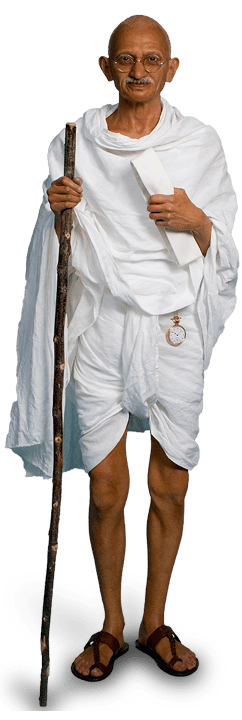
ghandiI just finished listening to the assigned podcast for pre-session #4 class work which was a short lecture given by Eboo Patel on interfaith interaction and ecumenical and inclusive engagement between various faith traditions; in particular, for him, between Christians, and his faith tradition, Islam. And yet as I listened to Patel’s very articulate and winsome talk, what stood out to me was that he seemed to be ameliorating the substantial differences and distinctives inherent between Islam, Christianity, and other ‘faith’ traditions. And that he places a higher premium on our shared human and earthly situation, and in the process diminishes the ‘eternal’ realities that give each of our faith traditions there actual distinctiveness; that is, I see Patel diminishing the significance and thus importance of what we think about God. It appears that Patel holds to the an idea that the concept ‘God’ is actually an ‘eternal’ reality, who in the end ends up being the same reality, and thus in the present what is important in the ‘earthly’ experience of ‘God’ is to focus on our shared experiences and various, but shared expressions of ‘faith.’

Interestingly, what Eboo Patel is doing, and the way he is emphasizing a ‘pluralistic’ approach to inter-faith cooperation sounds very similar to the way that theologian John Hick approached his expression and understanding of Christianity through his ‘pluralist universalist’ approach. Christian theologian Christian Kettler describes Hick’s approach (and quotes Hick in the process); notice, as you read this, how well Hick’s approach (as described by Kettler) dovetails with Patel’s approach. I think there is more than coincidence going on between Patel’s informing approach, and how Hick approaches things; here is Kettler on Hick:

Hick responds to this challenge by stressing 1) the structural continuity of religious experience with other spheres of reality, and 2) an openness to experimental confirmation. “Meaning” is the key concept which links religious and mundane experience. “Meaning” for Hick is seen in the difference which a particular conscious act makes for an individual. This, of course, is relative to any particular individual. Verification of this experience is eschatological because of the universal belief in all religions that the universe is in a process leading towards a state of perfection.

The epistemological basis for such an approach is found in the philosophy of Immanuel Kant. Hick’s soteriology is based on “Kant’s broad theme, recognizing the mind’s own positive contribution to the character of its perceived environment,” which “has been massively confirmed as an empirical thesis by modern work in cognition and social psychology and in the sociology of knowledge.” The Kantian phenomena in this case are the varied experiences of religion. All have their obvious limitations in finite humanity, so none are absolutely true.

In contrast to Kant, however, Hick believes that the “noumenal” world is reached by the “phenomenal” world of religious experience. “The Eternal One” is “the divine noumenon” experienced in many different “phenomena.” So the divine can be experienced, but only under certain limitations faced by the phenomenal world. Many appropriate responses can be made to “the divine noumenon.” But these responses are as many as the different cultures and personalities which represent the world in which we live. Similar to Wittgenstein’s epistemology of “seeing-as,” Hick sees continuity between ordinary experience and religious experience which he calls “experiencing-as”.

The goal of all these religious experiences is the same, Hick contends: “the transformation of human existence from self-centeredness to Reality-centeredness.” This transformation cannot be restated to any one tradition.

When I meet a devout Jew, or Muslim, or Sikh, or Hindu, or Buddhist in whom the fruits of openness to the divine Reality are gloriously evident, I cannot realistically regard the Christian experience of the divine as authentic and their non-Christian experiences as inauthentic. [Kettler quoting: Hick, Problems of Religious Pluralism, 91.][1]

Even if Patel is not directly drawing from Hick’s pluralism (which I doubt that he is not), it becomes quite apparent how Patel’s ‘earthly’ vis-á-vis ‘eternal’ correlates with Hick’s appropriation of Kant’s ‘noumenal’ (which would be Patel’s ‘eternal’), and ‘phenomenal’ (which would be Patel’s ‘earthly’). What happens is that the actual reality of God is reduced to our shared human experience of what then becomes a kind of ‘mystical’ religious experience of God determined to be what it is by our disparate and various cultural, national, and ‘nurtural’ experiences. In other words, God and the ‘eternal’ becomes a captive of the human experience, and our phenomenal ‘earthly’ experiences becomes the absolutized end for what human flourishing and prosperity (peace) is all about.

Beyond this, Patel, towards the end of his talk uses a concept of ‘love’ that again becomes circumscribed by and abstracted to the ‘earthly’ human experience of that; as if the human experience of love has the capacity to define what love is apart from God’s life. But as Karl Barth has written in this regard:

God is He who in His Son Jesus Christ loves all His children, in His children all men, and in men His whole creation. God’s being is His loving. He is all that He is as the One who loves. All His perfections are the perfections of His love. Since our knowledge of God is grounded in His revelation in Jesus Christ and remains bound up with it, we cannot begin elsewhere—if we are now to consider and state in detail and in order who and what God is—than with the consideration of His love.[2]

In other words, for the Christian, our approach and understanding of ‘love’ cannot be reduced to a shared and pluralistic experience of that in the ‘earthly’ phenomenal realm. Genuine love for the Christian starts in our very conception of God which is not something deduced from our shared universal experience, but is something that is grounded in and given to us in God’s own particular Self-revelation in Jesus Christ.

In conclusion, I would argue that Eboo Patel’s ‘earthly’ pluralist approach is noble, but his approach is flawed because 1) ‘God’ cannot be adumbrated by our human experience (because for the Christian that our understanding of God is revealed from outside of us); and 2) ‘love’ is not simply an human experience that transcends all else, but instead is the fundamental reality of God’s Triune life. If love is the fundamental reality of who the Christian God is, then the object of our ‘faith’ as Christians, by definition, starts in a different place than all other religions and their various conceptions of God. If this is the case, then Christianity offers a particular (not universal) understanding and starting point to knowing God, and thus to understanding how love relates to truth (and vice versa). And yet, Christianity remains the most inclusive ‘religion’ in the world, because God loves all, and died for all of humanity; but this can only be appreciated as we start with the particular reality of God’s life in Jesus Christ.

None of what I just wrote means that we cannot work alongside or with other ‘faith’ traditions; it is just important, I think, to remember that who God is remains very important, and in fact distinguishes us one from the other. And that while we can and should befriend and conversate with other faith traditions, in the midst of this, we should not forget that there still is only one ‘way, truth, and life’ to the Father, and that way comes from God’s life himself, in his dearly beloved Son, Jesus Christ. If we don’t want to affirm what I just suggested, then what we will be left with is something like Karl Rahner’s ‘anonymous Christians’ with the notion that all ways are ‘valid’ expressions towards the one God ‘out there’ somewhere.


[1] Christian D. Kettler, The Vicarious Humanity of Christ and the Reality of Salvation (Eugene, OR: Wipf and Stock Publications, 1991), 65-6.

[2] Barth, CD II/1, 351.


The Problem of Dualism in Science and Theology and Calvinism and Arminianism

Thinking “scientifically” is also thinking “theologically,” and vice versa:

dualism[. . .] theological science and natural science have their own proper and distinctive objectives to pursue, but their work inevitably overlaps, for they both respect and operate through the same rational structures of space and time, while each develops special modes of investigation, rationality, and verification in accordance with the nature and the direction of its distinctive field. But since each of them is the kind of thing it is as a human inquiry because of the profound correlation between human knowing and the space-time structures of creation, each is in its depth akin to the other . . . natural science and theological science are not opponents but partners before God, in a service of God in which each may learn from the other how better to pursue its own distinctive function . . . (Paul Molnar quoting Thomas Torrance [The Ground and Grammar of Theology],”Thomas F. Torrance: Theologian Of The Trinity,” 24)

This is an important principle to wrap the mind around. Torrance is always concerned with undercutting the dualistic ways of thinking that we typically operate out of; in other words, he wants to make sure that the “object” under consideration is always tied to the “subject” considering the “object.” Or, that the “subject” is not allowed to impose some foreign mode of thinking upon the “object” under consideration; thus, in effect, warping the “object,” and not allowing it (or Him) to determine its own shape and emphasis. This then can be applied to the “natural” or “theological” realms of inquiry.

Christianity has failed to grasp this critique in general; thus we continue to go down a road that is largely dualist in orientation —- whether that be from the proactive side (like theological liberalism might represent) or on the reactive side (like theological fundamentalism may represent).

Let me also extrapolate out the principle embedded in this kind of unitary thinking proposed by Thomas Torrance further. When this is applied to Calvinism—a non-dualistic approach—you end up with Evangelical Calvinism. The most important principle that anyone can understand about EC is that you cannot separate the Person of Christ away from the Work of Christ and expect to end up with anything other than classical Arminianism or Calvinism. Once the work of Christ is separated from the person of Christ, the work of Christ becomes attached to elect individuals seeking attachment to the person of Christ; and so this elect person needs a mechanism in order to do that kind of connecting work (or salvation). The solution, historically and presently, has been to propose a notion like created grace that God gives to the elect (whether this be the Arminians or Calvinist approach), and then they cooperate with God in appropriating salvation (by faith); the proof of appropriation is tied into persevering in the faith. But even this short sketch makes clear what happens when the person of Christ is separated from the work of Christ; we end up with an adoptionistic view of christology, and an abstract view of humanity. There is no ground for humanity in or from Christ in the dualistic approach; humanity grounds itself by choosing and persevering in salvation. This represents just one fall out, among the other ones that a dualistic approach to salvation and Christology can have.

If you don’t get this, you will never ever appreciate what we are articulating with Evangelical Calvinism.