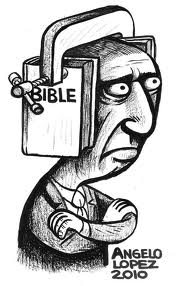
Kevin J. Vanhoozer, evangelical professor, par excellence, and current faculty member at Trinity Evangelical Divinity School, in the
 Chicago, Illinois area has offered a whole essay/chapter in critique of what Myk Habets and myself have articulated as Evangelical Calvinism (in our edited book: Evangelical Calvinism: Essays Resourcing the Continuing Reformation of the Church [Eugene, OR: Pickwick Publications and Imprint of Wipf&Stock Publishers, 2012]). In particular, Vanhoozer, in his critique, challenges our methodology (dialectical); our appeal to the history of interpretation (per John Calvin); and at the material level, our understanding of eternal election; and he gauges us on some other things as well. Vanhoozer does all this in a chapter he contributed to in a just released book (of
 which he is one of the three editors) entitled: Reconsidering the Relationship between Biblical and Systematic Theology in the New Testament: Essays by Theologians and New Testament Scholars edited by: Benjamin E. Reynolds, Brian Lugioyo, and Kevin J. Vanhoozer published by: Mohr Siebeck. Vanhoozer offers two chapters to this edited book, the one of interest to us, the one where he engages with Evangelical Calvinism is titled: The Origin of Paul’s Soteriology: Election, Incarnation, and Union with Christ in Ephesians 1:4 (with special reference to Evangelical Calvinism). Interesting, right?
What I am going to do, throughout the rest of this article, is simply introduce you to some of the early things that KJV claims to be attempting to do as he starts out his chapter; and I might gesture towards a direction that we might respond in as representative of one of the Evangelical Calvinists that he is critiquing in his essay. This will not be an official response/rejoinder to Vanhoozer, I think Myk Habets and myself will attempt to do that later, more formally, by way of an essay for a theological journal somewhere. So this is just an informal thing, to register what is going on in the great wide-world of Evangelical Calvinism, and how some of those who are not so persuaded (like Vanhoozer) are responding. Let’s begin.
Here is what Kevin Vanhoozer thinks of us, and what he thinks we are doing as Evangelical Calvinists; and then how he intends to respond to us:
I undertake this essay as a Reformed theologian in dialogue not only with New Testament exegetes but also with a new tribe of Reformed theologians who designate themselves “Evangelical Calvinists” and who trace their lineage from Barth through T. F. Torrance. They use the qualifier “Evangelical” in order to signal their intent to be biblical and to reinforce the good news at the heart of Christian theology, namely, “that all are included in Christ’s salvific work.” They claim that Evangelical Calvinism “adheres much closer to the presentation of election as it is found in Scripture” than does “Classic Calvinism.” Accordingly, I shall focus on the way in which Classic and Evangelical Calvinists understand Ephesians 1:4, especially as it relates to the theme of union with Christ. Our particular focus is whether Evangelical Calvinism represents a “better” gospel – not simply good news but the best – and hence a “more excellent way” (1 Cor. 12:31) of interpreting Scripture and understanding salvation.[1]
I wanted to make clear that Vanhoozer intends to engage very directly with us, Myk Habets and myself, as Evangelical Calvinists. And his engagement, as you can see, comes through his focus on Ephesians 1:4 and the doctrine of election therein. He will go on to argue that Evangelical Calvinism’s understanding of election, along with Karl Barth’s (since we essentially follow Barth on election, with some qualification) is erroneous to the text of Scripture, especially as articulated in Ephesians 1:4. One of his primary critiques at this point revolves around the question of whether or not the Apostle Paul has ontology in mind, or soteriology? Vanhoozer believes that Evangelical Calvinists, Thomas F. Torrance, Karl Barth et al. mistakenly hold to the idea that Paul’s reference to ‘in Christ’ or ‘union with Christ’ theology has to do with ontology, when Vanhoozer and the “classical” position, as Vanhoozer understands it, holds that St. Paul is referring to soteriology. Here is what Vanhoozer writes in this regard:
“To be or not to be (in Christ)” may not be the urgent question for those who hear the gospel if God, before the foundation of the world, has already determined who is “in.” On the other hand, if there are conditions for “getting in,” these too will have a direct bearing on the content of the good news. Here, then, is our primary question: Are the elect “in Christ” simply by virtue of being human (ontology) or because they have somehow become beneficiaries of his life and work (soteriology)?[2]
… The question that concerns us is whether election to union with Christ is the same as this unifying of all things in Christ: “To be in Christ . . . is to be part of a program which is as broad as the universe, a movement which is rolling on toward a renewed cosmos where all is in harmony.” What is at stake is nothing less than the meaning of our passage, the whole book of Ephesians, our understanding of Paul’s gospel, and the nature of “christocentric” theology. Does everything’s being summed up “in Christ” entail universal salvation? F. F. Bruce intriguingly suggests that the church is “God’s pilot scheme for the reconciled universe of the future.”[3]
There are, obviously, many interpretations of what Eph. 1:4 has to contribute to our understanding of election, the “sum of the gospel.” My intent in what follows is to examine the suggestion, put forward by Evangelical Calvinists, that all human beings are elect in Christ. Does this insistence collapse “being in general” (ontology) into “being in Christ” and, if so, does “being in Christ” connote salvation (soteriology)? T. F. Torrance draws a fascinating ontological implication from Jesus’ incarnation: “human beings have no being apart from Christ.” The key question, then, is this: if the incarnation is the “setting-forth” of the eternally purposed union of God and man in Jesus Christ – the historical projection of divine election into creaturely existence – then is every human being a “being in Christ” and, if so, does it follow that all are saved?[4]
Very intriguing, right? Vanhoozer is definitely onto something when he asks about the implications of our understanding of election, after Karl Barth, and after Thomas F. Torrance. Our view of election in Christ, our understanding of the Apostle Paul’s union with Christ theology has a more cosmic reach, which sees humanity as the center of the God’s cosmos by design. Our understanding of election, unlike the classical Calvinist approach that Vanhoozer advocates, is not individualistically focused, but Christ focused. In other words, as I just noted, our understanding of election, our doctrine of creation, is inextricably related to humanity’s place within creation as its climaxing reality, as the center that has been given Divine dominion over creation as its priests (as it were). But as corollary with this we do not think of humanity in abstraction, we think of it as ultimately conditioned and grounded in Christ’s humanity for us. We see the eternal Logos (Jesus) as the Deus incarnatus (God to be incarnate), and the Deus incarnandus (God incarnate); and so to be human, from our perspective (and we believe by way of implication of the Incarnation as the rule by which we interpret Scripture, theologically) has always already been a reality grounded in Jesus Christ by his free choice to elect humanity to himself for us before the foundation of the world. And so, yes, Vanhoozer is right to notice the role of ontology in our view of election; how this gets fleshed out into a soteriological locus leads us to a discussion of pneumatology (the person and work of the Holy Spirit in relation to the Incarnation and the image of God imago Dei). We will have to broach the rest of this later.
In closing, though, let me quote some from Myk Habets’ (my co-conspirator in Evangelical Calvinism) published PhD dissertation entitled: Theosis in the Theology of Thomas Torrance. While Vanhoozer claims to be defending the classical Calvinist understanding of election (and he is, as he reads Ephesians 1:4), this might be misleading, a little; we as Evangelical Calvinists actually reach back into heavy dependence upon Patristic theology (so very classical ourselves!), along with Thomas Torrance and Karl Barth. Not only do we look to some of the important themes of Calvin’s union with Christ theology and unio mystica (‘mystical union’ theology), but we look back to Athanasius’ understanding of the Incarnation relative to soteriology and the image of God; in short, we draw on a Reformed doctrine of theosis as found squarely in the theology of Thomas F. Torrance. I am going to quote now from Habets, and the quote should shed some light on how we might proceed in responding to Vanhoozer’s critique more formally in the days to come. Here is Habets (at length):
Like many in the early church Torrance believes the imago is an inherent rationality within men and women – a rationality that  enables them to perceive the order of the creation and to praise and worship the one from whom this order came – the Creator. In this regard Torrance affirms aspects of a substantive definition of the imago. However, this is only a partial description of the imago Dei according to Torrance. With Karl Barth in the foreground (and Calvin in the background), Torrance also vigorously defends a relational interpretation of the imago. Humans are created to ‘correspond’ with (Barth), or be a ‘mirror’ to (Calvin) God. However, Torrance develops this relational view beyond that of Barth along lines similar to Pannenberg, that of human destiny. Men and women are persons-in-becoming. Jesus Christ, the incarnate Word of God, is the complete person, the imago Dei in perfection and the one into whom men and women are being transformed, from glory to glory (2Cor 3.18; Rom 8.29; 1 Jn 3.2 etc.).[5]
Furthermore,
If humanity is created to know God and to revel in the joy of this knowledge brings (worship), then theosis is the attainment of that knowledge and the joyous communion it creates. The problem with this is, of course, the fact that humanity has fallen. Any discussion of humanity created in the imago Dei must deal with the fact of the Fall and its consequences. For Torrance, the Fall of humanity resulted in total depravity, in Calvinistic fashion. Total depravity does not entail, according to Torrance’s reading of Reformed theology, a thorough ontological break in humanity’s relation with God, but it does mean the essential relation in which true human nature is grounded has been perverted and turned into its opposite, something which only makes sense in a relational-teleological understanding of the imago Dei. Sin is properly of the mind and drags humanity into an active rebellion against God. It is only by the grace of God that human beings still exist at all. The imago Dei is not destroyed by the Fall but ‘continues to hang over man as a destiny which he can realise no longer, and as a judgment upon his actual state of perversity’. As a consequence, Torrance follows Barth and Calvin in maintaining that the imago Dei can now only be found in Jesus Christ, not in the creature properly speaking. He writes, ‘… justification by grace alone declares in no uncertain terms that fallen man is utterly destitute of justitia originalis or imago dei. It must be imputed by free grace.
There are tensions within Torrance’s anthropology (as in Calvin’s). on the one hand he argues the imago is an inherent rationality within all humans. On the other hand he argues the imago no longer remains in the creature after the Fall as creatures are utterly depraved. The sole existence of the imago Dei is found in Christ and in those in communion with him. For sure this communion is only possible through the incarnate Son and by the Holy Spirit, but the inherent capacity for communion with God is there nonetheless. How do we account for this tension? Our options are, as I see it, twofold: first, Torrance is inconsistent, or second, there is a deeper explanation. It is my conviction that Torrance is so influenced by Calvin’s anthropology that he adopts his ‘perspectival approach’, to use Engel’s words. From the perspective of traditionally conceived explanations of the imago Dei in substantial terms, the imago Dei has been obliterated in fallen creatures. And yet, from a christological perspective the imago is present, incipiently, as all humans have a capacity for God because the incarnation proleptically conditions creation. Outside of a saving relationship with Christ this avails them the condemnation of God. Savingly reconciled to Christ his Imago becomes theirs through the Holy Spirit. In this way Christ alone naturally possess the imago Dei, he shares this realised imago with creatures by grace, and those not in Christ ‘make more out of the imago Dei than they ought’ as they ‘continue to sin against the Word and Law of God’.
Within creation, the theatre of God’s glory, all creation is purposely brought into existence in order to glorify God, and it is in this context that Torrance speaks of men and women as the ‘priests of creation’. Their task is to represent creation to the Creator in a worshipful and joyous response. But nature fails in its realization of such a human vocation. Humanity has failed in its duty as the priests of creation; it refuses to sing the praises of all creation to God. It is precisely at this point that Torrance introduces the astounding claim that God in Jesus Christ does for us what we could not do for ourselves. Torrance’s anthropology is christological, soteriological, and eschatological. These three features inform his theological anthropology at every point.
Within Torrance’s theology theosis consists in being recreated in Christ Jesus who alone is the Image of God. Until men and women are renewed and brought face to face with God in Christ, we cannot know what it means either to know God or to know ourselves as persons….[6]
Conclusion
There are many things we could say after reading the account above from Myk Habets in regard to Thomas Torrance and his Reformed doctrine of theosis. But let this be said for now: the way Evangelical Calvinists (Myk Habets and me in particular) are reading Scripture, including Ephesians 1:4, comes from a different theological grid to begin with; at least from a different grid than Kevin Vanhoozer’s. Yes, we both still need to test our theological theses by Scripture’s teaching, but there is a spiraling relationship between how Scripture is read and the theological paradigms we read out of and back in dialogue with Scripture. There is a canon prior to the canon of Scripture, by way of logical order, that regulates the way we know that Scripture is indeed Scripture, and then how we understand things like creation, election, the eschaton etc. This is one thing.
Another thing is that if Jesus is the Imago Dei (cf. Col 1.15); it follows that any discussion about salvation and our relationship to Jesus will be thought from him at an ontic level. To make a distinction between ontology and soteriology vis-à-vis a reading of Ephesians 1:4 and a subsequent discussion of election really does not make sense for the Evangelical Calvinist; even if it makes sense for a classical Calvinist like Kevin Vanhoozer. Evangelical Calvinists see the Primacy of Christ, and an elevation theology (both of which we will have to discuss later) as central to how we, in a principled way, read Scripture and articulate doctrine in light of that reading; and we see all of this, again, from a kind of regula fidei, or rule of faith that is the canon of God’s life Self-revealed and Self-exegeted in Jesus Christ. When we allow all of this to condition the way we see the macro-themes of Scripture operating, like creation, the Incarnation, a doctrine of Scripture, etc. we end up sounding a lot different from the classical Calvinist reading of things.
Finally, we have only really scratched the surface here. Kevin Vanhoozer offers much more detailed critique than I covered here, but I think that we have made some headway at least towards identifying some ground clearing things that need to be discussed before we move into a point by point response to KJV’s detailed critique of Evangelical Calvinism as Myk Habets and myself have articulated that in our 15 theological theses in the last chapter of our edited book. Nevertheless, I hope this coverage, to the extent that it goes, has been somewhat helpful for you the reader; if nothing else it has been helpful for me to spend the time in writing some of this out (since I write to learn).
[1] Benjamin E. Reynolds, Brian Lugioyo, and Kevin J. Vanhoozer eds., Reconsidering the Relationship between Biblical and Systematic Theology in the New Testament: Essays by Theologians and New Testament Scholars (Germany, Tubignen: Mohr Siebeck, 2014), 179-80.
[2] Ibid., 182.
[3] Ibid., 184.
[4] Ibid., 184.
[5] Myk Habets, Theosis in the Theology of Thomas Torrance (England, Surrey: Ashgate Publishing Limited, 2009), 31.
[6] Ibid., 32-3.