
Is ‘Evangelicalism’ Collapsing?

In our recently released book (Evangelical Calvinism: Essays Resourcing the Continuing Reformation of the Church), in the introductory chapter (which Myk and I co-wrote) we address and seek to clarify how it is that we understand the politically charged language of Evangelical relative to our usage of that lingo in our chosen nomenclature of ‘Evangelical’ Calvinism. Yesterday, Brian LePort wrote a post for his blog entitled: A Coming Evangelical Collapse?; in the post LePort offers examples of people and posts that might illustrate this portending trend. I think, though, in order to adequately answer this question—is Evangelicalism collapsing on itself?—we need to define what in fact this rather amorphous term might mean. The fact of the matter is that there are different ways to define this term; there is the more contemporary loose application of this term when it is used to define the by and large phenomenon of the American and parts of the Western church (Roger Olson is helpful in describing this kind of Evangelicalism). But then there is another understanding of the language of Evangelical which is what Myk and I try to describe in the opening chapter of our book. This other understanding represents a more historic usage of this terminology, and thus provides a more theologically rich account of what it might mean to be Evangelical; here it is:
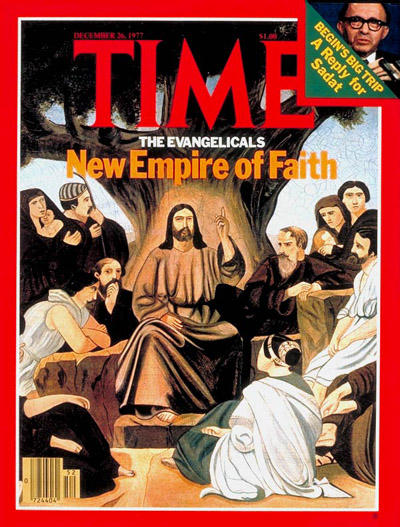
The word “Evangelical” carries something of a three-fold significance. First, and most importantly, we believe the readings of the Reformed traditions offered in this book hope to remain consistent to the witness of Holy Scripture—the euangelion—and thus it is evangelical primarily in this way. This is also what makes it thoroughly Reformed. Second, it is, we believe, a theology that is genuinely “good news.” That all are created good by God, that all are included in Christ’s salvific work, and that salvation is by grace alone and Christ alone is truly good news. And finally, it is Evangelical in that it does share a common boundary with that movement known as Evangelicalism. Evangelicalism as used here denotes a movement that is biblical, that is reformational, that is, it affirms the formal and material principles of the Reformation: sola scriptura and of justification by faith alone. An Evangelicalism of this type is self-consciously post fundamentalist in it commitment to the Word of God and the task of world evangelization within transdenominational fellowships. It is these common commitments which enable an Evangelical Calvinism to legitimately embrace more than one denominational tradition. [Myk Habets and Bobby Grow eds., Evangelical Calvinism: Essays Resourcing the Continuing Reformation of the Church, (Eugene, OR: Pickwick Publications, 2012), 10-11.]

Is Evangelicalism collapsing? Maybe parts of it. But can the the kind of Evangelicalism that Myk and I describe actually collapse? I don’t think so! As long as Jesus Christ as the ground and center of what defines an “Evangelical” Christianity; as long as commitment to his Holy Scriptures as the norming norm of Christian faith and practice is understood as central and definitive witness to Jesus Christ and what it means to be a free and Evangelical Christian; then I don’t see how it is truly possible for a Reformed Evangelical Christ conditioned Evangelicalism to collapse. Maybe the vestiges of the man made ghettos of Evangelicalism are collapsing, but, then, those should collapse.

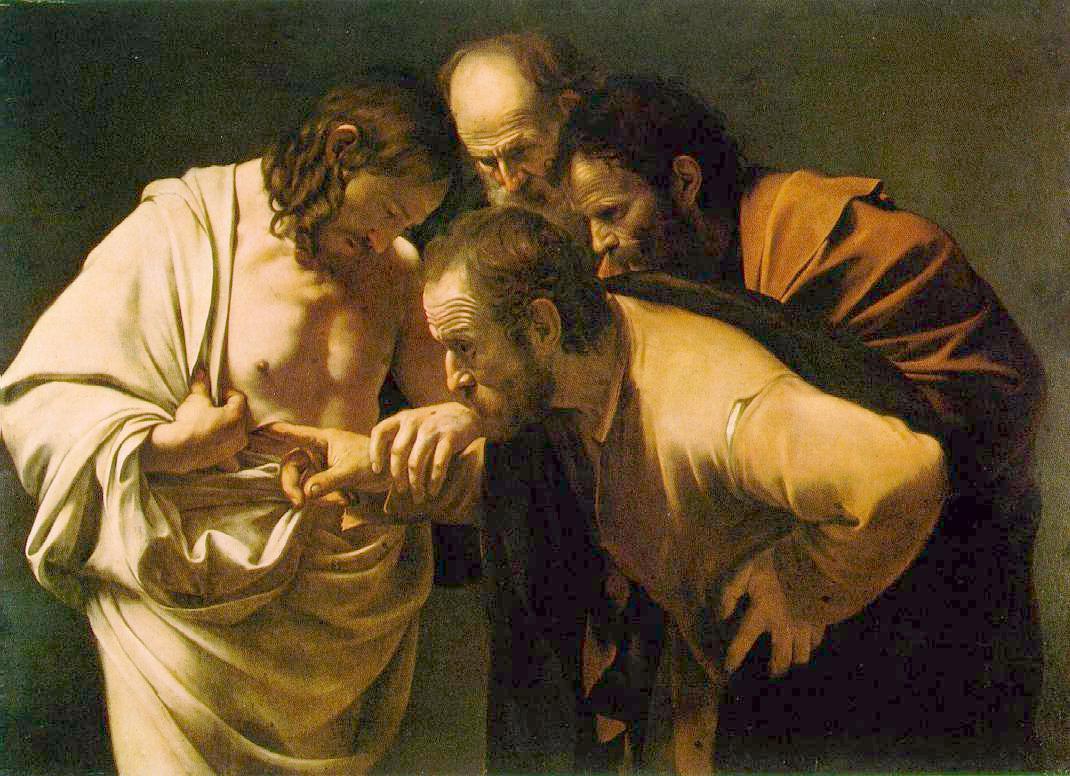
I’m ‘Spiritual’, not ‘Religious’

This is the second time within two weeks that I am stealing a great quote from another blogger, in this instance it is from Jason Goroncy (and it is not Goroncy, although there is plenty of Jason worthy to be quoted!, but Lash, whom Jason is quoting); last time I did this I stole a quote from Kait Dugan who was quoting Bruce McCormack on Barth (almost sounds like I’m scholastic or something). But I just couldn’t pass this up, and I wouldn’t want you to pass this up either; and if you don’t read Jason’s blog (and if you don’t you should!), then you would clearly have missed an opportunity to reflect on the difference that is present when someone says ‘I’m not religious, I’m spiritual!’. This is what Nicholas Lash is addressing in the quote that I found from him over at Goroncy’s; here’s what Lash thinks about such sentiment:

‘When people say (as they do, it seems, with increasing frequency) that they are more interested in “spirituality” than in “religion”, they usually seem to mean that they prefer the balm of private fantasy, the aromatherapy of uplifting individual sentiment, to the hard work of thought and action, the common struggle to make sense of things, to redeem and heal the world. When church leaders are exhorted to concentrate on “spiritual” affairs, the implication sometimes seems to be that these things are different from, and loftier than, such mundane matters as proclaiming good news to the poor and setting at liberty those who are oppressed’. – Nicholas Lash, Holiness, Speech and Silence: Reflections on the Question of God (Aldershot: Ashgate, 2004), 92–3. [taken from this post at Jason’s]

Jason lives in New Zealand, I think Lash is in the UK, and I am in the USA; it doesn’t matter where one might be in the West, I am sure we have all encountered this kind of sentiment. It reeks of a thinly veiled varnish, it sounds shiny, and it looks finished; but upon further examination it becomes clear that this kind of posture towards life is really just an empty headed admission that these kinds of folk (who employ such verbiage) are full of dead man’s bones. It is an attempt to give an appearance of depth, thought, and dimension; without really counting the cost, without denying self, taking up the cross, and following Jesus. Sometimes, I’m afraid, that when people make the claim that they are Christians, they might as well be claiming to be ‘spiritual’ instead of ‘religious’; since, often, they share the same hollow ring. We are all hypocrites at some level—which is what’s so good about the Good News—but that doesn’t mean we can’t talk about our own hypocrisy, and then repent!

‘This’ World Doesn’t Stand a Chance; Not Apart from Christ That Is!

I’m stealing this quote from Kait Dugan, a quote that she took from Bruce McCormack on Barth’s theology of resurrection; here it is:

But Barth did have an answer to the question he had posed: where does the world of God have an opening towards society? God would not be God if the matter rested with the antithesis in which the world of God stands over against this world. There must be a way from there to here, since clearly there is no way from here to there. Everything which he had said up to this point rested upon a presupposition: namely, that in the resurrection of Jesus from the dead the history of God has cut through the history of this world at a single point, ‘perpendicularly from above’. The movement whose power and significance has been unveiled in the resurrection of Jesus is a divine movement. The wholly other, eternal life of God has been revealed. That the resurrection was ‘bodily’ means that the profane world has been addressed at the very point of its subjection to the powers of death and destruction. When we know this, we can no longer live as if the laws which govern social relationships have an independent validity and significance. They have already been set aside in principle. In the light of the resurrection, we can no longer live under the illusions that we can overcome the world but we also know that God can and will. We live in hope of the coming Kingdom. [Bruce McCormack, Critically Realistic Dialectical Theology, 198-199.]

And not only do we live in the hope of the coming kingdom, but we help to establish its reality through the proclamation of the Gospel to all who have eyes to see and ears to hear. There is a sense, to what McCormack is getting at with Barth, of Martin Luther’s Deus Absconditus, or the ‘hiddeness of God’. Meaning that in line with Barth’s ‘analogy of faith’ the reality of what he is getting at in relation to God’s apocalyptic in-breaking on this world in Christ, at least epistemologically, can only be appreciated by ‘faith’. This faith gives way to the sight (as Augustine might construe it) that God’s eschatological reality has already become the victor over, and over by doing so through the structures of this created world, his created world. The hope that we have of the coming kingdom is grounded in the already reality that the bodily resurrection of Jesus Christ has taken place resulting in turning the world upside down and thus right side up towards its created purpose in Jesus Christ. As Torrance might comment, the independent contingencies of creation are contingently dependent on the fact of God’s independently non-contingent life; it is this non-contingent life that is the power of the resurrection, and it is this non-contingent life ‘which govern social relationships’ in such a way as to see these relationships as recreated/resurrected in the life of God in Christ. There really is no distinction between the secular and sacred, at least not for those with eyes of faith (cf. II Corinthians 5.7).

Spotlighting Martin Davis, and His Mini-Essay on Thomas Torrance’s Theology

You all need to check out a fellow Torrancean’s summarizing post on Thomas Torrance’s theology. Martin Davis, like me, is doing research for his PhD on Torrance’s theology. Let me share the piece from his mini-essay that stands out for me (as it pertains to my research on the vicarious humanity of Christ):

An additional corollary to Torrance’s doctrine of the hypostatic union is his doctrine of the vicarious humanity of Jesus Christ. Emphasising the humanward-Godward aspect of the unitary movement of atoning reconciliation, this doctrine asserts that, as God and man joined in hypostatic union, Jesus acts from within the depths of the fallen humanity he assumed in the incarnation to offer to the Father the perfect response of faith and obedience on behalf of, and in place of, all. This vicarious response includes not only Jesus’ passive obedience on the cross but also the entirety of his active obedience offered to the Father throughout the whole course of his life. The key to this doctrine is found in Galatians 2:20, where Torrance translates pistis christou as a subjective genitive to assert that we live by the faith “of” Jesus Christ. This passage functions in a hermeneutical manner to provide a significant point of access for understanding Torrance’s theological vision of conversion, worship and prayer, the sacraments, and evangelism. In all these important aspects of discipleship, Jesus acts as both representative and substitute, offering to the Father perfect faith, obedience, worship, and prayer on behalf of, and in place of, all. Jesus’ response on our behalf, however, does not undermine our own response, but, rather, undergirds it as he takes our feeble efforts and unites them with his own self-offering to the Father. The sacraments of baptism and the Eucharist are visible forms of the Church’s participation in the self-offering and ongoing priesthood of Jesus Christ. Each sacrament finds its meaning, not in the rite itself, but in the objective reality underlying it, that is, the vicarious humanity of Jesus Christ and his self-offering to the Father. When the vicarious humanity of Jesus Christ is emphasised in preaching the Gospel, evangelism becomes an invitation for hearers to become what they are, that is, to participate actively in the reality of the salvation that is already theirs in Jesus Christ. [Martin Davis]

Here is the full essay, here. Please go read it, it will only take you 10 minutes, and it might save you and I heart-ache down the road; it ought to take some of the mystification out of my own posts for you. Beyond that it will demonstrate that Bobby Grow is not the only crazy Torrancean out in the world (particularly the theo-blogosphere). Now go read!

2011 in review

The WordPress.com stats helper monkeys prepared a 2011 annual report for this blog.

Here’s an excerpt:

The concert hall at the Sydney Opera House holds 2,700 people. This blog was viewed about 29,000 times in 2011. If it were a concert at Sydney Opera House, it would take about 11 sold-out performances for that many people to see it.

Click here to see the complete report.

Travis’ Updated Blog: From ‘Der Evangelische Theologe’ to ‘Die Evangelischen Theologen’

My friend, Travis McMaken, recent PhD graduate of the infamous Princeton Theological Seminary, and newly minted Barth scholar has re-created (which is what Barthians and Torranceans are into, re-creation) his blog from the one to the many (another Barthian and Torrancean emphasis … so this move makes sense, from being to becoming); he has changed his blog from his sole proprietorship, into a consolidated form that now includes a few others. You will have to check it out! Here’s what Travis wrote of the new direction at his blog:

Attentive readers may have noticed that there’s something different about DET. Indeed, there is something very different. For DET has transformed from “Der Evangelische Theologe” to “Die Evangelischen Theologen.”

You may ask, Why the change?

While I was in Princeton to defend my dissertation, circumstances and conversations lead me to reminisce about the “good ol’ days” of theo-blogging and the current decline in the practice. Put simply, all the old theo-blogs that were my fellow travelers have ground to a halt and – indeed – my own work here at DET has slowed considerably under the strain of assuming the rigorous responsibilities of full time academic teaching. . . . Rather than remaining only my personal blog, I have invited a number of theological students from various stages of their academic careers to join me here in a communal endeavor to foster theological community through blogging. You can read about these intrepid individuals on the new Contributors page in the top menu. You may also read more about this renewed vision for DET in the new About page, also accessible in the top menu.

I encourage you to head on over! Here’s the link Die Evangelischen Theologen, or you can always find this in my sidebar/blogroll.

Piety and Faith and Theology

Adam Kotsko wrote (at his blog An und für sich):

Jeremy Ridenour sent me a link to this post by Kait Dugan, which fulfills what is apparently a ritual requirement of all theology bloggers who don’t blog at AUFS: declaring that personal faith and piety is required to be a theologian. Specifically, she asks whether theology might be different from other disciplines:

Do the rules and procedures change when the object of inquiry is God? What are we doing here if they don’t? What does it mean that the object of inquiry is one that summons us to obedience, faithfulness, and worship? When the object is actually our Lord?

To which I would respond: How do you know all those things? What if God isn’t really like that? What if it’s unworthy of God to assume he demands something like obedience and worship? What if it’s harmful to us to idolize a being that would make such demands? Such questions are necessary if theology is to be a critical intellectual pursuit, and it strikes me as a lot more likely that those questions will be raised if people who aren’t concerned about maintaining their good standing in existing religious institutions are part of the conversation. (see here)

_______________________

He is responding, obviously to Kait Dugan (an MDiv student at Princeton Theological Seminary).

To which I would respond to Adam (with his help): How do you know all those things aren’t the case? What if God is really like that? What if it’s worthy of God to assume he demands something like obedience and worship? What if it’s beneficial for us to idolize a being that would make such demands? ‘Such questions are necessary if theology is to be a critical intellectual pursuit, and it strikes me as a lot more likely that those questions will be raised if people who are concerned about maintaining their good standing’ with Jesus Christ (like fellowship and communion) are part of the conversation.

I think the difference between what is informing Kait’s question and Adam’s comes back to the ominous question of prolegomena. Kait obviously follows what Barth has called the ‘analogy of faith’, and Adam follows what has been called (taken to its logical conclusion in Adam, presumptuously I say, on my part) the ‘analogy of being’—or a full blown natural theology (emphasis on natural).

Frogs In A Kettle and Boomerangs: The Great Repression, In Our “Backyards”

I just came across this quote over at Cynthia Nielsen’s blog Per Caritatem; it represents a great caution for any nation state, and I can see its critique of Nazism as applicable to many other nationalist movements that occur within states and countries in the world (including the United States). The quote comes from Aimé Césaire (1913–2008), a black socio-critic who used and surpassed Marxist theory to provide the critique of Nazism that I found in the footnote from Nielsen’s article from which I take the following quote:

“First we must study how colonization works to decivilize the colonizer, to brutalize him in the true sense of the word, […] a gangrene sets in, a center of infection begins to spread; and that at the end of all these treaties that have been violated, all these lies that have been propagated, all these punitive expeditions that have been tolerated, all these prisoners who have been tied up and ‘interrogated,’ all these patriots that have been tortured, at the end of all the racial pride that has been encouraged, all the boastfulness that has been displayed, a poison has been distilled into the veins of Europe and, slowly but surely, the continent proceeds toward savagery. And then one fine day the bourgeoisie is awakened by a terrific boomerang effect: the gestapos are busy, the prisons fill up, the torturers standing around the racks invent, refine, discuss. People are surprised, […] they wait, and they hope; and they hide the truth from themselves, that it is barbarism, […] the crowning barbarism that sums up all the daily barbarisms; that it is Nazism, yes, but that before they were its victims, they were its accomplices; that they tolerated that Nazism before it was inflicted on them, that they absolved it, shut their eyes to it, legitimated it, because until then, it had been applied only to non-European peoples; […] they have cultivated Nazism, […] they are responsible for it” (Discourse on Colonialism, 35–6).

Nielsen develops the boomerang effect throughout her short article, you should read it in full! What this reminds me of is the proverbial frog-in-the-kettle syndrome; that is, we become so comfortable with the status quo, that we loose the ability to be able to discern the impact that our own nationalist interests are having upon us (e.g. American exceptionalism) ; maybe, and probably usually in the name of patriotism. This “effect” helps to explain how it is that something as horrific (finally) as Nazism could have, and did happen. What this should do, for us, is caution us about thinking that we are immune or above the Germans who eventually became Nazis. Do you think it is possible to be complicit, by silence, in enabling the same kind of atrocities that happened in the back yards of the World War II Germans? Let me be more explicit by way of application—this is something I have really been contemplating lately—do you think that, as Americans, it is possible that our back yards are China, Africa and various other repressive and oppressive regimes wherein the exploitation and brutalization of whole people groups and nations is taking place; while we sit comfortably by, continuing to consume [and thus enabling and endorsing] (off of the backs of these people in the world ‘out there’) from the produce of these “Nations” (in our back yards)?

I think Aimé Césaire’s critique is highly applicable today.

Looking For God — A Blogspot!

I wanted to draw your attention to the full reflection that this post only mimics; by way of pilfering this image and quote of Bonhoeffer. Jason Goroncy is a dear brother in Christ of mine, and he writes things, like the article of his I am pointing you too, that ought to make us all (as Christians in America and the West, respectively) stop and feel guilty (feel burdened to point of action!). Admittedly, I don’t make looking at images, like this, my standard mode of operation throughout the day; in fact I probably avoid contemplating this issue by way of constant habituation (I don’t have to, I live in an upwardly mobile demographic—and I mean by neighborhood—in comfortable America).

This image is shocking, but is more representative of the reality in the world than are the representations we are surrounded with; daily. The important thing to draw from this is to remember that this is where Jesus resides the most; with the destitute and famished amongst us (in the world). Surely the West and America has its own impoverishment[s]; they aren’t always as open and clear as those that are found in places like this little child inhabited. But there is more to be said about Christ’s identification, more, infiltration of humanity by understanding the depth of the human predicament; that is, by seeing this in full force (like this image evokes). If you want to see Jesus in all of his humanity you should look no further than this little intrepid lifeless body for whom Jesus was crushed. Here is a quote from Dietrich Bonhoeffer that Jason shared in his post, and then here is the link to Jason’s full post (read it!).

The same God who is with us is the God who forsakes us (Mark 15:34!). The same God who makes us to live in the world without the working hypothesis of God is the God before whom we stand continually. Before God, and with God, we live without God. God consents to be pushed out of the world and onto the cross; God is weak and powerless in the world and in precisely this way, and only so, is at our side and helps us. Matt. 8:17 makes it quite clear that Christ helps us not by virtue of his omnipotence but rather by virtue of his weakness and suffering! This is the crucial distinction between Christianity and all religions. Human religiosity directs people in need to the power of God in the world, God as deus ex machina. The Bible directs people toward the powerlessness and the suffering of God; only the suffering God can help. (pp. 478–79)

My Other Blog, Devotio

Addendum:

Nevermind, I think one blog will do 😉 . I will just integrate more devotional and common man posts into the blog here. I don’t have time (never have) to maintain two blogs.

I am going to re-open one of my other blogs; Devotio. This blog is and always will be my first love, but this blog is pretty academic (especially for the non-academics amongst us). “Devotio” is a place that is intentionally non-academic, and reflects more of an devotional and “lay-person” ethos. I have little time as it is to blog nowadays, but as I have time I will be trying to post over at Devotio too. Again, this blog is my first love, and will continue to be a place where I unapologetically drop rather technical (relatively speaking) thoughts on my current reading, research, and reflection in that vain.

Here is the url to my blog ‘Devotio’: http://devotiochristi.blogspot.com