
I’m stealing this quote from Kait Dugan, a quote that she took from Bruce McCormack on Barth’s theology of resurrection; here it is:
But Barth did have an answer to the question he had posed: where does the world of God have an opening towards society? God would not be God if the matter rested with the antithesis in which the world of God stands over against this world. There must be a way from there to here, since clearly there is no way from here to there. Everything which he had said up to this point rested upon a presupposition: namely, that in the resurrection of Jesus from the dead the history of God has cut through the history of this world at a single point, ‘perpendicularly from above’. The movement whose power and significance has been unveiled in the resurrection of Jesus is a divine movement. The wholly other, eternal life of God has been revealed. That the resurrection was ‘bodily’ means that the profane world has been addressed at the very point of its subjection to the powers of death and destruction. When we know this, we can no longer live as if the laws which govern social relationships have an independent validity and significance. They have already been set aside in principle. In the light of the resurrection, we can no longer live under the illusions that we can overcome the world but we also know that God can and will. We live in hope of the coming Kingdom. [Bruce McCormack, Critically Realistic Dialectical Theology, 198-199.]
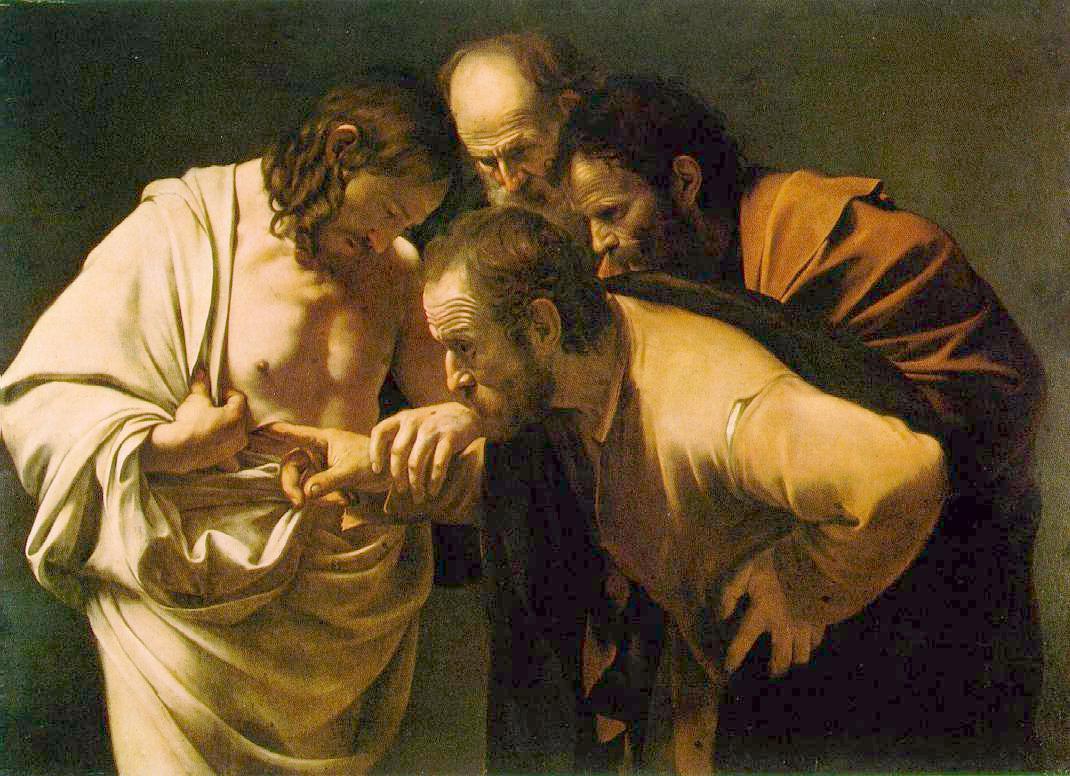
And not only do we live in the hope of the coming kingdom, but we help to establish its reality through the proclamation of the Gospel to all who have eyes to see and ears to hear. There is a sense, to what McCormack is getting at with Barth, of Martin Luther’s Deus Absconditus, or the ‘hiddeness of God’. Meaning that in line with Barth’s ‘analogy of faith’ the reality of what he is getting at in relation to God’s apocalyptic in-breaking on this world in Christ, at least epistemologically, can only be appreciated by ‘faith’. This faith gives way to the sight (as Augustine might construe it) that God’s eschatological reality has already become the victor over, and over by doing so through the structures of this created world, his created world. The hope that we have of the coming kingdom is grounded in the already reality that the bodily resurrection of Jesus Christ has taken place resulting in turning the world upside down and thus right side up towards its created purpose in Jesus Christ. As Torrance might comment, the independent contingencies of creation are contingently dependent on the fact of God’s independently non-contingent life; it is this non-contingent life that is the power of the resurrection, and it is this non-contingent life ‘which govern social relationships’ in such a way as to see these relationships as recreated/resurrected in the life of God in Christ. There really is no distinction between the secular and sacred, at least not for those with eyes of faith (cf. II Corinthians 5.7).