I’ve been having an exchange on Facebook with a Lutheran orthodox interlocutor. We remain friendly, and have over the years, but clearly we’re going to disagree over Barth. What remains of issue for many (including myself) is the continuous infidelity of Barth’s life with Charlotte Von Kirschbaum. If I hadn’t so ingested the theological themes of Barth into my  own theology over the past many decades it would be easy to say I want nothing to do with him; but of course, I have ingested his themes, theologically. My interlocutor’s critique of Barth is twofold: 1) he thinks Barth’s theology is erroneous, particularly with reference to a doctrine of Scripture (which of course really is just a subset of Barth’s superstructural doctrine of election), and 2) he says he would never learn from someone who lived openly in unrepentant sin. I countered that theologians throughout the centuries of the church’s history is replete with other examples of high profile theologians who lived in unrepentant sin. This neither justifies the sin, nor does it necessarily negate the theologian’s capacity to have spoken accurately about God (Balaam’s ass did, the rocks could have etc.) What this recognition does do though is that it remembers that theology is done by fallen humans who are simul iustus et peccator (‘simultaneously justified and sinner’). This never excuses the sinner from their sin, only the blood of Jesus Christ can do that; but again, it holds things in perspective. I used this logic, with reference to Thomas Aquinas’ apparent sin of gluttony (which isn’t fully established), in dialogue with my interlocutor; this was his response:
It’s reasonable to believe that most of the celebrated theologians in the history of the church have not lived in unrepentant sin for decades. I’m sure it has happened in some cases, but it’s not plausible to think that it has been widespread.
I feel for you man, but there’s no point in trying to insinuate that others did it too to make Barth’s case look like it’s not so egregious. You might be able to make a case that theology and the character of the theologian are two separate things, but suggesting that other theologians might have a similar history of sin is really not the way to go, since this is nothing but speculation and comes close to bearing false witness.
And my response to that:
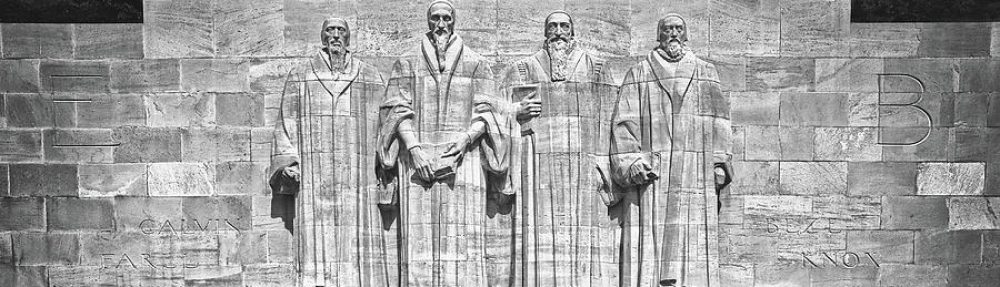
actually the opposite is the case. Luther, Calvin, Zwingli, Auggie, Edwards et al. come immediately to mind, and they are of course the higher profiles who we have relatively lots of background info on. It’s reasonable to think that because of the nature of the human heart, even post-justification, that sin remains pervasive and theologians of all periods remain just as susceptible to it as anyone else. This isn’t an attempt to lessen Barth’s sin, but to bring real life perspective to it. I try to avoid golden-age fallacies.
I don’t have to “suggest” anything, it’s the history that witnesses to it.
The reality is, theologians remain human. It aches the heart to imagine that even our most foundational and celebrated teachers and theologians have sin, even unrepentant sin in their hearts; but I would indeed suggest that this is in fact the rule (unless we hold to a Wesleyan doctrine of perfectionism). We are all sinners, and have fallen short of the glory of God. Just because we become justified before God as we come into spiritual union with Jesus Christ, this does not abrogate the fact that we also remain sinners (in these ‘bodies of death’ cf. Rom 7). Unrepented of sin in the Christian’s life is a sin in and of itself, but not a sin greater than the shed blood of Jesus Christ. It implicates matters of fellowship with God, not union, per se. Each and everyone of us lives with unrepentant sins, even if our heart is to do otherwise, each and every day. If Jesus were to come back in the midst of that unrepentant sin, which He surely does, when He takes someone’s life, would that unrepentant CHRISTIAN enter into the final presence of the Lord? According to Scripture: Yes! This doesn’t minimize the stain of sin, the gravity of it all in that person’s life and witness, but it does indicate that they are still a child of the living God.
As I have already exhaustively registered, I believe Barth’s sin was especially egregious; particularly as that implicated his wife and children. I see no way of softening the edge of that as my interlocutor seems to think I am attempting to do. At the end of the day if someone is going to read Barth’s theology it must be read on its merits and capacity to bear witness to Jesus Christ. The Apostle Paul thought it was possible for people who had all types of mal-intent (murderous even towards, Paul) to speak accurately and proclaim clearly the entailments of the Gospel reality; to the point that he believed people were being ‘saved’ because of said witness. He writes: “15 Some indeed preach Christ even from envy and strife, and some also from goodwill: 16 The former preach Christ from selfish ambition, not sincerely, supposing to add affliction to my chains; 17 but the latter out of love, knowing that I am appointed for the defense of the gospel. 18 What then? Only that in every way, whether in pretense or in truth, Christ is preached; and in this I rejoice, yes, and will rejoice” (Phil 1.15-18). It is certainly not the ideal to go to such people as your “teachers.” But the underlying premise, according to the Apostle, is that it is possible for someone to be living in sin, and at the same time declare, proclaim a saving and true Gospel (it’s just that in Barth’s case he has six million words of that proclamation deposited in his Church Dogmatics).
For me, it is not the ideal to go to Barth as a teacher, but I did so, for many years, without any knowledge of Barth’s life with Charlotte Von Kirschbaum. I have determined that his work, as a development of prior theologians (he isn’t as original as some like to think), in fact bears witness to Jesus Christ; indeed, and as such, it even bears witness against Barth’s own sinful lifestyle. I will never attempt to minimize the destructive, deleterious nature of Barth’s chosen sin with Charlotte; but at the same time, I cannot deny that in spite of that his theological bearings, for the most part, have a proximity to the eschatological Good News of Jesus Christ; such that it remains a weighty thing for me as I attempt to contemplate who God is, the ways of God in the world as that has been pre-destined by His free choice to be God for and with us, and not without us.
I think this is an important point. I have received similar notions for my commendation of J.I. Packer and his supposed “Romanizing.” On the list goes of reasons to forego this or that individual who has been beneficial to the life of the body of Christ–while still remaining in need of its Savior.
I appreciate your comments, because I have to ask am I grieved enough over my own sin, and will I disqualify what I believe and have to say on the basis of this judgment of egregious sins. These sins which happen to have been publicized vs pet sins which go unknown to the world’s eyes but known to our Heavenly Father.
In a nutshell, our judgments are often too hasty and severe especially given the degree of complexity involved in each circumstance. Sin is sin, yes, but isn’t truth the truth? Good thoughts here today!
There is an odd parallel between many Christian pastors and laypeople in the Conservative Evangelical movement in the US and their adoration of the past President Trump. His “sins” have been overlooked, tolerated, believed to be inconsequential, etc, because of the belief that his admin policies are in keeping with their view of God’s politics for the US. The distinction between the Sinner and the Sins of the Sinner has bothered the church for a long time.
As an admirer of the work that Barth has done, I have also have read through the literature that looks at his relationship with Charlotte. I, too, struggled with the nature of his action with her and the impact on his family, wife, and kids. Also, the overt public appearance when Charlotte accompanied Barth on work and holiday trips. Yet, his apparent struggles with his own realization of his sin and situation are a helpful reminder that the Spirit was convicting him all the while. His (and Charlotte’s) grappling with their relationship within the context of the theology of Man and Woman is a significant theological tension for them. Something about the reality of “addressing one’s sin” in the midst of that sin and the calling to speak God’s Word about Obedience over sin is profoundly humbling. I have preached sermons that were more to myself than anyone listening. There are passages within letters where Barth was clearly in crisis about his situation. Again, this is not exoneration, but the human dilemma of being called from within sin to speak God’s Word over sin is like being asked to eat the hot coals of God’s Word as a human. Judgment and Grace stand together in those moments. Hopefully, we have learned, from Barth (and St Paul – who saw himself as “chief among sinners), in Christ Jesus, the last word is always Grace.
Yea Bobby,
Then my mind is want to wander to plausible future scenariae, especially should our Lord tarry, as benchmarks for sin continue to migrate. As an example, It may be it will be our Lord’s pleasure to reveal an advancement in theology to one who is in homosexual sin. Such a test could certainly be in view for your Lutheran friend, particularly if he is of a conservative tribe of Lutherans. Then we will be in similar quandry: “but is his or her message truth – is it consistent with the gospel, with Jesus?” , regardless of the person’s contradictory life. We will cross that bridge when we come to it I suppose. The conscience of Worldly Wise has long since been seared regarding marital infidelity. Our own conscience is stung by Bartish unfaithfulness, but the above mentioned example may be a bridge too far.
@Nathan, yeah, truth is truth; so there is an objectivity to it, of course (an objectivity of God, which is really His subjectivity for us).
@Paul, yeah, I can see the hypocrisy w/ Trump, or on the other side, with Christians who support Biden; enough hyp. to go around.
As far as God’s last Word being grace, no doubt! But that isn’t the issue w/ Barth, it’s unrepentance.
@Duane, yeah, there is no way or reason to soft-peddle Barth’s unrepentant sin; a lifestyle of it. We are all sinners, no doubt. But when we become aware of them, as Christians, I’d like to think that we don’t quench the Spirit behind a malaise of genius. God actually shows no partiality. Indeed, there will be those who are saved as by fire; kyrie eleison.