“He delivered us from the power of darkness and transferred us to the kingdom of the Son he loves, . . .” –Colossians 1.13 (NET)
ὃς ἐρρύσατο ἡμᾶς ἐκ τῆς ἐξουσίας τοῦ σκότους καὶ μετέστησεν εἰς τὴν βασιλείαν τοῦ υἱοῦ τῆς ἀγάπης αὐτοῦ, –Colossians 1.13 (GNT)
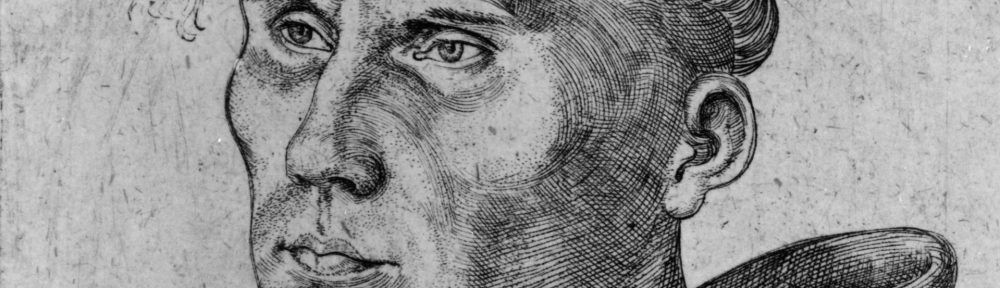
Simul justus et peccator–Martin Luther
As Christians in Christ we are simultaneously inhabitants of the kingdom of God in Jesus Christ, and at the same time we continue to dwell in a world full of the darkness we have been redeemed from; this world is yet present in our old hearts, and in the bodies of death we continuously inhabit. This seems paradoxical, dialectical even; it is. Sin no longer has its filthy grip on our lives /  instead the righteousness of Christ does. In this we have the freedom of God to live in the holiness He has always already inhabited in the perichoresis of His Triune Life as Father, Son, and Holy Spirit; we have become ‘partakers of the divine nature’ by the adoption of God’s Grace; been made co-heirs with Jesus Christ as we are now in union with the life that He has always had by nature with the Father in the Holy bond of matrimony provided for by the Holy Spirit. As Christians we paradoxically live in-between two ages; even as we inhabit both of them, yet in asymmetrical ways. We are citizens of the heavenly Kingdom, seated in the heavenly places with Christ; yet we are still in this world, in these bodies. Helmut Thielicke explains these things in the language of æon, which is the Latin transliteration of the classical and Koine Greek, αἰών; the word simply means: ‘age.’ He writes:
In the second form the question runs, “How do I move from faith to action?” That is, how do I make my Christianity concrete? What is life in the new aeon to be like? For to be baptized is, after all, to let oneself be called into God’s salvation history, and hence out of the old aeon. But to be called out in this way can mean only that we are delivered from the ruling powers of this aeon and set under the dominion of a new and different Lord. It means, for example, to acquire a new relation to the god Mammon, and to the powers of property and possession (Matt. 6:24; Luke 16:13; 12:16-20; Mark 10:21, 24 f.). It means also that I have to revise my relationship to my body (I Cor. 6:19) and its passions (Phil. 3:19; I Cor. 6:16), to the things of this world (I Cor. 7:29 ff.) and anxiety concerning them (Matt. 6:25 ff.), to the Thou of my neighbor and to the groups to which I belong. It implies, in fact, the total revision of my existence in all its dimensions, since Christ is ruler of the entire cosmos and not just Lord of my inwardness. The orientation of my existence—and this means concretely my life in the plenitude of its relationships—is completely transformed because I am now the member of another history and of another aeon.
On the other hand I am simultaneously—by virtue of a mysterious simul—a member of the old aeon. For Christ did not pray the Father that he should take his own out of the world, but that he should keep them alliance with wickedness (John 17:15). After all, they are no more “of the world” (in terms of origin and destiny) than is Christ who, even though he walks in it, still is not “of” the world (John 17:16).
Hence believers in Christ stand to the old aeon in a relationship of both continuity and discontinuity. The relationship is one of continuity insofar as they eat and drink, marry and are given in marriage, laugh and cry, stand under authorities and within orders, etc. It is one of discontinuity because they no longer receive their orientation from all of this. Their relation to that which is relative can no longer be something absolute (to put it in Kierkegaardain terms). They live “in the flesh” to be sure, but no longer “according to the flesh.” We shall see later to what degree Luther’s well-known phrase “at once righteous and sinful” [simul justus et peccator] reflects this relationship to the two aeons, especially when it is seen to involve an interrelating of res and spes, of present and future, of this aeon and the coming aeon: ‘sinful in fact, righteous in hope” [peccator in re, justus in spe].[1]
What a glorious, yet precarious status we inhabit. We are redeemed, and indwell, in and through the mediatorial humanity of Jesus Christ, the Holy of Holies of God’s inner and triune Life. Yet, we remain in the far country of this groaning world, and the bodies that inhabit it, until we fully realize the beatifico visio in the consummation of all things yet to come at the shout of the coming Son of Man.
I long to be saved from my ‘body of death.’
“Wretched man that I am! Who will rescue me from this body of death?”–Romans 7.24 (NET)
[1] Helmut Thielicke, Theological Ethics: Volume 1: Foundations, edited by William H. Lazarus (Philadelphia: Fortess Press, 1966), 40-1.
An encouraging affirmation and word of encouragement… Hallelujah!
Amen.