
I am going to be involved in a writing project again, it looks like; I have been asked to deal with the question presented by God’s so called transcendence and immanence—or more traditionally, God in eternity and God in time (which gets us into analytical issues, i.e. God and time etc., that I am not interested in for this 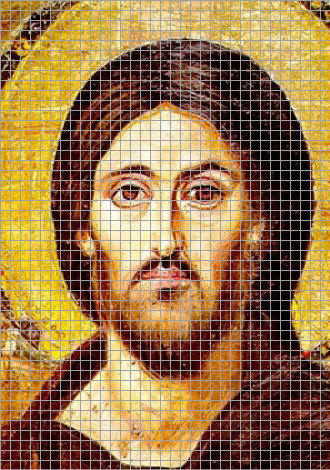 writing project)—and more apropos to the way that I like to think about this, God’s veiledness and unveiledness. I am supposed to provide an introduction and explanation to this category, related to a doctrine of God and his Self Revelation, and then apply this to a related existential question (or two) that bubbles up from this consideration. The audience is not primarily “specialists,” but instead the thoughtful pursuing Christian who wants to try and think deeper about such things; and maybe the reflective Christian who is being pressed to think about these things because of the circumstances of life, and just don’t have a Christian grammar or perspective to think about their circumstances, and God’s relation to them, in Christian ways, through.
My initial thoughts towards engaging this issue, have caused me to immediately flash to Martin Luther’s theology of the cross; which explicitly deals with the ‘hiddeness of God’. One of the suggestions the editor has asked me to maybe consider, pastorally, in regards to my topic; is ‘why is it so hard to discern the will of God and his presence’—or, ‘if Jesus is God’s Self Revelation, why do so many people not notice it’? I think a gloss on Martin Luther’s theology of the cross gets at the underlying premise of the first suggested question; i.e. God comes as a baby in the manger, and he ends up dying on the cross, a criminals death (so his ways are hidden and even foolish to natural ‘man’). On the second suggested question; this obviously has to do with the noetic effects of the biblical ‘Fall’, and the fact that no one pursues God (Rom. 3 etc.)—indeed this over-laps with the first question. I think though, that I will appeal to the conceptual matter that gave shape to my personal chapter in our book. I will press the idea that entering into a knowledge of God cannot come from our side, it cannot come through reflecting on a general concept of God; it can only come through God’s own mediated Self revelation in his Son Jesus Christ. In other words, the analogy by which we come to know God is through ‘Faith’ not through establishing a philosophical conception of God and then trying to fit him to that. It is trying to frame God philosophically that eschews our perception of him because we are imposing on him things that he never intends to fit into, and does not. This line of reasoning takes us full circle; it takes back to answering the question of why so many of us miss understanding God’s will, his presence in our lives. We have unwittingly put on the wrong lenses, and thus we end up seeing a God of our own imaginations; we are thus unable to interpret the circumstances of our lives in a way that is in keeping with a God who has revealed himself to the point of death, even on the cross.
So the answer is that we must start where the Father starts, with his Son; if we don’t we are most certainly doomed to glance right off of the reality of a good loving God, and end up in the oblivion of a God who looks much too much like ourselves (but only “super sized”).
Anyway, this represents some of the lineaments that I am thinking about in regards to this forthcoming writing project (I am supposed to be operating as a theologian-pastor when I answer this question, which is the perfect combo for me … I think pastors ought to be theologians and vice versa!).