
I am an heir of the Literal Grammatical Historical approach to biblical interpretation; an approach, that at least of yesteryear (and even now at some levels) has dominated Evangelical biblical exegesis. The LGH was given its 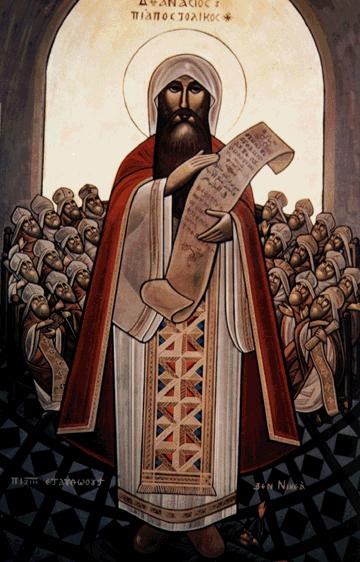 genesis in the history of religions school, and what can be called the higher criticism of enlightenment rationalism. We see it alive and well today in the discussions that take place amongst so called biblical studies guys and gals (just go read a biblical studies blog somewhere, you’ll see what I mean … or an excellent illustration of this kind of exegesis [form-redaction] is Grant Osborne’s book Hermeneutical Spiral). But this post isn’t really intended to be about the LGH, instead I am just using this as the foil that introduces what I want to highlight; something that I have become a convert to, theological exegesis. Christian theological exegesis has been around from the beginning, and no one better epitomizes what this whole project has been about but St. Athanasius himself; that stalwart of contra mundum theology. Peter Leithart in his gem of a book Athanasius in the Foundations of Theological Exegesis and Christian Spirituality series, gives a great little summary of what theological exegesis entails; and how it served as the matrix through which Athanasius engaged the scriptures:
Theological interpretation of Scripture thus involves respect for the premodern interpretation, attention to the doctrinal tradition of the church, recognition that Bible scholarship takes place within the church and exists for the edification of the church, and acknowledgment that interpretation is not a clinical scientific enterprise but a form of piety and properly preceded and followed by prayer, praise, and worship. Athanasius is among the precritical interpreters of Scripture whom contemporary theological readers of Scripture seek to emulate. Lessing’s ditch was unknown to him, as was Benjamin Jowett. Of course, so too was the Nicene tradition to which Reno appeals. Athanasius does appeal to the authority of the “fathers” at Nicaea, but he is one of the key formulators of the Nicene tradition, rather than an heir of it. His biblical interpretation is therefore of peculiar importance, since by following his lead we can discover some of the paths by which he moved from Scripture’s narrative, law, gospel, and epistle to the metaphysical claims inherent in Nicene theology. –Peter J. Leithart, Athanasius, 28.
It is through a theology and hermeneutic of retrieval that we can appropriate the impulses that made someone like Athanasius’ theological interpretation beat. Clearly we can’t repristinate Athanasius’ precritical theological exegetical practices—we are at least, critical if not post-critical exegetes—but that is not to say that theological exegesis is doomed to the history of ideas. As those in the know, theological exegesis is making a come back—even amongst some evangelical exegetes (most notably Kevin Vanhoozer and Daniel Treier). What appeals to me about theological exegesis is 1) it is the method that the Apostles followed when writing scripture, 2) it is rooted in positive Christian axioms of interpretation, 3) it does not require a negative defense [like inerrancy and veracity of scripture] for the ground and foundation of its interpretive life, and more.
I hope you appreciate the quote from Leithart; I do …
I’m with you, some examples would help of how different approaches come at texts/books/subjects from their own angles.
I have been discussing something like this with a friend recently. Plus, at the same time, reading C.S. Lewis’ “Reflections on the Psalms,” where he looks at verses from a more global view of the scripture and it’s “tone” for us, rather than LGH. Look forward to reading some more from you on this.
@Dave,
Hey great to hear from you! I agree, some examples would go further than this post; but I don’t have the time to get to deep into this at the moment. Maybe in the future 🙂 . Happy New Year!
@Jerome,
Hello, welcome, thanks for your comment. I’ve never read Lewis’ “Reflections on the Psalms;” I’m sure it is good, as is most everything else from his pen. What is your background with hermeneutics and the LGH? Many don’t really know what that means, and sense you do I am curious to know what you think of the LGH V. what has tagged “theological exegesis?”