
Something that fits with my continued quest to be a ‘Christian’ in all things, Dogmatically, implicates, of course, hermeneutics. On a personal level, the Lord gripped my heart anew, in confrontational and drastic (or loving) ways, approximately 16 years ago—I was somewhat of a lukewarm Christian just prior to this fresh encounter with him. Part of this ‘grip’ involved an inculcation, in my life, towards becoming saturated in God’s second Word 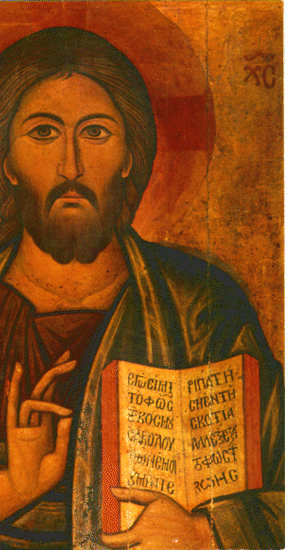 for us, the scriptures. I have been reading through the scriptures (approx. 3x a year sense) voraciously ever sense (even in the original languages). A symptom of this mode of living has resulted in a sensitivity to encounter with, as Webster calls it below, the viva vox Dei (or the ‘living voice of God’); that being itself, God’s eternal Logos, or Jesus Christ of Nazareth. As corollary, I kick against methods of biblical interpretation that do not start, methodologically, with an intentional and principial Christian ontology of reading scripture. More tersely, modern (which includes ‘Evangelical’) methods of biblical interpretation ultimately assume an anthropological posture that (crudely stated) places humanity (as abstracted from relation to God, or dualistically) over the text (and more importantly; material reality) of the written Word. John Webster offers an alternative, Christian, account (and critique) to the usually modernistic, dualistic ways of reading scripture; Webster writes,
Christian reading and interpreting of the Bible is an instance of itself. The complex configuration of text-acts and reading acts, the use of this text with those intentions to achieve these ends, is sui generis. It is not, of course, wholly dissimilar from other acts of reading undertaken by other readers in other communities with other purposes and self-definitions. But establishing the commonplaces and overlaps between Christian and other reading, however valuable in exposing docetism, often serves the purpose of underwriting a foundational anthropology which eclipses what in fact is most interesting about what happens when Christians read the Bible: that the Bible as text is the viva vox Dei addressing the people of God and generating faith and obedience. It is this address which is constitutive of the Christian hermeneutical situation, and it is this which in the last analysis means that that situation is without analogies. [John Webster, Hermeneutics in Modern Theology: Some Doctrinal Reflections, (‘Scottish Journal of Theology’), 317]
This way of construal implicates almost all instances of what counts as hermeneutics today (in the ‘critical’ traditions). To become more blunt (I know this is strange for me 😉 ), there is nothing special or Christian about reading the Bible through the Literal, Grammatical, Historical method today (which is a result of synthesizing enlightenment, rationalist anthropology with ‘Evangelical piety’) [don’t confuse what I label the ‘LGH’ with something like the Patristic ‘Grammatical-Historical’ approach and their usage of theoria). In many a “Christian’s” pursuit to say something intelligible (critical) about scripture; they most often, unconsciously (because they are not ‘Dogmatically’ sensitive) find themselves in cohabitation with ‘form-redaction critics’ (which while on the wane in some circles, is still alive and well in most quarters of what is considered critical biblical scholarship today). The criteria, and assumptions upon which this kind of criticism is built; finds its locus firmly situated in the dualist anthropology that Webster (in the quote) alludes to, and further develops and critiques throughout the rest of his essay (which I am still reading).
What agitates me most, is that ultimately, while good intentions reign, there usually is nothing intentionally ‘Christian’ about how ‘Evangelical’ (so called) Bible Colleges and Seminaries teach biblical interpretation. There needs to be a reformation! semper reformanda!
I would agree that the Word needs to be taken through a Christian lens first. But I wouldn’t entirely discount the modern literary critical techniques. Some of them have opened up the Word to me in ways I hadn’t experienced it before, and that’s brought me into a better understanding of the relationship to God.
Ken,
I realize that modern literary tools have there place, but w/o a proper provision of Dogmatic order; these ‘tools’ float around like un-anchored ships—which is of course a dangerous thing.
Challenge yourself. Google First Scandal.
Robert,
Challenge yourself. Your comment represents what is commonly called SPAM. Do it again, I’ll ban you from ever commenting here again.
peace.