
Ultimately it is sad that Usama Bin Laden has died, apparently in a deceived state; leaving this world with a mind still (apparently) blinded by 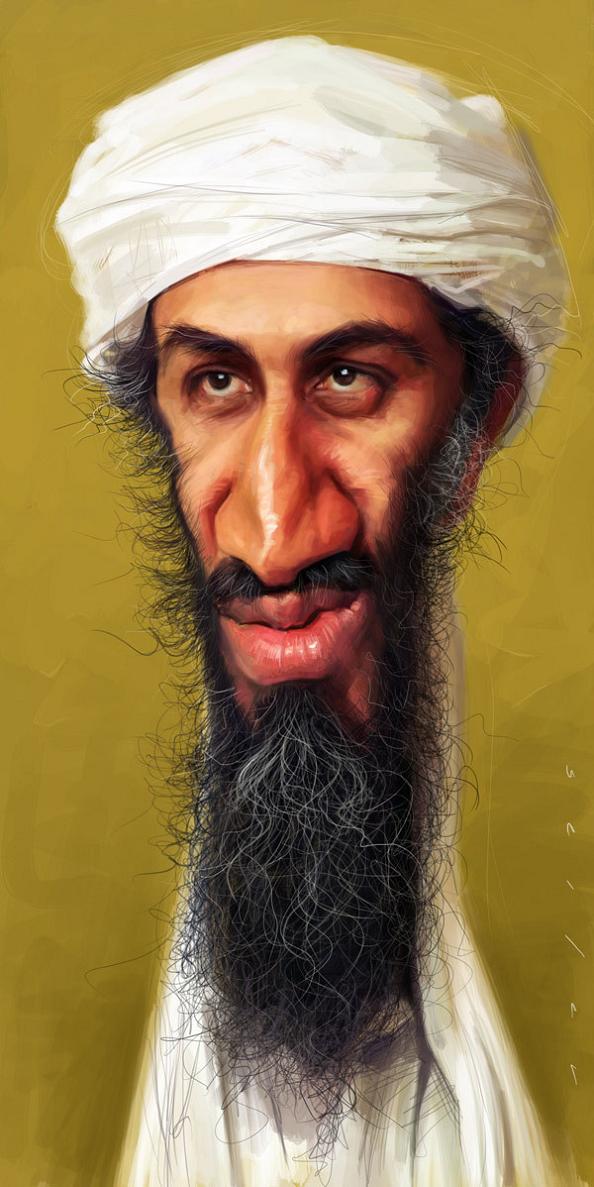 the god of this age (II Cor. 4.4). A brother on Facebook queried in response to this: “Christians pray for their enemies, right?” Absolutely, that is a clear mandate and even honor that Christ has bestowed upon us (we too at one time being enemies of the Gospel cf. Titus 3.1ff) as His diciples. The fear, I think, that my friend on FB is voicing is that Christianity is collapsed into an American Nationalism or some such thing; that is, that Christians shouldn’t really be rejoicing at Bin Laden’s death. Yet, there is indeed a dialectic tension here (at least presented in Scripture); Christians pray for their enemies, but at least in Revelation 19, Christians also rejoice at God’s justice over unrighteousness. And this isn’t just an abstract unrighteousness, but an unrighteousness that is personal and lived out by particular people. For Christians there seems to be a both and scenario here; we pray for someone like Bin Laden’s salvation, and we are sorry and hate to think that he (presumptively) is eternally separated from God (unless you follow the possibility for a post-mortem salvation); but we also rejoice when we see justice carried out (Rom. 13), whether that be in the case of Usama Bin Laden, or when a rapist is sentenced to a term of imprisonment, etc.
This issue also, and clearly raises the spectre of how you approach a theory of “Just War,” or not. The principles appealed to, in the instance of the “taking out of Bin Laden,” for a Christian perspective, would have to be grounded in the principles used to establish the basis for a “Just War;” since that’s who Bin Laden represented, an enemy combatant, in the field of war. Right?
Death should never be rejoiced and celebrated. I believe our response should always be one of sombre and reflective grief…no matter who the person is.
Craig, of course one can rejoice in somber and humble attitude, right? Like I said, though, there is a bigger question behind this issue other than emotive concerns. That is certain ethical principles, and how those are either justified, or not, from God’s self-revelation in Christ. Interestingly, Christians are thankful for Christ’s death (we rejoice in it because of the attendant consequence associated with it Heb. 12.2); and at the same time we hate it!
On a personal level considering Osama as a man made in the image of God, of course his death outside of Christ is a personal tragedy in the light of the cross and the atonement of Christ. But God has a challenging job. Consider that Osama has given himself to war for decades. He has invested himself in killing for most of his life. Every year he lives he becomes responsible for the death of many innocent people around the world. So how long should God allow that to happen? The deaths of those people is just as tragic if not more so than Osama’s. Those who live by the sword will die by the sword. Osama is not just a murderer of Americans or Europeans, but Muslims, Africans and other Middle Eastern people.
If he were apprehended alive and tried in a court he would be found guilty and perhaps given the death penalty by a human court. Is he not already in the court of God’s judgment? Doesn’t God already know his sins, his unrepentant heart, his future plans for murder? Should the courtroom of God in heaven be silent forever? Or is God free to exercise judgment upon such a man from the courts of heaven where he is ultimately responsible both in this life and in the final judgment?
Sure Americans rejoice because he was our national enemy. Does God rejoice that a man of evil is brought to an end. Ezekiel says God takes no pleasure in the death of the wicked. In the same way a human judge may take no pleasure in the sentence of death he has to hand down to a convicted murderer. Yet justice demands such a sentence. So for God I believe that at times justice also requires such a judgment and sentence against the wicked. Only God knows the times, the standards, and has the right to pass down such a sentence. But I will not deny Him His role of judge of all. I believe his mercy is greater than judgment, I believe his mercy is deep and wide, but in his own ways there is a place for judgment also.
I live within an hour by train of Ground Zero the attack zone on the World Trade Center. I had neighbors who were murdered that day. I know too many clergy colleagues who intellectualized away the horror of that day in their Anti-America, Anti-Israel ideology.
Revelation 19: 11-21 and I Thessalonians chapter 1 are more than appropriate. There are people who willingly and knowingly incarnate the forces of darkness. We must understand that reality and affirm God’s wrath–Law and Grace, Law and Gospel MUST be balanced
I think I’ll have to stay away from facebook for the next few days since the status are turning my stomach. Do I want Osama round doing his damage to the world? No, I’m glad that he can no longer do that. But as a Christian, I am shocked at my fellow Christain’s status’s and repelled by the the way his death is being spinned by political camps. My emotional response to all this is not cheerful, but conflicted. Nor do I think terrorism over because he is dead.
The issue of applied Christian ethics can sometimes be a sticky one, can’t it?
I do think it is interesting how Americans (both Christian and non) have expressed shock and anger over certain videotaped celebratory Muslim responses to the WTC horror but have apparently had a similar reaction upon hearing of the death of Bin Laden. Perhaps what struck me is that the Islamic groups place a religious significance on their efforts to destroy us; and my understanding is that they believe they are actively working to overcome a satanic entity while many Americans become incensed that anyone would dare to threaten our freedom and (mostly indulgent and consumer-driven) way of life. I know that is a bit of oversimplification concerning the American reaction, but I can’t ignore that this is often the sentiment that is relayed.
Do you ever wonder whether much of modern American values and culture could be listed under “mammon worship”? And if so, could not the concept of justice being served not be a two-way street in which *we* are being called to repentance ourselves?
Pingback: Reacting to the death of Osama bin Laden « Near Emmaus
Great point on how this relates to our views of just war. I think it also relates to our views of the death penalty and Hell as well. Whatever view you hold on the death penalty and Hell will in some way color your response to OBL’s death. Roger Olson has recently dropped some posts on the death penalty and in one in fact, he even calls it a SIN! (check it out here: http://rogereolson.com/2011/04/17/capital-punishment-is-sin)
Driving deeper on the primary issue behind the issues of Hell and the death penalty, we must come examine what we mean when we say God is just. What is the purpose of his justice? What conception of justice do we attribute to God? What does this justice look like it? What is its primary function? Retribution? Restoration? It is so difficult to come at this issue without being loaded down by preconceptions of what God is justice means. Some filter their reading of Scripture through medieval, Anselm oriented views of justice (the traditional conception of biblical justice), while other are moving more towards reading justice as restorative in light of recent justice theory. I think what we must do is go back to Scripture and really try to understand what the function of justice plays in God’s economy of salvation.
It saddens me deeply to see many Christians in their FB status messages and on Twitter, emphasizing the retributive notion of justice and trumpeting loudly and excitedly over OBL’s death. Further, as it was hinted above , I think we have to be careful in distinguishing civili religion from the Christian religion and not allowing these two to become overly conflated and synonymous. If it tells you anything, one of my first thoughts after reading FB this morning was to post some Stanley Hauerwas quotes from Resident Alien..too bad its packed already for my move across the pond!
I finished McDonald’s book today and I must say I absolutely loved it and look forward to looking more into the notion of election she presents and the interconnections between theologians such as TFT, Gunton, and David Fergusson.
@Jon,
Great thoughts, I agree with them.
@Kenneth,
I also agree with you. Of course I do think that how we think of the “Kingdoms” comes into question here; we want to run wary, I think, of collapsing American interests into God’s, per se.
@Penny,
I think FB, and blogs alike are places where knee-jerk responses make both go round (guilty here 😉 ). I would imagine that there will be more sober and reflective responses taking place by Christians in the future on this. That said, I am not sad that Osama is no longer with us in regards to the terror that he sought to unleash on millions of people in this world. I am saddened to think that anyone, Bin Laden, even Hitler can be duped and deceived to the satanic levels that both were. They both, I think (most likely), are now with the King of Babylon (Is. 14).
@Heather,
Absolutely, America *is* hedonism. I think we are experiencing our own judgment (Rom 1) in that regard. Do I think God is using Islam to punish America? Probably not. Do I think our national instability is a result of God’s judgment on America? Yes. I think all that is taking place is God’s movement in history to finally bring to consummation what He inaugurated in the Incarnation, Atonement, Resurrection, and Ascension; the purpose for all of creation from all time . . . the parousia and second coming of Jesus (Lord of the living and supreme over the dead Col. 1).
@Randy,
Yes, good points on distinctions between justice. I agree, defining God’s justice in relation to who He is as love is central to this question. I think we need to filter God’s actions and justice from God is love, and ask the question of whether or not God’s justice springs from His love; or if His justice is a static ontological attribute and category of its own (thus competing with His love as another attribute). Obviously I see His justice springing from who He is as love, and that the cross is the primary example of that. How does this affect this conversation? Maybe to say that from death comes life. I need to ponder some more 😉 .
I totally appreciated McDonald’s book, it has helped me a lot! I’m going to be posting from her book for at least my next couple of posts.
Perhaps now some American Christians can better understand the position Bonnhoeffer took, in being involved in the plot (or knowledge of it) and the attempt on the assassination of Hitler?
Fr Robert,
I think many of us Americans already appreciated what Bonhoeffer was up against. I know some folks who like Bonhoeffer, and yet remain baffled by Bon.’s apparent shift from pacifist to assassanist, this is not a clean time to live in (between the “ages”).
Bobby,
To Bonhoeffer’s credit, he knew that evil must often be met head-on! And sometimes neutrality is itself unjust and can be evil also.
Yes, the “sin of omission” as they used to say.
Speaking from an Australian cultural perspective, it seems that the majority of the American churches / christian culture would miss the point of Bonhoeffer’s struggle in his pacifism.
Again I’m speaking from the perspective we have here in Australia about the American church – that it seems for the most part – it is very pro war – whereas for Bonhoeffer he was not pro war / he did not have a just war theology and had a very strong theology of how and what kingdom living looked like.
I don’t think a majority of American Christians know of Bonhoeffer’s Ethics or pacifism. In fact I would say that most American Christians have probably never heard of Just War theory (even the name), let alone the principles that it entails. I wonder how many Australian’s know what Just War theory, or even Pacifist theory is? Probably not many (same as American Christians, in general — I don’t consider most biblio/theobloggers to be in the “general” category, usually).
Americans are probably “pro-war” because they actually have a military . . . just sayin’ 😉 .
I’m sorry, but all of this hand wringing is making me nauseous. Do you recall that when King David was going into exile from Jerusalem, that Shimei cursed David. Well, upon his return, Shimei repented, and David swore that he would not put him to death with the sword. Fine! Good!, Magnaminous of him, oh but wait! David’s last will to Solomon his son: “Remember Shimei, who cursed me? Bring down his grey head to the grave with blood.” (and “wise” Solomon did). Moreover, the evil Haman, who sought to murder all of the Jews in the empire of Ahasueras, was hanged on the gallows he had built for Mordecai, is remembered to this day, in the fast/feast of Purim. Re-enactments are done, and the congregation rejoices at the just demise of Haman.
Ok, so it’s not unalloyed joy that I feel. There are mixed emotions. But I rejoice with those who rejoice. That they can sleep tonight knowing that Osama (the nonpolitically correct spelling) will not rain hell on them or their children in their beds tonight. I rejoice with them that the murderer of their fathers, their mothers, their sibblings and spouses, went down to the grave in violence. I hope when they dumped his body in the sea, they dumped some chum with with it. That his body would be torn up violently by fish comports well with those thousands of bodies ripped apart by falling churning concrete.
While I do not rejoice that he may be in Hell, there is considerable satisfaction, thinking that he may be suprised to find that there are zero virgins attending his needs.
Regarding American hedonism, it saddens me that we are a few scant generations behind the Greeks in total bankruptcy, and a couple generations behind in European socialism, but what really bugs me is the corruption between the perpetual “wet dream machine” that is Hollywood, and the “sell your grandchildren for a rising stock portfolio” that is Wall Street, and that all of these systems (Hollywood, Wall Street, Socialism) are too happy to perpetuate an abortion machine that without any handwringing wipes away the life of a child with no more ceremony than wiping a slate clean.
To me, it sounds like so much anti-american sanctimony.
I went to Wikipedia to verify what I wrote above. “Osama” is the most common American spelling of his name, at least until the election 2 1/2 years ago of someone named Obama. Wikipedia, being reader generated tells of Bin Laden: “After positive identification, and within 24 hours of his death, bin Laden’s body was taken out to sea for burial. ROT IN HELL YOU BASTARD!!!”
Which reminds me: We are so happy to remind us that we are not a Christian nation. It cracks me up then, that whenever the america haters find something they can accuse U.S. of, suddenly we are a Christian nation. “You!!! You Christians are jubilant that Usama Bin Laden might be rotting in Hell!!!!!!!!!”
I don’t know if this Wiki writer is a Christian or not. Odds are, he thinks he will go to Heaven because he is not wicked like Osama Bin Laden.
It is to laugh!
Duane,
Obviously this is not an easy issue. Nevertheless, to me, “taking out” OBL was a necessary aspect of justice, unfortunately. I still can’t stand to think that he is most likely, now, eternally separated from the Lord! I think we need to try and stand back and view the whole deplorable effects of sin on humanity; try to take a more “God’s-eye-view.” I remember that little anecdote from Sunday School: “Hate the sin, love the sinner,” I think that is apropos in this case (and every case). The darkness of our own hearts really makes us no different than the darkness in OBL’s heart; the difference is that we have been saved and (apparently) OBL wasn’t (that’s ultimately God’s call!). It took the God of the universe to die for my sins, personally; and I don’t mean my “Law-breaking” or behavior, but worse, my dark and wicked heart. If the depth of sin, the break between God and man involves the Son becoming man in order to bring reconciliation; then this identifies the intense depth of sin and self-love that I am consumed by. I think each person’s heart is equally, desperately wicked; which is why Paul challenges the church in Crete: 3 At one time we too were foolish, disobedient, deceived and enslaved by all kinds of passions and pleasures. We lived in malice and envy, being hated and hating one another. 4 But when the kindness and love of God our Savior appeared, 5 he saved us, not because of righteous things we had done, but because of his mercy. He saved us through the washing of rebirth and renewal by the Holy Spirit, 6 whom he poured out on us generously through Jesus Christ our Savior, 7 so that, having been justified by his grace, we might become heirs having the hope of eternal life. 8 This is a trustworthy saying. And I want you to stress these things, so that those who have trusted in God may be careful to devote themselves to doing what is good. These things are excellent and profitable for everyone. ~Titus 3:3-8
Obviously this is not an easy issue. Nevertheless, to me, “taking out” OBL was a necessary aspect of justice, unfortunately. I still can’t stand to think that he is most likely, now, eternally separated from the Lord! I think we need to try and stand back and view the whole deplorable effects of sin on humanity; try to take a more “God’s-eye-view.”
This brought to mind the gospel scenario of Jesus, weeping over Jerusalem. Justice and judgment (consequences of specific choices) even in the temporal realm are inevitable…but there is a sorrow that accompanies the recognition that there are some who will be eternally separated from God and Life because of their choices.
@Heather,
That’s a good one, and yes, that summarizes what I was trying to get across; thank you for that insight!
Bin Laden, was not only a sinner, but a mass murderer! Big difference here. And in my opinion, he was a religious reprobate. I don’t morn his loss at all myself. He is in the hands and judgment of his Creator God! And this would be a good place to argue the theological merits or idea, of the doctrine of reprobation. I believe in it from the sense of God’s everlasting purpose and will, but I am a Infralapsarian, and God’s sees all men as sinners. Everlasting life for some, eternal perdition and irreparable loss and ruin for others! (Rom. 9:11, etc.)
I don’t see any difference from being a sinner vs. a murderer; we’re all murderers in a sense. Jesus was delivered up because of “our transgressions” (Rom 4:25; Jms 2:10).
Yes, Jesus was reprobate for all of humanity as he elected humanity (our reprobation for Himself, and made us rich through His election II Cor. 8:9). I know your view is classic, and mine is biblical 😉 . But I agree, OBL is in the Lord’s able hands!
I think it’s right to rejoice. And not at the death of the man, per se, but rather, at the satisfaction of justice. Whenever justice is satisfied, God is glorified.
Great post, Bobby.
Josh
BTW, I think the reason it’s critical to rejoice over the right thing is because otherwise it’s just way too easy to fall into the finger-pointing trap of defining and personifying evil “out there,” rather than where Paul starts. We need to be brutally honest about our own potential for evil. I’ve found it’s a whole lot easier to love your enemies when you first see yourself as the ‘chief of sinners.’ We can rejoice in justice and still mourn deception.
Josh
Bobby,
As we know from 1 John 5: 16-17, that there is a degree of sin/sins. My point was, yes we are all sinners, but not all of us are mass murderer’s. The two are hardly the same.
Yes, I know Barth’s nice dialectic for Christ as both “reprobate” and “elect”, but I no longer see it as contingent myself. For me it rather weakens Christ’s death & resurrection for the true “Elect” and election of grace. And also Christ as Mediator. No man can make one inch of a move toward God, at least salvifically, save by God’s power & grace.
Also Barth’s position is really open to a universal salvation. Indeed the Death of Christ could save innumerable worlds, i.e. the value of the death of Christ, but biblically it only “saves” the ‘Election of Grace’. At least thats my conclusion. Certainly we are not directed to the secret decree of God, at least directly. But “we are to learn to fix our eyes on the death of Christ, whenever our salvation is concerned.” (Calvin, Rom. 5:11)
God gave this law to Noah after the flood.
Gen. 9:6 “Whoever sheds human blood,
by humans shall their blood be shed;
for in the image of God
has God made mankind.
God established that justice be part of human society from the beginning. It was right to take out Osama. He was more than an enemy of the US , but an enemy of mankind.
It seems to me there is a distinction to be made between the general reach of sin to us all and the sharing in the Fall of all mankind, vs the role of society to punish sin and crimes against society such as murder.
God created man to know Him. So when one man’s sins takes the turn of murder it becomes more than just another sin, but one that usurps God’s sovereignty over life and death and puts it into the hands of the murderer. A murderer joins forces with Satan in opposing God’s purposes of life for mankind. God’s purpose for us all is that we should live and seek for Him. Acts 17
Osama had set himself against this purpose by seeking to kill as many as possible. He sought to destroy as many Westerners and others who opposed him as was possible. I am just surprised that God allowed him to live this long.
Good comments on Bonhoeffer. I think Bonhoeffer was able to see beyond the fate of one man, beyond the command to turn the other cheek, beyond his personal commitment to non-violence and see that to do nothing would be akin to enabling a much greater violence to continue. That is the perspective of just war and even just assassination of evil leaders who if left alone will inflict massive death and destruction. Since this is extremely serious, it should not be entered into lightly or often, but historically we have seen times when it was appropriate. OBL is also one of those times IMO.
@Josh,
I think Rev. 19 illustrates what you’re saying about rejoicing. And, further, I think you’re spot on how we need to interpret reality, through “our condemned flesh” which Jesus bore for us; that way we approach all of this with the necessary humility required to still come before our God with thanksgiving ourselves!
@Fr. Rob,
Yet, for me, this is one of the most troubling components of classically construed election/reprobation; it sets up a polarity of favoritism and outcast, human vs. sub-human — and none of this is “Biblical!” If we don’t see Christ as the center then pride easily wells up by the so called “elect” over and against the “reprobate.” And these are just noting pragmatic/pastoral problems, not to mention what placing the absolutum decretum between God and man, does to God’s being (it rips it assunder!). But I’m not saying that I don’t see “gradation”, per se, in sin (as far as levels of intensity and punishment). You should check out McDonald’s book “Reimgaging Election” she critiques both the classic and Barthian view with her constructive election to representation. I’ll be posting on that soon; I find it helpful to maybe get past some of this impasse.
@Jon,
I see a distinction amongst different kinds of sin, per their intensity and consequences, for sure! Nevertheless, the end for all those outside of Christ, “savingly,” is all the same (yet I believe that judgment even in hell will correlate to the particular kinds and gravity of sin committed in this life for those “unsaved”).
Yes, I think Bonhoeffer, ultimately, made the right decision. I think the preservation of “innocent life” trumps the preservation of “guilty life” (juridically construed), and thus action to preserve the innocent in lieu of the guilty seems most ethical! Ironically, isn’t this exactly what Jesus became for us? He took all of our guilt and sin, in Himself; so that the many could be saved in Him and live in His innocence and righteousness (II Cor 8.9).
Bobby,
I can understand some of the problems with Classic Calvinism, but these are not in the best of Calvinism per se, or better the Doctrines of Grace. It is unfair to judge this on mere philosophic constructs. The bare Text is the only ground of our faith and also reason! Calvin did not place his faith on philosophy, he used it often as a tool, but the ultimate authority was the Scripture itself. Here is the classic doctrine of sola Scriptura. Tradition is a derivative but secondary role in the doctrinal statement. As is any philosophy.
It is also good not to get into theological or ideological wars with our brethren or history. We all have both, but again it is always best to strive for a biblical theology, and sometimes this includes systematic theology somewhat.
Some of my thoughts at least. 🙂
Fr Robert,
Of course that’s the problem, I don’t think it’s enough to say that what I’ve said about classic Calv. and the absolute decrees (and the decretive God) isn’t the case even with the “best” of them; it is. And this is what I find so troubling, esp. with the scholastics. Yes, the Text is the ground, and that’s why I disagree even with the best of the classics. I don’t think theology is an amalgam, someone is more “right” and someone is less “right.” I think EC is onto something that is more right. That’s not to say that I see this as a sectarian standard (as many of my bros in the classic camp would take their position as) to disfellowship GOD FORBID! That’s to say that I think classic Calv is deficient and does not provide the best grammar for faithfully articulating the inner logic of Text of Scripture. I agree with you about Calvin, that’s why we appeal to him and his method so much in our forthcoming book.
There’s a difference between wars and debate. At this point I mostly think it’s just not worth even debate though 🙂 . Nevertheless, I still think, strongly, that classic Calvs understanding of reprobation is highly problematic theologically, but more importantly, Biblically.
Bobby,
My point is that one cannot judge Classic Calvinism by just today’s overt Classic people in one camp. Note again, the more FV, which are still close to the Classic Calvinism. And note too that Brunner was always closer to some form of Classic Calvinism. I would strongly disagree that the Classic Calvinist position is somehow theologically ill! And I myself believe in an absolute Sovereign God, both election to life and death! Again, note Augustine here.
Fr Robert,
I know that we disagree on this issue. I realize there is important nuance amongst classic Calv. I too believe in an absolutely sovereign God, of course how that is understood is under dispute somewhat. But more important to me, even, is that we have a God who is truly triune and relational in nature (and that needs to be the basis of understanding his sovereignty, not a brute Creator God). Also the point on the absolute decrees is an important one. I note Augustine (I also note that there are a million ways to read him 😉 ). Anyway, we genuinely disagree on this, Fr Robert.. That seems clear to me.
Bobby,
First, I am not really trying to change your mind or position, that is always part of our own search and also the will and purpose of God. It is obvious however that you have had a very negative experience with certain modern Federal Calvinists. I know too how some of them can be, they see themselves as some kind of keepers of the keys, at least to their form and understanding of Calvinism. Again, I say to some. But thank God the history of Calvinism, also, has others who are Calvinist, but not so legal and narrow-minded. For myself this includes men like Abraham Kuyper, Herman Bavinck..indeed many of the Dutch Reformed, etc. And closer to our time people like Geerhardus Vos, G.C. Berhouwer, Cornelius Van Til, and even Emil Brunner. So my point is, that there is a modern Calvinism that is still historical and traditional, but that is also sensitive and in some kind of dialogue with today’s Roman Catholic’s for example (note here the Augustinian theology of Ratzinger/Benedict). And speaking of a Trinitarian theology, Van Til’s is very profound! It is here too that I personally like the man and ministry of John Frame. So there really is a “Calvinism” that is still historic and yet traditional, but close to the best of the Westminister Standards (Note here too the Irish Articles 1615 and the Anglican Archbishop James Ussher). It is here also that I see at least some of the Federal Vision, and people like Norman Shephard, who has really lead the way for a renewed Reformed Catholic Calvinism. Note here too the former works of people like, Philip Schaff and John Williamson Nevin, and their Mercersburg Theology. And see here also today, the book by the classic Federal Calvinist historian: D.G. Hart’s book: John Williamson Nevin, High Church Calvinist.
Bobby,
Also, as to Augustine, the classic bio by Peter Brown is still one of the best. Note the chapter on Pelagius and Pelagianism, and see too Augustine’s doctrine and understanding on Hell. Also note too, how for Augustine we cannot remove the poles of the tension of both God’s omnipotence, and man, the sinful, but “pious seeker”. But for Augustine God is as later Luther and Calvin, still ‘God the Almighty’. It is here for me at least, that both Barth and TFT, really miss Augustine, even many past Roman Catholic theolog’s are closer to Augustine here. As even today, at least somewhat.. Ratzinger or Benedict. We can note too how Augustine used and thought of synergy!
@Fr Robert,
I’ve only had spats with Fed Calv online, but that’s not the source of my disdain for Fed Calv; that goes much deeper, and I’m afraid it’s not based in some sort of psychological emotive thing either. Instead, I believe there are real methodological, and material/conceptual problems with the whole approach of Federal Calvinism (Federal Vision, etc etc. Brunner although he’s more neo-Orthodox etc). While I try to play nice 🙂 , I actually believe what I am saying here at the blog. I actually believe in the approach of Evangelical Calvinism (there’s more to come as you’ll see with the publishing of our book). I’m not sectarianly approaching Fed Calv (although they do me, often), I just think the mechanics of their approach is dead wrong; and would be happy to talk further with you about those (and avoid these generalities). I don’t like the Westminster Standards (that’s only one piece of Reformed theology, it shouldn’t be representative of the whole bit, that’s not the nature of confession making nor always reforming — plus Fed Calv even in the history is not the only narrative available, in fact according to Janice Knight in English Puritan Calv and American Federal Calv was not THE norm or only “orthodoxy” available she places that with Richard Sibbes and who she calls The Spiritual Brethren vs. The INtellectual Fathers). Anyway, I’m not saying there isn’t naunce even amongst Federal Calv; but that there is a question of “methodology” and thus which affects material theological out-put that is problematic. This is a substantial and real difference, and yet I see both EVangelical Calv and Fed Calv both within the house-hold of the Reformed faith.
I think that TFT and Barth miss Augustine, for sure, at points (they are more and only Athanasian); but I also think that Augustine can be read in multiple ways. I was heavily influenced by my readings of him while in seminary. My prof and mentor Dr Ron Frost is very Augustinian, and his PHD reserach revolved around his studies in that re. as he studied puritan Richard Sibbes and William Perkins.
Hi Bobby!
Love ya brother, and this I mean from the bottom of my heart.
One more time will I comment on this line, and then unsubscribe to the OBL blogs. Mind you, I’m not leaving you, just this topic.
I just wonder what is the Christian perspective on the 3,000 victims of 9-11, and the uncounted other victims of OBL; of the tens of thousands of family members left behind. This topic reminds me of inmates rights being spoken of to the exclusion of victims rights.
Finally, I was reminded of this psalm of praise while I was kind of moping around today:
Then Moses and the people of Israel sang this song to the LORD, saying
“I will sing to the Lord, for He has triumphed gloriously,
the horse and his rider He has thrown into the sea.
The LORD Is my Strength and my Song,
and He has become my Salvation;
this Is my God and I will praise Him,
my father’s God and I will exalt Him.
The LORD Is a Man of War;
The LORD Is His Name.
Pharaoh’s chariots and his host He cast into the sea,
and his chosen officers were sunk in the Red Sea.
The floods covered them;
they went down into the depths like a stone….
Not a tear shed for those poor ignorant charioteers. Only Jubilance. Only praise for their LORD who accomplished it. Not very Martin Luther King like.
There were helicopters hovering over the towers that day, but they dare not land to take people to safety because the air was too turbulent. Many lept to their deaths. Maybe they fell clear of the debris, I don’t know. That would be lucky because the family would have a body to bury. Many went straight to the Lord. A few years back, I knew a dear sister in Allentown, who by God’s grace was sick that day. She did not report to work that day. She is still alive to raise her children. Others not so lucky. Still others met sudden death to join the horse’s riders who drown in the sea. I believe the grace and providence of God would have captured them before that moment if they would be caught. Still others, facing death either remembered the evangel given to them at an earlier date, perhaps as a child in Sunday School, or on the radio, or from their Grandmother, and they received the Lord as an angel of God in their last moments. And probably some faithful Christians ministered to some souls in those last moments, and plausibly even as the foundations began to crumble beneath them and earth gave way, angels received them into the presence of Jesus.
I know my sinfulness far too well, and I remind myself with almost every breath without someone reminding me. If I’m the cause of the wrongful death of one person, killled in malice, Lord please take me. Please be merciful to me at your throne, but do not lay blood at the feet of my children or their children, but settle accounts today. I know Lord that I’m guilty of your blood. Lord I also know that you gave it willingy. My guilt is the greatest of guilts, especially since I know your Grace. I thank you for your Justice and your Mercy. I thank you that prayers went forth for Osama Bin Laden, and continue for that Libyan butcher and the monster of North Korea, who eats little girls for lunch. Please send faithful witnesses to them and save them alive, and save the millions under their tyranny, that we may sing your praises. If they should die violently and spend eternity without you, please forgive us if we shed not a tear. In the Name of our Graceful, Loving Savior,
Amen
Speak to me no more of Osama Bin Laden.
Duane,
I was speaking to whoever would read; that’s one of the benefits of blogs (they’re like TV), you can either choose to tune in or not on a particular topic. Yes, this is an emotional topic, but that won’t stop me from blogging on it if something else hits my mind on it. We live in a brutal ugly world, we live in a world with Hitler, OBL, Mao, Stalin, Pharaoh, etc. But, honestly, Daune, you’ve lost me; in this post I was actually advocating for what happened to OBL. I believe these are the rightful consequences for OBL actions.
Anyway, I don’t understand your last clause “Speak to me no more of Osama Bin Laden;” I wasn’t, I was speaking to whoever “wanted” to read.
Bobby,
Yes, we are at different theological “poles” here! 🙂 Just for myself, I cannot see true “Calvinism” apart from the classic idea of God’s sovereign grace (the elect) and God’s sovereign reprobation, (those left outside God’s saving grace). Indeed it is a divine mystery, but not really a so-called human thinking dialectic for me at least! 🙂
Fr Robert,
Yeah, we are at different poles, but still brothers in Christ! And we both appreciate the Tradition and the Patristics, which can’t be said for many “Evangelicals” nowadays 🙁 .
Bobby: Your right there mate! We will all be on our face before The Lord of Glory no doubt! And really HE will be the only litmus test! But we will have, our faint (personal) image in HIM! 🙂
Amen!