
Here is an interesting critique of N. T. Wright’s New Paul Perspective and Justification. I think he makes some great points in regards to Wright’s over-emphasis on a “neo-Covenantalism.” Of course I would also want to 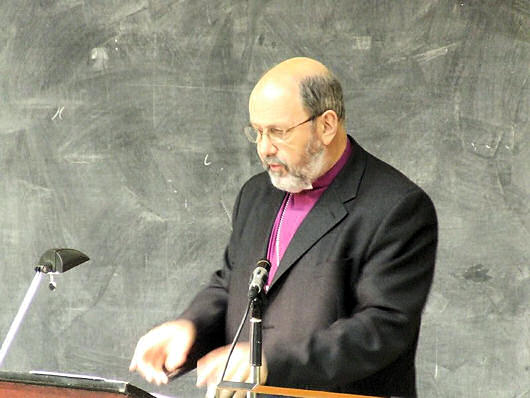 critique Charles Hill, because he frames justification in purely ‘juridical’ or ‘forensic’ terms. Here’s the link:
And then I really like Simon Gathercole’s critique of Wright’s approach. Here is a short article he wrote on it at Christianity Today. His book Where Is Boasting: Early Jewish Soteriology and Paul’s Response in Romans 1–5, is an even better resource. Here’s the link to his short article:
I want to highlight this, because I know many of you find N. T. Wright to be significant; and that many of you believe that what he is saying is even commensurate with Evangelical Calvinism. Here’s the difference I would like to highlight, in a nutshell: I see Classic Calvinism/Arminianism orbiting around soteriology, N. T. Wright and the NPP[s] oriented toward ecclesiology, and Evangelical Calvinism grounded in christology. I would say that these are significant “boundary-markers” relative to approach and thus emphasis.
That was a good article in response to the New Perspective on Paul….While N.T. Wright has good things to say I think that he takes his point too far with Paul and works of the law…He is too dogmatic with his interpretation of Paul…He excludes any possibility of Jews trying to be justified by works in the sense that the Reformers believed….Not the reformers are the final say by any means…I have read a good part of justification and I am confused really by what he believes concerning justification….Does he hold to justification by the faith of Christ and if so…How can you reconcile that with a future justification of works (referencing his interpretation of Romans 2-3) ? I would love to dialogue his views some more and discuss how it relates to EC…..I was going to ask you at some time about N.T Wright and his new perspective on Paul….My heart rejoices that you are blogging once again…I love this blog! 😀
Chris,
I am so glad to hear from you! Still praying for you and fam!!
I still need to read more NTW myself someday, but the basics seem clear to me (in re. to his major premise). To shift the discussion from personal salvation to covenant identity is wrong-headed to me. The first move, I think, is to make it “personal” in regards to God’s personal Triune life; and then we can talk about “personal” salvation (per us) and “Covenantal” stuff. The reality as I see it, in re. to “order,” is that who God is prior to everything; a good example from an EC point of view, is that “grace” precedes “Law” (or Wright’s Covenants). I am not saying that Wright can’t be worked into an EC perspective, but that in his current posture and approach it makes it rather difficult from my point of view.
Bobby,
I will attempt to read these articles, but for now, let me attempt to address your comments. When I read Wright, the first thing that strikes me is that his theology is HIGHLY christological. This is why I actually see such a connection with NTW and EC. The issue in Paul is no longer (as the reformers believed) my own faith vs. earning my own salvation, but rather it is Christ vs. Torah (specifically temple and sacrificial system, circumcision, food and cleanliness laws, Sabbath). The OT Torah-centrism (to coin a phrase) is transformed into Christocentrism by Jesus. The people of God are no longer marked out by the above noted boundary markers, but by union with the faithful Christ.
Christology is actually the central reference point in Wright’s theology…just like EC. It’s just that since the classic reformed folks are so interested in personal soteriology, the debate tends to center on ecclesiology. When we talk covenant, Christ is the new covenant, and those who are united to Him are the covenant people, through whom God works in the world, as the body of Christ, to fill out what Christ accomplished on the cross and through his ressurection. In fact, if it wasn’t for the christocentrism of Wright, I probably would not have been interested in EC at all.
@ Chris
NTW view of justification is that it is eschatlological (now/not yet), but its main reference point is the ressurection of Christ. Union with Christ is the overarching category here. Justification, through and through, is a result of the the Spirit’s work. People come to faith by the Spirit, who also produces works that are in accordance with those of Christ. Works are built on the foundation of the complete forgiveness of sins, so Wright would never say that the forgiveness of sins comes on the basis of works. I think confusion comes because most people tend to equate “forgiveness of sins” with justification, but this is not the case as Wright sees it (nor do I). People are forgiven because of God’s grace in Christ’s faithfulness, they are justified (shown to be the true people of God) because they are united to Christ (and as in galatians, have abandoned the old covenant markers). Future justification is on the basis of (in accordance with) works, but people are not forgiven on this basis. The works are there because they know that they have been forgiven and show the same mercy that they have received to others. It is thus proven that they were God’s people, those whom he had been using to spread the knowledge of His love and mercy. Confusing or helpful?
Sorry Bobby, but I can’t resist! 🙂
In your first comment, you seemed to equate “law” with “Wright’s covenants”…but actually, Wright would state things like you did, “grace precedes law”. All of the covenants are a manifestation of grace in his view. He does not frame things like most protestants do. The mosaic covenant was not given to prove that man was unable to keep it so that he would eventually trust in the imputation of the active obedience of Christ, rather, the covenant provided the forgiveness of sins and taught people how to live. It was the fact that the sacrifices had to be offered over and over that made the covenant in that dispensation imperfect, the coming of Christ and his once for all sacrifice made the old covenant obsolete (think hebrews). In other words, he does not have a “covenant of works” framework.
@Brian,
Thank you for your feedback on this.
My point though, is that EC actually does still see it as “personal” and “Christ’s faith for us.” It’s not about replacing this Covenant with that Covenant (primarily). It’s not just about “identity,” it’s about personal union with Christ. That’s my point on christology. I don’t see NTW emphasizing this at all. And from what I heard from him at Wheaton and his response to Vanhoozer (on adoption); it only confirms to me that Wright is not thinking in these terms (albeit he “seems” open to it).
So I can see, broadly construed, how EC and NTW can be compatible in some respects (given the idea of emphasizing corporate vs. individual etc.). But really, and this is what I want to stress, EC is much more “traditional” and “catholic” in orientation than what I understand Wright to be. That, again, is not to say that there can’t be lines of commensurability between the two — through appropriation as you’re attempting — but I simply am trying to be clear (from my perspective) how I see EC and Wright relating (in large measure, theologically and hermeneutically [as I understand Wright at this point], I don’t).
Another interesting, and ironic point, just prima facie stuff, is Wright’s points on “works” as identity markers. Brian, would you mind explaining to me how this doesn’t collapse back into what the Puritan’s called experimental predestinarianism? What if someone doesn’t evince these “boundary marker” characteristics in their own life; should they assume that they aren’t part of the “New Covenant” marked and signified by Christ? IN the end, there are always going to be the “personal” questions (points of appropriation in re. to salvation). It is impossible to get away from this, and as of now, I don’t think Wright has, at all.
Having said all of this, I’m glad that your appreciation of Wright has brought you to investigate “EC”; and who knows, maybe my sense will change in the future on this, but as of now I’m not that much convinced (esp. after reading Gathercole’s “book” not just that little article, and his critique of his teacher [Dunn] and then of course Wright’s reading of Romans).
Brian,
Thank you on clarifying on the “Covenant” stuff. That is good to know, I’ll have to continue researching your buddy Wright; I’m not saying I can’t or haven’t learned from Wright, but I’m just not as impressed by him as others — sorry 🙁 .
Bobby,
I’m not sure what you mean by experimental predestinarianism. Help! 🙂 The only boundary marker for a the people of God is faith in Christ; there is no other boundary marker.
Its fine that your not that impressed though 🙂 Some people are, some people aren’t.
Thanks Brian I appreciate it! I have enjoyed reading some of Wright’s material. I knew that he wasn’t advocating what many people have accused him of. I really do not know a lot about Reformed Theology. I am actually unfamiliar with a lot of it. I have read only a little of Calvin and Luther and others. Thanks for your input as well Bobby! I am already enjoying this dialogue! 😀
@Brian,
Experimental Pred. is that nomenclature used to identify the “test” Puritan’s used to see if in fact they were actually one of the elect. So they would experiment through viewing their good works to verify if indeed they were part of God’s elect people.
When you mentioned good works as being markers for being part of God’s covenant people, then I thought that that sounded quite similar to “EP,” relative to the function and impact it would have on a person’s spirituality.
Let’s just say that Wright is intriguing in some ways for me; I feel like I need to read more of him at some point (don’t get the impression though that I haven’t read any of him, I have . . . it’s been awhile), primarily so I can stay informed on such things. But time is short, so I’ve got to pick my battles, I mean books 😉 carefully!
@Chris,
Glad you’re back here, brother!
Gotcha. I thought that was what you meant, but I didn’t want to assume. There is definately no EP going on here. Actually, the focus is on the objectivity of the covenant. Baptized believers are part of the elect…no need for tests. I personally do not believe that the visible/invisible church distinction is biblical. If someone believes and is baptized, they should be considered within the covenant family. I have never heard Wright talking about a visible/invisible distinction either. For him it is clear, the Christ followers are the elect whether Jew or Gentile, as opposed to those marked out by the Jewish boundary markers.
Thanks, Brian. Of course I am also going to take issue on pressing, by implication, a “baptismal” regeneration; which again, I think assumes a “Covenantal” system that I cannot go along with (which is why NTW’s view is rightly called Neo-nomism).
And this should illustrate that even though I highly regard TFT, I don’t give him the “keys.” In other words, my ecclesial identity is still Free; viz. I am not a “Covenant” guy, per se. I believe in “one-covenant” actually (Covenant of Grace, and of course this isn’t construed in classic ways . . . even if TFT, in some ways goes this way).
Anyway, I haven’t gone as far as some in regards to baptism etc. I’m still credo, and I, of course think that Scripture is clear on that (cf. Col. 2); and even something like the Didache illustrates this by presupposition. In short, I don’t think that baptism is a necessary condition for appropriating eternal life; yet I do think it remains an important step for publically testifying to the fact that I am identified in Christ. I don’t really want to debate baptism right now ;-), maybe another time. But this should point to why I just cannot go with NTW, or even TFT all the way (I’m more “Barthian”, I guess on the sacraments in general).
I’m still working out my mechanics, so to speak 🙂 . . .
Bobby,
You’ve given me a lot of reading to do here – feeling like I’m back in the classroom, taking Critic of Wright and the NPP 101. 😀
At any rate, I reject your either of Wright’s brand of NPP. Wright grounds everything in his high view of Christology. But of course one needs to understand how he appropriates soteriology in all this.
These issue are difficult no doubt, and we could go off on numerous rabbit trails (like baptism). I have questions about what you believe about certain things, feel free to answer or not, but I would like to consider your positions and gain more clarity about what you believe. 🙂
I believe in one covenant as well…I want to know if we are talking about the same thing. I mean, basically, that there is no covenant of works. I think it is legitimate to talk about covenant(s) plural though, because there do seem to be differences in the way the covenant is manifested in different dispensations. But I do think that it is wrong to speak of bi-covenentalism, because the new covenant is also spoken of as a “renewed” covenant. I am confused about what you mean by “covenental system”, and would like to know how you differentiate between this and what you are calling “free” (I’m not exactly sure that I know what you mean by this either).
With regard to baptism, I am really back and forth, but I have always been credo in the past, and have never officially changed my position. The issue is not as easy as I once assumed, that is for sure. I do not think that one must necessarily be baptized in order to participate in the final ressurection, but the scripture is very strong on the relationship between baptism and its relation to participation in Christ. I am thinking that we should not view election and salvation as completely equivilent…there are many places where they are not. There is a lot of cross over and I understand why we have a tendancy to want to make them equal, but I do not think that they are totally. As far as baptismal regeneration goes, there are different ways to understand what this means, and as I understand, Luther and Calvin both held to one form of it. In other words, this was always more of a baptist issue than a reformation issue. Again, I am no expert on these reformation issues though.
@TCR, Yes, I expect a mini-paper on your reading by next Tuesday 😉 .
I like your “at any rate” posture, TCR; seriously, just say it how it is! I think this is lacking in much of the theo/bibliosphere, and people tend to get their feelings hurt to easily. Your operative view on Wright is in “his” high view of christology; that’s exactly what I might want to contest. NOt that he has a high view of Jesus, but that he has a thorough enough view of the Christ to count 😉 . . . and I mean by working out the implications of Incarnation and all the related themes that follow. Also, to be clear, I don’t think I have an either/or view on Wright; instead, it’s that I probably reject Wright’s approach as THE approach to understanding things. My greatest point of caution with Wright is the attitude, that he seems to assume, that what he is doing is purely “Biblical” studies; when in fact, clearly, it is “Dogmatic” theology by way of presumption on his part (e.g. he assumes a “Covenantal” approach it seems to me). But anyway, I need to read him more; when I get a chance someday.
@Brian,
Your questions are at least “post-worthy” in response. Let me hold onto your questions, and post on them at some point down the line.
In short, I would just say that I see One Covenant of Grace, like I see One Will of God, like I see One electing and elected God. And I have no place for a “Covenant of Works,” at all.
Yes, baptism might not be as simple as we would like it; but it is clear to me that baptismal regeneration is a non-starter in Scripture, and in fact the only way that one gets close to such things is to assume a “Covenantal” system that I don’t think Scripture fits into so neatly 🙂 .
Hi Bobby and Brian!
I think I can put this concisely enough just to be food for thought. After what? 1000, 1500 years? Paul comes around and says around Romans 2:28 that one is not a Jew, who is circumcised in his flesh, but the heart is what counts. So then do we substitute one long held rite of passage which was meant as a symbol (when it was explicit that one who would not be circumcised should be cut off) with another one? No where in the New Testiment does it say that one who is not water baptized will be cut off. Just as Romans 2:28 true circumcision is that of the heart, so the real baptism is the washing of the Spirit, the washing of the Blood, and the washing of the Word, possibly used in diverse contexts. I do believe that water baptism is important symbolically, and am open to the plausibility to it being efficatious to make one an active member of the church. Just chew on that if you will.
Or you both could read my exegesis on I Cor. 1.17 in my Master’s Thesis 😉 . Btw, I agree with you, Duane. I can’t ever imagine that my view on baptism (as credo) will ever change. I still have certain non-negotiables 😉 .
I want to Bobby. I’ll try, but I worked over night last night, and scant sleep today has left me denuded of the necessary intellectual prowess to capture the essence of such an astute work of mental aporosity.
Duane, nice usage of “denuded,” lovely 😉 .
Btw, I got your email and I don’t really want to advise you on what you should buy. Although, Ground and Grammar is quite excellent! 🙂 Happy Birthday, my friend!
I must say that I love Wright’s attitude towards tradition. He said, in similar words to these, in his work on justification that ALL tradition needs fresh evaluation in light of the Scripture….I honestly believe that this is one main reason why people are getting all worked up over him….Who DARES to challenge anything from the Reformation? Or any of the Confessions and Creeds? On Guard…..:-P If you defend your theology primarily from creeds and confessions dare I say that your theology is built of straw ready to collapse…..We must not let creeds and confessions dictate our theology and the way we interpret the Holy Script….I am not a professional theologian but I am not intimidated by anyone…..The Lord Jesus Christ is amazing….He is all in all….The Alpha and the Omega….The Beginning and the End…I love sharing in the glory and life of the Triune God….Knowing Him…what joy and peace….:-D
Hey Chris,
There’s no doubt. But here’s the thing, saying that all tradition needs to be looked at in light of Scripture fresh and new is the war cry of the Reformed tradition. Now the fact that some in that “tradition” have become stultified is problematic; that’s something that EC is trying to help correct. That said, and here’s the other thing, Wright is offering his own “tradition;” it’s not necessarily any fresher than what he’s saying that he wants to take a fresh look at. Beyond that, I do agree that we are not slavishily bound to any confession, creed, catechism or what have you. BUT, that is not to say that particular creeds and councils, and what they articulated have not been foundational for how we speak (grammatically) today. In fact, “Triune,” and the way we articulate that today is because of these “councils;” the word itself comes from Tertullian’s usage. My point, while I agree that we need to always be looking afresh “always reforming” as it were; we shouldn’t forget too quickly that we stand on the shoulders of the “giants” who went before us. I am too committed to the idea that Jesus said that He would build His church; and that He would give us His Holy Spirit and “teachers” to help do that. I am not willing to say that all that has gone on in the last 2000 yrs is in error (in toto) simply because NT Wright — as brilliant as he is — says he has figured something out about Scripture (along with a few others in the NPP[s] camp) that apparently the rest of church history failed to recognize. Now, what I just said is not an argument for or against anything substantive that Wright might communicate; but for me it is a caution (a pause) to say “hey, wait a minute here, not so fast!” What Wright is communicating has severe consequences for the Gospel and the way that we understand, and have understood it for centuries.
I’m with you on your love for Christ, Chris! Absolutely!!! Solus Christus!!!! But at the center of this rather emotionally charged scenario (and for good reason), novelty does not necessarily equal truth. Indeed, the same thing could be said for Torrance and/or Barth or whoever. My points could just as easily cut against them as NTW. So let’s have at it, the last man standing wins 😉 .
In the end, though, yes, knowing Him is what it’s all about; that’s something worth getting charged up about!!!
@ Duane
Thanks for your thoughts. I have (until recently) felt that Paul’s issue with circumcision was similar to what you have stated above, but I think differently about it these days (not that I think that what you are saying has no value). I think Paul was fighting against a Jewish nationalism, as opposed to some people that thought circumcision would grant them a free ride to heaven. Therefore, I don’t really believe that it is proper to insert baptism into the equation, in place of circumcision, because it really changes Paul’s point drastically. The question is about whether Gentiles can be consider God’s people without becoming Jews first, at least I think. I don’t believe that Paul was arguing against something similar to what we would call “baptismal regeneration”, only with circumcision. Therefore, I think that we are often more concerned about these things that the NT is. Also, I think that we too often want to “spiritualize” washing and baptism when the most simple way to take the text is to understand it as speaking of water baptism.
@ Bobby…Thanks for your great response…I am very thankful for the contribution of many many people…I read a variety of different people and I am very thankful for what they all bring…I by no means am saying that creeds and confessions are inherently wrong or bad…I am just saying that in some circles I am hearing creeds and confessions quoted and used to support a theology more than I am hearing Scripture…I am not speculating about whether or not N.T. Wright is trying introduce his own tradition or not, but I wholeheartedly agree with his attitude towards a fresh evaluation of tradition in light of the Scripture…What does Scripture have to say? That is not coming with preconceived ideas about the Scripture and then forcing the Scripture to say something that it doesn’t…When the Scripture makes plain sense don’t try and make any other sense of it…Knowing Christ is everything! A majority of the early church couldn’t read or write and they turned the world upside down because they were focused preaching, teaching, and knowing Jesus the Messiah.. 😀
@ Chris
I agree with you wholeheartedly. I think Bobby also had some quality things to add, but I also think that we all tend to use tradition when it works well with what we are doing, and scrap it when it doesn’t. Whenever I disagree with tradition, people are always telling me to be careful, and point me to tradition. It is all very subjective in my opinion. I also think it is wise to remember that creeds and confessions were usually formed in the heat of battle and thus, there is a tremendous tendancy to overemphasize, which can tend to error. Bobby is right that we believe in the Holy Spirit, and that we should examine the wisdom of past Spirit filled men as we seek to interpret scripture. But they were alive in different times, with different problems, and they were fallible like us all. In the end, though I respect the great theologians of the past, I can’t take the argument for tradition all that seriously because I know how subjective it is, and how good we all are (me included!) at using it as it serves our own agenda. I’m sure Bobby wouldn’t disagree with all of this 😉 just adding my 2 cents.
@Chris,
I know what you’re saying . . . I think we are very like minded, my brother 🙂 . That’s right, the early church was illiterate in many quarters; of course there were still the “Teachers” (and Apostles 😉 ).
@Brian,
I think we just need personal conviction 🙂 these days ! That seems to be lacking in many ways today. Unless of course you go to WTS (California or something 😉 ).
I love it! 🙂 It is ingrained in my DNA to test all things according to the Holy Script and the Lord Jesus Christ that the Holy Script testifies of…I love engaging with people in the word of God…I have gotten myself into trouble by confronting the golden calves of many professing Christians :-P….I don’t do it to be controversial or to start arguments rather I am honestly and humbly and boldly confronting particular teaching in light of the Holy Script….Thank you Brian for sharing as well as thank you Bobby…:-D
How sweet everyone! Me too! ((:O))
@Brian:
So what does the water in water baptism do? Or what does water baptism do, in your opinion?
I don’t know 🙂 I don’t think it is something magical that effects some sort of “spiritual” change with a person. I also don’t think that it guarantees someone the ressurection unto life. Also, someone could, in all likelihood, have not been baptized, and still participate in the ressurection unto life.
I do think that it is a picture that works in a similar manner to that of scripture, communicating the message of Jesus to both the participant and anyone else who withnesses the event. In this sense, it could be a means by which someone comes to understand the gospel (participant or viewer). This could be called “baptismal regeneration”, though I know that this is not usually what is intended by the phrase.
I think that it is a seal of the covenant, through which someone actually becomes a part of the elect, the church, the body of Christ, the Israel of God. In that sense, one is united to Christ by it, since he becomes part of the church through it. All in all, I’m still thinking through alot of this. I just don’t think that the baptist view tends to do justice to the fullness of the doctrine of baptism, although the position does raise some important things to consider (like the fact that it seems that people do not need to be baptized to be “saved”).
Chris,
I have the tendency to get in trouble in the sphere too, but that’s okay 🙂 ! Keep testing everything!!
@Bobby, Succinct summary of the Wrightian controversy. I’m sure Wright would counter however that soteriology is indeed important but only within ecclesiology because the covenant is the means of dealing with sin and hence of saving people. His critique is more that reformers have missed the big picture than that they’ve seriously misunderstood Paul’s soteriology.
Hi Marc,
Thank you for your good point! And yet to your point, it’s interesting that Wright says that he believes that the Reformers got the right answer to the wrong question. This seems much more sweeping than what you’re alluding to with Wright; at least to me. He doesn’t seem to be all that aware of points like “adoption” and Calvin’s unio mystica; instead when he says “Reformed,” he seems to have folks in the WCF strain in his cross-hairs — but then this is only to caricature or at least miss important aspects of at least early Reformed theology. Not to mention other strains like the one we are highlighting with “Evangelical Calvinism.”
I’m still thinking Wright through though, so thanks for your point.
You might like to check out this inquisition panel. Maybe I’m being simplistic but here you have renowned Calvinist Theologians disagreeing with Wright and all they really have is tradition (“That’s not what the reformers said!”) and personal preference (“I want to be a justified sinner!”). This tells me that Wright is on the right tack.
Personally, Wrights work has led me to believe that either Calvinist Universalism or Anglo-Catholicism is correct. By this I mean either God does salvation alone and all will be saved or all will be judged and forgiven. I really do think the biblical cases for either of these options is stronger than for mainstream evangelicalism, Calvinism, Lutherism, Arminianism, or whathaveyouism. Biblical ambiguity means we can exclude none but prefer these two.
Marc,
Well, what this blog is primarily about (if you haven’t noticed 😉 ) is promoting what we are calling Evangelical Calvinism. Which reflects more to the “Calvinist” tradition than I think either you (it appears) or Wright are giving shrift to; which is understandable, because many know nothing of “Scottish Theology” and the kind of “Calvinism” that developed therein — which is why we are writing a book on it, and why I blog on it!
In short, I don’t agree with your either/or conclusion. Theologically, which ideally is the working out of the enthymemic or unstated theo-logic that Scripture assumes in its disclosure of God’s revelation in Christ. In other words, I think that Wright’s over-all project fails because he doesn’t pay attention close enough to the inner-logic of scripture and the implications of the Incarnation itself. For example, you speak of something in all judged/saved through the same lens that traditional Calvinists/Arminians speak. This is what “EC” seeks to correct. We ground “election/reprobation” in Christ; we call this, along with T.F Torrance, Christ-conditioned election (you can read more about that in my “Themes of Evangelical Calvinism” page (below my header image).
There is always going to be tension somewhere, I’m afraid. That’s what happens when we’re pushed up against an ineffable God! But we push and “confess” onward until our broken fragmented thinking is consummated in beatific vision.
Well I admit I am taking a birds-eye view of things but my experience over years of debate and discussion with Christians and Atheists has been that something which appears nonsense but has a large explanation and disclaimer attached still remains nonsense even when you work through all the details.
I’m pushing against anti-intellectual tendencies in evangelicalism which says “of course it doesn’t make sense, this is God we’re dealing with here, his ways are higher”. The potential for misuse is, as Nietzsche reminds us, always there. We can control people with half-truths and untruths and appeal to authority to keep them in line. Of course, I think we have yet to plumb the depths of God’s purposes and much of my theology involves exploring ideas like unrevealed universalism, but we won’t plumb them by starting with contradictions. It isn’t holy because it’s contradictory… I mean, in tension. 🙂
Well, what “Evangelical Calvinism” flows from (epistemologically) is critical realism, and prolegemonoligcally is what historically is called the via positiva, or the “positive way.” So we are in the tradition of what is known as the analogia fidei or “the analogy of faith;” so our starting point, so to speak is in the Revelation of Jesus Christ. I personally follow what, T.F. Torrance has developed as what he calls a stratified knowledge of God in Christ (which I have a post on and I’ll find the link later).
There are anti-intellecualisms in Christianity, in general; but you won’t find that here 😉 .
pax
So you’re basically modern, in the sense that you like to speak about “foundations”, “starting points” etc. I’ve moved away from that stance because I’ve noticed it tends to be posturing: we all think and make decisions based on experience, rationalities, fears, desires, authority, tradition, etc. regardless of if we say our ground is the Bible or whatever. I think I can relate well to how Brian McLaren describes his “fall” into Postmodernity. Certainty is suspect, relational love in action is primary.
Marc,
Good stuff…thanks for your input.
Brian
Marc,
You’ve presumed too much, but I’ll just chalk that up to: you haven’t read me enough. No, I’m not a “foundationalist;” nor am I a PoMo relativist, which to me they stem from the same “Rationalist” anthropology — just different sides of the same coin. Lets not talk about McLaren here, he gets no play at this blog!
Thomas F. Torrance has a good book called “The Ground and Grammar of Theology,” which would be a good read for you. He destroys modernist notions of “dualistic” thinking in that book, and offers an alternative unified mode of thinking which is his “stratified knowledge of God.” See this post of mine (from an old blog) which briefly summarizes that: http://recreatedinchrist.wordpress.com/2010/09/20/christ-conditioned-knowledge-through-stratification/
EC and the Torrancean model that “I” follow works from different premises than the usual suspects you seem to be familiar with.
Bobby, post-modernism is manifestly NOT relativist as is often claimed by Christian philosophers enamoured to modernism with it’s black and white worldview. It is primarily a critique (or recovery from) modernism specifically it’s strident arrogance and dualist epistomology. Post-modernism does not say there is no Truth but that there is very little certainty about that Truth. Concretely, we do not approach Scripture as blank slates, but as complex, cultured individuals, bringing our own context and framework to the text. Allowing the text to shape us is neither modern nor post-modern but the fact is that our culture IS post-modern and Modern Christianity will be unable to engage it unless it investigates and accepts the phenomenon. Unfortunately, Calvinism with it’s notion of election and monergistic regeneration plays havoc with the categories above…
Marc,
Not to be a jerk, but ;-), I didn’t just fall off the turnip truck. I know what PoMo claims, and it bottoms out in normative relativistic directions . . . that’s all there is to it. Sorry 🙂 .