
Today I watched a video where NT Wright and 5 other Biblical exegetes-Theologians/interlocuters interact with Wright around papers they had previously delivered; all oriented to responding to Wright’s audacious and adventurous approach to the “New Paul” — and other related topics 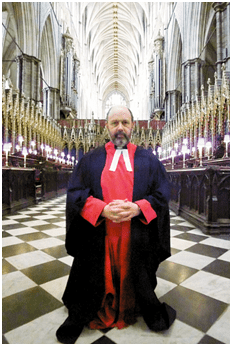 like, eternity, salvation, etc. You can catch that video here (this was at a conference that Wheaton hosted last Spring, Wright was the honored guest and lecturer at the conference).
I wanted to just broach something here. I have had more than one person say that Evangelical Calvinism seems to be a good fit with what NT is doing; to be honest, that has puzzled me a bit. One of the things that Wright says in the panel discussion is that “the Reformation provided right answers to the wrong Medieval questions” (my close paraphrase). What he means is that Luther, Calvin, and all the rest of the Protestants have really and utterly failed at grasping what the text of Scripture emphasizes internal to its own ‘Jewish’ and ‘1st century” context. Wright, as many of you know, wants to say that ‘how’ someone gets saved (by faith alone) isn’t the point of the Apostle Paul, in particular, at all; instead it is about Yahweh’s ‘Covenant’ and a shifting in identity from being outside the ‘Covenant’ incoporated into the ‘Covenant’ grounded in Christ. It’s not about imputation, and some sort of alien legal righteousness; it’s really about being related to Yahweh through the Covenant that He made with Abraham. It’s not about personal or particular salvation; it’s about universal salvation (although not universalism), through rightly being related to the ‘Covenant’.
Now, I can see how some folks would say that this fits well with EC’s idea on the ‘ontological’ nature of the atonement, and the close relation to the Incarnation. I can see how folks would think that EC’s de-emphasis upon the legal/forensic imputative aspects of salvation, fits well with what Wright is saying. But I think there is still a difference.
First, I think that Wright over-states things when he says that the “Reformation provided right answers to the wrong Medieval questions;” as if the Reformation was built upon false pre-tenses to begin with. Second, I think Wright is right to emphasis the universal scope of the Covenant; but I think, from what I know of Him, he fails in allowing for a robust understanding of the ‘personalising’ nature of the Covenant; since, really, he still works with a dualism of “Covenant” (as historical event) juxtaposed with the fulfillment of that in the person of Christ. In other words, a gapping hole in Wright’s construal is that he doesn’t provide any real discussion on how vicariousness helps relate the divine and human (eternity and time) in the one person of Christ. In so doing, again, there is a failure to adequately cope with the saturated Trinitarianism presupposed within the corpus of Pauline theology — or a failure to press the “Evangelical” and even subjective or ‘personal’ nature (Torrance’s ‘logic of grace’) of God’s redemptive purposes (I think Wright needs to read Torrance’s The Mediation of Christ). Third, what I am sensing with Wright, is that much of what he has characterized Reformed theology as; really fails to grasp the nuance that particular early Reformed theologians offered in their work relative to dealing with “textual” questions, and Pauline questions — this is what Calvin’s mystical union theology is all about.
As I understand Wright (I still have much more reading to do on him), the primary point of convergence between him and EC is an emphasis upon thinking about salvation as particularly grounded in Yahweh’s Covenant (which I also think, as I note above is a weakness for Wright, in the way that he casts this); so that we don’t think of salvation as separate prongs (justification, sanctification, glorification), but as the whole enchilada (which has different aspects to it) grounded in Christ (I don’t see Wright being as explicit on the ‘in Christ’ as EC, he seems to be saying ‘in Covenant’ which certainly has christological presuppositions, but they don’t seem as explicit as EC).
In the end, I think there are some fruitful lines provided by Wright; I just think though, he has moved to fast in his rejection of any theology post 1st century (which he says he is doing, you’ll see that in the video). I think he is right in trying to reign in fast and loose theologizing that is not ‘text-grounded’, but then I think he is wrong in assuming that any theology that has developed in the church ‘catholic’ has somehow erred in every way; simply because it was being communicated in non-Jewish situations (I’m thinking of the ecumenical Church councils as examples). I think this is where theologians need to step in and provide some chastity for Wright in his zeal to promote his unique and even peculiar approach to history and textual Biblical studies.
Is EC in line with Wright? In some ways, yes; in some ways, no. I think Wright offers some nice corrective for overstatement and over-theologizing; but I also think that some of what Wright is saying needs to be tempered by some theologizing and asking the question: SO, what are the implications?
PS. My reflection here is a little soft, I think; as I recall, in the past, after reading some of Wright, I’ve been riled up a little more than this post might intimate. I think the Scriptures clearly speak to ‘personal salvation’, I just think that the Person it is most concerned with is Jesus Christ; and that our relation (in an ‘EC’ ordo salutis) to Him is preceded by questions about ‘Us’ . . . but I also think that the Incarnation, itself, shows how important the ‘Us’ is to God in Christ ‘for us’ (pro nobis). I think Wright has wrongly junked talk about ‘us’ in regards to salvation, and this is the primary distinction between ‘us’ (EC) and Wright — and for that matter ‘us’ and Classic Calvinism (on the opposite front) . . . EC is rather ‘contra mundum’ (against the world 😉 ).
I think it was Doug Moo who first said it best: Wright creates antithesis that don’t exist. That’s the single best summary of Wright’s whole project vis-a-vis Protestant soteriology. It’s a real shame too. If Wright would simply present his second temple contextual arguments as “filling out” the classical Protestant position, then there wouldn’t be any controversy and unnecessary divisions.
I think we can learn a lot from Wright, but not the overall tenor of what scripture is saying. He writes as a historian, and the same texts he uses produce different ideas in the hands of James Dunn, etc. I think he is helpful in getting aweay from the notion of Judaism as a legalistic works righteousness religion, but, sadly, he is giving the right answers to the wrong questions, to coin a phrase. He is reacting against a form of Reformed theology, but not as a theologian.
Kevin,
Agreed. There are plenty of things about Wright that I appreciate; unfortunately, just not his over-all project. I think Vanhoozer says basically the same thing to NTW in the panel discussion.
SG,
Yes, I agree, we can learn from Wright. And yes, you’re right about Dunn; thus the NPPS. I’m not so convinced that Pharasaism wasn’t a religion of works-righteousness; w/o that reality, for example, much of Jesus’ response would seem non-sensical. Although I’m aware of the attempt to reframe that situation; I think the internal witness of the New Testament itself needs to be allowed to provide its own “historical” voice. I.e. I’m not into form or redaction criticism, so much 🙂 .
Yes, he is reacting, which he clearly says that he is; and that was my impression to, he is reacting to a “general” perception of Reformed theology . . . there’s certainly more to it than that general perception — and Vanhoozer intimates as much in the panel discussion (and rightly so).
Almost all of the NPP goes back to Krister Stendahl, and his article on Luther, conscience and Paul. He attacked the idea that Paul was a conscience-burdened striver, as Luther portrays him, and that Paul was actually quite comfortable in his Jewishness – to the extent that he never actually gave it up. He just realised that Jesus really was the Messiah after all, and he had persecuted him; that’s why he was the chief of sinners. It is through this he realised the importance of grace.
This comes out of issues internal to Luther, but which have affected Reformed churches insofar as Augustine’s confessions, and Luther’s Galatians etc have had an influence. Connected with EP Sanders portrait of Paul (and Jesus), this has led down a road that is – once again – built on theological and philsophical presuppositions, yet claiming to be value free historical reconstruction.
Along with Barth, I accept that Biblical Judaism as such was never about works righteousness; it was deformed that way (but that is something the whole human race is complicit in). Gospel first, law afterwards is the rule, not vice versa. The trouble is, people like Stendahl, Sanders, etc were never even Evangelical, let alone Reformed or Orthodox Lutheran. Wright is trying to do what they have done, but from an Evangelical basis. I have to admit, at times I think he believes his own press reports too much. 😉
I read his book Justification recently, but can’t decide whether I like it or not.
Thanks SG.
I knew of Stendahl, and in the past I had more acquaintance with this stuff. I’ve even corresponded, a bit, with Simon Gathercole about Wright and Gathercole’s book on Romans.
I certainly agree with the “order” of Grace before Law (or Person before Work), but I don’t think this requires that we reify the legalism prevalent within 1st century 2nd temple Judaism. I just think the “text” inductively and inferentially speaks to this issue over and again (which is Gathercole’s point and I think the straightforward read of the Text). Again, I don’t think one has to deny legalism in the occasional nature of the Biblical text in order to say that the way that this overcome is to place Grace before Law; which is exactly, I think, what Paul does — and in fact is the point of the “New Covenant.”
When I have more time I’ll be reading Wright’s “Justified.” It looks “short” enough that I could probably punch it out in a day or two 🙂 . Thanks SG.
I have been thoroughly blessed by certain things I’ve read from Wright. But I have not extensively read his writing’s. What would you say are the dangers of some of Wright’s position then?
Daniel,
I’ve only read some of Wright too. I wouldn’t characterize Wright as “dangerous,” but I think he is overstated and needs some tempering. Primarily its his belief that “personal salvation” relative to justification is not under consideration in the text of Scripture. I think the only way you could interpret Scripture that way is if you’re previously committed to another system, like his “Covenant,” that skews passage in that direction. I realize he say’s just the opposite, but I really do disagree with him here. For a really good exegetical response to Wright, read Simon Gathercole’s “Where Is Boasting” — I believe that’s the title — it’s a study of Roman’s 5, and is intended to subvert some of Wright’s claims about “justification,” from the “Text”.
Blessings.
Wright is very often misunderstood, and that is sometimes his own fault, as he is zealous to show where he believes that the reformers went wrong, and people take his emphasis as a denial of many important conclusions that the reformers came to, which is not true at all. The only things that he rejects with regard to reformed theology (or historical interpretation) is that Judaism was a works righteousness religion, that justification deals primarily with individuals, and that righteousness can be imputed.
The first conclusion is drawn out of both external and internal biblical evidence, which, if it is correct, means that the reformers were actually basing their conclusions on false pretenses. They would have been seeking answers to the wrong questions. That doesn’t mean, for Wright, that they could not understand everything, or that they got everything wrong, just that, from the beginning, their trajectory was off.
The other two points, though assisted by external evidence, are (in my opinion) very clearly understood by the internal evidence of scripture. With all due respect to Kevin, I think Moo’s comments ignore the facts about Wright’s work completely. They are only true if you agree with Moo’s presupositions and exegesis, which many people do not. He starts with the conclusion that Paul is most interested in individual soteriology and concludes that Wright backgrounds this in favor of ecclesiological issues.
Also, Wright doesn’t see soteriology and ecclesiology in antithesis, he just correctly notes that reformed theology has almost totally severed this relationship, and this is terrible due to the fact that one will be unable to understand soteriology correctly without first seeing it as a subset of ecclesiology. I know I have not gone into depths about how this works, but this is in many ways an attack on the federalism of reformed theology that EC is fighting.
The federalists have in effect abstracted the role of the people of God from the historical narrative and made it almist entirely about something that happens for a select group of people before creation, and as a result, are utterly incapable of recognizing that the people of God are those through whom God is setting out to bring salvation to the whole world. Reformed theology cannot see the proper relationship between ecclesiology and soteriology unless it abandons federalism, and this is why there is so much trouble with Wright, although most probably don’t even realize what they are doing.
As far as the trinitarian issues go, he definately does not emphasize these things as much as Torrance, but that is mainly because he has a different agenda. I would read New Testament and the People of God if you would like to know the what and why. One main reason is that the people that we read about in the gospels would not have had the trinitarian understanding that those in the late 1st to 2nd centuries would have had, even if the writers of the Gospels were presuposing this. If they were telling history (as I believe that the synoptics are) then they would not impose a trinitarian understanding upon people that would not have been able to comprehend it prior to much theological reflection upon the life, death, and ressurection of Jesus.
I should rephrase what I said in paragraph 4. Ecclesiology (specifically the covenant) is a subset of God’s purpose of universal salvation, but individual salvation is a subset of ecclesiology. Thats probably a little more accurate of a representation.
Thanks for the comments, Brian.
1). The only things that you note, seem quite substantial to me.
2.) The Reformers, as you know, were not monolith as Wright often portends; this is just not careful. Calvin’s union with Christ, for example, is very text and Paul based.
3.) What Wright does, from my purvey, is concretizes the “Covenant” or “ecclesiology” w/o give proper and primary weight given to the life of God as the esse of the Church and thus salvation. I see this as a huge problem with Wright’s approach, both theologically and Biblically.
4.) I actually have the same problem with Wright as I do with Federalists; both de-personalise the Gospel by not working from the life of God, but instead they emphasize “historical covenants” abstracted from the life of God (albeit in His name) in their own respective and troubling ways.
5.) I’ve read New Testament and the People of God, Jesus and the Victory of God, and What Saint Paul Really Said: Was Paul of Tarsus the Real Founder of Christianity? But like I said, this is all in the past. Then I’ve read quite a bit of secondary stuff and critique on Wright (not counting discussion we had on him in my under-grad and grad days); I had pretty much written Wright off, in some ways (not that I don’t think he’s a brilliant and very nice man who loves the Lord . . . I just don’t agree with his solo scriptura), but I continue to believe that he is someone who needs to be thought “through” or at least considered. I think though, if you haven’t, you should read Simon Gathercole’s book: Where Is Boasting: Early Jewish Soteriology and Paul’s Response in Romans 1-5 . Thus far, this is the best book I’ve seen that really refutes Wright’s basic premises from the “Text” and from the “History”. I’ve read Tom Schreiner and others from the “Reformed” side — I don’t follow them; but Gathercole is a different story 🙂 .
In the end, Brian, I just find Wright’s approach lacking. Of course, I’m into “Theology” and so I weight the “inner-logic” and theo-logic of Scripture highly — which Wright does not. I rate the catholicity of the church (history of interpretation) highly, which Wright in many ways, doesn’t. Yet, I also recognize that Wright is more sensitive to theology than some may admit, I think the panel discussion illustrates this. I think he needs to listen to folks like Vanhoozer and his call to Wright to recognize the role that “adoption” plays in the text and then what this implies about salvation etc. This then would be paying attention to a Calvinian theme and union with Christ; which I would contend is a Pauline theme and what “in Christ” presupposes in the Paul’s theology. I just think Wright needs to be corrected by theology, in some ways; he doesn’t think that way, so much, and so I don’t go with him all the way — and yet, I don’t reject him all the way either 😉 .
Thanks, Brian.
Thanks Bobby,
1) I agree that the only things are substantial, I guess my point was that he has not completely rejected historical theology. In fact, though he does not come to the same conclusions as the RCC, many of the points being contended are related to the issues which sparked the reformation in the first place (i.e works, imputation, jusitifcation). The reformed cannot be considered any more concerned with historical theology than Wright, in my opinion.
2) I would agree that Wright tends to paint the reformers with a broad brush…but he also often notes that he has great respect for Luther, but even more so, Calvin. His attacks though, are probably more focused on much of the theology that has resulted from the theology of the reformers. While he would gladly agree with Calvin’s emphasis on union, he does not agree with imputation, nor the more prominant role that it received in much post-Calvin Calvinistic theology (i.e. Beza, the Puritans).
3 and 4) I’m not sure I follow everything that you are saying here, so I’ll try to ask. You want to theologize from the life of God…what do you mean by that? I’m also not sure how we can understand God or the life of God apart from His acts of revelation, including the covenants. As far as I understand, God reveals Himself through the covenant. I also know that Wright does not believe in a covenant of works like the federalists. I guess I just don’t follow you here…would appreciate clarification.
5) I have not read Gathercole…but I’ll add it to my list. Another thing…about Vanhoozer…I don’t think that Wright has been influenced by his thinking, from my perspective, it seems as if Vanhoozer has a better grasp on Wright than most people do and saw union as a possible bridge between Wright and reformed thought…to which Wright agrees…if they ditch imputation language. All in all, if you think Vanhoozer is on point with these things, then you should give Wright another look, because I would argue that he has been saying this stuff all along. If you have not watched Richard Hays talk from the same conference ( another NPP advocate) I would recomend it. He also has some helpful critiques, probably in the direction that you would like as well (but I could be wrong).
Thanks for the time, sorry I’m so long, I appreciate Wright like you do Torrance, so sorry that I have alot to say 🙂 I do appreciate your thoughts, and possibly I will be tweeked in the year to come as I further engage with your boy TFT.
Is it so strange that a NEW TESTAMENT historian came up with conclusions grounded in a historical perspective?
As a historian, Wright does a convincing job at a reasonable contextual recreation of the first century world of Jesus and Paul. I think he has strong arguments for his recreation and I would trust his recreation of the “original” context as the starting point for a better understanding of Jesus and Paul then many theological or biblical exegetical starting points.
History matters and doing good history places the reader in the “potentially real” world of the biblical authors intentions. E.P. Sanders has done the church a great service by getting at the religious context for understanding a religious text grounded in that context, and now Wright and his crew are carrying that work further.
I’m more interested in the historians empirical data than the theologians abstract conjecture and metaphysical speculation. I love reading the theological Jesus and Paul if their theology is grounded in their own space and time, and it is my belief that Wright has done a good job at getting readers to understand the importance of a plausible history for any theological project.
You all might want to give this a read.
A Justification Debate Long Overdue
http://thegospelcoalition.org/blogs/tgc/…
Historical investigation is a good thing, as part of a wider theological labour. On its own, it can as easily lead to the McGrath/Dunn/Stark position, Nolan/Borg/Liberation Theology, or even the Jesus Seminar. Revelation is not history, nor history Revelation, and it is error to confute the two – as much amongst fundies as academics. Historical research qua historical research can only investigate what is recorded in some way. Only prior commitment says that Paul either met the risen Lord Jesus, or had a vision of an instantiation of the Only true God; that Jesus of Nazareth is the Saviour of the world, or a human prophet. Only prior commitment separates Calvin, Luther and Barth from Gerd Theissen, Bp Spong and Bart Erhman.
I value any attempts to realise the humanity of Christ, but Jesus Christ is not defined by his background, not understood simply on the basis of 2TJ nomism, nor explained by his placement purely in Judeo-Hellenic pharisaism.
@ Solly Gratia, It would seem your Christ is not much different than a subjective phantom. Prior commitment is not the same as truth about a particular teaching grounded in the real world. One can have prior commitment, but be horribly wrong. Maybe God works apart from the text, but if one talks about the text it better be grounded in a plausible context. Only History gives us this. As biology and cognitive science give us the context that frames our talk about human nature, modern cosmology the same and on. If this is not the case you are talking to yourself and your subjective phantom. Theology needs to be constrained by other knowledge if it is to have a place to speak of truth in any real objective sense. I think this is the underlying project of Wright in the first place and I think it is compelling for the modern believer.
P.S. Pannenberg wins over Barth!!!!
Kenny: Frei wins (on this topic) over Pannenberg and Barth! Along with him I take Richard Hays and C. Kavin Rowe. Willimon and other have also pointed out how the historical Jesus almost ends up looking like the person searching (Borg=liberal hippie, C.F. Henry=uptight conservative). Plus I thought this all ended when Schweitzer wrote:
“He comes to us as One unknown, without a name, as of old, by the lake-side, He came to those men who knew Him not. He speaks to us the same word: ‘Follow thou me!’ and sets us to the tasks which He has to fulfill for our time. He commands. And to those who obey Him, whether they be wise or simple, He will reveal Himself in the toils, the conflicts, the sufferings which they shall pass through in His fellowship, and as an ineffable mystery, they shall learn in their own experience Who He is.”
Revelation wins here. It seems, ironically, that we have failed to learn from history.
The Quintessential second temple Jew is the fellow who walked up to Jesus and asked:
“Teacher, what good thing must I do to get eternal life?”
The Quintessential second temple jewish response to this question was:
“If you want to ENTER life, obey the commandments.” (cf. Mt.19:16-21 and parallels).
If I am following what Sanders, Dunn and Wright in their own unique ways are saying, this text of Matthew should not exist. The rich young ruler could not have framed the question in the manner he did, and Jesus could not have given him the answer he gave.
This is the appropriate Second Temple Judaic version of this text according to Wright:
“Teacher, what is the basis of eternal life?”
“The covenant of election given by YHWH to the jews in pure grace, to which obedience to the commandments of Torah can only ever be a free response.”
On a basis of pure historical enquiry, I let the text of Matthew rather than the writings of a Dunn or a Sanders or even a John Piper or a Mark Seifrid tell me what sort of soteriological questions were asked, and what sort of soteriological answers were given, by second temple Jews.
The disparity between the primary sources I am reading, and the polemical writings of the so-called NPP folk and even their detractors, can be quite ferociously significant.
The second temple Jews were steeped in works righteousness, and I think appropriately so. For the covenant they entered into with God was: “I command you today to love the LORD your God, to walk in his ways, and to keep his commands, decrees and laws; THEN you will live and increase, and the LORD your God will BLESS you in the land you are entering to possess.” Dt. 30:16.
That Sanders and Wright and Dunn can find grace in the internal structure of this covenant clarifies to me how poorly they understand the texture of grace.
And as for individualism, well….I have found no better way to express and emulate a pattern of “me and God, God and me” than in taking up a serious reading of the literature of the Psalms. The individualism of these jewish texts is so flagrant, so clear and so un-ashamedly open that one might as well call modern examples of “individualism” mere burlesque shams.
I fell out of hiatus for a second,
Nope, Torrance wins 🙂 . . . at least on this blog 😉 .
I have a killer quote from TFT on this and his novum, but later.
According to Emerson the only logic of eternal life since it came from the “primary source” is: If you want to be perfect, go, sell your possessions and give to the poor, and you will have treasure in heaven. Then come, follow me.
I am not quite sure I am getting in then.
Secondly, reading Matthew like “primary source” might tell us how entrenched we are in the modern historical method which, as far as I know, isn’t baptized by God.
This should clear all of this up 😉 : Here’s our good buddy,
It’s all theo-logical, there’s no “naked” history or texts. Simple 🙂 .
@Bobby, surly T.F.T. Is right here and I generally agree with his discourse. But I think this doesn’t really touch on what Wright is trying to do. Wright seems to be trying to fit the “Orthodox Jesus” which I’m sure he didn’t come to call Lord, because he did all the necessary historical research – obviously!!! What he is doing with his project is trying to uncover the historical context for the “Orthodox Jesus” to fit reasonably into. This is not so much a battle between the primacy of Theology over History but a dialogue between the two. Wright’s discourse is primarily concerned with Historical context as partner with Theology in the sense that Theology knows what it can say Historically. Maybe this does suggest (to some) the primacy of history, but I don’t think so, especially if Theology has a equal place at the ideology formation table.
I think this is all Wright seeks to do with his project.
@Emerson Fast You should reread Wright’s work “Jesus and the victory of God” because he deals with this text within the historical framework he is positing, (Pages 301-303).
@Mshedden, I know, I should revisit some of those Postliberal writers. Thanks for the reminder.
@Kenny,
I think what you’re saying might be better framed as your appropriation of Wright. It seems to me that Wright discounts theology in lieu of his own work as a historian. And yet it is this very kind of dualism that TFT would call an ebionite approach (Wright’s naive epistemological historism); as you implied that SG’s point was somehow docetic or a phantom christology (which I don’t think what SG was saying is). I actually think Wright’s approach fits best with Bruce McCormack’s reading of Karl Barth and the attendant “non-metaphysicalism” therein; viz. to say that Wright’s “order of knowing” as illustrated by his historiography goes “epistemology” –> “ontology” vs. “ontology” –> “epistemology” etc. To me it seems that Wright simply assumes a certain “common sense” (even realist) approach, w/o articulating what undergirds that approach (theologically or even philosophically).
That’s my point on the idea that everything is theo-logic; Scripture itself presupposes this, so to say that someone is “just” a historian or “just” doing history fails to recognize this clear and salient reality. To me Wright seems to intimate that “his” is “just” the “objective” work and reconstruction of a “historian,” and thus this carries more “clout” than asserting that what he is doing is “theology” (“he” places a competitive wedge between the two, of which TFT says NO to; and thus the point of the quote above).
In short, I remain unpersuaded by Wright (in full); and on another front, folks like Simon Gathercole offer Wright’s construal, from within the same discipline, problems. I don’t want to deny that Wright offers some fresh insights (thus his appeal), I just think his approach needs to be problematized a bit . . . lest we forget that there are some problems with his approach 😉 .
@ Brian M.,
Just see my points to Kenny on theologizing from the life of God, in lieu of your question above. To me, doing any kind of “history” is purely a descriptive exercise (like translating from Greek to English), but of course, in the end, we know, that’s never really the case. There are always “interpretive” moves made in historical reconstruction — and even for Wright, in all of his uberman-likeness 😉 he is shrouded by such realities (a priori commitments to theological beliefs); and thus it serves us all, well, to know what those are, and how in fact Wright’s moves and interpretive work take ship (by way of emphasis) given his prior commitments (we need to know what those are). To theologize from “God’s life” is best illustrated by the long quote I just gave above from TFT.
@ Bobby, So Can one do any History without “Theo-logic?” Say I want to understand railroads in the 19th century, is there a “theo-logic” I need to hammer out before I can understand railroads and the world that inhabited them?
So if it is yes ( yes=getting at the event without “theo-logic”), why not in the case of Jesus’ world?
@Kenny
Because Jesus isn’t a train 😉 .
Seriously, as TFT would say (paraphrase): The object (or subject) under consideration determines its own categories of inquiry. Studying God has its own special set of categories and emphases. It is this realization that makes this kind of study scientific (for example see TFT’s Theological Science). I think we might disagree here, Kenny . . . not sure.
It’s all about that ominous analogy of faith.
P.S. NT Wright isn’t doing “just” history though, how can we do “just” history when that “history” is God’s life to begin with?
@Kenny,
I have the same problem with Richard Muller; I’m not saying that historians can’t engage in the “is/was”, but that there is always an “ought” lurking behind any of our work.
@ Bobby. Greatest reply I have read all year – ” Because Jesus isn’t a Train.” Love it!!!
But, I have to ask is the religious context of Second Temple Judaism the same thing as Jesus? I would say no it isn’t, but what it is is the “real world” where we find Jesus and Paul. Much like when we would read Suetonius to get at Nero in a limited sense, or Tacitus or Josephus etc. I Agree with TFT’s “stratified realism” ( This idea is borrowed from the Philosopher of Science Roy Bhaskar and as such I wonder how much “Theo-logic” this position has contained in it) but can’t we apply this Stratified realism to data about Jesus’ historical context from the sources of the time? I agree that Jesus presents us himself as knowledge on his own terms, but I really don’t think this is the Primary question. For me, the primary questions are always “point of contact” questions. Where did God live 2000 yrs ago and what was going on Historically for him to claim what the NT writers claim he said and did. Sure, the spirit can reveal who Jesus really is to me and he does – That’s why I like the position of TFT’s realism – but this seems more an apology for personal knowledge of Jesus and His Lordship. I don’t think it (TFT’s position) does much by way of showing a “objective” point of contact with a person who really lived in History – This is what Wright seems to be concerned with. So yes, “Jesus isn’t (Just) a train,” but if he was (part) train, his tracks would have been in the real world and it would take the historian to find out where they have led. But, I agree we might just go round and round on this one. Looking forward to more posts by you – I love this Blog!!!
Kenny,
Well I come from a railroad family, so your initial analogy was apropos 😉 .
I don’t dispute anything you’re saying, except that I’m not as optimistic than all Wright is doing is “history.” The fact that what he has to say mostly effects soteriological issues — which he candidly admits — says to me that he’s not “just” doing “observable/descriptive” history. Yes, there is a concrete particular “thereness” about Jesus, Paul, et al.; but of course the significance of their particularity is only so because of its theological situation (and both of these are grounded in Christ’s anhypostatic person in His enhypostatic particularity).
Well, lets not forget the impact of Polyani and Einstein on Torrance either (see his “Theological Science” and “Ground and Grammar”); I’m all about Christian reification, and I think Torrance does a good job (in the main) with appropriating foreign categories and “retextalizing” them for Christian purposes.
Anyway, I’m glad we have this kind of contact again, Kenny; we can reignite our “school-day-spats” from of old, the “electronic-noise” of the blogosphere should only serve to amplify our points of dispute, eh 😉 . I’m glad you appreciate the blog here, that’s encouraging!
pax.
Rob,
That actually is not what I suggest, nor is it what I believe Matthew was suggesting. However, Christ is perfectly capable of working within the dynamics of the Mosaic covenant, which do indeed promise life and shalom to its recipients on the condition of their scrupulous obedience to the demands of the covenant. Like Paul, I see Matthew reminding us in this text that the Law indeed promises eternal life but can never render it on account of the weakness of the flesh (‘with man this is imposssible’).
Hey Kenny. Thanks for the page references 🙂 I’ll be sure to thoroughly take up your suggestion and dive headlong back into Wright. In the meantime I would like to suggest that you take up some of the essays in the Justification and Variegated Nomism series to see how other scholars have taken up the soteriological issues of ST Judaism.
Sorry for the double-post Bobby (I am a faithful-not a sinless- participant in your blog discussions, and as such still hope to “stay in” your cyber-favor).
Just thought it would be profitable to bring up a quote from that charming fellow Francis Watson:
It is Paul alone who differentiates sharply between covenant or promise and law. As he puts it in Galatians 3.17: ‘The law, which came four hundred and thirty years afterwards, does not annul a covenant previously ratified by God, so as to make the promise void’. On the one hand, the covenant with Abraham, which took the form of an unconditional promise; on the other hand, the law given through Moses at Sinai, which makes the divine gift of salvation or ‘life’ conditional on observing its commandments: ‘The one who does these things will live by them’ (Lev.18.5, quoted in Gal.3.12). This antithesis of promise and law is fundamental to Paul’s scriptural hermeneutic, his attempt to demonstrate that the gospel he preaches really is ‘according to the scriptures’. But no such antithesis is evident in the non-Christian Jewish texts. In those texts, Abraham, Isaac and Jacob do not inhabit a kind of law-free zone, living by promise alone. Their relationship with God is already determined in advance by the Torah, to which they show an exemplary obedience. There is, then, no divine covenant with Israel which can be differentiated from the covenant enacted at Mount Sinai. Unlike Paul, the texts in question all presuppose that the Sinai covenant is the enduring foundation of the divine-human relationship, it is therefore inconceivable to them that God’s gracious election of Israel should have been established somewhere other than at Sinai. That means, however, that the question of Israel’s observance or non-observance of the law is fundamental to the covenant itself. The covenant just is the demand imposed on Israel by Israel’s God, with the conditional promise attached that ‘the one who does these things shall live by them’. The entire book of Deuteronomy is an amplification of that statement, and we must assume that the authors of the intertestamental texts were familiar with Deuteronomy. (Not the New Perspective, Critique 3, pp.6) Via: http://www.abdn.ac.uk/divinity/staff/watsonart.shtml
I don’t agree with Watson’s thesis on all points. It seems to me that he has overlooked the theological significance of the ante-Sinai obedience of the patriarchs, particularly Abraham. Rather than Abraham dwelling in a sort of ex-post facto Sinaitic relationship with God, it is precisely his obedience to contemporaneously revealed “requirements, commands, decrees and laws” which merit for him the perpetuation of the covenant and the salvation of his descendants (Gen.26:4-5; 22:15-18; 17:1). In short, it is the obedience of Abraham which is the condition and the presupposition of the later Sinaitic covenant and the deliverance which effected it rather than vice versa. Similar currents of works-righteousness can be found in the relationship between David and Israel’s God; which is the presupposition of Judah’s posterity over and against the quickly disintegrating Northern Kingdom (cf. 1 Kgs.11:12; 2 Kgs.8:19 etc…).
What Watson DOES is re-establish the conditionality of the Mosaic covenant and thus salvation for the jews. There is no salvation apart from active human participation and cooperation. Watson is also correct to see Paul react against this very trend in his discovery of the- eternally independant- “promise of faith” which is given to Abraham before a single step of obedience can be taken, and which in its very nature has nothing to do with the obedience or disobedience of Abraham. It is here that Paul’s (and John’s) doctrine of Adoption takes shape. We are brought into this other covenant with God apart from natural descent, human decision or the will of the husband (so John) precisely IN THE MIDST of our active, vile, reprehensible and damnable disobedience to the Immortal (so Paul).
Kenny,
I just finished pouring over your N.T. Wright citation (p.301-303; Jesus and the Victory of God) and was correct in my estimations. Wright unfortunately does not do justice to the implications of this text, although he comes closer than I expected:
“Jesus’ response began in the normal Jewish place. The Torah was the boundary-marker of the covenant people: those who kept it would share the life of the coming age.”
This is skirting the point. The issue here is not the Torah as a boundary-marker but the Torah as the “entrance requirement”…the keeping of the Decalogue is the pre-condition for ENTRANCE into the eschatological reign of God. The ruler is not “within” the Torah’s blessings already by some gracious act of God; nor does Jesus tell him to continue on in the commandments as a free response to this act. Rather, Jesus says,” You are not perfect. You do not have eternal life. And the only way you will ENTER into the life you are asking is to DO or to KEEP the Decalogue.”
Wright completely misses the point here, whether purposefully or inadvertently. Nor does he offer any background clues that would support his eisegesis.
The conclusion to be derived from this text still stands: Jesus as the Second-Temple Jewish expositor of the covenant tells the rich man that he will be saved if he keeps the whole of the commandments (I interpret the “forsake your possessions and follow me” as Jesus’ summary of the first table of the Decalogue. Jesus is the YHWH who has delivered and will continue to deliver his people from Egypt, to whom total allegiance is due if entrance into the promised land is to be granted).
Since I take Jesus’ exposition on the Law to be normative and infallible, I also see this text as being the only proper way to understand righteousness and salvation in the context of the Divine Law. This is precisely what ST Jews HAD to believe and think about their God.
The NPP idea that Jews were saved by grace and did not need to meet any demands in order to gain life reflects a misconception which Jesus challenges rather than accepts.
Again, take my above comments as referring only to “law works” rather than the righteousness revealed in the gospel, which is given by grace through faith from first to last…which makes no demands and only gives.
@Emerson,
You know you can feel free to comment any time, it’s a blog after-all 🙂 .