
My Un-preached Sermon on Holy Saturday: The Chasm Between ‘now and not yet’

I probably wrote this about six years ago now. I realize I am jumping the gun (since it is only Maunday Thursday at this posting), nevertheless, this is the right season to post something like this once again. So here is a mini-sermon that I wrote, and never preached.

holysaturdayHoly Saturday is the time that the “Western Church,” Protestants included (well some), contemplate the moment between the death and resurrection of Jesus. It is the contemplation of the burial in 1 Corinthians 15:3, 4:

For what I received I passed on to you as of first importance: that Christ died for our sins according to the Scriptures, 4. that he was buried, that he was raised on the third day according to the Scriptures, . . .

What a time to contemplate the time between the now and the not yet. This time between Christ’s cross and humiliation of unspeakable depths, and the glories’ of His coming resurrection and ascension; analogically represent the time we inhabit now. We currently wait to fully realize the glory that Jesus has shared with the Father before the world began. And like the Apostles, Disciples, and hopefuls who followed Jesus to the cross, during this time of Jesus’ silence we can despair, be full of fear, angst, anxiousness, etc. We often wonder is this it? We face circumstances that seem overwhelming, that seem to eclipse and overcome the life of Christ . . . that make it seem as if Christ stayed in the grave. As Christians in this big world, some-times like the disciples of Christ (during this time in history), we can cower behind locked doors, scratch our heads, and wonder, “what now?”

If only the disciples would have remembered, and put 2 + 2 together, what Jesus had said to them in the past (easy for me to say):

As they were coming down the mountain, Jesus instructed them, ‘Don’t tell anyone what you have seen, until the Son of Man has been raised from the dead.’ ~ Matthew 17:9

maybe their despair, their bewilderment, would be turned to joy. Maybe their burden would have been light. Maybe they would have been grieving as ones with real hope. But they forgot, at that moment of time they became so gripped with fear they could not really function (at least some of them, His closest). Even though we know the story, because we can read about it at one sitting, don’t we live like Jesus’ end was the grave? We fall into caverns of unbelief that seem to eclipse and overshadow what we know to be true . . . if only we would remember the hope, the hope that Jesus spoke of in Matthew 17, and the hope that was realized in Matthew 28:1-10.

As we look forward to Sunday, lets not grow weary by the unanswered questions and grief of Saturday. Instead of forgetting what Jesus has said about the resurrection (i.e. His second advent), lets glory in advance, in anticipation of the glory that will be revealed in us, as we are hidden in Christ. While we live in Saturday, in anticipation, lets rest with Jesus, lets, with Jesus say: ” . . . Father, into your hands I commit my spirit (Lk 23:46).”

I think the best thing about this analogy, of “Holy Saturday,” is that it breaks down at a point. We don’t despair as if there is no resurrection, in fact as Christians we have been brought into the heavenly places with Christ (cf. Eph. 1), now; we have intimate union with Him now (cf. I Cor. 6:17); we have been given the Holy Spirit now (cf. Jn 14–16); and a whole array of distinguishing factors from those disciples of the first century. So take heart, don’t forget, this Holy Saturday, Jesus’ words of glory in humility:

. . . I have told you these things, so that in me you may have peace. In this world you will have trouble. But take heart! I have overcome the world. ~ John 16:33

ย 

Israel and the Incarnation at Christmas Time

Have you ever thought about how related Israel’s history is to Christmas? When Jesus came that apocalyptic night there was a whole complex of promises that had set the stage; the fullness of time, if you will. Israel was God’s incarnation1vehicle of mediating His salvation to the world; and without her there would be no Jew from Nazareth for the world. T. F. Torrance makes this point.

. . . If it is the historical factuality of Jesus that is of controlling importance, then that Jesus must be presented as really embedded in history, embedded therefore in the hard stubborn history of Israel. That is precisely the case with Jesus. Even if it is the historical factuality of Jesus that is the controlling factor, how did it come to exercise that control over the minds of the witnesses and the church? How did it interpret itself, and with what categories and conceptions did it operate? The answer to this question is clear all over the pages of the New Testament, evident not only in the face value of the witness itself, buf from the most exhaustive lexicological examination of its language and concepts. The historical fact of Christ is embedded in the history of Israel, and is the actual fulfillment of the purpose embedded in its long history. Thus the interpretative categories and conceptions through which the fact of the historical Jesus imposes itself upon the witnesses, and by which it controls their witness are not their creation and are not imported by them from outside this historical context, say from the mystery religions of Greece, but derive from the actual history of Israel in which Jesus is embedded and from which he emerges. (T. F. Torrance, “Incarnation,” 17)

So the purpose of Israel is void without Jesus, and the substance of Jesus’ Incarnation is grounded in the history of Israel (as given by Yahweh in the first place); wherein Israel’s purpose takes shape.

Next time you look at a nativity scene ponder the “backstory,” the narrative situation within which that manger finds its significance. God not only promises and prepares, He fulfills. Is Israel important as a nation? Indeed, but only for the same reason anyone is, because of Jesus!

keep the ฮง in X-Mas, and the HOLI in HOLI-days

I haven’t done any research on this, but we need to keep the X in mas. Some people seem to think they are “x-ing” out the Christ in mas when they use X-mas, xbut in reality they are only really using shorthand for the first letter of Christ’s name in Greek which isย ฮงฯฮนฯƒฯ„ฮฟฯ‚; the X makes the sound ‘chi’ or Xi.

I also thinks its funny how at least in America its politically correct to use the terminology happy HOLIDAYS instead of Merry Christmas. Etymologically in the Western society especially I would gather that the language of HOLI-days comes from our Judaeo background taken up by our Christian background; and the high holy days that we find celebrated in the Hebrew cultus like in Leviticus 23. Again this is all based on conjecture on my part (not the X in X-mas, but the etymology of Holi in HOLI-days).

No matter how hard folk try to escape Christ and his religion this season the reality is is that he is inescapable. If he is the ground, telos (purpose) and orientation of all of creation then resistance is futile; even in trying to go around him and his HOLI-days during this Christmas season.

Merry X-mas and Happy HOLI-Days!

Remembering resurrection from my chemo-chair

Last year around this time (maybe a few weeks before this time, but the Spring-Resurrection-Easter season) I was finishing up my last couple of cycles of pre-surgery chemo (6 and 7). I was doing a cycle in the chemo-clinic, and we (us cancer-patients) were seatedย in stations or pods made up of two chairs each. That particular cycle of chemo I was seated next to another lucky cancer patient, we started engaging in the normal banter; “what are you in for . . . how about you? etc.” Through our discussion I found out that his name was Jay, Jay was in his early fifties, he was surrounded by his wife and three beautiful daughters (all probably college age, 20’s). I asked Jay what kind of cancer he had, and what his prognosis was. Jay had just recently been diagnosed with lung cancer, he wasn’t a smoker, he just “happened” to come down with lung cancer; and it was metatastic (he had tumors in his lungs, his liver, and somewhere else). As he told me that he was terminal, I looked over at his daughters, and they were all trying to hold back their tears; trying to keep encouraging/strong smiles on their faces for their dad (I almost started to cry when I saw his daughters starting to cry). Jay had resigned himself to the fact that he was going to die from this grotesque disease; they were just doing the chemo to extend his life (which to be honest, chemo is a terrible way to extend your life . . . I had seen Jay’s reactions to the chemo previous toย the chemo he was receiving during ourย discussion, and he had seizures, often, from the chemo). The thing that came out through our discussion that was the most encouraging (because usually this was not the case with so many others I talked to in the chemo-clinic), was to find out that Jay and his family were believers in Jesus; they were born again, on fire Christians. As we continued to talk I had the chance to tell him about my cancer, and that by God’s grace my cancer was still self-contained; Jay praised the Lord with me and my wife when he found out my prognosis was still potentially good. Our discussion turned to our testimonies, and how we got saved. We then went on to talk about Easter, since that was the next holiday that we were approaching at that point, I remember Jay saying (through his teary eyes) that “resurrection day should be our favorite holiday now!”; his daughters really started to cry at that point! He said that this most likely was going to be his last Easter that he would celebrate on this earth, and that by next Easter he would most likely be celebrating it in the presence of the Lord. What really struck me about what he was saying, was that he was using the first person plural; referring to himself and me, that really hit home with me at that moment!

I don’t know what happened with Jay, I never saw him again after that (I had surgery a few weeks later); statistically his words to me then were prophetic, and he is in the presence of the Lord this Easter, celebrating the resurrection with sight, not faith. What a profound thing! I will never forget Jay around Easter times, most likely for the rest of my life. He was so right, the resurrection should be our favorite holiday; whether we have cancer or not, the resurrection is our hope! Without the resurrection as Paul said: “we are of all men the most to be pitied!”

A Holy Saturday Reflection: The Chasm Between Now and Not-yet

Holy Saturday is the time that the “Western Church,” Protestants included (well some), contemplate the moment between the death and resurrection of Jesus. It is the contemplation of the burial in 1 Corinthians 15:3, 4:

For what I received I passed on to you as of first importance: that Christ died for our sins according to the Scriptures, 4. that he was buried, that he was raised on the third day according to the Scriptures, . . .

What a time to contemplate the time between the now and the not yet. This time between Christ’s cross and humiliation of unspeakable depths, and the glories’ of His coming resurrection and ascension; analogically represent the time we inhabit now. We currently wait to fully realize the glory that Jesus has shared with the Father before the world began. And like the Apostles, Disciples, and hopefuls who followed Jesus to the cross, during this time of Jesus’ silence we can despair, be full of fear, angst, anxiousness, etc. We often wonder is this it? We face circumstances that seem overwhelming, that seem to eclipse and overcome the life of Christ . . . that make it seem as if Christ stayed in the grave. As Christians in this big world, some-times like the disciples of Christ (during this time in history), we can cower behind locked doors, scratch our heads, and wonder, “what now?”

If only the disciples would have remembered, and put 2 + 2 together, what Jesus had said to them in the past (easy for me to say):

As they were coming down the mountain, Jesus instructed them, ‘Don’t tell anyone what you have seen, until the Son of Man has been raised from the dead.’ ~ Matthew 17:9

maybe their despair, their bewilderment, would be turned to joy. Maybe their burden would have been light. Maybe they would have been grieving as ones with real hope. But they forgot, at that moment of time they became so gripped with fear they could not really function (at least some of them, His closest). Even though we know the story, because we can read about it at one sitting, don’t we live like Jesus’ end was the grave? We fall into caverns of unbelief that seem to eclipse and overshadow what we know to be true . . . if only we would remember the hope, the hope that Jesus spoke of in Matthew 17, and the hope that was realized in Matthew 28:1-10.

As we look forward to Sunday, lets not grow weary by the unanswered questions and grief of Saturday. Instead of forgetting what Jesus has said about the resurrection (i.e. His second advent), lets glory in advance, in anticipation of the glory that will be revealed in us, as we are hidden in Christ. While we live in Saturday, in anticipation, lets rest with Jesus, lets, with Jesus say: ” . . . Father, into your hands I commit my spirit (Lk 23:46).”

I think the best thing about this analogy, of “Holy Saturday,” is that it breaks down at a point. We don’t despair as if there is no resurrection, in fact as Christians we have been brought into the heavenly places with Christ (cf. Eph. 1), now; we have intimate union with Him now (cf. I Cor. 6:17); we have been given the Holy Spirit now (cf. Jn 14–16); and a whole array of distinguishing factors from those disciples of the first century. So take heart, don’t forget, this Holy Saturday, Jesus’ words of glory in humility:

. . . I have told you these things, so that in me you may have peace. In this world you will have trouble. But take heart! I have overcome the world. ~ John 16:33
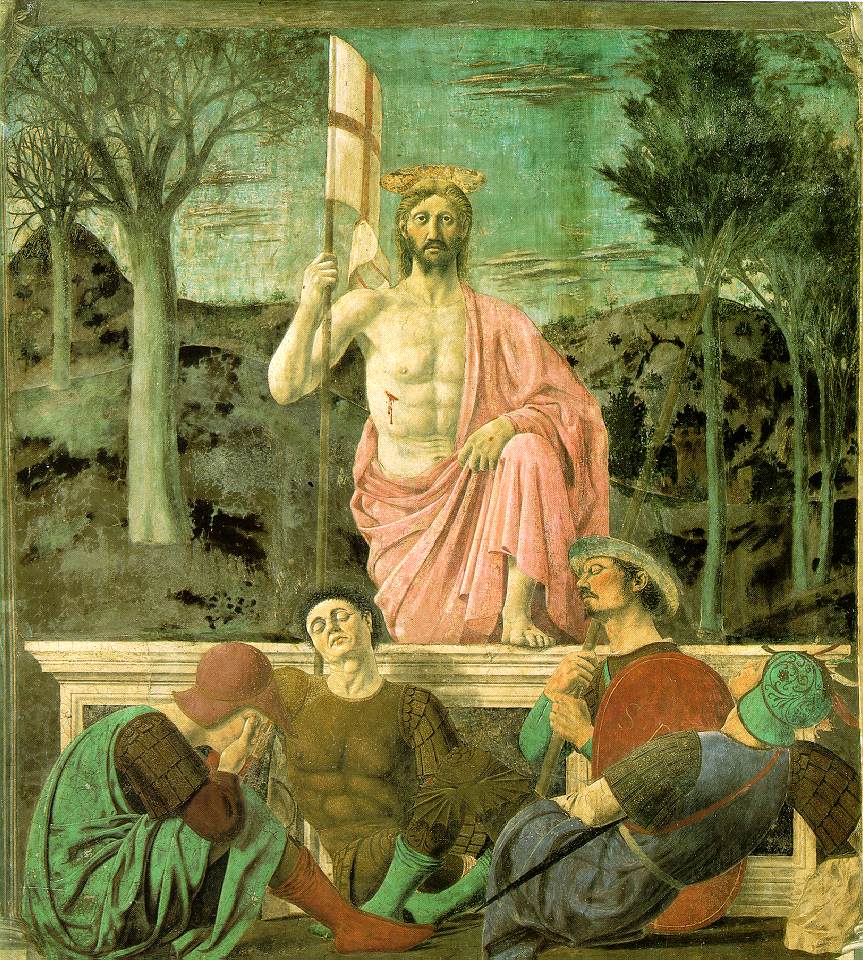
Things For the New Year

Happy New Year!

Things I plan on doing here for the new year:

  • The first couple of months we will, Lord willing, be finishing up our book; and sending it out for publication, to be released sometime in 2011.
  • Continue highlighting and engaging the contours of Evangelical Calvinism.
  • Hopefully look at more texts in Scripture from an Evangelical Calvinist perspective.
  • And probably fading this blog out (although I will always have it open as a resource and advertisement for “EC”) sometime in this new year. This blog will eventually give way to a blog I started awhile ago called “Behind The Back” (http://tftorrance.wordpress.com), which was a blog dedicated to all things Thomas Torrance. I am planning, Lord willing (and funding sufficing — which I don’t have yet), to begin my PhD studies on the theology of the vicarious humanity of Christ with special attention to TF Torrance. So this will involve a lot of new reading in exciting areas, covering Patristic theology, Reformation, and Modern/Contemporary theology. I will use “Behind The Back” as my outlet for that time of study (so something to look forward to this upcoming year).

Once again, happy new year everyone! May you have a blessed and grace-filled year, and may this be the year that our Lord finally returns bodily for His Church . . . maranantha!

Merry Christmas

For a child will be born to us, a son will be given to us; and the government will rest on His shoulders; and His name will be called Wonderful Counselor, Mighty God, Eternal Father, Prince of Peace. 7. There will be no end to the increase of His government or of peace, on the throne of David and over his kingdom, to establish it and to uphold it with justice and righteousness from then on and forevermore. The zeal of the LORDย  of hosts will accomplish this. ~Isaiah 9:6-7 NASBU

The Chasm Between Now and Not Yet: A Reflection on Holy Saturday

Holy Saturday is the time that the “Western Church,” Protestants included (well some), contemplate the moment between the death and resurrection of Jesus. It is the contemplation of the burial in 1 Corinthians 15:3, 4:

For what I received I passed on to you as of first importance: that Christ died for our sins according to the Scriptures, 4. that he was buried, that he was raised on the third day according to the Scriptures, . . .

What a time to contemplate the time between the now and the not yet. This time between Christ’s cross and humiliation of unspeakable depths, and the glories’ of His coming resurrection and ascension; analogically represent the time we inhabit now. We currently wait to fully realize the glory that Jesus has shared with the Father before the world began. And like the Apostles, Disciples, and hopefuls who followed Jesus to the cross, during this time of Jesus’ silence we can despair, be full of fear, angst, anxiousness, etc. We often wonder is this it? We face circumstances that seem overwhelming, that seem to eclipse and overcome the life of Christ . . . that make it seem as if Christ stayed in the grave. As Christians in this big world, some-times like the disciples of Christ (during this time in history), we can cower behind locked doors, scratch our heads, and wonder, “what now?”

If only the disciples would have remembered, and put 2 + 2 together, what Jesus had said to them in the past (easy for me to say):

As they were coming down the mountain, Jesus instructed them, ‘Don’t tell anyone what you have seen, until the Son of Man has been raised from the dead.’ ~ Matthew 17:9

maybe their despair, their bewilderment, would be turned to joy. Maybe their burden would have been light. Maybe they would have been grieving as ones with real hope. But they forgot, at that moment of time they became so gripped with fear they could not really function (at least some of them, His closest). Even though we know the story, because we can read about it at one sitting, don’t we live like Jesus’ end was the grave? We fall into caverns of unbelief that seem to eclipse and overshadow what we know to be true . . . if only we would remember the hope, the hope that Jesus spoke of in Matthew 17, and the hope that was realized in Matthew 28:1-10.

As we look forward to Sunday, lets not grow weary by the unanswered questions and grief of Saturday. Instead of forgetting what Jesus has said about the resurrection (i.e. His second advent), lets glory in advance, in anticipation of the glory that will be revealed in us, as we are hidden in Christ. While we live in Saturday, in anticipation, lets rest with Jesus, lets, with Jesus say: ” . . . Father, into your hands I commit my spirit (Lk 23:46).”

I think the best thing about this analogy, of “Holy Saturday,” is that it breaks down at a point. We don’t despair as if there is no resurrection, in fact as Christians we have been brought into the heavenly places with Christ (cf. Eph. 1), now; we have intimate union with Him now (cf. I Cor. 6:17); we have been given the Holy Spirit now (cf. Jn 14–16); and a whole array of distinguishing factors from those disciples of the first century. So take heart, don’t forget, this Holy Saturday, Jesus’ words of glory in humility:

. . . I have told you these things, so that in me you may have peace. In this world you will have trouble. But take heart! I have overcome the world. ~ John 16:33
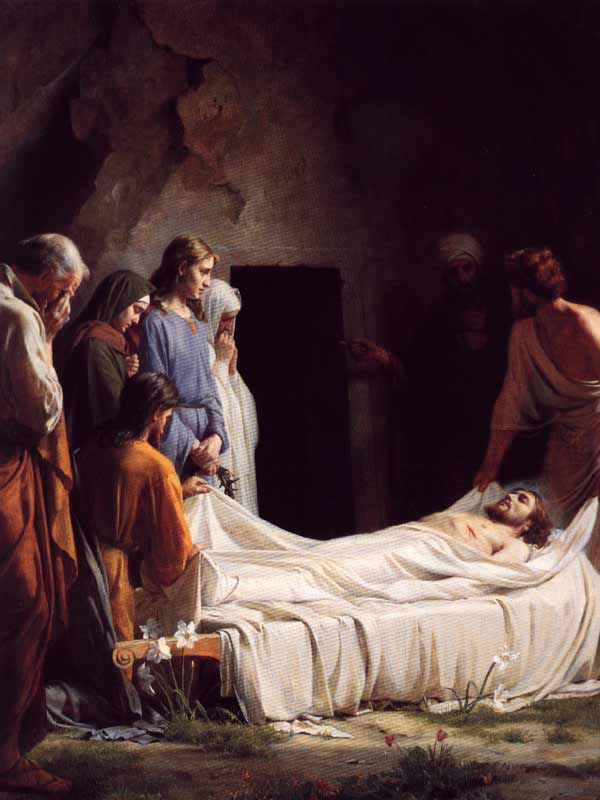
**Post inspired in part by: Alan Lewis’, “Between Cross and Resurrection: A Theology of Holy Saturday”**

Good Friday Thought

“. . . Jesus calls his followers to break from their own selves. “If any man would come after me, let him deny himself and take up his cross and follow me. For whoever would save his life will lose it, and whoever loses his life for my sake will find it” (Matt. 16:24-25). Those whom Jesus calls are ever required to break with themselves. They are required to deny themselves, to lose their lives, for Jesus’ sake. They are required to let go of their old identities. Matthew’s version of this saying puts it much more concisely: “He who does not take his cross and follow me is not worthy of me” (Matt. 10:38). Self-denial, losing one’s life, is involved in taking up Jesus’ cross. Toย  follow Jesus requires us to take up our cross.

We must not interpret the phrase “follow me” to mean “follow the principles by which Jesus lives, follow the law of love and all that stuff.” That is too abstract. To follow Jesus means to follow his concrete path and that path leads to the cross. To follow Jesus is to die with him and let go the only identity we have. As I see it, when Paul speaks of our dying with Christ so that we may be raised with Christ, he simply states what the Synoptic Gospels name as “follow me,” follow Jesus.”

— Arthur McGill, “Death And Life: An American Theology,” 56-7