
What does it mean to have a Christ-centered reading of Scripture? I have a post in the works where we will work through this question a bit. Let me just foreshadow that post by offering a simple reflection of what I think this might mean.
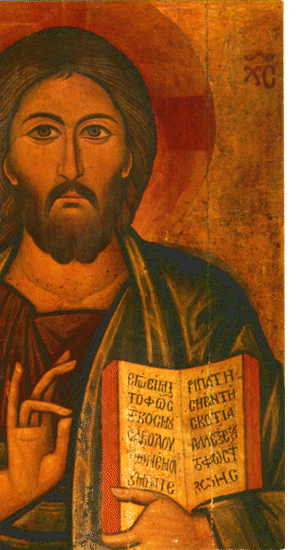 A Christ-centered reading of Scripture does so with the full realization that nothing else, for a Christian, could ever be the same when engaging with the text of Scripture. We don’t read the Scriptures as Rabbinic Jews, we don’t read the Scriptures as modern Jews; instead we want to read the Scriptures the way the Apostles did, as if the whole Old Covenant and its promises finally makes ultimate sense in light of its fulfillment in Jesus Christ. So for me, a Christ-centered reading of Scripture involves careful attention to the way the Apostles and the New Testament authors read the Old Testament, and attempting to understand what kind of Jewish modes of interpretation these early Jewish (Apostolic) Christians employed in their arsenal of demonstrating that Jesus is indeed the promised Messiah of Israel, the promised new Prophet (Moses) as it were. Within this linear reading, I also understand a Christ-centered reading to be one that pays attention to the ongoing conversation Christians have been having with the living voice of God and Christ encountered in Scripture over the centuries. So this kind of reading places the early-Apostolic reading within a larger-living metaphysical frame wherein it should be understood that Jesus is actually the living text that gives the language of the text its reality and meaning. And so a Christ-centered reading for my money must be aware of both of these prongs; the linear-historical, and what Matthew Levering calls the participatory-historical. The ultimate shaping frame of this kind of Christ-centered reading of Scripture is provided by the realization that the text is given orientation and sense by the reality of Deus dixit ‘God has spoken’ (of which the history of interpretation in the Christian church provides attestation), and the filling out of what it means for God speaking is provided traction by way of the text’s Apostolic interpretation deposited in the New Testament; and the New Apostolic interpretation is also a result of a special kind of encounter that the Apostles had with the living voice of God in their seminal context.
I am incorporating some stuff I have been reading from various authors like: Levering, Webster, Barth, Torrance, Blomberg, Gibson, Nigh, Bavinck, et al. I look forward to fleshing this out further.
Hey this post seems really interesting, but unfortunately the Calvin background clashes with the text color and makes the text literally difficult to read. I’ll be praying for your CT scan though!
Thanks, Bobby.
Looking forward to the posts coming.
Please let us know how your scan turned out!
Good stuff. If we’re not starting with John 5:39 when we read Scripture (“knowing they point to [Jesus]”), then we’re by no means grasping the full wonder of the Scriptures. It’s how some are able to say “We have to take in the full counsel of God” when I point to something in the life of Jesus. Jesus is the full counsel of God! So if you’re not seeing it in Him, you’re misreading the TaNaKh!
Minor quibble: Deus Dixit means ‘God Spoke’; Deus Dicit means ‘God speaks’ 🙂
Cal
FN,
It worked okay on my computer, but sometimes templates appear differently on different computers. Thanks for letting me know, I fixed it :-).
Dick,
Thanks. Praise the Lord, my CT scan said I am still cancer free! 🙂
Cal,
Agree.
I used the language of Deus Dixit, because it is the phrase that Herman Bavinck used as one of the premises of his theological project, and in fact a thought from Bavinck that Barth intentionally took from Bavinck and used to develop his theology of the Word. So I was focusing more on the phraseology (conceptually) itself, instead of the actual lexical/grammatical form :-).
Cal,
Here’s the article on Bavinck: http://derevth.blogspot.com/2010/09/2010-kbbc-week-1-day-2.html