
I am not going to say much, other than that this helps me. I am a sinner, and I still sin, frequently in fact. The only difference between me and the world is that I am a saved sinner (simultaneously justified and sinner); nevertheless, I still think in ways that terminate nowhere else but in the self, and by absolutizing material reality in a way that never gets back to material realities origin. Like the world I think foolishly (at points), and like ancient Israel, I have my high places. So what helps me, and maybe it will help you too, is Webster’s discussion of the vice of curiosity. Here is what he has written:
(2) Curiosity involves the direction of intellectual powers to new knowledge of created realities without reference to their creator. In curiosity, the movement of the mind terminates on corporeal properties of things newly known, without completing its full course by coming to rest in the divine reality which is their principle. In effect, curiosity stops short at created signs, lingering too long over them and not allowing them to steer intelligence to the creator. So Augustine against the Manichees:
Some people, neglecting virtue and ignorant of what God is, and of the majesty of the nature which remains always the same, think that they are engaged in an important business when searching with the greatest inquisitiveness and eagerness into this material mass which we call the world … The soul … which purposes to keep itself chaste for God must refrain from the desire of vain knowledge like this. For the desire usually produces delusion, so that the soul thinks that nothing exists but what is material.
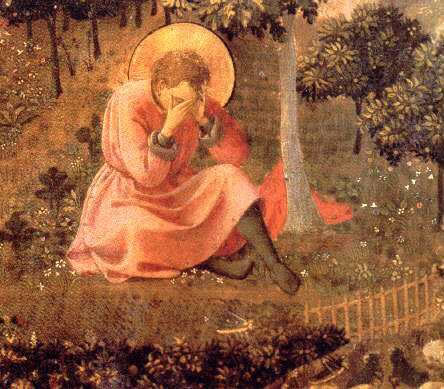
Curiosity, Augustine says elsewhere, is ‘eating earth’, penetrating deep and dark places which are still time-bound and earthly. Or again, in another idiom, curiosity is the ‘lust of the eyes’ (1 Jn 2.16), so called, Augustine says, because its origin lies in our ‘appetite for learning’, and ‘the sight is the chief of our senses in the acquisition of knowledge’. It is that ‘vain and curious longing in the soul’ which, ‘cloaked under the name of knowledge and learning’ is in reality a greed for ‘new experiences through the flesh’, a disordered ‘passion for experimenting and knowledge’ – flocking to see a lacerated corpse, attending a theatrical spectacle, letting contemplation be distracted by watching a lizard catch flies. Curiosity terminates on surfaces. [John Webster, The Domain of the Word, 196.]
I fall into the trap of curiosity more than I would like to admit! But I seek, by the Spirit, to live a life of (as Torrance would say) ‘repentant thinking’. Living a life that moves and breathes from the Spirit’s breath, the breath that animates the humanity of Jesus Christ for us. There is a depth dimension to Christianity and this life that most Christians will never experience in this life (and I am not supposing that the alternative is an elitist gnostic kind of Christianity!), because we are too curious and not contemplative and critical enough in our daily walks with Christ. As James writes “14 but each person is tempted when they are dragged away by their own evil desire and enticed. 15 Then, after desire has conceived, it gives birth to sin; and sin, when it is full-grown, gives birth to death.” Curiosity is the desire that terminates in sin and death. We so often give into this curiosity, and hardly ever do the hard work of actual Christian contemplation. We go the way of the world, we are just too curious.
Good reflections Bobby! When I was a teen, seeking for truth but unconverted and not following Jesus, I remember reading Revelation and thinking I had figured out the “proper” way of reading it, discovering a prophecy for the future of Mankind and America (my god). Arrogance and “secret knowledge” is considered wisdom, look at the history channel programs on “ancient aliens”, vampires, ghosts and spiritual beings.
Always that temptation still, to want to be “enlightened” and probe the mysteries of the Earth. I think HP Lovecraft was onto something when he challenged man’s glib arrogance in these matters, especially the late 19th century/early 20th century obsession with theosophy and seances. Seeing what lies beneath will more likely leave a man stark raving mad than eloquent, and we’re bound see Cthulu before a kingdom of fairies.
The only means forward, for true knowledge, is taking the Word (Jesus Christ speaking through the Scriptures) as “lamp for my feet, a light for my path” (Psalm 119). In that, our questioning builds up.
2 cents,
Cal
Thanks for sharing your experiences, Cal. Yeah, being contemplative V. curious is different.