
John Webster provides a sketch of two principles — Karl Barth’s ‘scripture principle’ — that I think provides a healthy conception of how we ought to consider scripture’s dogmatic placement. The consequences of this have implications toward 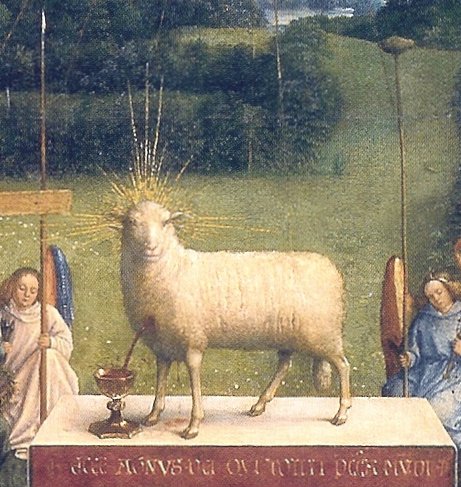 our hermeneutical theory (i.e. what we presuppose, theologically, when we are doing biblical exegesis and translation), ethics, and various other foci in regard to an ontology of scripture. Here is the first of the two principles that Webster provides for us:
[F]irst, “God can only be known through God.” Knowledge of God is God’s gift (“revelation”), borne to us through Holy Scripture, in such a way that to encounter Scripture is to stand before a witness to something that is not simply part of the immanent historical world. “The knowledge of God is not mediated but is only unmediated, that is, God is known through God himself. The expression for that immediacy, for the absolute facticity, for the paradox of revelation, is the Scripture principle, precisely by virtue of its offensiveness. This does not entail, Barth insisted, a simple identity between God’s Word and Scripture; any such suggestion would transform revelation as “sovereign act” into a material textual condition. What it does mean is that for Barth, Scripture hovers on the border between the historical life of the church and the transcendent reality of God — a point he had sought to communicate in Romans elsewhere, but which he only now was able to name in doctrinal terms…. [John Webster, Barth’s Lectures on the Gospel on John, in George Hunsinger, Thy Word Is Truth, 130-31.]
The primary implication of this is that Scripture is liberated from being the absolute source of God’s revelation (instead it is the relative source). Scripture through this lens is emphasized as the ordained witness by which God encounters us in his Self-Revelation, Jesus Christ. So Scripture, in this scheme, is hyper-important, but it takes on its proper orientation relative to the one to whom it gives way to, to its reality, Jesus Christ. We could extrapolate out from this, and get into Barth’s doctrine of creation as well; his doctrine of Scripture is corollary of his doctrine of creation — but we will have to address that at another time.
The bottom line here is: that Scripture is not something that we possess; instead Scripture possesses us by the Spirit as it invites us into encounter with the reality to whom it finds its un-relenting ground; Jesus Christ. He is the Lion of the tribe of Judah, Lamb of God slain before the foundation of the world. In other words, he can’t be tamed; he is Lord, and we are his servants (and brothers and sisters). He is the humbling of God, and the exaltation of humanity; and Scripture finds its starting point from that matrix and nowhere else. In other words, there really is no analogy for Scripture (except faith), because there is no analogy (from creation) for its starting point in the life of God in Christ.
I want to continue to reflect on this, and will in my next post (hopefully). I will also be giving the second principle on Barth’s scripture principle, as articulated by John Webster.
Pingback: Around the Blogosphere (10.26.2012) | Near Emmaus