
I am currently reading a fascinating book by Richard Bauckham (which all of his are) entitled, Jesus and the Eyewitnesses: The Gospels as Eyewitness Testimony. I have skipped to the last chapter and conclusion first, through which I will read the rest of the book. The last chapter is simply titled, The Jesus Testimony. And in this chapter Bauckham is concluding his arguments and thoughts (developed in the previous chapters) on the power that ‘testimony & witness’ have as ancient categories of historiography, and as such, how this then relates to the Biblical Gospels as examples of this as they are representative of ‘Ancient Biographies’. Bauckham, in this last chapter, 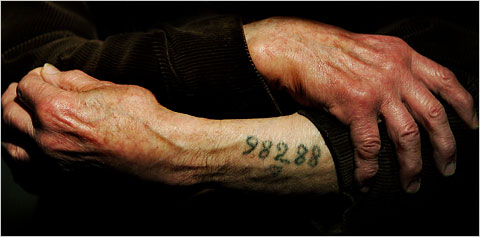 is continuing to provide argument for how ‘testimony’ is truly of mode of epistemological import; as much as are memory, self reflection, and inference. He appeals to (along with the other authors who he is interacting with as informative of his own thinking) the Holocaust as an analogy and example of how ‘testimony’ functions as a historical and literary device through which the historian and reader are confronted with the realities of the past in a way that challenges the oft ‘modern’ approaches to history which are usually ‘naturalistic’ and uniformitarian (my language) in orientation—meaning that the modern ways of doing history are often contradicted by the testimony of the past, since modern ways of doing history are all too often base upon individualistically formed abstracting methodology that seeks to find the kernels of ‘truth’ from the past (as pretexts, supposedly); and then place these abstracted kernels of ‘truth’ (and truth based upon what our modern sensibilities will allow to be ‘true’) into a pre-constructed matrix of our own making—a matrix that really will not allow the testimony of the past to speak for itself. Well Bauckham, with his interlocutors (Coady, Ricoeur, et. al.), has persuasively made a distinction between ancient historiography and modern by placing them into dialectic relation; such that we can and ought to avail ourselves to shared reality that both are seeking (in their different ways) to affirm and articulate about the past, or namely, history. So Bauckham concludes one section of his last chapter this way (this is at the end of his usage of the Holocaust as setting a recent paradigm for the power of testimony as historical witness to events that confront what we would consider ‘real’ in a rationalist sense—Bauckham, at the end of this quote, as you will see, appeals to a motif that he has been developing, and one that he has picked up from Ricoeur, the motif is the idea that history often offers us ‘uniquely unique events’ that must be allowed to contradict what we might [by our rationalist/naturalist standards) consider possible, real, and thus historically acceptable]). Here is Bauckham:
In this [referencing the Holocaust] and other cases, including the Gospels, testimony asks to be trusted. It does not consist in the presentation of evidence and argument for what only the witness, the involved insider, can tell us. In all cases, including even the law courts, testimony can be checked and assessed in appropriate ways but nevertheless has to be trusted. In the uniquely unique events we are considering, this is all the more true. To insist, with some Gospel critics, that the historicity of each and every Gospel pericope must be established, one by one, with arguments for each, is not to recognize testimony for what it necessarily is. It is to suppose that we can extract individual facts from testimony and build our own reconstruction of events that is no longer dependent on the witness. It is to refuse that privileged access to truth that precisely participant testimony can give us. Ancient historiography rightly valued such testimony as essential to good history, and the Holocaust shows us how indispensable it can be when the events we confront are “at the limits.” [Richard Bauckham, Jesus and the Eyewitnesses, 502.]
Interestingly, what Bauckham is arguing coalesces quite well with something, relative to theological method, that Thomas Torrance affirms and develops; that is, that in order to be truly ‘Scientific’, the inquirer must attend and pay attention to the voice that the testimony, the witness itself establishes as its veritable categories for knowing—this is Torrance’s ‘Theological Science’. Knowledge is something that is ‘given’ (not taken or forced or imposed), and it is only as the potential learner approaches reality (critical realism) with this attitude, that true knowledge and wisdom will be ‘given’, opened-up, and revealed to the seeker. The genre of ‘Ancient Biography’ and ‘History’ which gives shape to the Biblical Gospels sets the kind of categorical and epistemological ground by which we the students are free to ‘critically’ learn who the Savior of the World is. It is as this ‘Biography’ gives way to the reality of whom it bears testimony, that we become participants in the living reality of scripture’s text. So this goes a step further than simple historical inquiry, as is being developed for us by Bauckham; we, as Christians, are actually participants (presently) in the ‘Ancient’ life of God in Jesus Christ. Indeed, this life has ‘historical’ grounding (of which we come to know through the ‘testimony’ given by the Apostolic Deposit), but it is a ‘historical’ grounding that is given shape by the kind of Apocalyptic life that stands behind an in it. So God’s life in Christ, while revealed in history, continually breaks into the present, by the Holy Spirit, through the humanity of Christ, in a way that gives us fresh perspective that is based upon the testimony of Scripture, but a testimony that always gives way to its theological and christological reality in the person of Jesus Christ.