
Here is a great statement from Barth on the vicarious humanity of Christ,
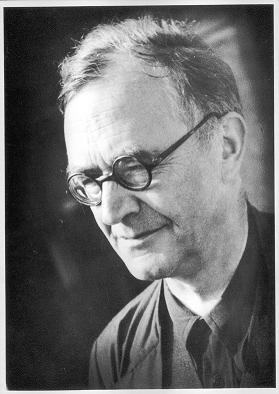 [T]he answer is that we ourselves are directly summoned, that we are lifted up, that we are awakened to our own truest being as life and act, that we are set in motion by the fact that in that one man God has made Himself our peacemaker and the giver and gift of our salvation. By it we are made free fro Him. By it we are put in the place which comes to us where our salvation (really ours) can come to us from Him (really from Him). This actualisation of His redemptive will by Himself opens up to us the one true possibility of our own being. Indeed, what remains to us of life and activity in the face of this actualisation of His redemptive will by Himself can only be one thing. This one thing does not mean the extinguishing of our humanity, but its establishment. It is not a small thing, but the greatest of all. It is not for us a passive presence as spectators, but our true and highest activation—the magnifying of His grace which has its highest and most profound greatness in the fact that God has made Himself man with us, to make our cause His own, and as His own to save it from disaster and to carry it through to success. The genuine being of man as life and activity, the “We with God,” is to affirm this, to admit that God is right, to be thankful for it, to accept the promise and the command which it contains, to exist as the community, and responsibly in the community, of those who know that this is all that remains to us, but that it does remain to us and that for all men everything depends upon its coming to pass. And it is this “We with God” that is meant by the Christian message in its central “God with us,” when it proclaims that God Himself has taken our place, that He Himself has made peace between Himself and us, that by Himself he has accomplished our salvation, I.e., our participation in His being. [Karl Barth CD IV/I, p. 12]
This is the kind of stuff I am looking for. A theological anthropology, that is Christological; that honors the integrity of created humanity by giving humanity its place in the recreated humanity of Jesus Christ for us. It is a participationist humanity that we are given as a gift, we don’t possess it in ourselves. The giveness of humanity is where humanity flourishes through its relation in the divine life (i.e. the proper order) in Christ. This early section in IV/I is entitled “God with Us.”
And yet as both Calvin and Beza knew and stated, while all men (Christian) recognize (cognitio) that God exists, their sinful natures do not allow them agnitio, or willing assent, to this truth. Thus, in faith there is integrated objectivity and subjectivity, intellect and will. True faith always presupposes knowledge from God (objectivity), yet too nothing can be saving faith without the spiritual and subjective application of God’s promises in Christ.
Fr Robert,
I don’t think Barth would disagree with this. It’s just that he would place the ground of human subjectivity in the humanity of Christ ‘with us’; and the subjective response is made possible for our human response from there.
Bobby,
And I would agree somewhat with that also, but as Calvin and Beza, I would place the weight on the Mediatoral office and life of Christ! Which this would certainly include!
I am not negative of Barth or TFT at all, just perhaps theologically somewhat critical. 🙂
Fr Robert,
No, I think I understand, at this point, where you’re coming from 🙂 . But I do think that TFT provides the mediatorial weight you are looking for in Barth, and that Barth provides the human subjective component that I am looking for in Torrance 😉 , and that Calvin and maybe even Beza provided the grammar to speak of such things in the first place.
Indeed the chain is the Reformation/Reformed, Calvin, Beza and later even Turretin! Btw, Luther is in there too! 😉 Just a note, but I have been enjoying (once again) that great “Archbishop of British Methodism”, John Scott Lidgett (19th century), and especially his work on the Atonement. If you can ever scare-up a copy of his book: The Spiritual Principle of the Atonement, I think you might like it? 🙂
Fr Robert,
I’ll look Lidgett up when I have the chance; thanks for the lead. I have so many things to be reading at the moment I have no idea what I’m doing typing this right now 😉 .
Bobby,
When ya read somewhat historical books on the Atonement, besides Mackintosh, Forsyth, and of course Denney, you will see Scott Lidgett, who was affected by the great R.W. Dale! Indeed the Satisfaction to the Penal theories.
Thanks again, Fr Robert.