
There is a certain methodology a theologian or exegete should follow if they want to be considered a Christian Theologian or Exegete. The methodology a Christian Theologian or Exegete should follow is one that principally starts with Jesus as the goal (telos) of their theological and exegetical work; one that sees Jesus as the inner-coherence and unity of meaning inherent to the Christian’s formal source of witness, the Bible. Insofar as the theologian and/or exegete proximates their work to this standard; then what they produce can be considered, Christian.
[I thought a good practice for me, here at the blog, would be to start my posts out with an intentional thesis statement. And so the above attempts to do that. Of course how I develop and defend said thesis may remain in an undeveloped state given time constraints, and the nature of blogging (at least for) itself.]
In thinking about this post I wanted to provide a counter-voice to the voice I want to feature as the featured voice for this post. I used to have an excellent quote on hand that would have done a great job in providing the foil I 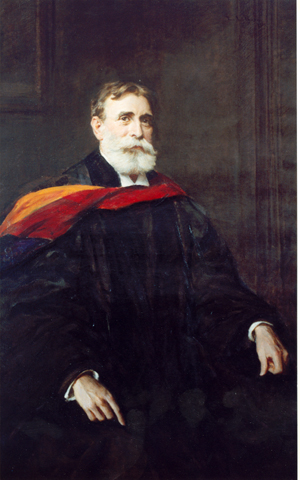 am looking for to at least illustrate my thesis statement above. The quote I once had (but has since been deleted from one of my multitudinous blogs) was from that stalwart Fundamentalist theologian B. B. Warfield of pre-Westminster Theological Seminary, Princeton Theological Seminary fame. In summary, what his quote stated was axiomatic for what provided the general shape of the ‘Christian’ Fundamentalist Faith; and that is that Christian Fundamentalism, according to one of her best (Warfield), was an Apologetic Faith. Meaning that contrary to the Liberal Theological tradition that was seeping into places like Warfield’s Princeton; that Warfield’s (Fundamentalist) Christianity was one that sought to meet Liberal Theologie’s claims upon their grounds. In other words, if the ground of ‘Liberal Theology’ was primarily one that found purchase from rationalistic and so called ‘man-centered’ ground (like positivism, historicism, pietism, etc.); then Fundamentalist Christianity was eager to meet this ‘problem’ by doing so on the same grounds. In brief (and this nut-shells that quote from Warfield I once had): the one who could out-think and out-argue the other (Liberal versus Fundy), wins! Warfield (and Fundamentalist, and even American Evangelicalism) attempted to defeat Liberal Christianity by adopting their principles of proof; by using positivistic logic; by seeking to establish the veracity of the Bible, and the miracles therein, thus providing ‘something’ upon which Christians could indubitably stand and believe. Warfield & co. were not alone in trying to preserve the integrity of “Conservative-Classical-Christianity;” the yester-year preceding someone like Warfield had seen an apologetic Christianity thrive and take shape as well. A Christianity wherein we could have something like a systematic theology entitled Enlectic Theology (Turretin’s — meaning apologetic or defensive theology). This ground swell provided a tradition that Warfield could appeal to, and in this tradition he was given a methodology that sought to provide proof of God’s existence through philosophical reasoning (in the Medieval era this was called the via negativa or negative theology).
The above serves as a brief sketch (longer than I wanted — and very oversimplified) of maybe an organic relationship that inhered between the 17th and late 19th early 20th centuries Anglo-European/American theological development. In this vein, and for this post, I thought I would take a look at an old Systematic Theology text-books we used during one of my under-grad experiences; Charles Ryrie’s Basic Theology. I was not let down by the method and order that Ryrie appropriated for his “Theology.” It is one that he inherited from many in the Medieval-scholastic era; one that has pedigree with someone like Francis Turretin’s Enlectic Theology (and I mean in mode); and one that fulfills the on-going trajectory set by the Fundamentalist Warrior, B. B. Warfield. Starting in Ryrie’s Chapter 5, entitled Revelation of God, he starts his discussion out, on General Revelation, by providing the Cosmological Argument for the existence of God (a classical argument that argues for the existence of finite creation by positing the need for an infinite cause); then he gives us the Teleological Argument, the Moral Argument, and the infamous Ontological Argument — all classic philosophical proofs seeking to provide rational proof for the existence of God.
I sketch all of the above in order to provide a salient quote that throws the above approach into relief. Christian Theology does not start where Warfield or Ryrie started; it does not feel the need to prove the material content of what it seeks to provide grammar for. Christian Theology should assume (as the Scripture’s do) the triune God whom she worships, and this supposition should present us with the categories and theological furniture necessary to carry out the vocation of what it means to be a Christian Theologian or Exegete. In short, Apologetics should not provide the methodological ground for how we proceed in our Dogmatic reflection as Christians. If we are Christians we don’t need to prove to ourselves the belief that God is triune; our self-identity already presupposes said belief (and this is evidenced in the way that someone like the Apostle Paul wrote his epistles; he didn’t argue for the Trinity or the existence of God prior to penning his letters, he presupposes this as the reality that shapes his identity and thus the material that he exhorts his brothers and sisters through in the various churches he wrote to). With this is mind I have come across a great quote from someone who will remain un-named (you can try and guess who it is though 😉 ); and with this quote I will close:
[I]t is obvious that an adherent of some other faith might perhaps be completely convinced by the above account that what we have set forth is really the peculiar essence of Christianity, without being thereby so convinced that Christianity is actually the truth, as to be compelled to accept it. Everything we say in this place is relative to Dogmatics, and Dogmatics is only for Christians; and so this account is only for those who live within the pale of Christianity, and is intended only to give guidance, in the interests of Dogmatics, for determining whether the expressions of any religious consciousness are Christian or not, and whether the Christian quality is strongly expressed in them, or rather doubtfully. We entirely renounce all attempt to prove the truth or necessity of Christianity; and we presuppose, on the contrary, that every Christian, before he enters at all upon inquires of this kind, has already the inward certainty that his religion cannot taken any higher form than this. [ _______________ cited by Bruce L. McCormack, Orthodox And Modern: Studies in the Theology of Karl Barth, 72]
I am withholding the name of the theologian cited, because it may be a source of stumbling for some; and thus cause them to not appreciate what he is communicating (I will say that it is not Karl Barth). Evangelical Calvinist theological-exegetical methodology operates from this posture. It seeks to follow a Christian methodology, like, for example, the Apostle Paul assumed in his writings. It is not our intention to prove God’s existence, the veracity of the Scriptures, etc. before we feel that we can then do theology or exegesis. Instead, as Christians, we recognize that our self-identity necessitates that we move and breathe as such; and this self-conscious reality has a dramatic impact (or should) upon how we proceed as theologians and exegetes. It is this movement that I believe allows someone to say, in general, that they are operating as a genuine Christian theologian or exegete. What do you think?
Don’t you think Ryrie’s reason for those arguements for the existence of God are really more to give students tools to help in convincing atheists or others that there is a God who is infinite, rather than trying to convince the student that there is a God himself?
Though I don’t like this sort of starting point either, as I see that it is a way of trying to get to God outside of His revelation in Christ.
Hi Cody,
Thanks for the comment.
Yes, but the problem is is that Ryrie’s points are made in his “Systematic Theology” not an apologetics book. Beyond that, his order illustrates a certain method (or prolegomena) that is well established in the realm of Christian Theology, and it is obviously one that I object to 🙂 . I am advocating that Christian Theology should be unapologetically Christian in method, and therefore “our” theology should be shaped by the imposition of God in Christ on us and not vice versa (which ultimately I believe someone like Ryrie’s approach springs from).
That said, Cody; I still respect Ryrie, he is a man of God and certainly a brother in Christ. My copy of his “Basic Theology” is actually personally autographed by him; he did the commencement at one of my alma maters graduation ceremony. I am certainly not questioning the personal salvation or Christianity of Ryrie, Warfield, Turretin or any “classic” style theologian or exegete; instead I am questioning the methodology they have chosen to employ in their respective works. I am persuaded that there are much better ways to go about things. But it is hard for me, at points, to kick against these goads; I grew up in a house-hold that was shaped by folks like Ryrie, Ironside, Walvoord, Pentecost, and a whole host of Fundamentalist-Evangelical types. I still live and move in this kind of environment ecclesially, and simply hope to lovingly alert folks to what I find to be a much more christocentric focus in thinking Christianly. I write posts like this to hopefully rattle the status quo I live in as an Evangelical Christian 😉 .