I thought I would just share what I am currently reading (I’ve decided to forego doing those posts on dispensationalism I had mentioned in my last post. That issue always seems to produce much more heat than light, and so I think I’ll just keep my thoughts on that stuff to myself and with those I know personally from now on :-). Anyway, here’s what I am reading:
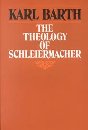 Karl Barth. The Theology Of Schleiermacher. Grand Rapids, Michigan: William B. Eerdmans Publishing Company, 1982). Here’s what what George Hunsinger says of it on the back jacket:
. . . these early lectures on Schleiermacher are an impressive exercise in sympathetic criticism. Not only do they fully display Barth’s amazing analytic powers, and not only do they present his most extensive treatment of perhaps his major adversary, but they also contribute significantly to the growing debate about whether Barth treated Schleiermacher unfairly. Those who insist that he did will find a few things to confirm their view surrounded by much that refutes it. — George Hunsinger
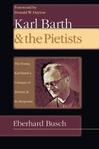 Eberhard Busch. Karl Barth & the Pietists. Translated by Daniel W. Bloesch. Downers Grove, Illinois: Intervarsity Press, 2004. Here’s what Darrell L. Guder says:
With his customary thoroughness and flair for the important and often unknown historical detail and its theological ramification, Professor Busch’s work Karl Barth & the Pietists expands our understanding of this crucial period in the development of Barth’s theology in the 1920s: the two versions of the Romans commentary and their significance for Barth’s interaction with Continental Pietism. Busch’s scholarship sharpens our awareness that there is much to the Barth legacy that has yet to be fully understood and unpacked, especially in its English-language reception. — Darrell L. Guder
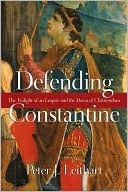 Peter J. Leithart. Defending Constantine: The Twighlight of an Empire and the Dawn of Christendom. Downers Grove, Illinois: Intervarsity Press, 2010. Here’s what William Cavanaugh says:
An excellent writer with a flair for the dramatic, Peter Leithart is also one of the most incisive current thinkers on questions of theology and politics. In this book, Leithart helpfully complicates Christian history, and thereby helps theologians recover the riches of more than a millennium of Christian life too easily dismissed as “Constantinian.” If the Holy Spirit did not simply go on holiday during that period, we must find ways to appreciate Christendom. Any worthwhile political theology today cannot fail to take Leithart’s argument seriously. — William T. Cavanaugh