
“I have my own private opinion that there is no such thing as preaching Christ and Him crucified, unless we preach what nowadays is called Calvinism. It is a nickname to call it Calvinism; Calvinism is the gospel, and nothing else. I do not believe we can preach the gospel, if we do not preach justification by faith, without works; nor unless we preach the sovereignty of God in His 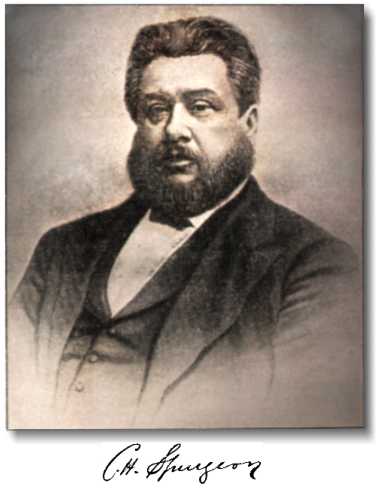 dispensation of grace; nor unless we exalt the electing, unchangeable, eternal, immutable, conquering love of Jehovah; nor do I think we can preach the gospel, unless we base it upon the special and particular redemption of His elect and chosen people which Christ wrought out upon the cross; nor can I comprehend a gospel which lets saints fall away after they are called, and suffers the children of God to be burned in the fires of damnation after having once believed in Jesus. Such a gospel I abhor.“
(From A Defense of Calvinism.) (Quote taken from ‘The Contemporary Calvinist’)
As much as I like Spurgeon, and I really really do, this is the problem with popular Calvinism; there is an inability to see a distinction between what they understand Calvinism to be, and what Scripture actually communicates. This is a typical problem for most Protestants; we have a hard time admitting we have interpretive tradition (the Roman Catholics have us beat on this point).
there is an inability to see a distinction between what they understand Calvinism to be, and what Scripture actually communicates.
You’re scaring me.
Hey Roll with it Bobby!
Spurgeon was sovereignly elected to believe as he does, and you were sovereignly elected to believe as you do.
And in 24 words!
What’s scaring you, Heather?
Were not fatalists here 🙂 .
You were posting this while I was on the other thread, expressing concern about the equating of Calvinism with Scripture and then holding Calvinism up as the standard by which sound doctrine is measured. It was a little unnerving to see this post pop up.
I agree with your thought, BTW>
I see, Heather.
Remember, 1st cause, and Sovereignty is God ;).
You make a good point. I’m evangelical and mostly Calvinist. Too many people cannot see that there are honest people making arguments from the Bible both for and against certain doctrines. One sure sign that our interpretation is forced: When we say that we’re not quite sure what a particular Bible passage means, but we’re sure that it does NOT mean the most obvious meaning, since that couldn’t fit with the rest of the Bible. How are we wise enough to be sure what will and won’t fit with the rest of the Bible? For example, from a Calvinist perspective, how are we sure that when it says Jesus died for the sins of the whole world, it doesn’t mean the whole world? When it says, “Do not forbid speaking in tongues,” how are we sure that it means we should forbid speaking in tongues? When it says, “that whoever believes in him should…have everlasting life,” how are we sure that it really means, “that whoever is given everlasting life will believe in him”? I’m not a top-notch theologian, but I think a little humility on such doctrinal issues is a great thing.
I think a little humility on such doctrinal issues is a great thing.
🙂
Hi Jim,
I would say we can know what the text means by paying close attention to the literary structure and context wherein said texts are situated. I do advocate for the reality that we can get to the authorially intended meaning of the text; but what usually hinders this is when folks are unable to identify what in fact is informing and shaping the theological preunderstandings that they bring to the text (therefore undershooting what the original author actually intended).
See Kevin Vanhoozer’s book: “Is There A Meaning in This Text?” Identifying our interpretive “traditions” allows us to distanctiate and disabuse ourselves from things that are indeed foreign to the text. Interpretation is a spiraling process, so to get to the originally intended meaning often times requires hard work; and as you say humility.
I think you’re misinterpreting Spurgeon. I think that all Spurgeon is saying is that sound Scriptural interpretation results in what we term “calvinism”; that what people have given a popular name is not a separate belief system, it’s just a belief in what Scripture teaches. To teach something contrary to “calvinism” is to preach less than the full truth. I would tend to agree, because non-calvinists really preach a god that is less than God. But I think that Spurgeon’s statement here allows plenty of “wiggle room” for varying “interpretations” of precisely what Calvinism is.
But what you say is exactly my point, you say: I think that all Spurgeon is saying is that sound Scriptural interpretation results in what we term “calvinism”.
That’s my point and interpretation of Spurgeon; he makes no distinction between scripture and a tradition known as Calvinism — I disagree with this. Although I think it’s important to be thoroughly convinced of one’s position.