
I am just rereading John Webster’s chapter in The Oxford Handbook of Systematic Theology on ‘Theologies of Retrieval’. As he begins his essay he sketches how theologian Eberhard Jüngel engages this mode of theological endeavor in his book God As the Mystery of the World. In his sketching, Webster highlights Jüngel’s primary thesis overriding his book, and that is […] “The book is best read as a set of analytical soundings in the modern history of the relation between theology and philosophy, seeking to show how the rise of atheistic philosophy is parasitic upon decay in Christian thought about God….” (Webster, p. 586) This is a very intriguing point, and one that Christian Fundamentalism, which has now come of age in American Evangelicalism would do well to take heed to. I say this because in many quarters of Evangelicalism—and I say in the quarters that make up the academic side of Evangelicalism, mostly found in seminaries, and then parachurch ministries—there is still to be found the ‘fighting Fundy’ spirit. That is, Evangelicals are consumed with matching wits with their atheist and “Liberal” counterparts by engaging the atheist (or whomever) on their own terms; nary realizing that maybe the terms set by the atheist panoply might be a result of Christians (Evangelicals or otherwise) not taking care of proper business in their own house. Namely, that Christians, in their abandonment of the doing of actual Christian Dogmatics (Theology) have in this vacuum created space for antagonists to the Christian faith to bottom feed off of the waste produced or not-produced by Christian thought today. Webster writes further of Jüngel’s thesis:
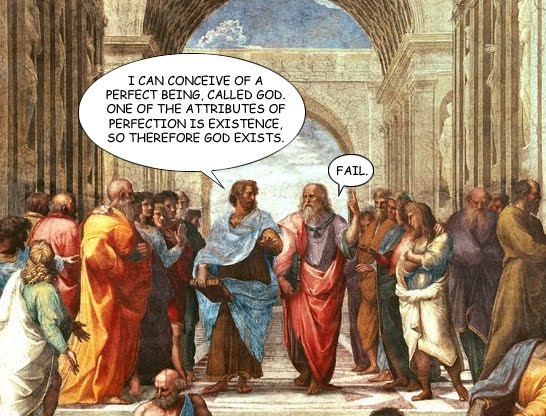
[W]hat is most noteworthy in Jüngel’s diagnosis is its focus on the mismatch between the authentic content of Christian faith and the conceptual version of itself by which it sought to retain its authority in the face of modern critiques. ‘Atheism’ is as much a child of theology’s theistic self-alienation as of philosophical unbelief. Jüngel’s presentation of this authentic content is undoubtedly dogmatically compressed, appealing to only a narrow selection of doctrinal material; and his historical narrative can lack complexity and nuance. The book’s appeal is, indeed, as much kerygmatic as historical. What gives strength to his account is his insistence that the crisis of Christian thought and speech about God ‘is to be worked through in terms of the particular character, the proprium of the Christian faith’ (Jüngel 1983:229). What is required is not a more effective apologetic strategy but a better dogmatics. [emboldening mine] [John Webster, The Oxford Handbook of Systematic Theology, Chapter 32 Theologies of Retrieval, 587.]
Maybe if Christians, and Evangelicals in particular, got back to engaging with actual positively shaped Christian Dogmatics (instead of following the ‘negative way’), and abandoned the current trend of continuing to engage with a god largely shaped by classical theism (still!); then maybe atheists and the rest of the unbelieving crowd would lose the traction they currently have in the culture today. It is much easier for an atheist to argue with a conception of god that is humanistically constructed based on philosophical reflection and abstraction of the universe versus dealing with a God, who by definition, is shaped by His own internal Self-presentation and revelation through Jesus Christ. If ‘apologists’ were to become theologians, instead of philosophers, atheism might fade away; and if not fade away, it would at least have to reconsider how to assail the conception of the Christian God who resists philosophical manipulation, and instead contradicts it (by the wisdom of the cross!). We need more Christian Dogmaticians, and less Christian philosophers of religion.